Here are 10 window treatment ideas that work across budgets and styles, from quick rental-friendly fixes to statement pieces worth the investment.
Top 10 at a Glance
Layered curtains and sheers
Roman shades for a tailored look
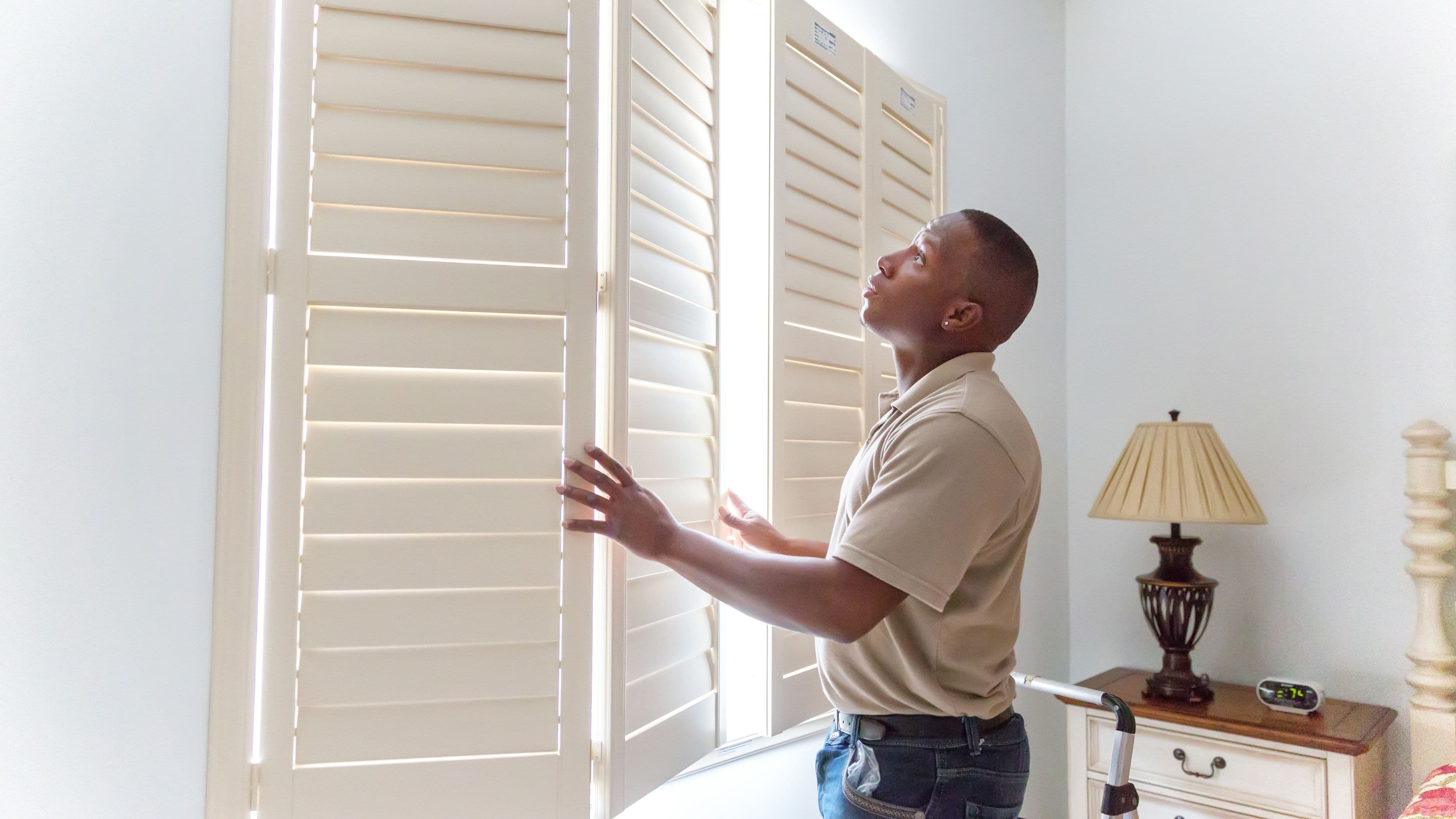
Plantation shutters for durability and value
Roller shades for a clean, modern feel
Bamboo or woven wood shades
Cellular (honeycomb) shades for insulation
Cafe curtains for privacy without blocking light
Motorized smart shades
Statement valances and cornices
No-sew or tension rod curtains for renters
1. Layered Curtains and Sheers
Pairing a sheer curtain underneath a heavier drape gives you the best of both worlds – soft, diffused light during the day and full privacy or blackout at night when you close the outer layer. This is one of the most versatile treatments because it adapts to different times of day without needing to swap anything out.
Why it matters: Adds visual height and softness to a room while giving you flexible light control.
How to apply: Mount the outer curtain rod a few inches above the window frame and slightly wider than the window itself to make the space feel larger.
Key benefit: Works in nearly any room style, from traditional to modern.
2. Roman Shades for a Tailored Look
Roman shades fold into neat horizontal pleats when raised, giving a room a clean, tailored appearance that reads as more custom than off-the-shelf blinds. They come in an enormous range of fabrics, so it's easy to match an existing color scheme.
Why it matters: Offers a polished, designer look without the cost of full custom drapery.
How to apply: Choose a fabric with some texture or pattern if the rest of the room is fairly neutral, to avoid the window disappearing into the wall.
Key benefit: Compact when raised, making them ideal for smaller windows or rooms with limited wall space.
3. Plantation Shutters for Durability and Value
Plantation shutters are a bigger upfront investment, but they last for decades and consistently rank among the window treatments that add the most resale value to a home. The wide louvers give precise light and privacy control, and they work well in humid rooms like bathrooms and kitchens where fabric treatments can wear out faster.
Why it matters: Long-term durability plus a real return on investment if you plan to sell eventually.
How to apply: Get a professional measurement before ordering – shutters are custom-fit and small measurement errors are costly to fix. Key benefit: Extremely low maintenance compared to fabric-based treatments.
4. Roller Shades for a Clean, Modern Feel
Roller shades are about as minimal as window treatments get – a single flat piece of fabric that rolls up cleanly out of view. They're a favorite in modern and minimalist spaces because they don't compete visually with the rest of the room.
Why it matters: Simple, unobtrusive, and available in blackout, light-filtering, or solar screen fabrics depending on the room's needs.
How to apply: Choose a solar screen fabric for rooms with a great view you don't want fully blocked, and blackout for bedrooms.
Key benefit: Budget-friendly relative to shutters, with a much sleeker look than standard blinds.
5. Bamboo or Woven Wood Shades
Woven wood shades bring texture and warmth to a room in a way that fabric treatments can't quite replicate. They pair especially well with natural materials – wood floors, rattan furniture, linen upholstery – and work in both casual and more elevated spaces.
Why it matters: Adds organic texture that softens rooms with a lot of hard surfaces.
How to apply: Add a blackout liner if the room needs more privacy or light control than the natural weave provides on its own.
Key benefit: More affordable than plantation shutters while still feeling like a design upgrade.
6. Cellular (Honeycomb) Shades for Insulation
Cellular shades trap air in their honeycomb-shaped pockets, which measurably improves a window's insulation – useful in rooms that run too hot in summer or too cold in winter. They're also one of the better options for reducing outside noise.
Why it matters: Practical energy savings alongside a clean, streamlined appearance.
How to apply: Look for double or triple-cell versions in rooms where temperature control matters most, like a home office or nursery.
Key benefit: Available in cordless and top-down/bottom-up configurations, both of which are safer around kids and pets.
7. Cafe Curtains for Privacy Without Blocking Light
Cafe curtains cover only the bottom half of a window, which is a smart solution for rooms – kitchens, bathrooms, street-facing rooms – where you want privacy at eye level but still want natural light pouring in from the top of the window.
Why it matters: Solves the privacy-versus-light trade-off other treatments can't.
How to apply: Mount a simple tension rod at the window's midpoint for a quick, renter-friendly install.
Key benefit: Inexpensive and easy to switch out seasonally for a different look.
8. Motorized Smart Shades
Motorized shades let you control light and privacy from an app or voice command, and many models can be scheduled to open and close automatically with sunrise and sunset. Prices have come down significantly in recent years, making this a realistic option beyond just luxury homes.
Why it matters: Genuine daily convenience, especially for hard-to-reach or oversized windows.
How to apply: Start with one or two high-traffic rooms rather than converting an entire house at once, to keep costs manageable.
Key benefit: Many models retrofit onto existing shade hardware, so you don't always need a full replacement.
9. Statement Valances and Cornices
A valance or cornice hides curtain hardware and adds a finished, tailored edge to the top of a window. This is a smaller-scale project than replacing an entire treatment, making it a good way to refresh a room without a full window makeover.
Why it matters: Elevates an existing curtain setup with minimal cost.
How to apply: Keep the color tied to your existing palette – a mismatched valance can look more dated than no valance at all.
Key benefit: Great for hiding older curtain rods or uneven curtain lengths.
10. No-Sew or Tension Rod Curtains for Renters
For renters who can't drill into walls, tension rods paired with clip-on curtains or ready-made panels solve the problem without any permanent changes. Combined with removable adhesive hooks, you can create a fully layered look that comes down cleanly when you move.
Why it matters: Full design flexibility without violating a lease.
How to apply: Use a tension rod slightly wider than the window frame so it doesn't slip under the weight of heavier fabric.
Key benefit: Entire treatment can be swapped or removed in minutes.
What to Avoid
Don't buy curtains or shades that are too short for the window – hanging fabric that stops right at the sill or a few inches above the floor is one of the most common mistakes and instantly makes a room look unfinished. As a rule of thumb, curtains should either just brush the floor or pool slightly, not hover awkwardly in between.
Also avoid choosing a treatment based purely on trend photos without considering your room's actual light exposure. A north-facing room that already gets limited natural light will feel dim with heavy blackout treatments used as the primary daytime covering.
FAQ
How high should curtain rods be mounted? Generally 4–6 inches above the window frame, or closer to the ceiling in rooms with lower ceilings, to visually elongate the window and room.
Are motorized shades worth the extra cost? For hard-to-reach windows, skylights, or rooms where you want automated scheduling, yes. For standard, easily reachable windows, manual treatments offer nearly the same function at a lower price.
What's the most budget-friendly option on this list? Tension rod curtains and cafe curtains are typically the cheapest, often under $50 total, and require no permanent installation.
📚 Sources
National Association of Realtors – home features that add resale value – https://www.nar.realtor/research-and-statistics
Energy.gov – window treatments and home energy efficiency – https://www.energy.gov/energysaver/energy-efficient-window-coverings
Consumer Reports – window treatment buying guide – https://www.consumerreports.org/home-garden/