But "visa-free" isn't one-size-fits-all. Some countries let you stay 30 days, others 90. Some require proof of onward travel or sufficient funds. A few technically offer a visa on arrival, which is still free and takes five minutes at the airport – but worth knowing upfront so you're not caught off guard. This list covers 10 of the best options across different regions, travel styles, and budgets, with everything you need to know before you go.
Important note: Visa policies can change. Always verify entry requirements through the destination country's official immigration website or the US State Department's travel portal before booking.
Top 10 at a Glance
Mexico
Japan
Colombia
Portugal
Albania
Costa Rica
Morocco
Georgia
Thailand
Peru
1. Mexico
Visa-free stay: Up to 180 days
Entry type: No visa required
Mexico is the most visited country by Americans for a reason. It's close, cheap to get to, and offers more variety than most people realize – ancient ruins, world-class beaches, colonial cities, incredible food, and one of the most dynamic capital cities on the planet. All with zero visa hassle.
When you land, Mexican immigration will issue a tourist card (FMM) stamped with how many days you're allowed. That number varies by officer, but requesting 180 days is standard for US citizens. You'll want to keep that card – losing it means a fee and a headache on your way out.
Beyond Cancún and the resort strips, Mexico rewards travelers who push inland. Oaxaca, San Cristóbal de las Casas, Mérida, Guanajuato – these are cities with deep culture, affordable living costs, and far fewer crowds. If you're working remotely, Mexico City has become one of the top digital nomad hubs in the Americas.
Best for: Beach trips, city exploration, long stays, digital nomads
Budget range: $40–$100/day depending on location and style
Tip: Carry some pesos from the start – ATMs inside airports charge steep fees. Use a Wise or Charles Schwab debit card to avoid foreign transaction fees.
Verify entry requirements: gob.mx/sre
2. Japan
Visa-free stay: Up to 90 days
Entry type: No visa required
Japan reopened fully to independent travelers in 2022 and has been one of the most sought-after destinations ever since. For Americans, it's completely visa-free for stays up to 90 days – which is more than enough time to cover Tokyo, Kyoto, Osaka, Hiroshima, and a few countryside detours without rushing.
What makes Japan exceptional isn't just the obvious bucket-list draws – temples, cherry blossoms, bullet trains. It's the quality of everything. Food, public transit, hospitality, cleanliness, and safety are consistently at a level that's hard to match anywhere else in the world. Japan also has one of the lowest violent crime rates globally, making it a comfortable solo travel destination, especially for first-time international travelers.
One practical note: Japan is still heavily cash-dependent compared to most Western countries, though this is improving. Budget travelers will find it more affordable than its reputation suggests – particularly outside Tokyo. The Japan Rail Pass, purchased before departure, pays for itself quickly if you're moving between cities.
Best for: Culture lovers, foodies, first-time international travelers, families
Budget range: $80–$180/day depending on city and accommodation type
Tip: Book popular experiences (teamLab, specific ryokan stays, robot restaurant alternatives) well in advance – Japan's tourism infrastructure books out fast, especially spring and fall.
Verify entry requirements: us.emb-japan.go.jp
3. Colombia
Visa-free stay: Up to 90 days (extendable to 180)
Entry type: No visa required
Colombia has had one of the most remarkable image turnarounds in modern travel history. What was once considered off-limits is now one of South America's most exciting destinations – and one of the best value trips Americans can take right now. Medellín, Cartagena, Bogotá, and the Coffee Region all offer completely different experiences within a single country.
Medellín in particular has become a magnet for digital nomads and long-term travelers for good reason. The weather is spring-like year-round (it sits at 5,000 feet elevation), the cost of living is low, the food scene is booming, and the city's urban transformation over the past two decades is genuinely remarkable. Cartagena's walled old city is one of the most photogenic in the Americas. The Coffee Region offers lush landscapes, plantation tours, and farm stays that are hard to find elsewhere on the continent.
US citizens enter Colombia without a visa and can stay up to 90 days per entry, with a maximum of 180 days per calendar year. You'll need to show proof of onward travel when you arrive, so have a return or connecting flight booked before you land.
Best for: Budget travelers, digital nomads, history and culture enthusiasts, adventure travel
Budget range: $35–$80/day (excellent value for quality)
Tip: Exercise normal urban caution in Bogotá and Medellín just as you would in any large city. Stick to recommended neighborhoods and don't flash expensive gear.
Verify entry requirements: migracioncolombia.gov.co
4. Portugal
Visa-free stay: Up to 90 days within any 180-day period
Entry type: Schengen Zone – no visa required
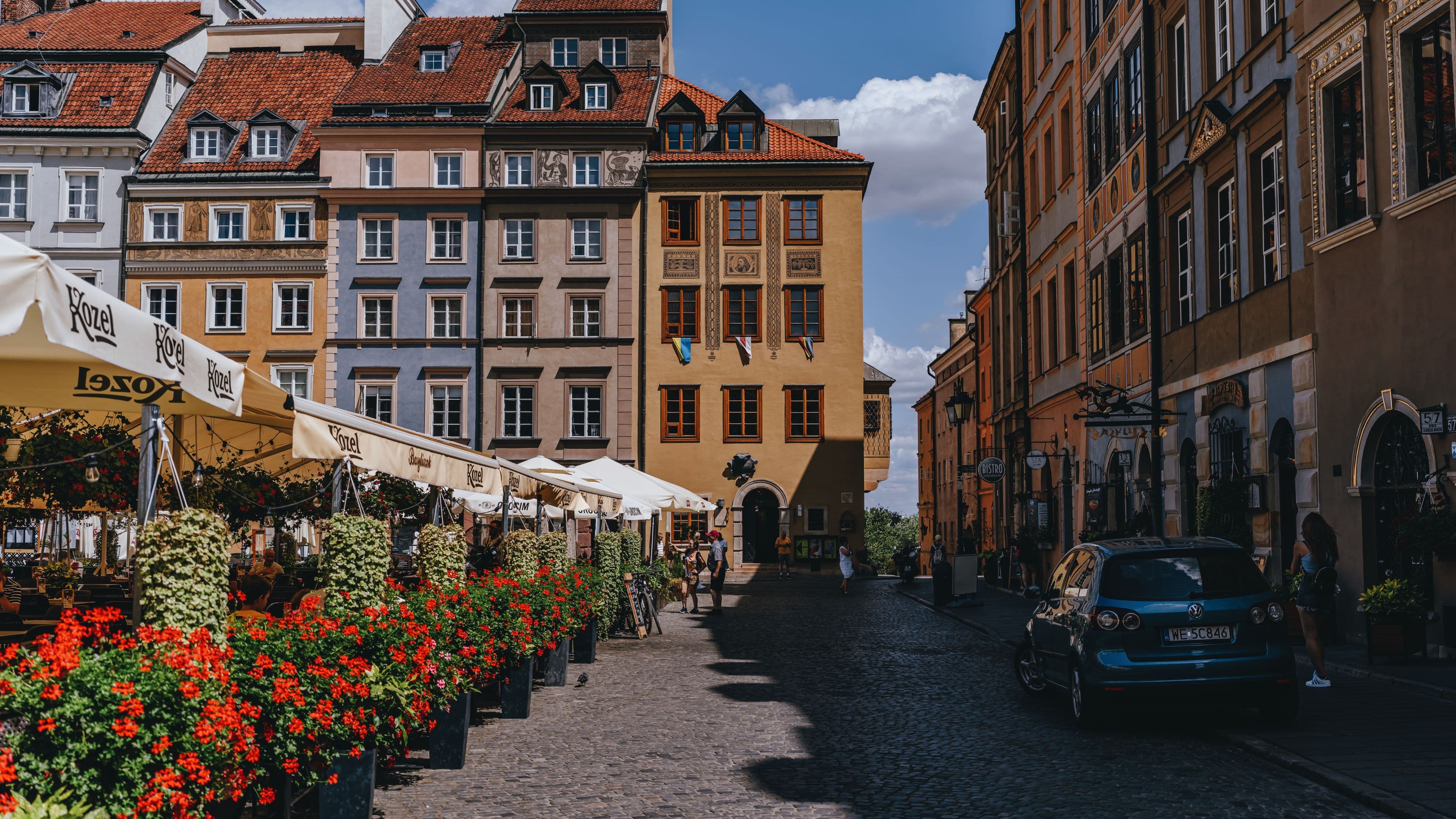
Portugal punches well above its weight as a travel destination. Lisbon and Porto are two of Europe's most beautiful and walkable cities, the Algarve coast offers some of the continent's best beaches, and the Azores archipelago in the Atlantic is one of the most underrated destinations on the planet. All accessible with just your US passport.
As a Schengen Zone country, your 90-day allowance covers the entire zone – meaning time spent in France, Spain, Italy, or any of the other 26 Schengen countries counts against the same 90 days. If you're planning a broader Europe trip, factor that in. But if Portugal is your only stop, 90 days is enough to see the whole country at a comfortable pace.
Portugal is also notably more affordable than France, Italy, or the UK, making it a smart entry point into European travel. Accommodation, wine, and dining out cost significantly less than in comparable Western European cities. The country has been actively attracting remote workers for years, and English is widely spoken in tourist areas.
Best for: City breaks, beach holidays, European travel, wine and food lovers, slow travelers
Budget range: $70–$150/day (cities) / $50–$100/day (smaller towns)
Tip: The Azores are a separate domestic flight from Lisbon and can be pricey if booked last-minute. Book Azores flights 4–6 weeks ahead for the best fares.
Verify entry requirements: vistos.mne.gov.pt
5. Albania
Visa-free stay: Up to 1 year
Entry type: No visa required (extended access for US citizens)
Albania is one of Europe's best-kept travel secrets and offers something genuinely rare: US citizens can stay for up to one full year without a visa. That's not a typo. While most European countries cap Americans at 90 days through the Schengen agreement, Albania operates independently and has extended unusually generous access to American passport holders.
The country itself is stunning and seriously underpriced. The Albanian Riviera along the Ionian Sea rivals anywhere in Greece or Croatia for scenery – without the crowds or the cost. Gjirokastër is a UNESCO-listed Ottoman city that feels like it's frozen in time. The capital Tirana has undergone a creative renaissance over the past decade and is one of Europe's most intriguing emerging cities.
Albania is also one of the most affordable countries in Europe by a significant margin. You can eat a full restaurant meal for $5–$8, rent a decent apartment in Tirana for $400–$600/month, and travel around the country on buses that cost a few dollars per trip. For long-term travelers, digital nomads, or anyone who wants to base themselves in Europe without burning through savings, Albania is a legitimate option that very few Americans are taking advantage of yet.
Best for: Long-stay travelers, budget explorers, digital nomads, off-the-beaten-path seekers
Budget range: $25–$60/day (one of Europe's most affordable destinations)
Tip: The Albanian Riviera is best visited May–September. Beaches get crowded in July–August with regional tourists. June and September are the sweet spots.
Verify entry requirements: punetejashtme.gov.al/en
6. Costa Rica
Visa-free stay: Up to 90 days
Entry type: No visa required
Costa Rica is the definition of accessible adventure travel. It's a short flight from most US cities, completely visa-free for Americans, and packs an extraordinary amount of natural variety into a country the size of West Virginia. Rainforests, volcanoes, Pacific and Caribbean coastlines, wildlife reserves, and world-class surf breaks – all reachable within a few hours of each other.
The country has built a well-developed tourism infrastructure without sacrificing what makes it special. National parks are genuinely well-managed, wildlife encounters feel natural rather than staged, and eco-lodges range from budget-friendly to luxurious. Monteverde's cloud forest, Manuel Antonio's beach-and-jungle combination, and the Arenal volcano region are the three most popular areas – and all three deliver.
On arrival, you'll need to show proof of onward travel (a return flight or bus ticket out of the country) and demonstrate sufficient funds for your stay. The official minimum is $100 USD per month, though this is rarely checked strictly. Costa Rica is pricier than neighboring Nicaragua or Guatemala but still significantly cheaper than a comparable nature trip in the US.
Best for: Nature lovers, adventure travel, families, wildlife enthusiasts, surfers
Budget range: $60–$130/day (budget to mid-range)
Tip: Renting a 4WD vehicle is highly recommended if you're exploring beyond the main tourist corridors. Many roads to lodges and beaches are unpaved and rough.
Verify entry requirements: migracion.go.cr
7. Morocco
Visa-free stay: Up to 90 days
Entry type: No visa required
Morocco sits at one of the world's most fascinating cultural crossroads – Arab, Berber, French, and Sub-Saharan African influences all woven into a single country. For Americans, it's one of the easiest African nations to visit independently, requiring nothing more than a valid US passport and a return ticket.
Marrakech is the most popular entry point, and its medina is genuinely overwhelming in the best possible way – narrow alleyways, dye pits, spice souks, tiled riads, and rooftop cafés stacked on top of each other. But Morocco beyond Marrakech is where things get really interesting. Fez has a medieval old city that's arguably even more impressive. Chefchaouen is the blue-painted hilltop town that's become an
Instagram staple. The Sahara desert in the Merzouga region offers camel treks, stargazing camps, and a genuinely otherworldly landscape.
Morocco is a negotiation culture – fixed prices are the exception, not the rule, in most markets. That takes some getting used to but becomes part of the experience once you settle in. Accommodation in well-run riads is one of the highlights of Moroccan travel, often available at reasonable prices even in Marrakech's medina.
Best for: Culture and history lovers, photographers, desert adventurers, solo travelers
Budget range: $40–$90/day (excellent value for quality
Tip: Book a riad in the medina rather than a hotel outside it. Staying inside the old city completely changes the experience.
Verify entry requirements: mtpnet.gov.ma
8. Georgia
Visa-free stay: Up to 1 year
Entry type: No visa required
Georgia – the country, sandwiched between Russia and Turkey in the South Caucasus – is one of the world's most underrated travel destinations and one of the most generous for American passport holders. Like Albania, Georgia extends up to 365 days of visa-free access to US citizens, making it exceptional for long-term stays.
The country is small enough to navigate easily but diverse enough to sustain months of exploration. Tbilisi's old town is unlike anywhere else in Europe – a mix of ornate balconied buildings, ancient churches, Soviet relics, and a genuinely buzzing contemporary arts and food scene. The Kazbegi mountain region in the north offers dramatic Caucasus scenery that rivals the Alps at a fraction of the cost. Kakheti, Georgia's wine country, is the origin of some of the world's oldest winemaking traditions, including the distinctive amber wines fermented in clay vessels underground.
Georgia is extraordinarily affordable for the quality it offers. Excellent meals cost $5–$10. Accommodation in boutique guesthouses runs $30–$60/night. The country has excellent infrastructure for its size, and English is increasingly spoken in Tbilisi. The food alone – khinkali dumplings, khachapuri cheese bread, slow-cooked stews – is worth making the trip for.
Best for: Long-stay travelers, digital nomads, wine and food lovers, mountain adventurers, budget explorers
Budget range: $30–$70/day (exceptional value)
Tip: Georgian hospitality is legendary. Accepting a dinner invitation from a local almost always means a multi-hour feast with wine, toasts, and food you didn't know existed. Say yes.
Verify entry requirements: geoconsul.gov.ge/en
9. Thailand
Visa-free stay: Up to 60 days (recently extended from 30)
Entry type: No visa required
Thailand has been one of the world's top travel destinations for decades, and for good reason. It offers a rare combination: extraordinary food, stunning beaches and islands, ancient temples, vibrant cities, and some of Southeast Asia's most accessible trekking – all at prices that make extended travel genuinely affordable. Americans now receive 60 days visa-free, up from the previous 30-day allowance, making it even easier to explore properly.
Bangkok is one of the world's great cities – chaotic, fascinating, and completely absorbing for anyone willing to get past the tourist strips of Khao San Road. Chiang Mai in the north offers a slower pace, incredible food, temple-dense culture, and easy access to hill tribe villages and jungle trekking. The southern islands range from party-heavy (Koh Phangan, Koh Samui) to genuinely tranquil (Koh Lanta, Koh Yao Noi) – with clear water and white sand across the board.
Thailand's food scene is one of the main reasons people go back repeatedly. Street food from market stalls is often better than restaurant food in most Western cities and costs $1–$3 per dish. The transport infrastructure is also excellent for Southeast Asia – budget airlines connect major cities cheaply, overnight trains are comfortable and affordable, and tuk-tuks and songthaews make local getting around easy.
Best for: First-time Asia travelers, foodies, beach lovers, budget travelers, backpackers
Budget range: $35–$80/day (budget to mid-range)
Tip: Avoid Thailand's rainy season on the Gulf coast (October–December) and the Andaman coast (May–October) if beach time is your priority – research which coast suits your travel dates.
Verify entry requirements: thaiembassy.org
10. Peru
Visa-free stay: Up to 183 days
Entry type: No visa required
Peru offers one of the most generous visa-free durations for Americans in South America – up to 183 days – and one of the most rewarding travel experiences on the continent. Machu Picchu is the obvious draw, but Peru is far more than one ancient site. The country spans Amazonian jungle, Andean highlands, Pacific coast desert, and some of South America's best culinary cities all within its borders.
Lima has quietly become one of the world's great food cities. Restaurants like Central, Maido, and Astrid y Gastón consistently rank among the best on the planet, but the real revelation is that Lima's neighborhood cevicherías and anticucho street stalls are exceptional at street-food prices. Cusco serves as the gateway to the Sacred Valley and Machu Picchu, and deserves more time than most travelers give it – the city itself is a living overlay of Inca stonework and Spanish colonial architecture. The Peruvian Amazon, accessible from Iquitos or Puerto Maldonado, offers wildlife encounters and ecological depth that rival anything in Brazil at a lower cost.
Altitude is the main practical challenge. Cusco sits at 11,000 feet, and Machu Picchu (lower at 7,970 feet) still catches some travelers off guard. Arriving a day early, staying hydrated, and avoiding heavy alcohol the first 24 hours goes a long way toward preventing altitude sickness.
Best for: History lovers, foodies, adventurers, nature travelers, long-stay visitors
Budget range: $40–$90/day (Lima higher, rural areas much lower)
Tip: Book Machu Picchu entrance tickets well in advance – they sell out months ahead during peak season (June–August). Use the official government portal: machupicchu.gob.pe
Verify entry requirements: migraciones.gob.pe
Before You Go: Key Things Every American Traveler Should Know
Your passport must be valid for at least six months beyond your entry date in most of these countries. Check the expiration date before booking anything. Renewing a US passport currently takes 6–8 weeks standard, or 2–3 weeks expedited.
Proof of onward travel is required almost everywhere. Even visa-free countries want to see that you're not planning to overstay. A return flight or onward bus ticket is usually sufficient. Some travelers use a dummy booking service (like Best Onward Ticket) if their plans are open-ended.
Travel insurance is worth it. Medical care quality varies enormously across these destinations, and medical evacuation from somewhere like Peru or Georgia can cost tens of thousands of dollars out of pocket. Plans from providers like SafetyWing or World Nomads cover trip cancellation, emergency medical, and evacuation at reasonable prices.
The US State Department's Smart Traveler Enrollment Program (STEP) lets you register your trip with the nearest US embassy. It's free, takes five minutes, and means the embassy can contact you in case of an emergency. Travel.state.gov has current safety advisories for every destination on this list.
FAQ
Do US citizens need a visa to travel to Europe? Currently, no – Americans can visit most of Europe visa-free for up to 90 days within any 180-day period under the Schengen Agreement. The EU's ETIAS travel authorization system has been delayed multiple times and was not yet in effect as of mid-2026, but check travel.state.gov for the latest status before booking.
What happens if I overstay a visa-free allowance? Overstaying is taken seriously. You may face fines at the border, a ban on re-entry, or in some countries, detention. Always know your exit date and plan accordingly.
Can I work remotely while traveling visa-free? This is a gray area. Most tourist visas technically prohibit "work," but remote work for a foreign employer is generally tolerated and rarely enforced. Several countries on this list – including Georgia, Albania, and Portugal – offer formal digital nomad visas if you want legal clarity for longer stays.
Is a US passport enough, or do I need additional documents? For the countries on this list, a valid US passport is sufficient for entry. Some countries may ask to see proof of sufficient funds or a return ticket, so having those accessible (even digitally) is smart practice.
Which of these destinations is safest for solo female travelers? Japan, Portugal, Costa Rica, and Georgia consistently rank among the safest for solo female travelers based on crime data and traveler feedback. Exercise standard urban precautions everywhere – the same common sense you'd apply in a US city.
How do I check if visa policies have changed before my trip? The US State Department's travel portal (travel.state.gov) is the most authoritative source for Americans. The destination country's official immigration or consular website is the second check. Both should agree – if they don't, contact the embassy directly.
The Bottom Line
The US passport opens doors on every continent without needing to book an embassy appointment or wait weeks for approval. The ten destinations on this list represent some of the best in terms of travel experience, visa generosity, and practical accessibility for American travelers – from weekend-getaway-close Mexico to the year-long stays possible in Georgia and Albania.
The only rule that applies everywhere: verify your entry requirements before you fly, keep your passport valid, and carry proof of onward travel. Everything else is details – and most of those details are easier to figure out on the ground than they look from home.
📚 Sources
US State Department – Visa-Free Countries for US Citizens: https://travel.state.gov/content/travel/en/us-visas/visa-information-resources/visa-wizard.html
Henley Passport Index – US Passport Access Report: https://www.henleypassportindex.com/passport/united-states-of-america
US Embassy Japan – Visa Requirements for American Citizens: https://jp.usembassy.gov/visas/
Migración Colombia – Entry Requirements for US Citizens: https://www.migracioncolombia.gov.co/
Visit Georgia – Entry and Visa Information: https://www.geoconsul.gov.ge/en
Tourism Albania – Visa and Entry Requirements: https://www.albania.al/visiting-albania/visa-requirements
Thai Embassy – US Citizen Visa Exemption: https://thaiembassy.org/us/en/services/visa-exemption-us
Peru Migraciones – Tourist Entry Requirements: https://www.migraciones.gob.pe/
WWOOF – US State Department Smart Traveler Enrollment: https://step.state.gov/
Morocco National Tourism Office – Entry Requirements: https://www.visitmorocco.com/en/travel/entry-requirements