

We've researched and tested dozens of booking platforms—both emerging players and reinvented classics—to identify where savvy travelers are actually making their reservations. These platforms aren't just marginally better; they're fundamentally different in how they approach pricing, selection, user experience, or customer relationships. Whether you're booking a quick weekend getaway or planning a complex international adventure, these are the platforms gaining serious momentum in 2025.
Top 10 Travel Booking Platforms at a Glance
Hopper – Best for price prediction and booking at the optimal time
Skyscanner – Best for flexible date searches and finding the cheapest options
Agoda – Best for Asia-Pacific hotel bookings and loyalty rewards
Kiwi.com – Best for creative flight routing and self-connecting flights
Hostelworld – Best for budget accommodations and social traveler community
Vrbo – Best for whole-home vacation rentals without the Airbnb drama
Google Flights – Best for transparent pricing and powerful search filters
Direct Ferries – Best for comprehensive ferry and boat journey bookings
Omio – Best for European train, bus, and multi-modal transportation
Priceline – Best for name-your-own-price deals and Express Deals
1. Hopper
What it is: Hopper is a mobile-first booking platform that uses predictive analytics to tell you whether to book now or wait, then notifies you when prices hit your target.
The core genius of Hopper is removing the anxiety and guesswork from booking timing. Using billions of historical pricing data points, Hopper's algorithms predict with surprising accuracy whether flight and hotel prices will rise or fall. When you search a trip, you see clear recommendations: "Book now, prices predicted to rise 12%" or "Wait, prices expected to drop $47 in 3 days." You can set price watches for specific trips, and Hopper sends push notifications the moment prices hit your acceptable range. This transforms booking from gambling into strategic decision-making.
Beyond prediction, Hopper has built compelling features like Price Freeze (pay a small fee to lock in current prices while you decide) and Flexibility protection that lets you change dates if plans shift. The app's visual timeline showing price fluctuations over time makes it easy to understand whether you're getting a good deal. Hopper has expanded from flights to include hotels and car rentals, applying the same predictive approach across travel categories.
Best for: Price-conscious travelers who want to book at the optimal moment and hate overpaying
Key Features & Differentiators:
Predictive algorithms forecast whether prices will rise or fall
Price Freeze feature locks current rates while you finalize plans
Color-coded calendar showing cheapest travel dates at a glance
Push notifications when watched trips hit your target price
Flexible cancellation and date change add-ons for peace of mind
Pricing: Free to download and search, small fees for optional features like Price Freeze ($5-$30) or flexibility add-ons
Pros:
Takes the guesswork out of when to book
Has saved users an average of $50+ per flight according to company data
Clean, intuitive mobile interface
Genuinely useful notifications instead of spam
Price Freeze option provides insurance against rate increases
Cons:
Mobile-only platform with no desktop website
Booking fees sometimes higher than booking direct
Price predictions not always accurate during volatile periods
Limited inventory compared to larger booking sites
Flexibility add-ons can make "deals" more expensive than they appear
2. Skyscanner
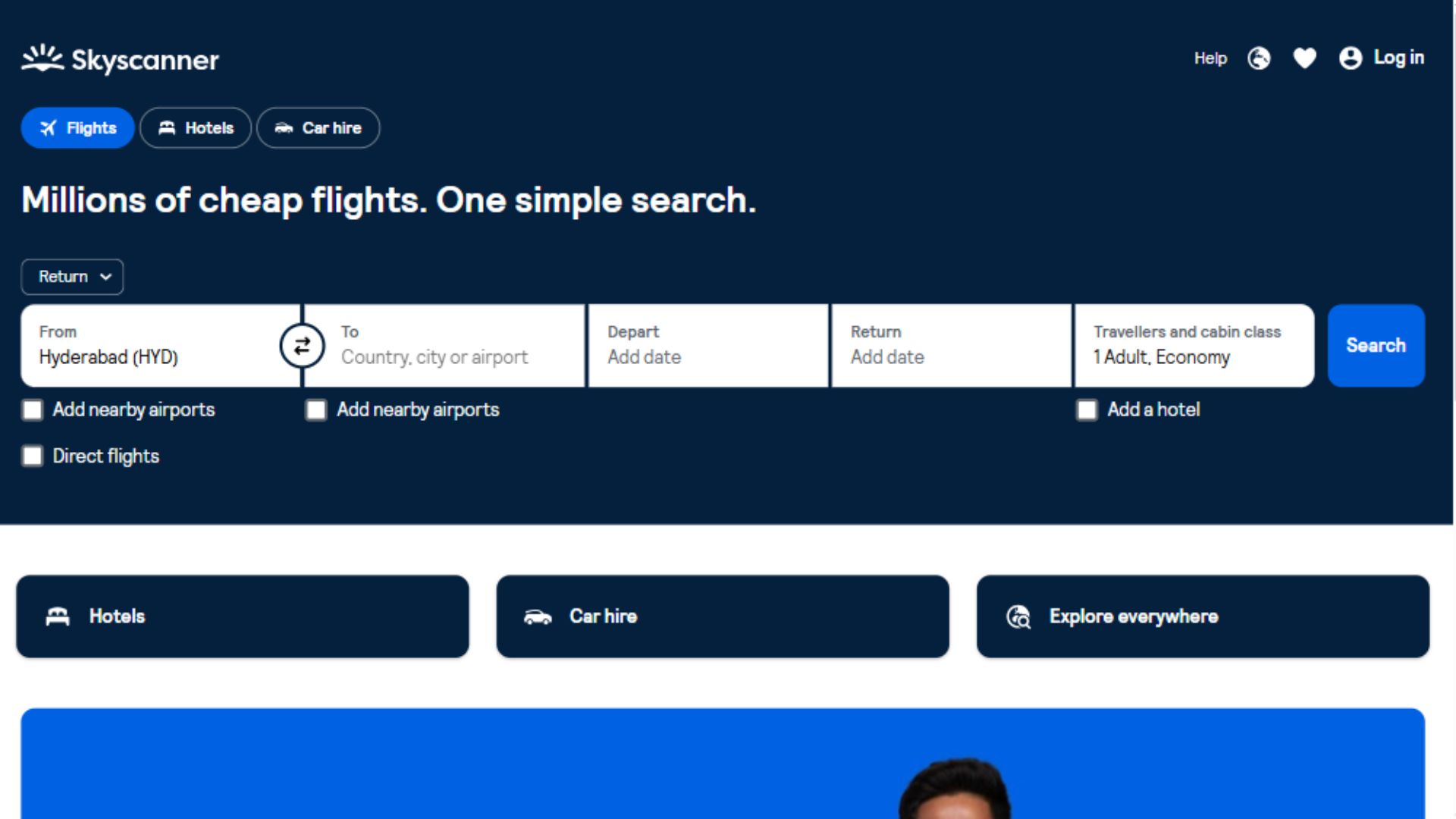
What it is: Skyscanner is a global travel search engine known for its "search everywhere" feature and flexible date tools that help you find the absolute cheapest flights to any destination.
Skyscanner has built a cult following among budget travelers and travel hackers because of features that prioritize finding deals over brand partnerships. The "search everywhere" function lets you input your departure city and search all possible destinations ranked by price—perfect when you're flexible on where to go but committed to getting the best value. The flexible date matrix displays a month-long calendar with prices for every combination of departure and return dates, making it visually obvious which days offer the best deals.
Unlike booking sites that push you toward partner airlines, Skyscanner provides genuinely comprehensive results from hundreds of airlines, including budget carriers often excluded from other platforms. The platform also searches alternative airports and suggests nearby departure points that might save money. Once you find a flight, Skyscanner redirects you to book directly with the airline or through the cheapest third-party agent, acting as an unbiased search tool rather than taking bookings itself.
Best for: Flexible travelers prioritizing price above all else and willing to adjust travel plans for savings
Key Features & Differentiators:
"Search everywhere" finds cheapest destinations from your location
Month-view calendar showing all date combination prices
Includes budget airlines often missing from other search engines
Price alerts track specific routes and notify when prices drop
Suggests alternative airports that might offer better deals
Pricing: Free to use, no booking fees (you book through airlines or third parties)
Pros:
Absolutely comprehensive search across virtually all airlines
Exceptional tools for flexible, price-focused travelers
No loyalty to specific airlines means truly unbiased results
Clean interface without overwhelming ads or upsells
Global coverage including lesser-known regional carriers
Cons:
You must leave the site to complete bookings
Customer service handled by the airline or agent, not Skyscanner
Can show flights with very long connections or awkward schedules
Some displayed prices not available when you click through
Less useful if you have specific airline or timing requirements
3. Agoda
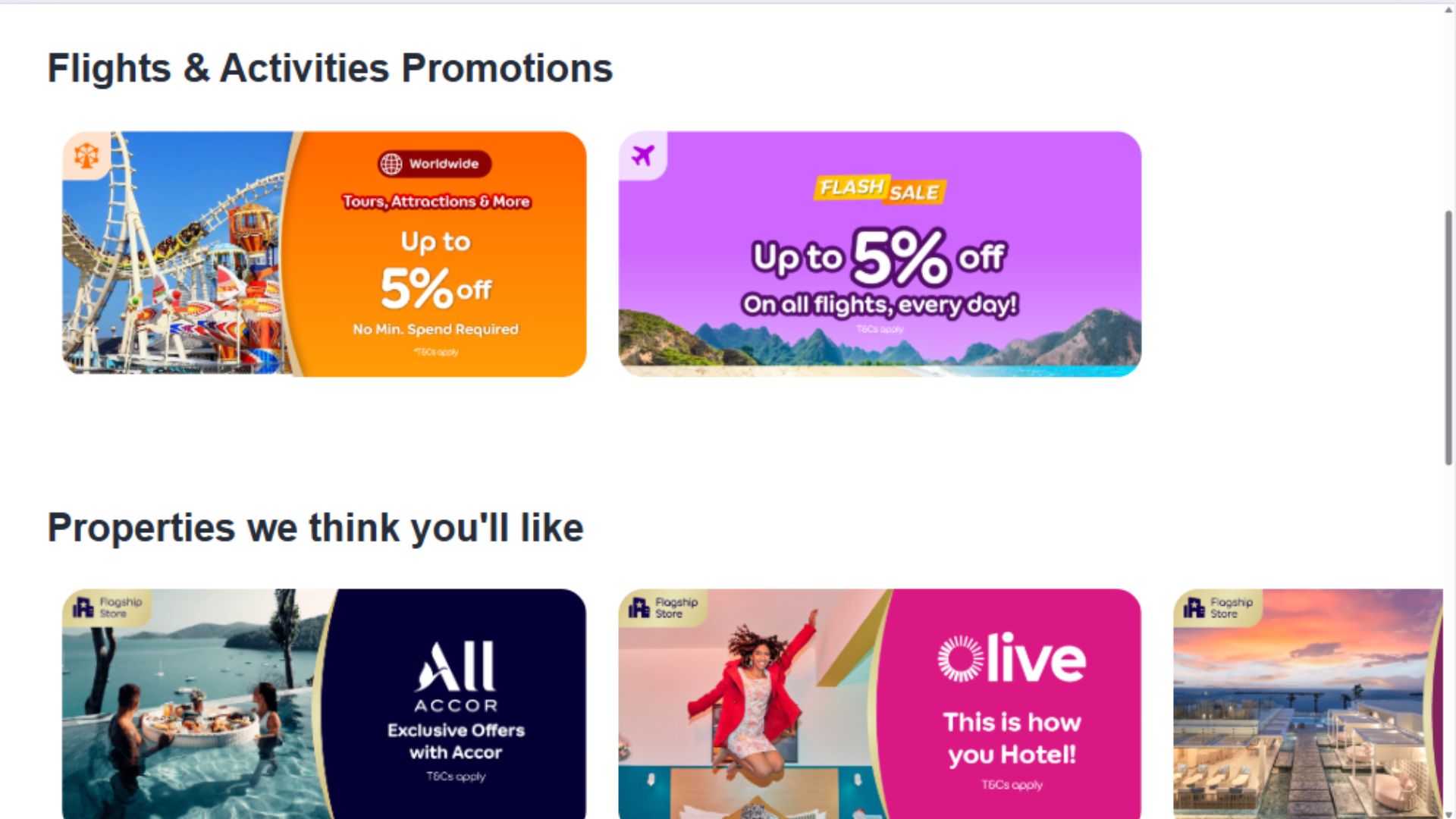
What it is: Agoda is a hotel booking platform that dominates Asia-Pacific markets and offers exceptional value for accommodations throughout Asia, plus a strong loyalty program.
While Booking.com and Hotels.com focus on Western markets, Agoda has spent years building relationships with hotels, hostels, and guesthouses across Asia, resulting in better inventory, prices, and local knowledge for the region. If you're traveling to Thailand, Vietnam, Japan, Indonesia, or anywhere in Southeast or East Asia, Agoda consistently offers more options at better rates than competitors. The platform includes everything from luxury resorts to family-run guesthouses that don't appear on Western-focused sites.
Agoda's PointsMAX loyalty program is notably generous, allowing you to earn both Agoda points and airline miles simultaneously on bookings. The platform frequently runs aggressive promotions with legitimate savings—not the fake "deals" that just match regular prices elsewhere. Agoda also excels at providing detailed, honest property information including verified guest photos that give realistic expectations. The mobile app is particularly well-designed for booking on the go during multi-stop Asian travels.
Best for: Travelers focused on Asia-Pacific destinations seeking the best hotel selection and prices in the region
Key Features & Differentiators:
Unmatched inventory and pricing for Asia-Pacific hotels
PointsMAX program earns rewards with multiple loyalty programs simultaneously
Frequent genuine promotions and flash sales
Insider local tips and area guides for Asian destinations
Flexible cancellation options clearly labeled on most properties
Pricing: Free to search and book, prices often lower than competitors for Asian hotels
Pros:
Best selection and prices for accommodations throughout Asia
Generous loyalty program that rewards frequent bookers
Excellent mobile app for booking during travel
Detailed property information with verified guest photos
24/7 customer support with multilingual agents
Cons:
Limited advantages for bookings outside Asia-Pacific region
Interface feels cluttered compared to minimalist competitors
Aggressive promotional emails can be overwhelming
Some properties use misleading photos despite "verified" claims
Cancellation policies sometimes stricter than booking direct
4. Kiwi.com

What it is: Kiwi.com is a flight search platform that specializes in creative routing, including "self-connecting" flights that combine airlines that don't normally work together to create cheaper journeys.
Kiwi.com's virtual interlining technology is revolutionary for travelers willing to be slightly adventurous. Traditional booking sites only show flights where airlines have partnership agreements, but Kiwi connects any airlines regardless of alliances. This means you might fly budget carrier Ryanair to a European hub, then separately fly a different budget airline to your final destination—creating a journey that's hundreds cheaper than a traditional connection. Kiwi handles the ticketing complexity and provides guarantee protection if delays cause you to miss connections.
The platform's "Nomad" search is perfect for multi-city trips, allowing you to input several destinations and let the algorithm determine the most efficient and affordable routing. The flexible search options let you browse destinations by themes ("beaches under $400," "ski destinations") rather than just searching specific cities. For travelers who value cost savings over convenience and are comfortable with layovers, Kiwi opens up routing possibilities that simply don't exist elsewhere.
Best for: Budget-focused travelers comfortable with creative routings and willing to accept some complexity for significant savings
Key Features & Differentiators:
Virtual interlining creates routes by combining any airlines
Nomad multi-city search optimizes complex itineraries
Guarantee protection if self-connecting flights have delays
"Anywhere" search finds all destinations within your budget
Flexible date searches showing cheapest weeks to travel
Pricing: Free to search, booking fees apply ($5-$30 depending on route complexity), optional guarantees ($10-$50)
Pros:
Uncovers flight combinations and prices impossible to find elsewhere
Can save $100-$500+ on international flights through creative routing
Guarantee programs protect against missed self-connections
Excellent tools for exploratory travel planning
Covers hundreds of airlines including regional carriers
Cons:
Self-connecting flights risk missing connections if delays occur
Customer service challenges when issues involve multiple airlines
Requires more travel savvy and comfort with complexity
Booking process more complicated than traditional flights
Guarantee protections add costs that reduce headline savings
5. Hostelworld

What it is: Hostelworld is the dominant booking platform for hostels, budget hotels, and social accommodations worldwide, catering to backpackers, solo travelers, and anyone seeking affordable, community-oriented lodging.
While traditional hotel booking sites treat hostels as an afterthought, Hostelworld has built its entire ecosystem around the unique needs of hostel travelers. The platform provides detailed information about common areas, organized activities, bar scenes, cleanliness standards, and social atmospheres—critical factors for hostel stays that standard hotel reviews miss. You can filter by "party hostel" versus "quiet hostel," see which properties organize pub crawls or group dinners, and read reviews specifically addressing the social experience and ease of meeting fellow travelers.
Hostelworld's community extends beyond just bookings. The platform connects travelers through message boards, meetup features, and travel advice forums. Many hostels offer exclusive deals only available through Hostelworld, and the loyalty program provides meaningful discounts for frequent bookers. The platform has expanded beyond dorm beds to include private rooms in hostels, budget hotels, and even some apartments, recognizing that budget travelers aren't all 20-year-old backpackers sleeping in bunks.
Best for: Budget travelers, backpackers, and solo adventurers seeking social accommodations and community experiences
Key Features & Differentiators:
Specialized filters for social atmosphere and property vibes
Detailed reviews addressing hostel-specific concerns
Information about organized activities and events
Flexible cancellation options on many properties
Loyalty program with genuine discounts for repeat bookers
Pricing: Free to search, small booking fee ($2-$5) per reservation, dorm beds typically $10-$40/night
Pros:
Best selection of hostels and budget accommodations globally
Reviews actually address concerns specific to hostel stays
Easy to find social properties perfect for meeting travelers
Significantly cheaper than hotels in expensive cities
Platform community helps with trip planning and meetups
Cons:
Limited usefulness for travelers seeking traditional hotels
Hostel quality varies wildly even with good reviews
Privacy and quiet not guaranteed in dorm settings
Booking fees add to already-budget prices
Some properties oversell social atmosphere that doesn't materialize
6. Vrbo
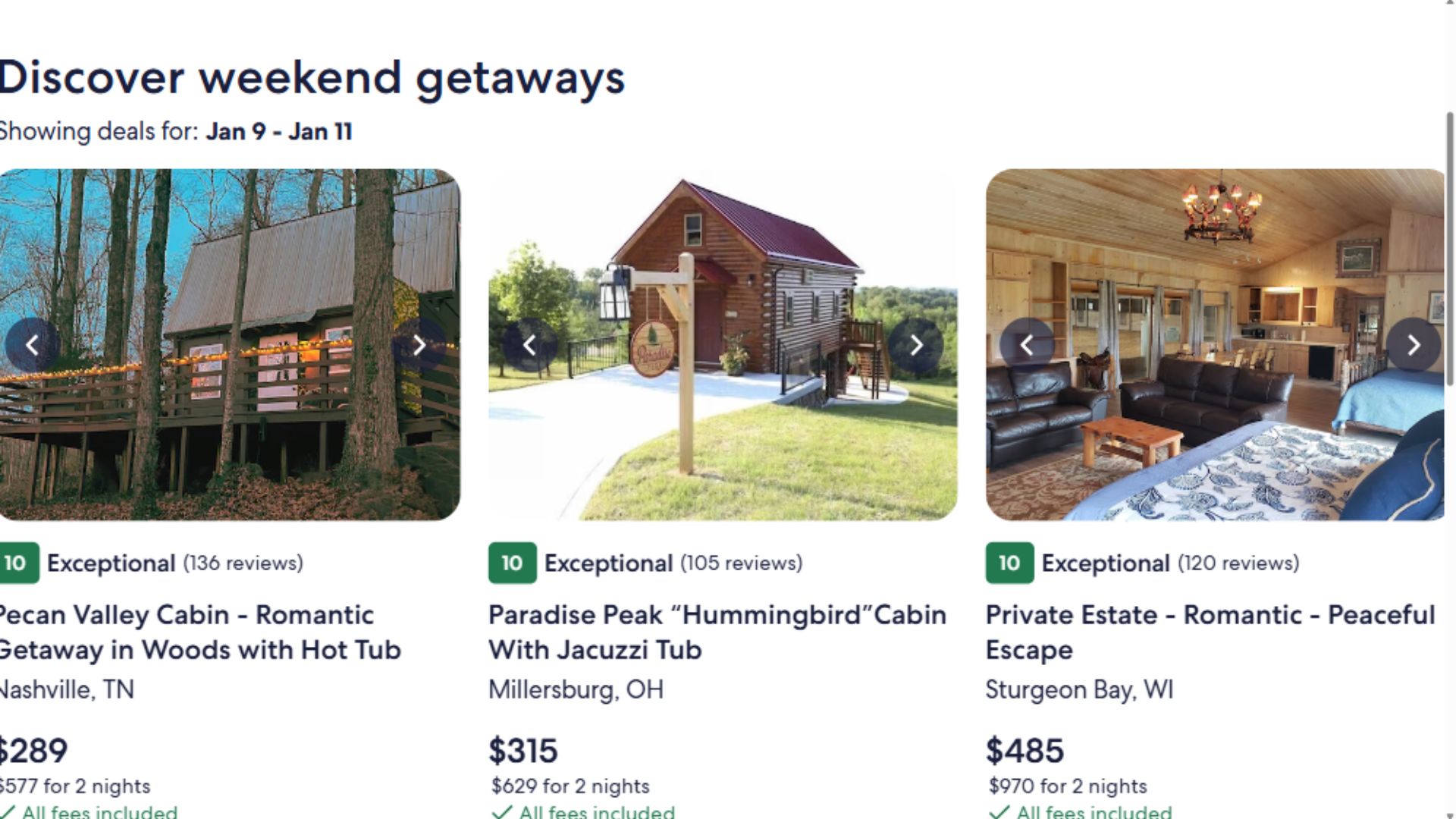
What it is: Vrbo (Vacation Rentals by Owner) specializes in whole-home vacation rentals, positioning itself as the family-friendly alternative to Airbnb with fewer surprise fees and more predictable experiences.
In the backlash against Airbnb's unpredictable host requirements (cleaning fees, chore lists, security cameras), Vrbo has positioned itself as the more straightforward option. The platform exclusively offers entire homes rather than shared spaces or single rooms, making it ideal for families, groups, or anyone who wants guaranteed privacy and space. Properties trend toward professionally managed vacation homes with consistent standards rather than someone's random spare bedroom, resulting in more predictable quality.
Vrbo's pricing transparency has become a major draw—total costs including all fees are displayed upfront in search results, eliminating the frustration of finding a great price only to discover it doubles at checkout. The platform caters heavily to family travel with filters for kid-friendly amenities (pools, fenced yards, highchairs), proximity to attractions, and multi-bedroom layouts. Vrbo's customer service and booking protections are generally more robust than Airbnb's, with clearer policies about cancellations, damages, and dispute resolution.
Best for: Families and groups seeking entire vacation homes with transparent pricing and professional management
Key Features & Differentiators:
Exclusively whole-home rentals, no shared spaces
Transparent total pricing including fees in search results
Strong focus on family-friendly properties and amenities
Professional property management more common than Airbnb
Clear cancellation policies and booking protections
Pricing: Free to search and book, service fees typically 5-10% of booking total
Pros:
More predictable quality than individual Airbnb hosts
Transparent pricing eliminates surprise fees at checkout
Excellent selection of large properties for groups
Professional customer service and dispute resolution
Family-focused filters and property descriptions
Cons:
Generally more expensive than Airbnb for similar properties
Less personality and unique properties than Airbnb
Smaller inventory in urban locations
Fewer last-minute booking options
Interface less modern and intuitive than competitors
7. Google Flights
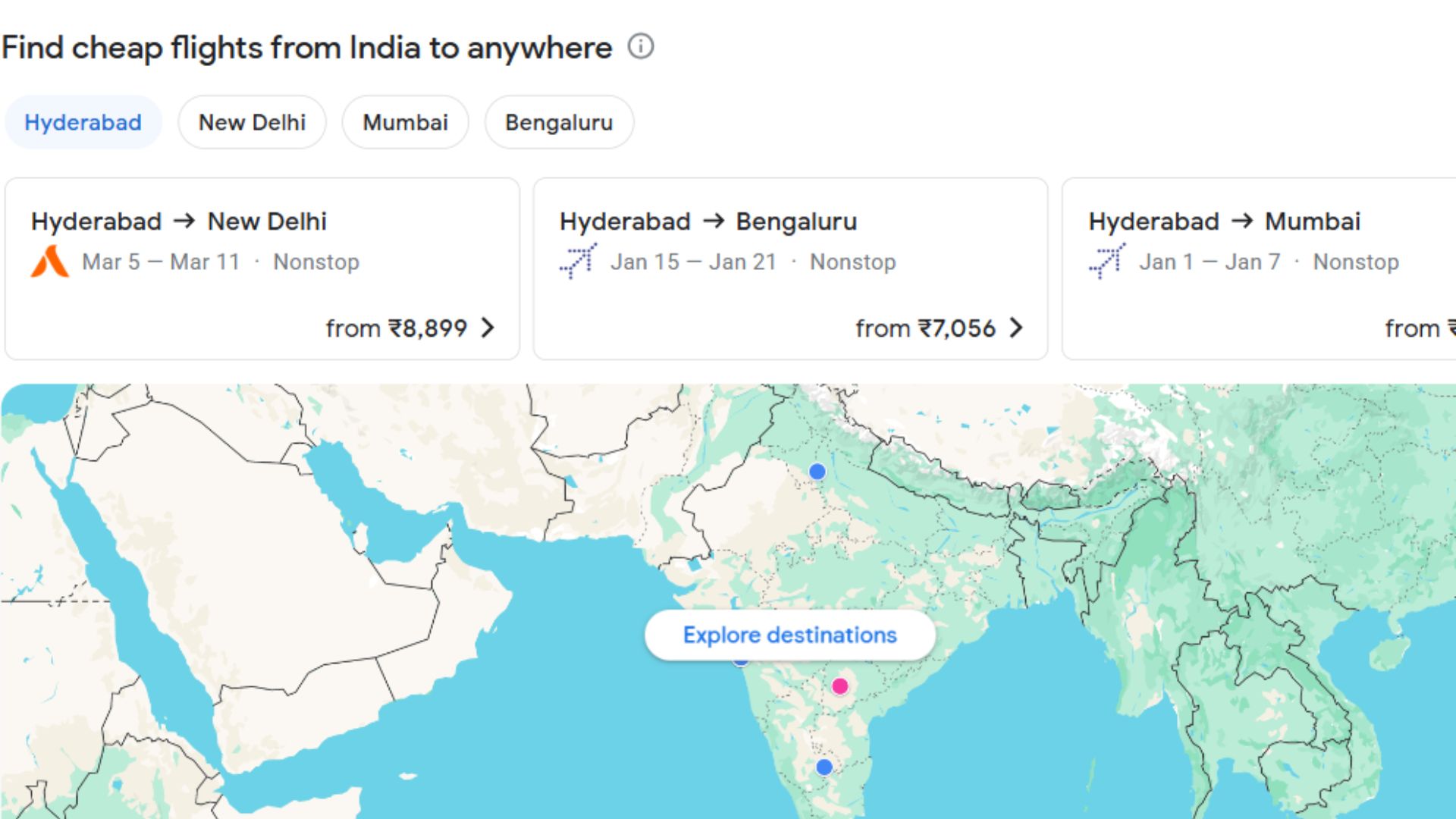
What it is: Google Flights is a flight search engine leveraging Google's data prowess to provide transparent pricing, powerful filters, and honest comparisons without booking fees or hidden agendas.
Google Flights has become the starting point for most savvy flight shoppers because it prioritizes user experience over maximizing booking revenue. The search displays all-in pricing immediately (no "from $99*" that becomes $347 at checkout), shows exactly which amenities are included with each fare class, and provides transparent information about baggage fees, seat selection costs, and change policies. The interface is clean and lightning-fast, with intuitive filters for stops, airlines, departure times, and duration that actually work as expected.
Google's unique "track prices" feature monitors specific routes and sends notifications when prices change significantly. The date grid and price graph visualizations make it immediately obvious which travel dates offer the best value. Google Flights also excels at showing alternative airports, suggesting nearby departure or arrival options that might save money or time. When you're ready to book, Google directs you to airline websites or third-party agents, allowing you to choose the most trustworthy option rather than forcing its own booking flow.
Best for: Travelers who want transparent information and powerful search without being pushed toward commission-maximizing bookings
Key Features & Differentiators:
Completely transparent all-in pricing from the start
Price tracking with notifications for watched routes
Visual date grid and price graphs for easy comparison
Detailed information about what's included in each fare
Suggests alternative airports and flexible date options
Pricing: Free to use, no booking fees (you book directly with airlines)
Pros:
Fastest, cleanest flight search interface available
No hidden agenda or commission-based result manipulation
Price tracking genuinely useful for planning
Comprehensive airline coverage including budget carriers
Direct links to book with airlines for best customer service
Cons:
Cannot book directly through Google Flights
No bundled vacation packages or hotel combinations
Limited customer support since Google doesn't handle bookings
Some smaller international airlines not included
No loyalty program or rewards for using the platform
8. Direct Ferries
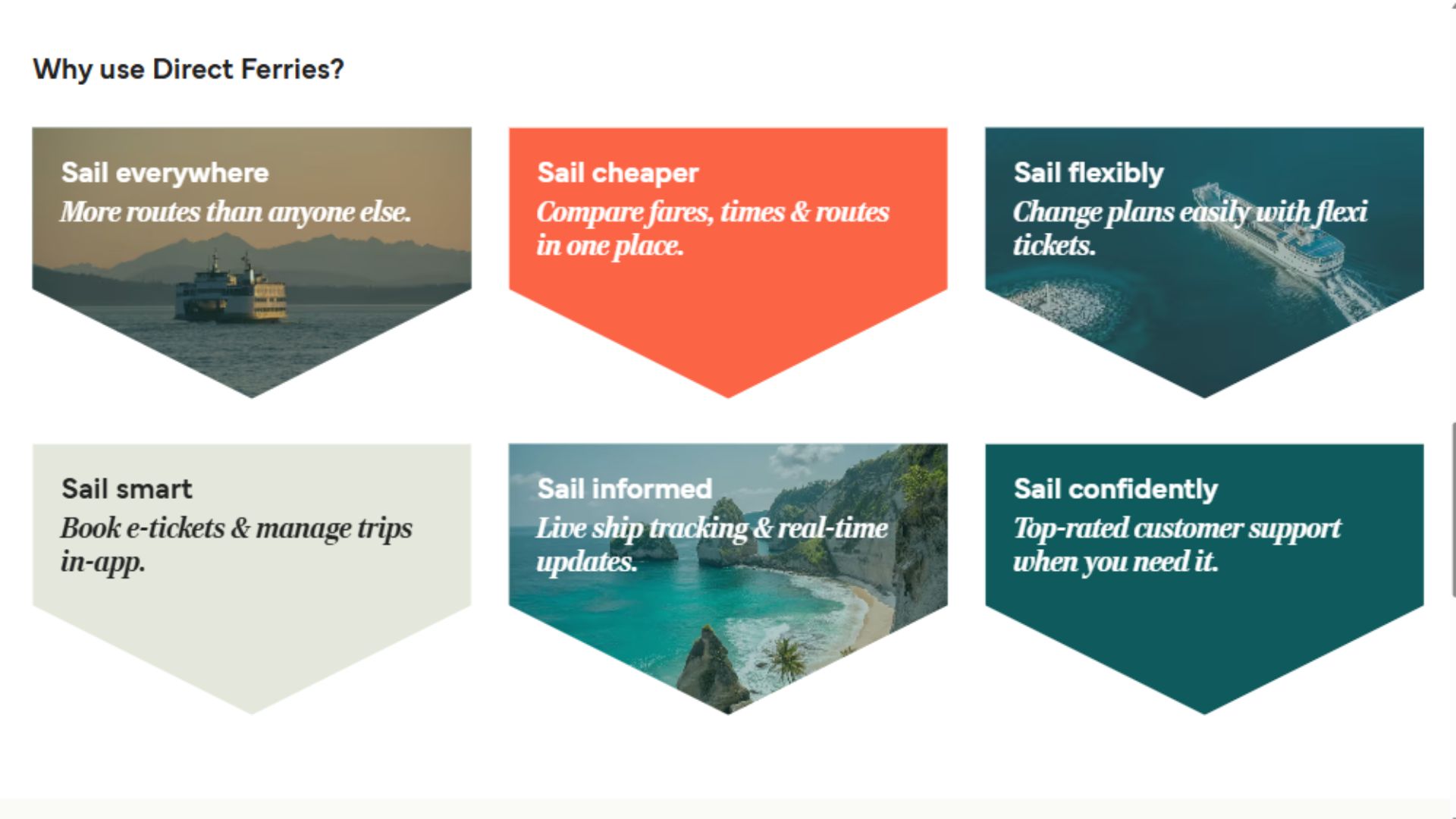
What it is: Direct Ferries is a specialized booking platform for ferry travel worldwide, offering the most comprehensive selection of routes, schedules, and pricing for ocean and river ferries across Europe, Asia, and beyond.
For travelers planning trips involving ferry travel—Greek island hopping, Scandinavian crossings, UK-to-Europe routes, or Southeast Asian island transport—Direct Ferries is essential. The platform aggregates schedules and pricing from hundreds of ferry operators that rarely appear on general travel booking sites. You can compare all available operators for a specific route, see detailed information about vessel amenities (vehicle decks, cabin types, onboard restaurants), and book everything from basic passenger tickets to luxury cabins with vehicles.
Direct Ferries excels at complex ferry journeys involving multiple legs or operators. The platform's route finder helps you figure out how to get from Point A to Point B when no direct ferry exists, suggesting optimal connection points. Real-time schedule updates prevent showing up to docks only to discover cancellations due to weather. For travelers exploring regions where ferries are essential transportation (Mediterranean, Baltic Sea, Indonesian archipelago), Direct Ferries transforms a logistical nightmare into straightforward planning.
Best for: Travelers planning trips involving ferry travel who need comprehensive route information and booking in one place
Key Features & Differentiators:
Most comprehensive ferry route and operator database worldwide
Compares all operators on specific routes with pricing
Detailed vessel information about amenities and cabin types
Route finder for complex multi-leg ferry journeys
Real-time schedule updates and weather-related changes
Pricing: Free to search, booking fees vary by operator (typically $2-$10), ferry prices range from $20-$500+ depending on route and class
Pros:
Only comprehensive solution for booking ferry travel
Saves enormous research time finding routes and schedules
Compares operators objectively on the same routes
Handles complex bookings involving vehicles or special needs
Customer service understands ferry travel specifics
Cons:
Niche platform only useful for travelers using ferries
Some smaller regional operators not included
Interface dated compared to modern booking platforms
Cancellation policies vary widely by operator
May not always show the absolute cheapest local options
9. Omio
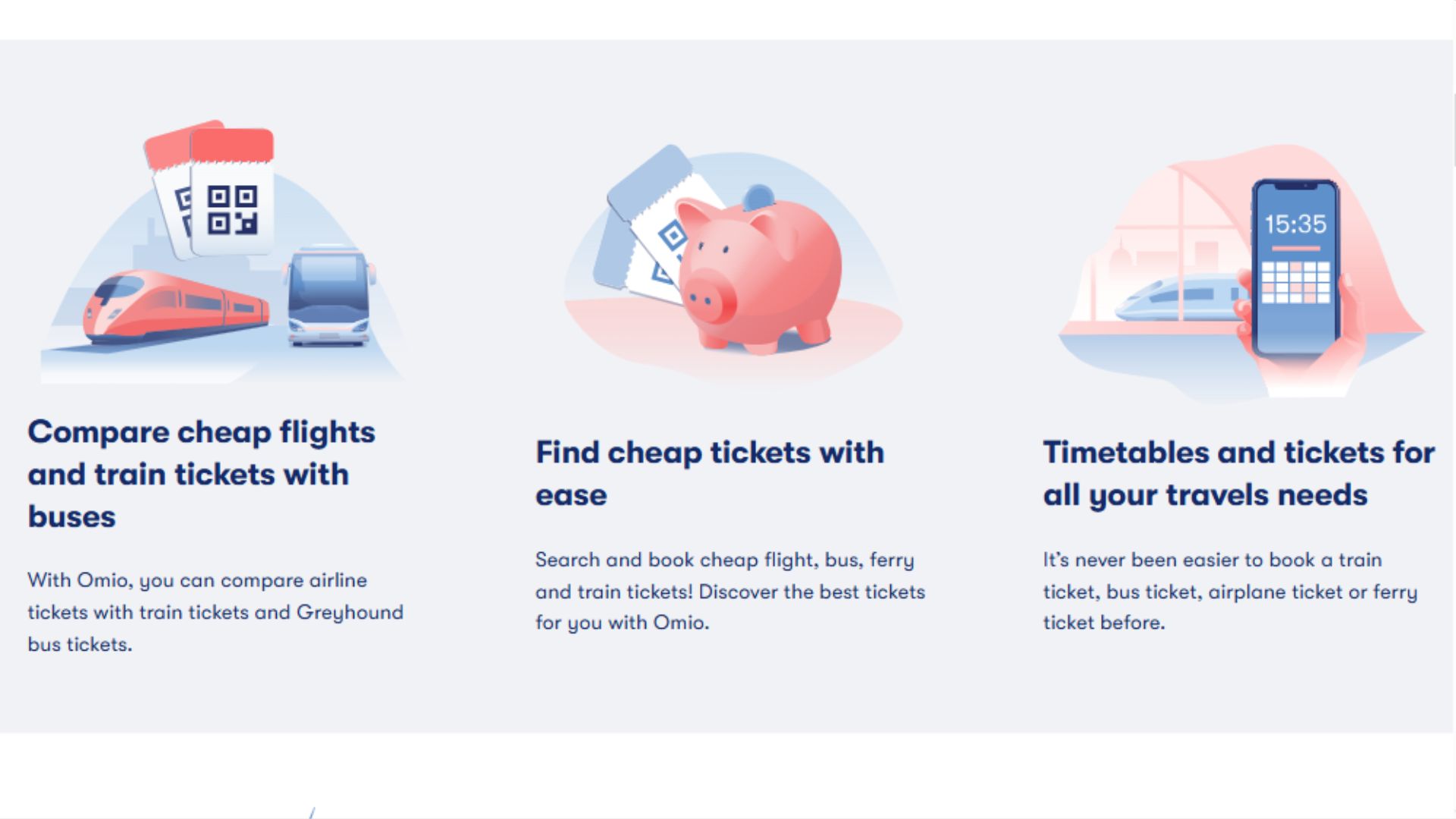
What it is: Omio is a European transportation booking platform that specializes in trains, buses, and ferries, making it easy to compare and book multi-modal journeys across the continent.
European travel often involves combining trains, buses, and ferries in ways that are incredibly difficult to plan using individual transportation websites. Omio solves this by aggregating schedules and pricing from hundreds of European transportation operators into one searchable platform. You can compare a route like Paris to Amsterdam via train, bus, or flight, seeing side-by-side comparisons of price, duration, and convenience. The platform is particularly valuable for trains, including national railways and international routes that require checking multiple booking sites otherwise.
Omio handles the ticketing complexity, providing e-tickets for all bookings that work on conductors' scanners throughout Europe. The platform's mobile app is excellent for managing tickets on the go and checking real-time departure information. For travelers exploring Europe who want sustainable ground transportation options or need to reach destinations not served by airports, Omio makes previously complicated journeys straightforward. The search also suggests alternative routes you might not have considered, like buses that are significantly cheaper than trains for the same journey.
Best for: European travelers who prefer trains and buses over flying, or need to reach destinations not served by airports
Key Features & Differentiators:
Compares trains, buses, and ferries on the same platform
Includes major European rail networks and bus operators
Single e-ticket system works across all operators
Real-time departure and delay information
Carbon footprint comparison for environmentally conscious travel
Pricing: Free to search, small booking fee ($1-$5) per ticket, transportation prices vary widely ($10-$300+ depending on route and class)
Pros:
Dramatically simplifies European ground transportation booking
Often finds cheaper options than booking directly with operators
Single platform eliminates checking dozens of transportation websites
Mobile tickets work seamlessly across different countries
Customer service handles issues across all operators
Cons:
Primarily useful only for European travel
Some regional operators and local routes not included
Booking fees add cost compared to operator websites
Customer service response times can be slow
Occasional discrepancies between displayed and actual schedules
10. Priceline
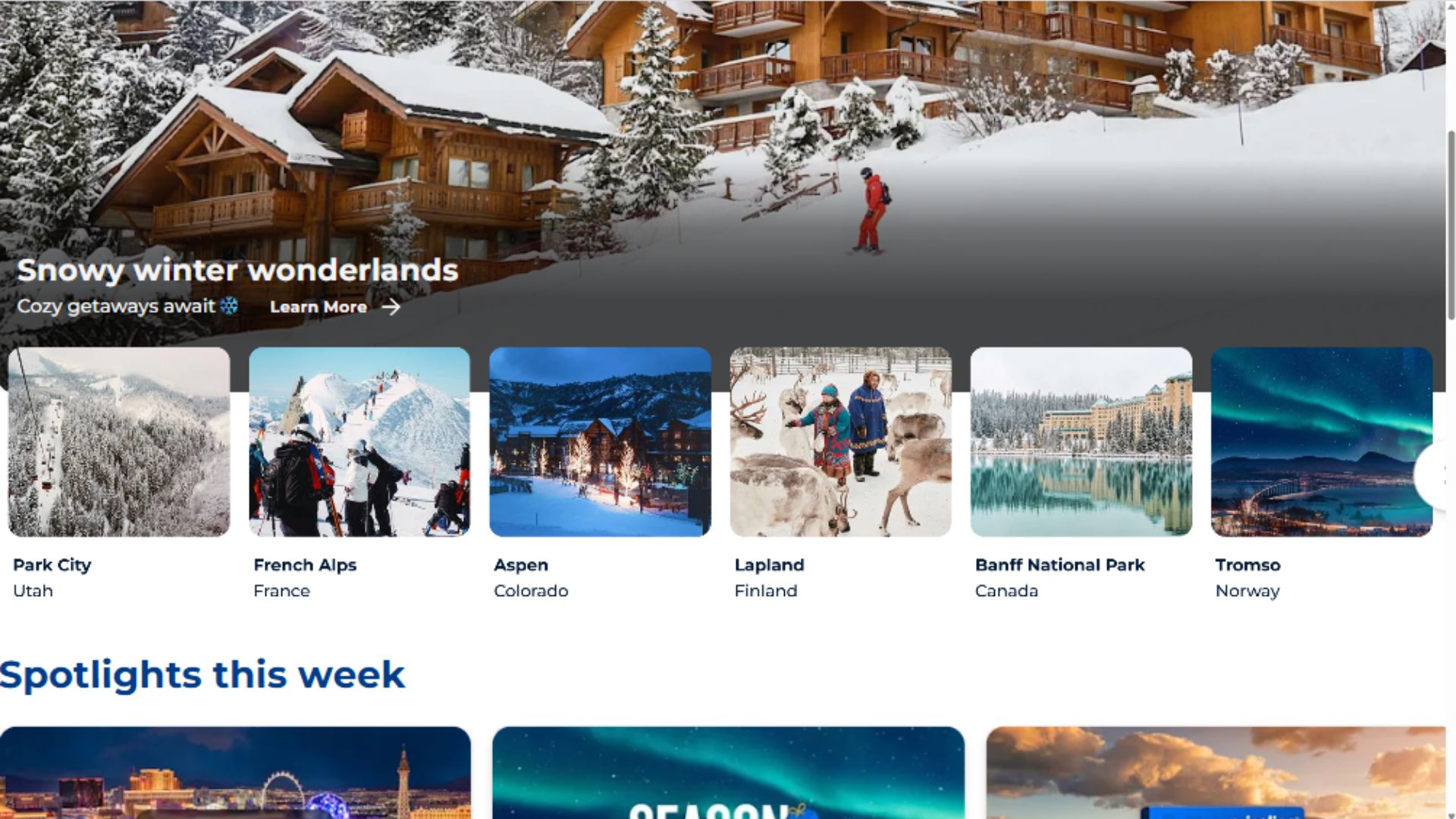
What it is: Priceline is the veteran discount booking platform known for "Name Your Own Price" and "Express Deals" that offer significant savings in exchange for flexibility on exact hotel selection.
Priceline pioneered the opaque booking model where you can get steep discounts by booking a hotel without knowing exactly which property you'll stay at until after payment. Express Deals show you the neighborhood, star rating, and amenities, plus a list of possible hotels, but the specific property is only revealed after booking. This allows hotels to fill inventory without publicly advertising low rates that might devalue their brand. For travelers comfortable with some uncertainty, the savings can be substantial—often 30-50% off standard rates.
Beyond opaque bookings, Priceline offers traditional fully-disclosed hotel, flight, and rental car bookings with competitive pricing. The platform's bundle deals (flight + hotel) often provide genuine savings versus booking separately. Priceline's VIP program rewards frequent bookers with even steeper discounts and upgrades. The platform has modernized its interface and mobile experience, making it more competitive with newer booking sites while maintaining the deal-finding features that built its reputation.
Best for: Flexible travelers willing to accept some uncertainty on exact hotel selection in exchange for significant savings
Key Features & Differentiators:
Express Deals offer deep discounts for flexible bookings
Shows possible hotels before booking so you know the options
Bundle deals combine flights and hotels for additional savings
VIP program provides escalating discounts for frequent use
Price tracking and deal alerts for watched trips
Pricing: Free to search and book, no separate booking fees (deals already reflect savings)
Pros:
Genuine savings of 30-50% on hotel bookings through Express Deals
Bundle deals can significantly reduce total trip cost
VIP program rewards loyalty with additional discounts
Improved interface makes finding deals easier than before
Large inventory ensures deals available in most major cities
Cons:
Express Deals mean you can't choose exact hotel
No flexibility to cancel or change opaque bookings
May end up at least desirable property within shown options
Traditional bookings sometimes not cheaper than competitors
Customer service challenging when dealing with third-party complications
Understanding Travel Booking Platforms
What Are Travel Booking Platforms?
Travel booking platforms are digital services that allow travelers to search, compare, and reserve flights, accommodations, rental cars, and other travel services. They serve as intermediaries between travelers and travel suppliers (airlines, hotels, car rental companies), aggregating inventory, displaying options, facilitating bookings, and sometimes providing customer service. Platforms range from comprehensive "one-stop-shop" sites handling all travel needs to specialized services focusing on specific travel categories or regions.
Modern booking platforms leverage technology to provide features impossible with traditional travel agents—real-time pricing across hundreds of suppliers, sophisticated filters to narrow options, price prediction algorithms, user reviews from millions of travelers, and mobile apps for booking and managing trips on the go. Some platforms handle bookings directly, others redirect you to suppliers or third-party agents, and the business model significantly affects pricing, customer service, and reliability.
Benefits of Using Modern Booking Platforms
Today's booking platforms offer substantial advantages over both traditional travel agents and booking directly with individual suppliers. First, they provide comprehensive comparison shopping—seeing options from dozens or hundreds of suppliers side-by-side with transparent pricing saves hours of manual research. Second, aggregated user reviews from real travelers provide authentic quality insights that supplier websites rarely offer honestly.
Many platforms leverage technology for features like price tracking, flexible date searches, and predictive algorithms that help you book at optimal times rather than guessing. Mobile apps allow managing entire trips from your phone—accessing tickets, checking in, handling changes, and getting real-time updates. Specialized platforms provide expertise and inventory for specific travel styles (budget, luxury, adventure) or regions that generalist sites don't serve well.
Competition among platforms also drives innovation in user experience, customer service, and loyalty programs. The best platforms eliminate friction points that frustrate travelers—confusing interfaces, hidden fees, complicated cancellation policies—creating streamlined experiences that make travel planning genuinely enjoyable rather than stressful. Finally, platforms often negotiate rates or provide deals impossible to access when booking directly, translating to real savings for travelers.
What to Look for When Choosing a Booking Platform
Selecting the right platform depends on matching its strengths to your specific travel needs and priorities. First, consider transparency and total pricing—platforms that hide fees until checkout waste your time and undermine trust. Look for all-in pricing displayed from initial search results. Second, evaluate inventory relevance—a platform dominating Asian hotels won't help much for European trips, while budget-focused platforms may lack luxury options.
Customer service quality and booking protections matter enormously when things go wrong. Research how platforms handle cancellations, missed flights, property issues, or billing disputes. Platforms that handle bookings directly generally provide better support than those redirecting you to third parties. Review user feedback about customer service responsiveness and problem resolution.
Consider the booking model's implications—direct bookings offer flexibility and direct customer service, opaque deals save money but eliminate flexibility, and third-party bookings can complicate changes. Evaluate loyalty programs if you travel frequently—meaningful rewards can offset higher booking prices. Interface and user experience shouldn't be underestimated; frustrating platforms turn simple bookings into ordeals.
Finally, consider specialization versus comprehensiveness. Specialized platforms (ferries, trains, hostels) excel in their niches but require multiple services for complete trips. Comprehensive platforms handle everything but may not serve specific needs as well. Most travelers benefit from using multiple platforms strategically—specialized services for their focus areas, comprehensive platforms for general needs.
Frequently Asked Questions
Is it cheaper to book directly with airlines and hotels, or through booking platforms?
It depends significantly on the specific booking and platform. Airlines often price identically across all channels (their website, Google Flights, Kayak) to maintain pricing integrity, though they may offer loyalty members exclusive discounts on direct bookings. Booking direct with airlines provides better customer service if changes or issues arise. For hotels, the answer is more complex—OTAs like Booking.com and Agoda sometimes negotiate rates lower than hotels advertise publicly, while hotels may match those rates or provide perks (free breakfast, room upgrades, flexible cancellation) when you book direct. The best practice is checking both direct and platform prices. For opaque booking platforms like Priceline Express Deals, savings of 30-50% are genuine but come with tradeoffs like no flexibility. Bottom line: compare prices including all fees, and factor in customer service quality and cancellation flexibility, not just the headline rate.
What happens if I book through a platform and have problems during my trip?
Accountability depends on the platform's booking model. If the platform processes payment and issues tickets directly (like Booking.com for many hotels), they're responsible for resolving issues and providing customer support. These platforms typically offer 24/7 support lines and will advocate with suppliers on your behalf. If the platform redirects you to book with airlines or hotels directly (like Skyscanner or Google Flights), the supplier handles all customer service—the platform has no ability to resolve problems. Third-party agent bookings fall in between, with both the agent and supplier potentially involved, sometimes creating confusion about who to contact. Always save confirmation emails, understand cancellation terms before booking, and note the platform's customer service options. For high-stakes trips, booking through platforms with strong customer service reputations or directly with suppliers may be worth marginally higher costs for peace of mind.
Are the deals on booking platforms legitimate, or is it better to wait for sales directly from airlines and hotels?
Most deals on reputable booking platforms are legitimate, though the degree of savings varies. Platforms offering "sales" that just match regular prices elsewhere should be viewed skeptically—always cross-reference supposed deals. However, several deal types provide genuine value: opaque bookings (Priceline Express Deals) offer real discounts in exchange for flexibility; bundle packages (flight + hotel) often beat booking separately; loyalty program members get exclusive rates on many platforms; and flash sales or last-minute deals can offer substantial savings on unsold inventory. That said, airlines and hotel chains do run direct sales (Black Friday, January clearance, fare sales) that sometimes beat platform prices. The smart approach is subscribing to deal newsletters from both platforms and suppliers, comparison shopping for major trips, and understanding which sources typically offer best value for your travel style. Following flight deal accounts on social media or using tools like Scott's Cheap Flights can alert you to extraordinary deals regardless of source.
How do I know which platform is most reliable and trustworthy?
Platform reliability can be evaluated through several indicators. First, research the platform's reputation through review sites, travel forums, and Better Business Bureau ratings—consistent patterns of complaints about billing, customer service, or bait-and-switch tactics are red flags. Second, understand the business model and who you're actually booking with—established OTAs like Booking.com and Agoda have billions in revenue and strong incentives to maintain customer satisfaction, while smaller third-party agents may lack resources to resolve problems. Third, check for clear contact information and customer service availability—platforms that make it hard to reach humans are problematic when issues arise. Fourth, read the fine print on cancellation policies, change fees, and booking protections before purchasing. Finally, start with smaller test bookings on new platforms rather than immediately trusting them with expensive international trips. Established platforms with long track records, transparent policies, accessible customer service, and positive user feedback over years are safest bets.