
The trading platform landscape has fragmented dramatically, with over 200 brokerages competing for investor attention through zero-commission trading, advanced charting tools, robo-advisory services, and cryptocurrency access. Understanding which platforms excel at specific use cases—whether active day trading, long-term retirement investing, options strategies, or portfolio diversification—separates successful investors who maximize returns from those paying unnecessary fees and working with inadequate tools.
Top 10 Best Trading Platforms & Tools
Fidelity Investments – Best for comprehensive research and retirement planning
Interactive Brokers – Best for active traders and international market access
Charles Schwab – Best for high-balance investors seeking premium service
TD Ameritrade (Thinkorswim) – Best for advanced charting and options trading
Robinhood – Best for beginner-friendly mobile-first investing
Webull – Best for commission-free trading with advanced features
E*TRADE – Best for options traders and platform variety
Vanguard – Best for low-cost index investing and buy-and-hold strategies
M1 Finance – Best for automated portfolio management with customization
TradeStation – Best for algorithmic trading and professional-grade tools
Methodology
Our evaluation assessed trading platforms across seven critical criteria to identify leaders serving different investor profiles:
Cost Structure: Commission rates, account fees, margin rates, options contract fees, mutual fund transaction fees, and hidden costs like payment for order flow that affect execution quality.
Platform Capabilities: Desktop software functionality, mobile app quality, order types supported, charting tools, technical indicators, real-time data access, and customization options.
Research & Education: Quality and depth of market research, stock screeners, analyst reports, educational content for skill development, and decision support tools.
Asset Availability: Range of tradable securities including stocks, ETFs, options, futures, forex, cryptocurrencies, international markets, fractional shares, and IPO access.
Account Services: Customer support quality and availability, account transfer assistance, retirement planning tools, cash management features, and lending services.
Security & Reliability: SIPC insurance, two-factor authentication, biometric login, system uptime during volatile markets, and regulatory compliance history.
User Experience: Interface intuitiveness for beginners, learning curve for advanced features, mobile functionality, and overall satisfaction ratings from verified users.
Detailed Reviews
1. Fidelity Investments
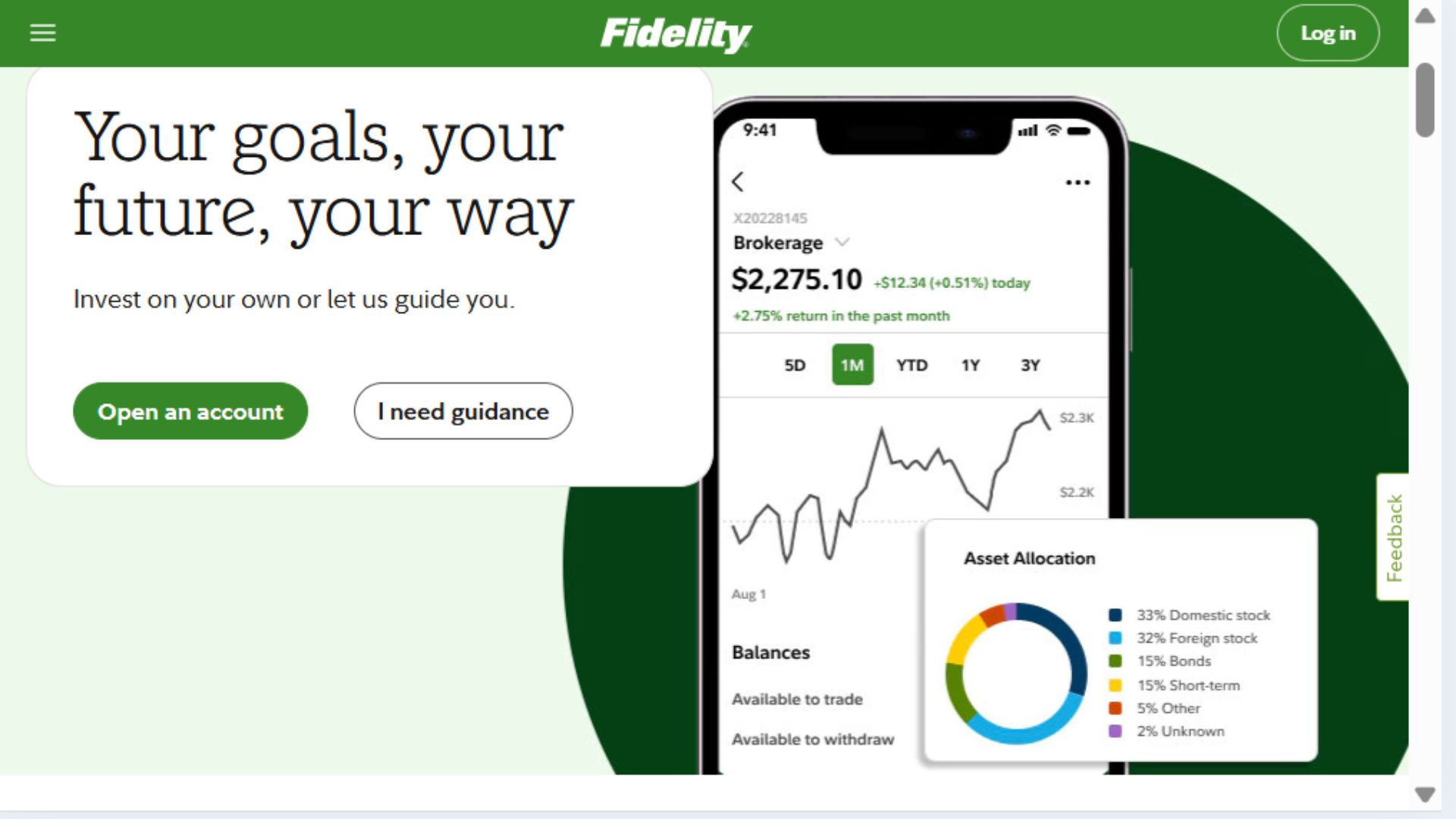
Best for: Comprehensive investors seeking top-tier research, retirement planning tools, and no-fee index funds
Pricing: $0 stock/ETF commissions, $0 account minimums, $0.65 per options contract, competitive margin rates starting at 8.325%
Key Features: Fidelity has emerged as the complete package for serious investors, combining institutional-grade research with accessible consumer platforms. The broker offers zero-commission trading on stocks and ETFs, access to over 3,300 no-transaction-fee mutual funds, and proprietary Fidelity Zero index funds with 0% expense ratios—the industry's lowest. Fidelity's research capabilities rival paid services, including third-party reports from 20+ firms, advanced screeners with 200+ criteria, detailed earnings analysis, and proprietary equity ratings. The Active Trader Pro desktop platform provides professional-grade charting with 80+ technical indicators, customizable layouts, and real-time streaming data at no additional cost.
Beyond trading, Fidelity excels at holistic financial management. The platform integrates retirement planning calculators, 401(k) rollover assistance, estate planning resources, and cash management accounts paying competitive interest rates. Fidelity's fractional share trading allows investing in expensive stocks with as little as $1, while the mobile app balances simplicity for casual investors with powerful functionality for active traders. Customer service maintains consistently high ratings with 24/7 phone support, live chat, and over 190 branch locations nationwide for in-person assistance. For investors building diversified portfolios across taxable and retirement accounts with emphasis on research-driven decisions, Fidelity provides unmatched value.
Pros:
Exceptional research resources including proprietary and third-party analysis
Zero expense ratio index funds reduce long-term costs significantly
Active Trader Pro platform rivals premium offerings at no cost
Outstanding customer service with multiple contact channels
Comprehensive retirement and financial planning tools integrated
Cons:
Desktop platform interface feels dated compared to modern alternatives
Options trading interface less intuitive than specialized competitors
No cryptocurrency trading available on platform
Mutual fund screener could be more user-friendly
International stock access limited compared to Interactive Brokers
2. Interactive Brokers

Best for: Active traders, international investors, and sophisticated strategies requiring advanced order types
Pricing: $0 stock/ETF commissions (IBKR Lite), tiered pricing with volume rebates (IBKR Pro), margin rates as low as 5.83%, $0.65 per options contract
Key Features: Interactive Brokers (IBKR) serves serious traders with professional-grade infrastructure at competitive costs. The platform provides access to 150+ markets across 33 countries, enabling true global diversification impossible at domestic-only brokers. IBKR's order routing technology and market maker rebates deliver superior execution quality—particularly important for active traders where fractions of a cent per share compound to thousands annually. The Trader Workstation (TWS) platform offers institutional capabilities including algorithmic trading, advanced order types (bracket orders, conditional orders, trailing stops with multiple price types), portfolio margin reducing capital requirements, and sophisticated risk analytics.
IBKR's pricing structure benefits high-volume traders through IBKR Pro's tiered system providing rebates as volume increases, potentially making trading profitable on spread capture alone. The platform's margin rates are industry-leading at 5.83-6.83% for balances over $100,000—critical for strategies like portfolio margin and leveraged investing. IBKR also pioneered stock yield enhancement programs allowing clients to earn interest by lending shares. For international investors, IBKR supports currency trading at institutional spreads and multi-currency accounts avoiding conversion fees. The learning curve is steep, but for traders outgrowing beginner platforms or requiring access beyond U.S. markets, IBKR is unmatched.
Pros:
Access to 150+ markets in 33 countries for international diversification
Industry-best margin rates (5.83%+) reduce leverage costs dramatically
Superior order execution and routing technology
Comprehensive asset coverage including stocks, options, futures, forex, bonds, funds
Professional-grade tools and data at competitive pricing
Cons:
Steep learning curve with complex interface intimidating to beginners
Inactivity fees for accounts under $100,000 with minimal trading
Customer service often cited as difficult to reach and less helpful
Account minimums ($0 IBKR Lite, $0 IBKR Pro but monthly minimum fees may apply)
Mobile app functionality limited compared to desktop TWS platform
3. Charles Schwab

Best for: High-net-worth investors seeking premium service, banking integration, and comprehensive financial planning
Pricing: $0 stock/ETF commissions, $0 account minimums, $0.65 per options contract, margin rates starting at 8.325%
Key Features: Charles Schwab positions itself as the full-service financial partner rather than just a trading platform, excelling for investors with substantial assets across multiple accounts. The broker's acquisition of TD Ameritrade created a powerhouse combining Schwab's banking and service legacy with Thinkorswim's advanced trading tools (now integrated as Schwab platform offerings). Schwab provides checking and savings accounts with no fees, ATM fee rebates worldwide, Schwab Bank credit cards, mortgages, and comprehensive lending services—effectively serving as a complete financial institution. For investors with $1 million+ in assets, Schwab Private Client provides dedicated financial consultants, complimentary financial planning, and concierge services.
Schwab's research offerings are extensive, including access to Credit Suisse, Argus, Market Edge, and Morningstar reports, plus proprietary equity ratings and detailed market commentary. The StreetSmart Edge platform provides active traders with advanced charting, real-time scanning, and customizable layouts, while the mobile app delivers exceptional functionality for managing accounts on-the-go. Schwab's branch network (300+ locations) offers in-person service unavailable at digital-only competitors. For investors prioritizing relationship banking, integrated financial services, and premium treatment as assets grow, Schwab delivers institutional-quality service with retail accessibility.
Pros:
Comprehensive banking integration with checking, savings, credit cards, lending
Exceptional customer service with 24/7 phone support and branch access
Premium services for high-balance accounts including dedicated advisors
Strong research and educational content for informed decision-making
Acquisition of TD Ameritrade brings Thinkorswim tools to Schwab ecosystem
Cons:
Desktop trading platforms less advanced than Thinkorswim (integration ongoing)
Mutual fund selection smaller than Fidelity's no-transaction-fee offerings
Margin rates higher than Interactive Brokers for competitive traders
Fractional share trading limited to S&P 500 stocks only
International market access limited compared to specialized brokers
4. TD Ameritrade (Thinkorswim)
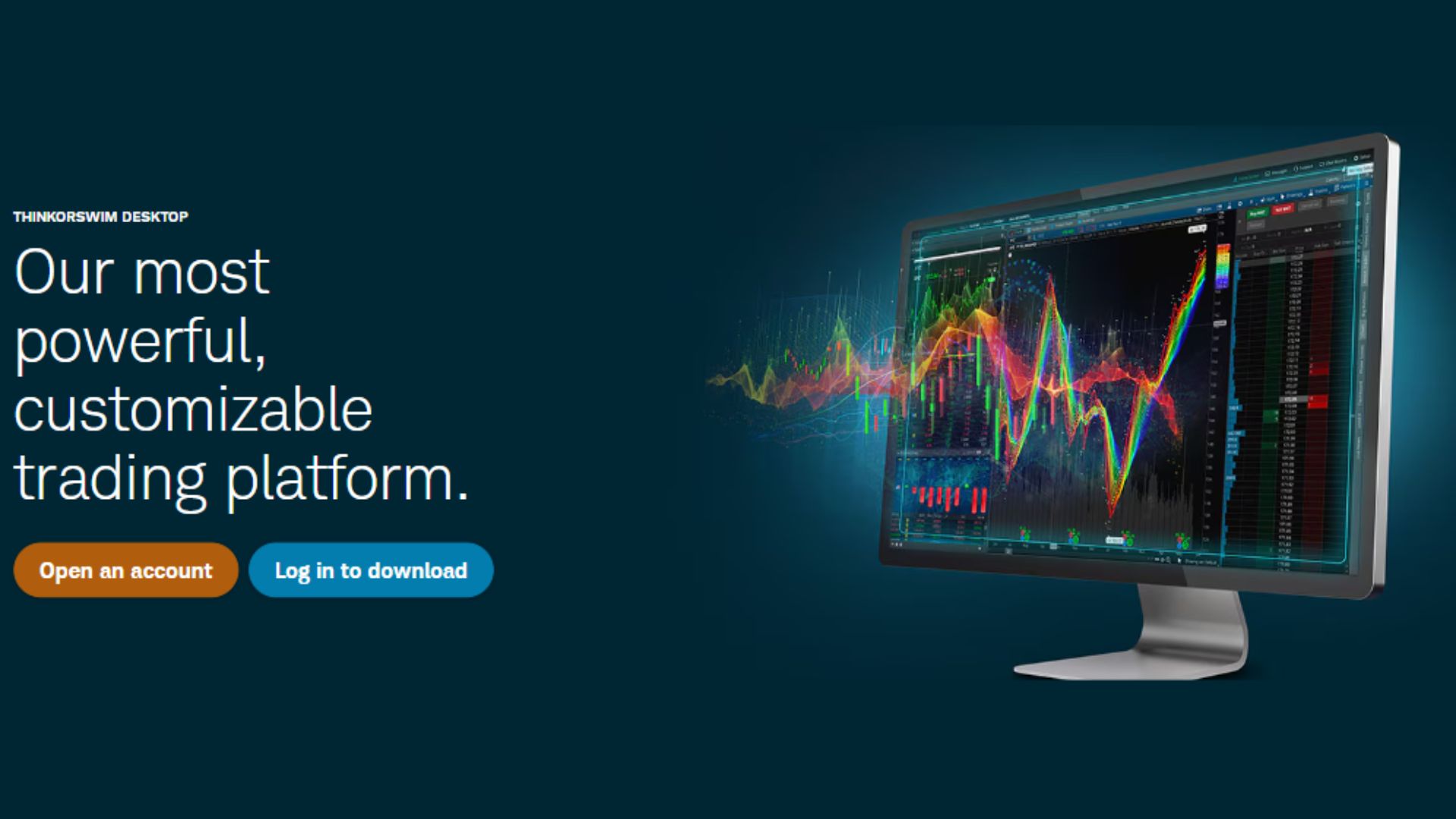
Best for: Options traders, technical analysis enthusiasts, and traders wanting professional-grade charting
Pricing: $0 stock/ETF commissions, $0 account minimums, $0.65 per options contract, margin rates starting at 9.25%
Key Features: TD Ameritrade's Thinkorswim platform represents the gold standard for retail options trading and technical analysis. The desktop platform offers over 400 technical studies, unlimited customization of charts and layouts, options analytics including Greeks visualization and probability analysis, and paperMoney virtual trading for risk-free strategy testing with $100,000+ in simulated capital. Thinkorswim's options chain interface is widely considered the industry's best, displaying complex multi-leg strategies with visual profit/loss diagrams, real-time Greeks, and one-click trade execution. The platform's scanning capabilities enable creating custom watchlists based on technical patterns, fundamental criteria, or options-specific metrics.
Beyond Thinkorswim desktop, TD Ameritrade provides multiple platform options: web platform for basic trading, mobile app combining simplicity with surprising power, and even Thinkorswim mobile for on-the-go advanced trading. Educational resources are exceptional with over 200 videos, live immersive curricula, local in-person workshops, and interactive webinars covering beginner to advanced topics. The platform's Social Signals feature aggregates sentiment from Twitter and other social platforms—interesting for momentum traders though requiring critical evaluation. Note: Following Schwab's acquisition of TD Ameritrade, integration is ongoing; Thinkorswim remains available and continues development as a Schwab product.
Pros:
Thinkorswim platform provides professional-grade tools at no additional cost
Industry-leading options trading interface and analytics
Exceptional educational content with videos, webinars, and courses
PaperMoney simulation allows risk-free strategy testing
Multiple platform options serve different trading styles and skill levels
Cons:
Thinkorswim learning curve steep for platform beginners
Margin rates higher than budget-focused competitors
Futures trading requires separate approval and funding
Platform can be resource-intensive on older computers
Integration with Schwab ongoing, creating some uncertainty about future direction
5. Robinhood
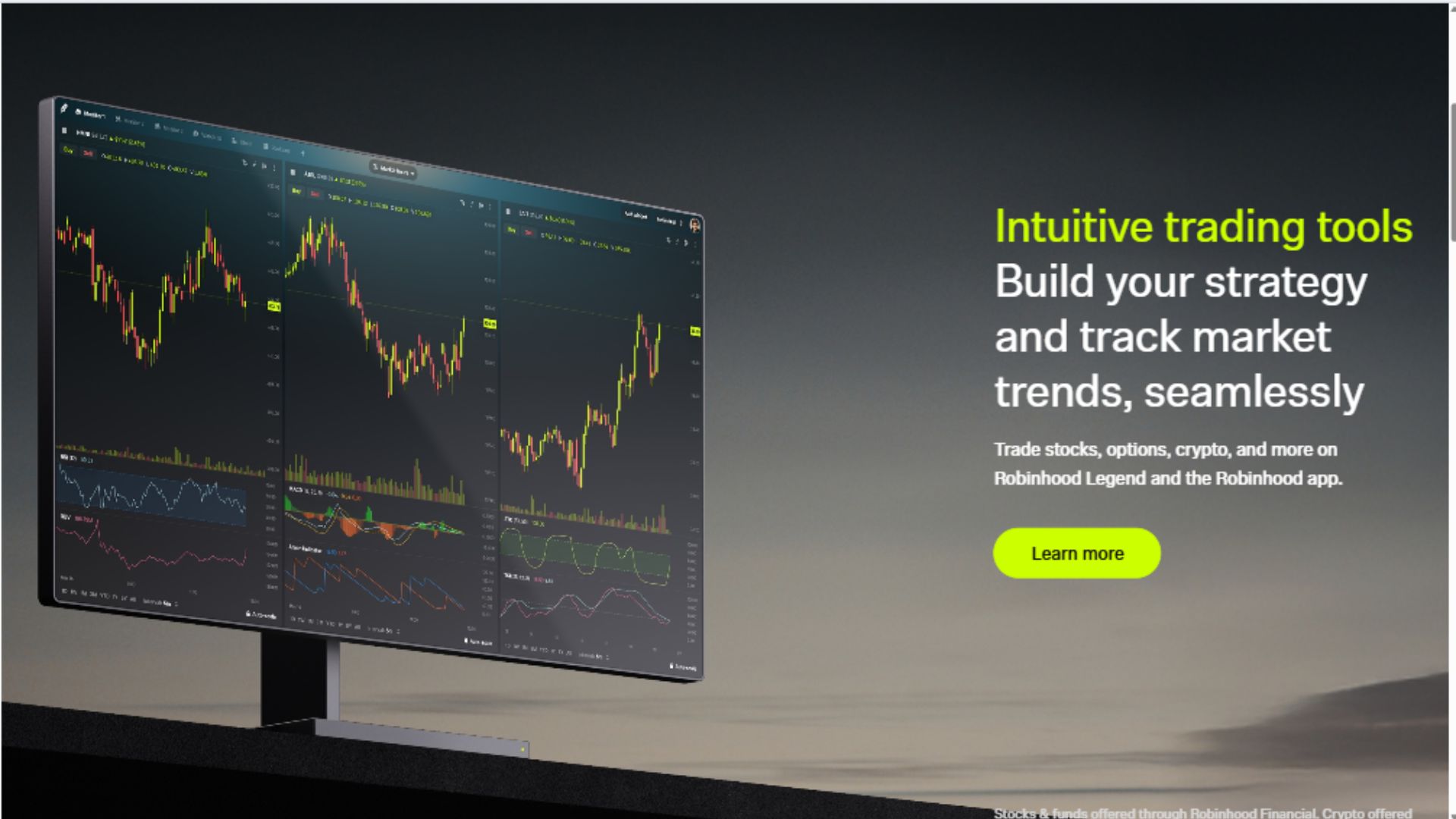
Best for: Beginning investors seeking simple mobile-first experience with instant deposits and fractional shares
Pricing: $0 commissions on stocks/ETFs/options, $0 account minimums, Robinhood Gold subscription $5/month for margin and other features
Key Features: Robinhood revolutionized retail investing by pioneering commission-free trading and designing mobile-first experiences for millennial and Gen Z investors. The app's streamlined interface removes intimidating complexity, presenting stocks with clean price charts, basic fundamentals, and intuitive buy/sell buttons. Fractional shares enable investing with any dollar amount—purchasing $10 of Amazon rather than requiring $3,000+ for a full share. Robinhood's instant deposit feature provides immediate access to deposited funds (up to $1,000) rather than waiting days for clearance, enabling responsive trading on market opportunities. The platform also offers commission-free cryptocurrency trading with 24/7 access to Bitcoin, Ethereum, Dogecoin, and other digital assets.
Robinhood Gold ($5/month) adds features like Level II market data, professional research from Morningstar, margin trading, and increased instant deposit limits. The platform's simplicity is simultaneously its strength and limitation—casual investors appreciate the uncluttered experience, while advanced traders find it limiting. Robinhood has faced criticism regarding system outages during extreme volatility, payment for order flow practices affecting execution quality, and initially poor customer service. However, improvements in reliability, 24/7 phone support introduction, and expanded educational content address many criticisms. For investors prioritizing ease of use, modern interface design, and low barriers to entry, Robinhood remains compelling despite limitations.
Pros:
Exceptionally intuitive mobile interface perfect for beginners
Fractional shares and no minimums enable starting with minimal capital
Instant deposits provide immediate purchasing power
Commission-free cryptocurrency trading with diverse coin selection
Clean, unintimidating design reduces analysis paralysis
Cons:
Limited research tools compared to full-service brokers
Customer service historically poor though recently improved
Desktop platform lacking (primarily mobile-focused)
Order execution quality concerns due to payment for order flow
System reliability issues during extreme market volatility
6. Webull
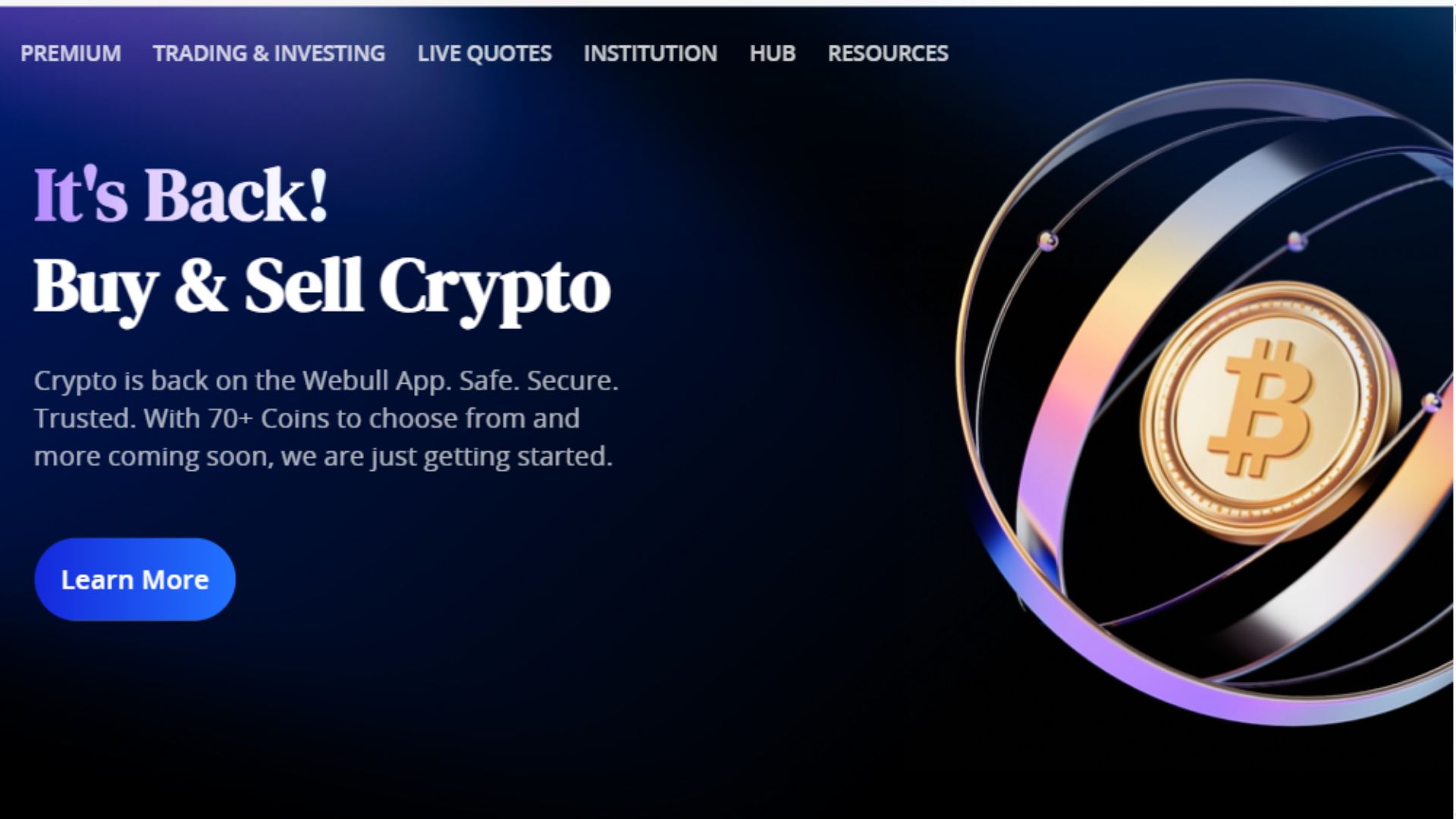
Best for: Active traders wanting advanced features without commissions and comprehensive pre/post-market hours
Pricing: $0 commissions on stocks/ETFs/options, $0 account minimums, competitive margin rates
Key Features: Webull occupies the middle ground between Robinhood's simplicity and professional platforms' complexity, offering advanced tools in accessible packages. The mobile and desktop platforms provide technical charting with 50+ indicators, customizable screening based on fundamentals and technicals, and paper trading for strategy development. Webull's extended hours trading (4 AM - 8 PM ET) exceeds most competitors, enabling reaction to pre-market news and after-hours earnings reports. The platform's real-time Level II quotes and order book depth (typically premium features) are included free, providing transparency into market maker activity and order flow.
Webull's community features distinguish it from competitors—users can post analysis, share ideas, and follow experienced traders' portfolios (with permission). While this social aspect introduces noise requiring critical filtering, it creates engagement and learning opportunities. The platform also offers commission-free cryptocurrency trading, fractional shares, and IPO access—comprehensive asset coverage for retail traders. Customer service and educational resources have improved significantly since launch but still lag established brokers. Webull particularly appeals to traders outgrowing Robinhood who want more sophisticated tools without Interactive Brokers' complexity or traditional brokers' dated interfaces.
Pros:
Advanced technical analysis tools at commission-free pricing
Extended trading hours (4 AM - 8 PM ET) exceed competitors
Free real-time Level II quotes and market depth data
Commission-free cryptocurrency trading and fractional shares
Social features enable learning from experienced traders
Cons:
Customer service quality inconsistent and sometimes slow
Educational resources less comprehensive than established brokers
Company is Chinese-owned, creating geopolitical concerns for some users
Options trading interface less sophisticated than Thinkorswim
Research reports limited compared to Fidelity or Schwab
7. E*TRADE
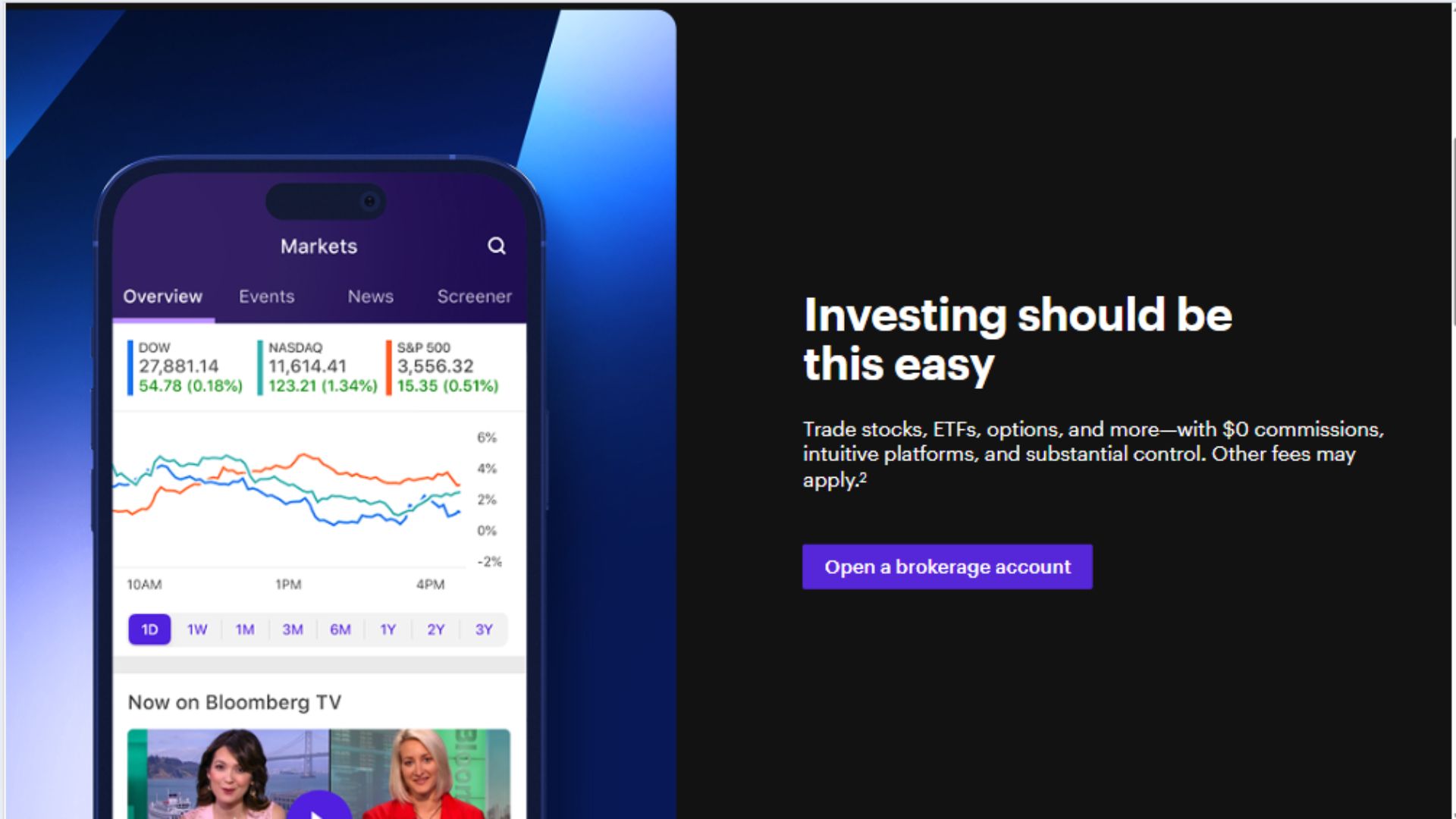
Best for: Options traders seeking intuitive platforms and investors wanting platform variety
Pricing: $0 stock/ETF commissions, $0 account minimums, $0.65 per options contract (can be reduced to $0.50 with volume), margin rates starting at 9.25%
Key Features: ETRADE (now owned by Morgan Stanley) provides sophisticated options trading capabilities wrapped in more approachable interfaces than competitors. The Power ETRADE platform delivers professional functionality—multi-leg options strategies, real-time scanning, customizable layouts, streaming watchlists—without Thinkorswim's overwhelming complexity. Options traders particularly appreciate the visual strategy builder allowing point-and-click construction of complex spreads, straddles, and butterflies with instant profit/loss diagrams. The platform's options analytics include Greeks, probability calculations, and "what-if" scenario modeling helping traders understand risk before committing capital.
ETRADE distinguishes itself through platform variety: web-based interface for casual investors, Power ETRADE desktop for active traders, mobile app balancing power and usability, and even OptionsHouse legacy platform (acquired by ETRADE) still available for its dedicated user base. The diversity allows matching tools to specific needs rather than forcing one-size-fits-all solutions. Research offerings are solid with reports from Recognia, Market Edge, and Argus, plus ETRADE proprietary screeners and market analysis. The integration with Morgan Stanley opens banking services, lending products, and wealth management for clients with growing assets.
Pros:
Intuitive options trading platforms with visual strategy builders
Multiple platform options serve different trading styles effectively
Strong mobile app balances functionality with usability
Morgan Stanley integration provides banking and wealth services
Paper trading and educational content support skill development
Cons:
Margin rates higher than Interactive Brokers and some competitors
Research depth doesn't match Fidelity's comprehensive offerings
Mutual fund selection smaller than Schwab or Fidelity
International market access very limited
Desktop platform aesthetic dated compared to modern alternatives
8. Vanguard

Best for: Long-term buy-and-hold investors focused on low-cost index funds and retirement accounts
Pricing: $0 online stock/ETF commissions, $0 account minimums, $1 per options contract (high compared to competitors)
Key Features: Vanguard pioneered low-cost index fund investing and remains the purest expression of buy-and-hold philosophy. The broker's strength lies in its mutual fund lineup—over 200 Vanguard funds with among the industry's lowest expense ratios (many under 0.10%), including the iconic Vanguard 500 Index Fund and Total Stock Market Index Fund. Vanguard's structure as a client-owned company (mutual funds own the management company) creates alignment between investor interests and corporate incentives—profits return to funds as lower expenses rather than enriching external shareholders. This philosophical commitment to investor primacy permeates everything from transparent pricing to educational content emphasizing evidence-based investing.
Vanguard's platform is functional rather than flashy—sufficient for periodic rebalancing and retirement account management but lacking the bells and whistles active traders expect. The broker excels at retirement planning tools, portfolio construction guidance based on modern portfolio theory, and educational resources emphasizing long-term wealth building over speculation. Vanguard also offers Personal Advisor Services—hybrid robo-advisor with human guidance at 0.30% annually for $50,000+ accounts—providing hands-on financial planning at costs below traditional advisors. For investors committed to passive indexing, tax-loss harvesting within Vanguard fund families, and retirement account optimization, Vanguard's combination of rock-bottom costs and investor-first structure is unbeatable.
Pros:
Industry-lowest expense ratios on Vanguard mutual funds and ETFs
Client-owned structure aligns company incentives with investor interests
Exceptional retirement planning tools and educational resources
Personal Advisor Services provide affordable professional guidance
Strong reputation and financial stability over decades
Cons:
Trading platform basic and outdated compared to competitors
Options trading expensive ($1 per contract) and interface poor
No fractional share trading or cryptocurrency access
Active trading features minimal—designed for buy-and-hold investors
Customer service can involve long wait times during busy periods
9. M1 Finance
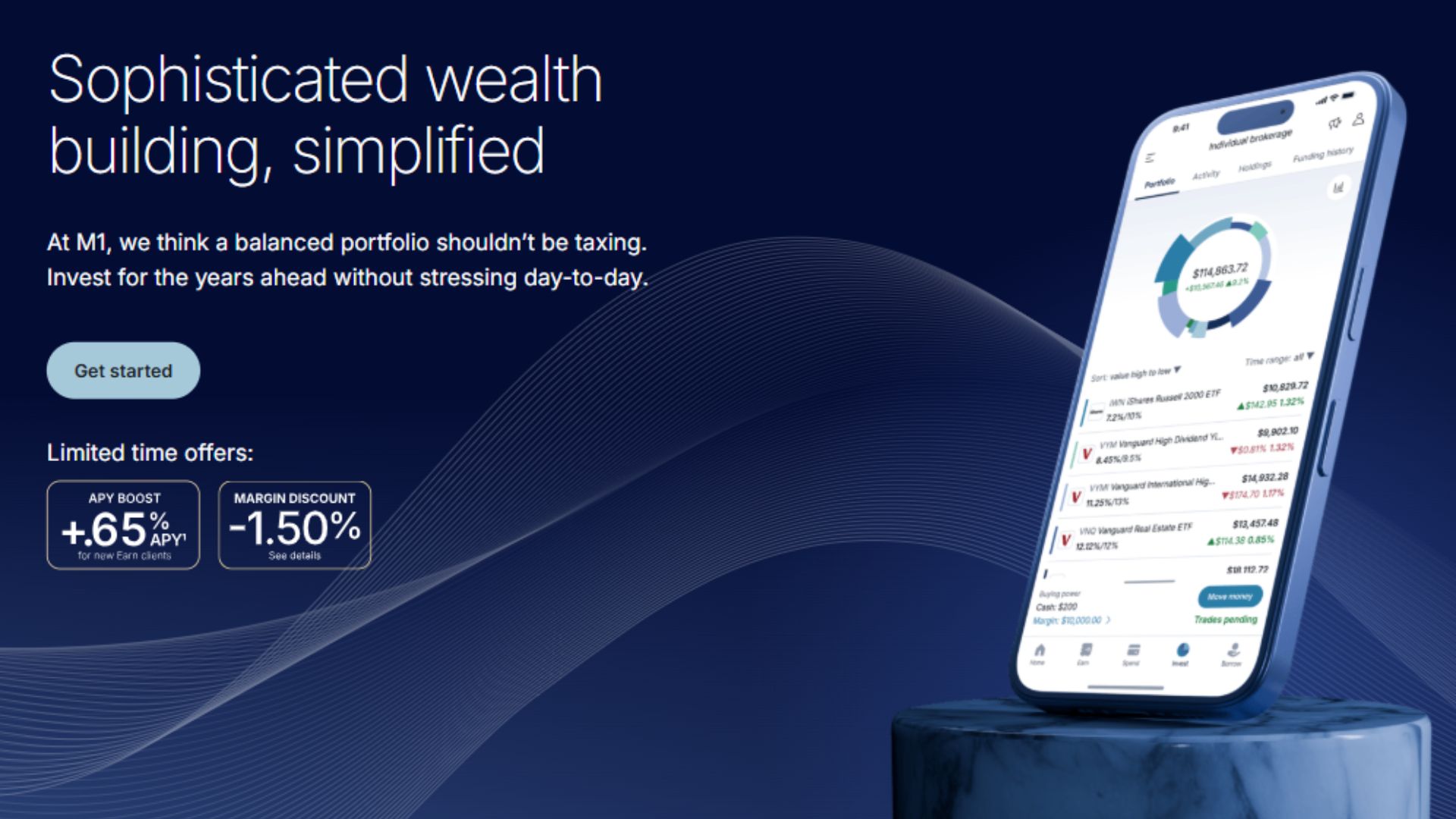
Best for: Automated portfolio management with customization, fractional shares, and "set it and forget it" investing
Pricing: $0 trading commissions, $0 account minimums for taxable accounts ($500 for retirement), M1 Plus subscription $125/year adds benefits
Key Features: M1 Finance reimagines investing through "pies"—visual portfolio representations where you allocate percentages to different stocks and ETFs, then M1 automatically maintains those allocations through smart rebalancing. The platform's genius is combining robo-advisor automation with investor control—you build custom portfolios choosing every holding and allocation percentage, then M1 handles execution through fractional shares and periodic rebalancing. This approach eliminates the tedious math of determining how many shares to buy, ensures portfolios stay aligned with target allocations, and enables true diversification even with small balances.
M1's dynamic rebalancing uses new deposits and dividends to buy underweight holdings rather than requiring selling to rebalance—minimizing tax implications. The platform also offers "borrow" margin lending at competitive rates (M1 Plus members access particularly low rates), and M1 Spend checking accounts with cashback and no fees. Expert Pies provide pre-built portfolios from various strategies (growth, income, socially responsible) that investors can adopt wholly or customize. The limitation is trading windows—M1 executes orders once daily (twice for Plus members) rather than on-demand, unsuitable for active trading but perfect for long-term portfolio builders. For investors who know what they want to own but prefer automation handling the execution and maintenance, M1 is remarkably elegant.
Pros:
Pie-based investing makes portfolio construction intuitive and visual
Automatic rebalancing maintains target allocations without manual intervention
Fractional shares enable true diversification regardless of account size
Dynamic rebalancing through deposits optimizes tax efficiency
Banking integration (M1 Spend) with competitive margin lending (M1 Borrow)
Cons:
Limited trading windows (once or twice daily) prevent intraday trading
No options, futures, or cryptocurrency trading available
Research and analysis tools minimal compared to full-service brokers
Customer service limited with slower response times
Not suitable for active traders requiring real-time execution
10. TradeStation
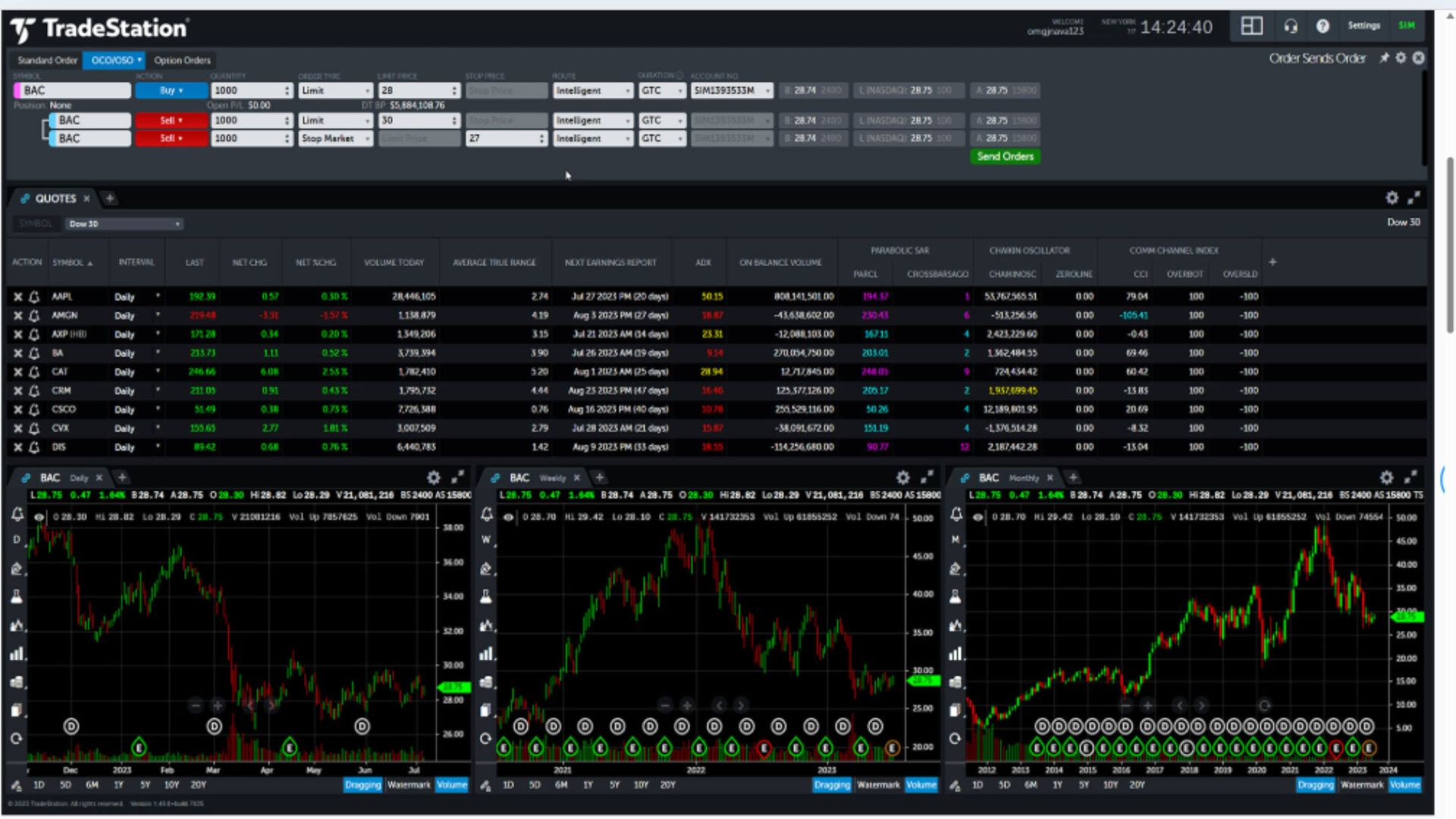
Best for: Algorithmic traders, professional-grade platform users, and traders requiring automation
Pricing: Three pricing plans: TS Select ($0 commissions with conditions), TS Go ($0 commissions on stocks/ETFs), TS Unlimited (subscription + extremely low per-trade costs)
Key Features: TradeStation serves serious traders and programmers with institutional-grade infrastructure and automation capabilities. The platform's EasyLanguage programming environment enables creating custom indicators, strategies, and automated trading systems without requiring professional programming skills (though experience helps). Traders can backtest strategies against historical data, optimize parameters, and deploy algorithms executing trades automatically based on defined rules. The desktop platform provides professional charting with drawing tools, pattern recognition, heatmaps, and market replay allowing "trading" historical days to test strategies. TradeStation's order execution technology and direct market access deliver institutional-quality fills important for scalpers and day traders.
Beyond automated trading, TradeStation offers comprehensive market access including stocks, options, futures, and forex—enabling diversified strategies across asset classes. The platform's Matrix trading interface shows real-time bids/asks for multiple strikes or expirations simultaneously, facilitating quick options spread execution. RadarScreen continuously scans thousands of securities against custom criteria, alerting traders to opportunities instantly. The learning curve is substantial—TradeStation demands commitment to master its capabilities—but for traders serious about systematic approaches, backtesting, or professional-grade execution, the platform provides tools unavailable elsewhere at retail level. The recently added TS Go option provides commission-free trading with simpler interfaces, making TradeStation accessible to broader audiences while maintaining professional tools for those wanting them.
Pros:
Industry-leading algorithmic trading and automation capabilities
EasyLanguage programming accessible to non-programmers
Institutional-grade execution and direct market access
Comprehensive asset coverage including stocks, options, futures, forex
Professional tools like market replay, backtesting, and optimization
Cons:
Steep learning curve requiring significant time investment
Platform complexity overwhelming for casual investors
Account minimums vary by account type (some require $2,000-$25,000)
Per-contract options fees higher on some plans
Customer service assumes technical proficiency, less hand-holding
Comparison Summary
Cost Structure: Zero-commission stock and ETF trading is now industry standard, making options contracts, margin rates, and hidden costs the differentiators. Budget leaders include Interactive Brokers (margin rates as low as 5.83%), M1 Finance (comprehensive free features), and Webull (advanced tools at $0 commissions). Premium pricing appears at Vanguard ($1 per options contract) and TradeStation (varies by plan). All major platforms abandoned stock/ETF commissions, though execution quality varies—payment for order flow at Robinhood and Webull potentially results in worse fills than Fidelity's or Interactive Brokers' direct routing.
Platform Sophistication: Professional-grade platforms include Interactive Brokers' Trader Workstation, TD Ameritrade's Thinkorswim, and TradeStation's desktop—offering advanced order types, algorithmic trading, and comprehensive technical analysis. Mid-tier platforms (Webull, ETRADE Power ETRADE) provide substantial functionality for active traders without overwhelming complexity. Simplified platforms (Robinhood, M1 Finance) prioritize ease of use over feature depth, perfect for beginners or passive investors.
Research & Education: Fidelity leads with institutional-grade research from 20+ third-party firms plus proprietary analysis. Schwab and TD Ameritrade provide comprehensive research and exceptional educational content. Budget platforms (Robinhood, Webull) offer basic information but lack depth. Vanguard emphasizes education around passive investing and portfolio theory rather than active trading research.
Best Use Cases:
New investors with small accounts: Robinhood, M1 Finance (low minimums, fractional shares, intuitive interfaces)
Active day traders: TradeStation, Interactive Brokers (execution quality, advanced orders, low costs at volume)
Options specialists: Thinkorswim, E*TRADE (superior options interfaces, analytics, Greeks visualization)
Long-term retirement investors: Vanguard, Fidelity (low-cost funds, retirement tools, buy-and-hold focus)
International diversification: Interactive Brokers (150+ markets in 33 countries)
Comprehensive financial services: Schwab, Fidelity (banking, lending, planning, premium service)
Automated portfolio management: M1 Finance (pie-based rebalancing with customization)
Buying Guide
Who Needs Trading Platforms & Tools?
Individual Investors: Anyone investing in stocks, bonds, ETFs, or mutual funds requires a brokerage platform. The appropriate platform depends on investment approach: passive investors need minimal features and low costs (Vanguard, M1 Finance), while active traders require advanced charting and execution (Interactive Brokers, Thinkorswim).
Retirement Savers: 401(k) rollovers and IRA management benefit from brokers offering comprehensive retirement tools, low-cost index funds, and financial planning assistance (Fidelity, Schwab, Vanguard). Consider tax-loss harvesting capabilities, Roth conversion calculators, and required minimum distribution automation.
Options Traders: Strategies beyond basic calls and puts demand platforms with strong options analytics, Greeks visualization, probability calculators, and intuitive multi-leg order entry (Thinkorswim, E*TRADE, TradeStation).
International Investors: Accessing foreign markets requires brokers with multi-currency accounts, global market connectivity, and competitive foreign exchange rates (Interactive Brokers excels; most other platforms offer extremely limited international access).
High-Net-Worth Individuals: Investors with $500,000+ benefit from brokers offering premium services including dedicated advisors, portfolio management, estate planning, and lending products (Schwab Private Client, Fidelity Private Client Group).
How Trading Platforms Work
Account Opening: The process involves completing applications providing personal information (SSI, employment, financial details), linking bank accounts for transfers, and meeting any minimum deposit requirements. Most platforms complete approval within 1-3 business days, though complex accounts (margin, options) may require additional time.
Funding & Transfers: Accounts are funded via electronic transfers (ACH), wire transfers, check deposits, or ACATS transfers from other brokerages. Initial deposits typically take 3-5 business days to settle, though many platforms provide instant access to deposited amounts up to certain limits for immediate trading.
Placing Trades: Trading involves searching for securities (stocks, ETFs, options), reviewing quotes and charts, specifying order types (market, limit, stop, trailing stop), and confirming execution. Advanced platforms support bracket orders, conditional orders, and algorithmic execution. Trades settle T+2 (trade date plus two business days) for stocks, requiring funds available by settlement.
Portfolio Management: Platforms provide performance tracking, realized/unrealized gains, cost basis reporting, and tax forms (1099s). Many offer automatic rebalancing, dividend reinvestment, tax-loss harvesting, and aggregation of external accounts for comprehensive wealth view.
Key Features to Consider
For Beginners:
Ease of use: Intuitive interface requiring minimal learning curve
Fractional shares: Ability to invest with small dollar amounts
Educational resources: Tutorials, glossaries, and beginner-focused content
Customer support: Accessible help via phone, chat, or email
Paper trading: Simulated trading to learn without risking capital
For Active Traders:
Execution speed: Low-latency order routing and platform responsiveness
Advanced orders: Bracket orders, trailing stops, conditional orders
Charting tools: Comprehensive technical indicators and drawing tools
Real-time data: Streaming quotes and Level II market depth
Low costs: Competitive margin rates and options contract fees
For Long-Term Investors:
Low expense ratios: Access to low-cost index funds and ETFs
Tax efficiency: Tax-loss harvesting and cost basis tracking
Retirement tools: IRA calculators, RMD planning, beneficiary management
Automatic features: Dividend reinvestment, rebalancing, dollar-cost averaging
Research quality: Fundamental analysis and long-term outlook reports
For Options Traders:
Options chains: Clear display of strikes, expirations, and Greeks
Strategy analysis: Profit/loss diagrams and probability calculators
Multi-leg efficiency: One-click construction of complex spreads
Paper trading: Risk-free options strategy testing
Mobile capability: Managing and adjusting positions from anywhere
Pricing Overview
Commission Structures
Zero-Commission Era: Most major platforms charge $0 commissions on online stock and ETF trades: Fidelity, Schwab, TD Ameritrade, E*TRADE, Interactive Brokers (IBKR Lite), Robinhood, Webull, and M1 Finance all eliminated trading commissions. This represents fundamental shifts from the $7-$10 per trade standard as recently as 2019.
Options Contracts: Fees range from $0 (special promotions or volume-based waivers) to $1.00 per contract:
Low-cost leaders: Interactive Brokers ($0.65), Fidelity ($0.65), Schwab ($0.65), TD Ameritrade ($0.65)
Premium pricing: Vanguard ($1.00), TradeStation (varies by plan)
Volume discounts: Most brokers reduce per-contract fees for high-volume traders
Margin Rates: Borrowing costs for margin accounts vary significantly:
Lowest: Interactive Brokers (5.83% for $100,000+)
Competitive: M1 Finance (6.25-9.25% depending on M1 Plus status)
Standard: Fidelity, Schwab, TD Ameritrade (8.325-9.325%)
Impact: On $50,000 margin balance, difference between 5.83% and 9.25% is $1,710 annually
Account Minimums:
No minimums: Fidelity, Schwab, TD Ameritrade, E*TRADE, Robinhood, Webull, Interactive Brokers (IBKR Lite)
Retirement minimums: M1 Finance ($500 IRA minimum), Vanguard ($1,000 for target-date funds)
Feature-based minimums: TradeStation (varies by account type, $2,000-$25,000)
Balance-based tiers: Many platforms offer premium services above thresholds ($250,000-$1,000,000)
Hidden Costs:
Payment for order flow: Robinhood and Webull generate revenue by routing orders to market makers, potentially resulting in worse execution prices (fractions of a cent per share that compound over time)
Mutual fund fees: Transaction fees on certain mutual funds ($49.95 at some brokers)
Wire transfer fees: Incoming/outgoing domestic and international wires ($15-$50)
Account transfer fees: ACATS transfers out may incur $50-$100 fees
Inactivity fees: Some platforms (Interactive Brokers Pro) charge fees for accounts with minimal trading
DIY vs. Robo-Advisors vs. Professional Management
DIY Self-Directed Investing: Using platforms reviewed in this guide, investors select securities, execute trades, and manage portfolios independently. Cost: $0-$100 annually for platforms (subscription services like M1 Plus, Robinhood Gold). Best for investors comfortable researching securities and managing allocation decisions.
Robo-Advisors: Automated investment services (Betterment, Wealthfront, Schwab Intelligent Portfolios, Vanguard Digital Advisor) construct and manage diversified portfolios based on questionnaires. Cost: 0.25-0.50% of assets annually (Schwab's is free but requires higher cash allocation). Best for hands-off investors wanting professional diversification without human advisor costs.
Hybrid Advisors: Combine robo-advisor automation with human advisor access (Vanguard Personal Advisor Services, Fidelity Go). Cost: 0.30-0.50% of assets annually, often with account minimums ($25,000-$50,000). Best for investors wanting professional guidance and automated management at costs below traditional advisors.
Traditional Financial Advisors: Human advisors provide comprehensive financial planning, investment management, and ongoing guidance. Cost: 1.0-2.0% of assets annually plus potential commissions and product fees. Best for complex financial situations, high-net-worth families, or those valuing personal relationships and comprehensive planning.
Cost Comparison on $100,000 Portfolio:
DIY platform: $0-$100 annually
Robo-advisor: $250-$500 annually
Hybrid advisor: $300-$500 annually
Traditional advisor: $1,000-$2,000+ annually
Frequently Asked Questions
Is it safe to keep large amounts of money in online brokerage accounts?
Yes, with appropriate precautions. All major U.S. brokers provide SIPC insurance protecting up to $500,000 in securities and $250,000 in cash per account in case of broker failure (not market losses). Many brokers carry additional insurance beyond SIPC limits—Fidelity and Schwab protect accounts up to $1 million or more through supplemental policies. Security best practices include: (1) Enable two-factor authentication on all accounts; (2) Use strong unique passwords (password managers help); (3) Verify broker's SIPC membership and SEC registration; (4) Monitor accounts regularly for unauthorized activity; (5) Be cautious of phishing attempts (brokers never ask for passwords via email). Large portfolios benefit from diversifying across multiple brokers to exceed individual SIPC limits, though this complicates management. Major established brokers (Fidelity, Schwab, Interactive Brokers) have operated for decades with strong security track records.
Should beginners start with simple platforms like Robinhood or comprehensive brokers like Fidelity?
The optimal starting platform depends on learning preferences and investment approach. Robinhood-style simplicity benefits absolute beginners who find traditional platforms overwhelming—the streamlined interface removes intimidation and enables starting with minimal capital. However, simple platforms risk limiting growth; as knowledge expands, you may require migration to comprehensive brokers (incurring transfer fees and hassle). Starting with established full-service brokers (Fidelity, Schwab) provides room to grow into advanced features without platform changes. These brokers offer beginner-friendly modes alongside sophisticated tools, comprehensive education, and superior customer support guiding learning. The compromise: begin with Webull—offering more features than Robinhood (technical analysis, extended hours, Level II data) while maintaining accessibility, then evaluate if sufficient or if comprehensive brokers become necessary. Alternatively, open accounts at both types—use Robinhood for initial small-dollar experiments while opening Fidelity/Schwab retirement accounts establishing relationships with full-service brokers.
How important is execution quality, and which brokers are best?
Execution quality significantly impacts returns despite being invisible to most investors. The difference between best and worst execution might be $0.01-$0.05 per share—negligible on single trades but compounding to thousands annually for active traders. Research from SEC studies shows payment-for-order-flow brokers (Robinhood, Webull) consistently deliver worse execution than brokers routing directly to exchanges or internalizing orders (Fidelity, Interactive Brokers). Interactive Brokers' Smart Routing technology and direct market access delivers industry-best execution; Fidelity's order routing and price improvement also rate highly. For buy-and-hold investors trading occasionally, execution quality matters less than costs and tools. For active traders executing dozens of trades weekly, superior execution at Interactive Brokers or Fidelity outweighs minor platform disadvantages. The SEC requires brokers to disclose execution quality (Rule 606 reports); compare payment for order flow, price improvement, and effective/quoted spread metrics across brokers when evaluating.
Can I use multiple brokerage accounts, or should I consolidate at one platform?
Multiple accounts offer strategic advantages: (1) Diversification beyond SIPC limits for large portfolios; (2) Accessing best-in-class features from different brokers (Thinkorswim for options analysis, Interactive Brokers for international stocks, Vanguard for low-cost index funds); (3) Maintaining relationships with multiple institutions for backup if one experiences outages; (4) Tax optimization through strategic placement (high-turnover strategies in IRAs at low-cost brokers, long-term holdings in taxable accounts at brokers with best tax tools). The downside is complexity—tracking multiple logins, tax forms from multiple sources, and fragmented portfolio views. Portfolio aggregation tools (Personal Capital, Empower) help by consolidating external accounts into unified dashboards. Most investors benefit from one primary broker handling 80%+ of assets (choose based on overall needs) while maintaining specialty accounts at other platforms for specific purposes. Avoid excessive fragmentation; 2-3 accounts is optimal for most investors balancing benefits and complexity.
Are low-cost index funds better than active trading for building wealth?
Historical evidence overwhelmingly favors passive index investing for most investors. Studies show 80-90% of professional fund managers underperform market indexes after fees over 10-15 year periods, and retail investors' active trading typically produces worse results due to emotional decisions, poor timing, and transaction costs. Vanguard founder Jack Bogle's research demonstrated that low-cost index funds capturing market returns consistently outperform high-cost active management and frequent trading. However, this doesn't mean active trading is universally wrong—sophisticated traders with edge (superior information, advanced analytics, emotional discipline, efficient execution) can generate alpha. The realistic assessment: if you're reading this guide as an introduction to investing, passive index investing at low-cost brokers (Vanguard, Fidelity) likely produces better risk-adjusted returns than attempting active trading. If you have specialized knowledge, systematic approaches, or genuine edge, platforms supporting active strategies (Interactive Brokers, TradeStation) become appropriate. Many successful investors combine approaches: core portfolio in passive index funds (70-90% of assets), actively trading smaller allocations (10-30%) for engagement and potential outperformance.