
Top 10 Best Gaming Platforms for Deals
Steam – Best for massive seasonal sales and largest PC library
Humble Bundle – Best for charity bundles and monthly subscription value
Epic Games Store – Best for free weekly games and exclusive coupons
GOG (Good Old Games) – Best for DRM-free games and classic titles
Fanatical – Best for curated game bundles and flash deals
Green Man Gaming – Best for pre-order discounts and VIP rewards
Xbox Game Pass – Best for subscription-based unlimited access
PlayStation Plus – Best for console gamers wanting monthly games
itch.io – Best for indie games and pay-what-you-want pricing
CDKeys – Best for discounted digital codes and console subscriptions
Methodology
Our evaluation assessed each platform across five critical dimensions: average discount depth (percentage savings compared to standard retail), deal frequency and consistency (how often meaningful sales occur), game library breadth (selection size and variety), platform reliability and legitimacy (safety of purchases and key sources), and additional value features (rewards programs, refund policies, community features). We analyzed historical pricing data from price tracking sites, monitored sale events throughout 2024-2025, verified user experiences across Reddit's game deals communities, and evaluated each platform's terms of service and business model. Platforms were prioritized based on proven track records of legitimate deals that respect developers while maximizing consumer value.
Detailed Reviews
1. Steam
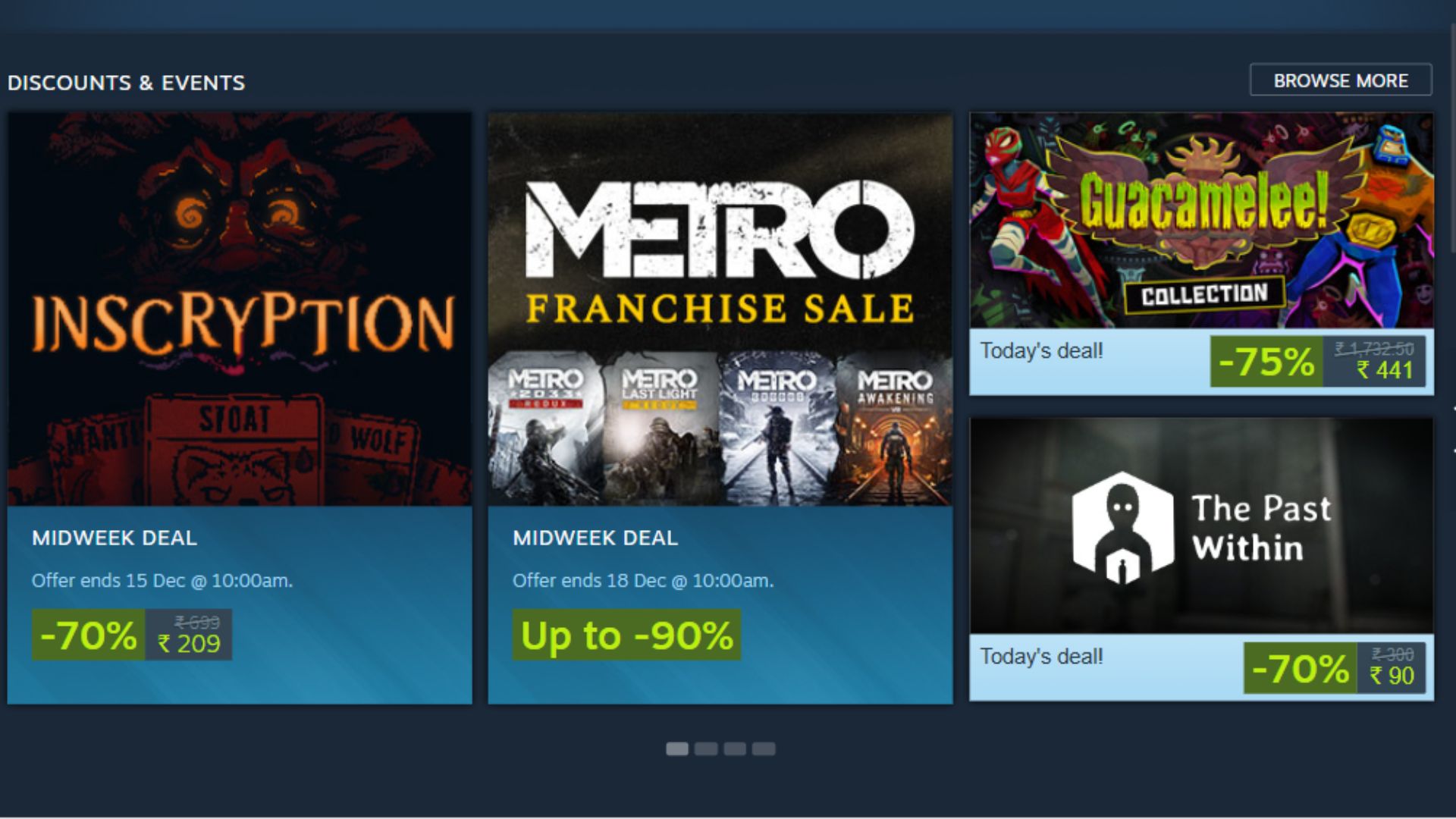
Best for: PC gamers seeking the largest library with predictable seasonal mega-sales
Pricing from: Games range from $0.99 indies to $69.99 AAA titles, with sales offering 10-90% discounts
Key features: 100,000+ game library, seasonal sales (Summer, Winter, Autumn, Lunar New Year), daily and weekend deals, user reviews and community features, Steam Deck compatibility, family sharing, robust refund policy (within 2 weeks, under 2 hours played)
Steam remains the undisputed king of PC gaming storefronts, with Valve's platform hosting the most comprehensive library and running the industry's most anticipated sale events. The legendary Summer and Winter sales transform the platform into a deal-hunting paradise where AAA titles from 6-12 months prior routinely hit 50-75% off, while older games frequently reach 80-90% discounts. The predictability of these sales (Summer in June, Winter in December) allows savvy shoppers to plan purchases around guaranteed deep discounts rather than impulse buying at full price.
Beyond seasonal mega-sales, Steam offers daily deals, weekend specials, midweek madness promotions, and publisher-specific sales that ensure fresh deals throughout the year. The discovery queue and wishlist notification system alerts you when desired games hit your target price points, eliminating the need for constant manual checking. Steam's refund policy provides consumer protection for disappointing purchases—any game can be refunded within 14 days of purchase if played less than 2 hours, reducing purchase anxiety.
The platform's community features add value beyond pure discounts: user reviews help identify quality titles, curators provide trusted recommendations, and the Steam Workshop enables free mod content for supported games. Steam keys purchased from authorized third-party retailers (Humble, Fanatical, GMG) activate on your Steam library, creating a unified ecosystem. The Steam Deck's rise has made the platform's portable compatibility an additional value proposition.
Pros:
Largest PC game library with 100,000+ titles
Predictable seasonal mega-sales with deepest discounts
Generous refund policy reduces purchase risk
Comprehensive community features and user reviews
Steam Deck compatibility adds portable gaming value
Cons:
Sales have become somewhat predictable, reducing surprise finds
Massive library creates overwhelming choice paralysis
Regional pricing can be unfair for some countries
No native price tracking—requires external tools
Customer support quality can be inconsistent
2. Humble Bundle
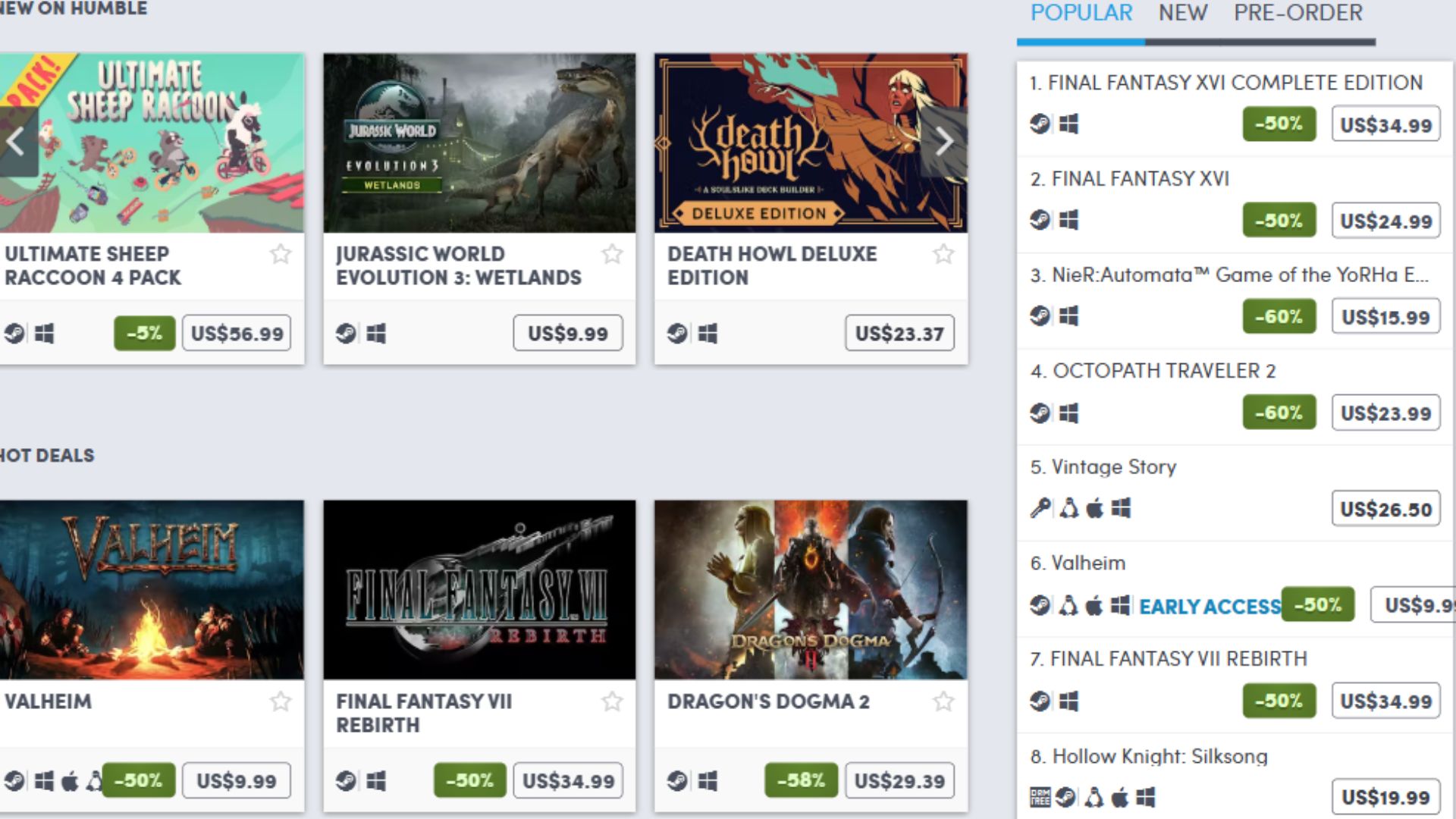
Best for: Gamers wanting exceptional bundle value while supporting charity
Pricing from: Bundles start at $1 tiers, going up to $12-25 for full bundles; Choice subscription is $11.99/month
Key features: Pay-what-you-want bundles, tiered pricing with increasing game counts, Humble Choice monthly subscription (8-12 games monthly), charity contribution options, Steam key delivery, DRM-free games in select bundles
Humble Bundle revolutionized game purchasing by introducing pay-what-you-want bundles where customers choose how much to pay and how their payment is divided between developers, charity, and Humble. The tiered bundle structure typically offers 3-4 games at the $1 tier, additional games at $10-15 tiers, and complete bundles at $20-25, creating extraordinary value where you might pay $25 for $300+ worth of games at retail prices. The charity component adds feel-good value—you're not just getting deals, you're supporting causes ranging from medical research to environmental protection.
Humble Choice (formerly Humble Monthly) represents one of gaming's best subscription values at $11.99 monthly, providing 8-12 curated games you keep forever even if you cancel. Historical analysis shows Choice delivers $150-300 in retail value monthly, though individual bundle quality varies. The pause feature lets you skip months without losing subscription benefits, and the Humble Trove (now discontinued but library access remains) provided DRM-free games as a bonus.
The platform's focus has shifted somewhat from pure bundles to Choice and Humble Store sales, but themed bundles (Fighting Games, Strategy, Horror) still deliver exceptional value regularly. All purchases generate Humble Wallet credit (5-20% depending on subscription status) usable on future purchases. The platform's legitimacy is unquestioned—they work directly with publishers and developers, ensuring keys are authorized and legal.
Pros:
Exceptional bundle value with games worth 10-20x bundle price
Charity contribution component adds purpose to purchases
Humble Choice subscription delivers consistent monthly value
DRM-free options available in select bundles
Humble Wallet credit rewards repeat purchases
Cons:
Bundle quality varies significantly month-to-month
Many bundled games have been previously bundled elsewhere
Choice subscription locks you into monthly payment
Some bundles contain filler titles padding quantity
Regional restrictions on certain game keys
3. Epic Games Store

Best for: Gamers who prioritize free weekly games and exclusive coupon promotions
Pricing from: Free games every Thursday; paid games often $10-20 cheaper than Steam on launch
Key features: Free game every week (52+ games annually), Epic Mega Sale with $10 unlimited coupons, exclusive titles (Fortnite, Rocket League, Fall Guys), 88/12 revenue split favoring developers, cloud saves, achievement system
Epic Games Store has aggressively competed with Steam by literally giving away games—every Thursday, Epic provides at least one free game (sometimes multiple), ranging from indies to AAA titles worth $60+. Since launching this program in 2018, Epic has distributed over 350 free games, providing thousands of dollars in value to users who simply claim games weekly. Past freebies include Control, GTA V, Prey, Borderlands 3, and numerous other premium titles, making Epic the best platform for building a library without spending money.
The Epic Mega Sale runs twice annually (typically May and November), offering $10 coupons that apply to any game $14.99 or higher, and the coupons are unlimited—buying a game with a coupon generates a new coupon for your next purchase. This creates stacking discounts where sale prices combine with coupons for unprecedented savings. A game on 50% sale for $30 becomes $20 with the coupon, representing 67% off retail. The catch is the relatively smaller library compared to Steam, though Epic's catalog has grown to include most major releases.
Epic's 88/12 revenue split (developers keep 88% versus Steam's 70%) creates goodwill with publishers, occasionally resulting in launch pricing $10 cheaper than Steam. Unreal Engine games often appear on Epic first or exclusively. The platform's feature set has matured with achievements, cloud saves, and shopping cart (finally), though it still lacks Steam's community features, user reviews, and mod workshop.
Pros:
Free game every week builds substantial library at zero cost
Epic Mega Sale coupons provide unbeatable discount stacking
Often cheaper launch prices for new releases
Developer-friendly revenue split encourages exclusive deals
No bloat—streamlined interface focused on games
Cons:
Significantly smaller library than Steam
Lacks community features, user reviews, and forums
Epic exclusivity deals frustrate some consumers
Fewer sale events throughout the year
Regional pricing can disadvantage international users
4. GOG (Good Old Games)
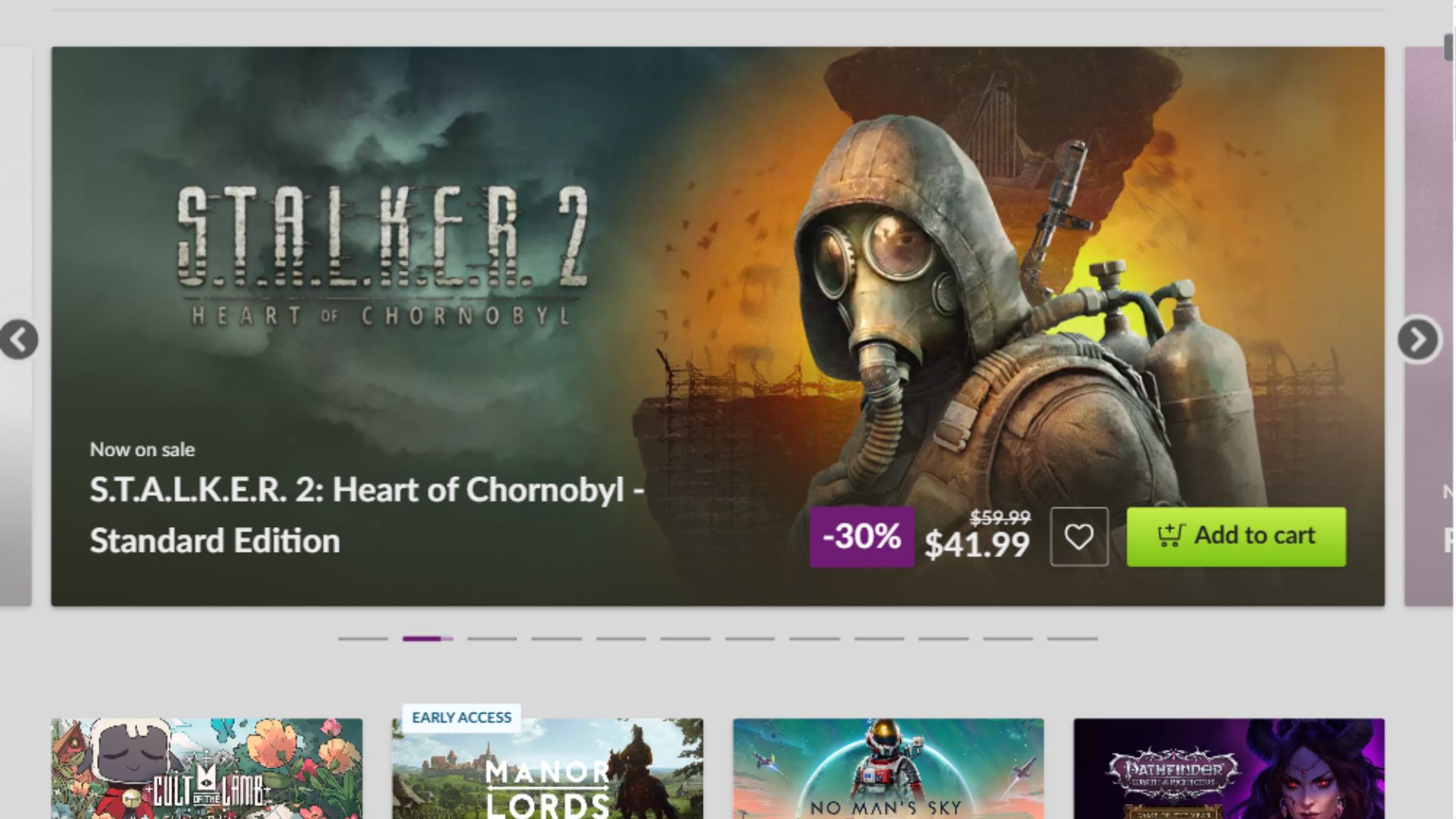
Best for: Gamers prioritizing DRM-free ownership and classic PC games
Pricing from: Classic games from $0.99, modern releases at standard $59.99; frequent 50-90% off sales
Key features: 100% DRM-free games, GOG Galaxy optional client, classic game preservation and compatibility updates, 30-day refund policy (extended beyond Steam's), frequent sales, GOG Connect (free Steam game imports), offline installers
GOG distinguishes itself through complete DRM-free distribution—every game purchased is yours permanently with downloadable offline installers that work without internet connection or client software. This philosophy appeals to gamers who value ownership over license agreements, those with unreliable internet, or anyone concerned about long-term game preservation when platforms eventually shut down. CD Projekt's (Cyberpunk 2077 developers) ownership ensures GOG prioritizes consumer rights and game preservation as core values.
The platform specializes in classic PC games (hence the original "Good Old Games" name), offering meticulously updated versions of titles from the '80s, '90s, and early 2000s that run on modern systems without complex configuration. Games like Baldur's Gate, Fallout 1-2, System Shock, and hundreds of others are preserved with compatibility updates, manuals, soundtracks, and bonus content. Modern releases appear on GOG too, though the library (around 9,000 titles) is smaller than Steam's due to DRM-free requirements limiting some publisher participation.
GOG's sales match Steam's frequency with seasonal events, weekend deals, and publisher promotions offering 50-90% discounts. The extended 30-day refund policy (versus Steam's 14 days) provides more flexibility, though the 2-hour playtime limit still applies. GOG Galaxy client offers optional convenience features (cloud saves, achievement tracking, unified library across platforms) while maintaining the core DRM-free philosophy—you never need the client after downloading games.
Pros:
100% DRM-free ownership with offline installers
Specialization in classic game preservation and compatibility
Extended 30-day refund window
GOG Connect occasionally imports owned Steam games free
GOG Galaxy unifies multiple platform libraries in one client
Cons:
Smaller library than Steam due to DRM-free requirement
Some publishers refuse to release DRM-free versions
Fewer community features than Steam
Sale discounts sometimes less aggressive than Steam
Game updates occasionally lag behind Steam versions
5. Fanatical
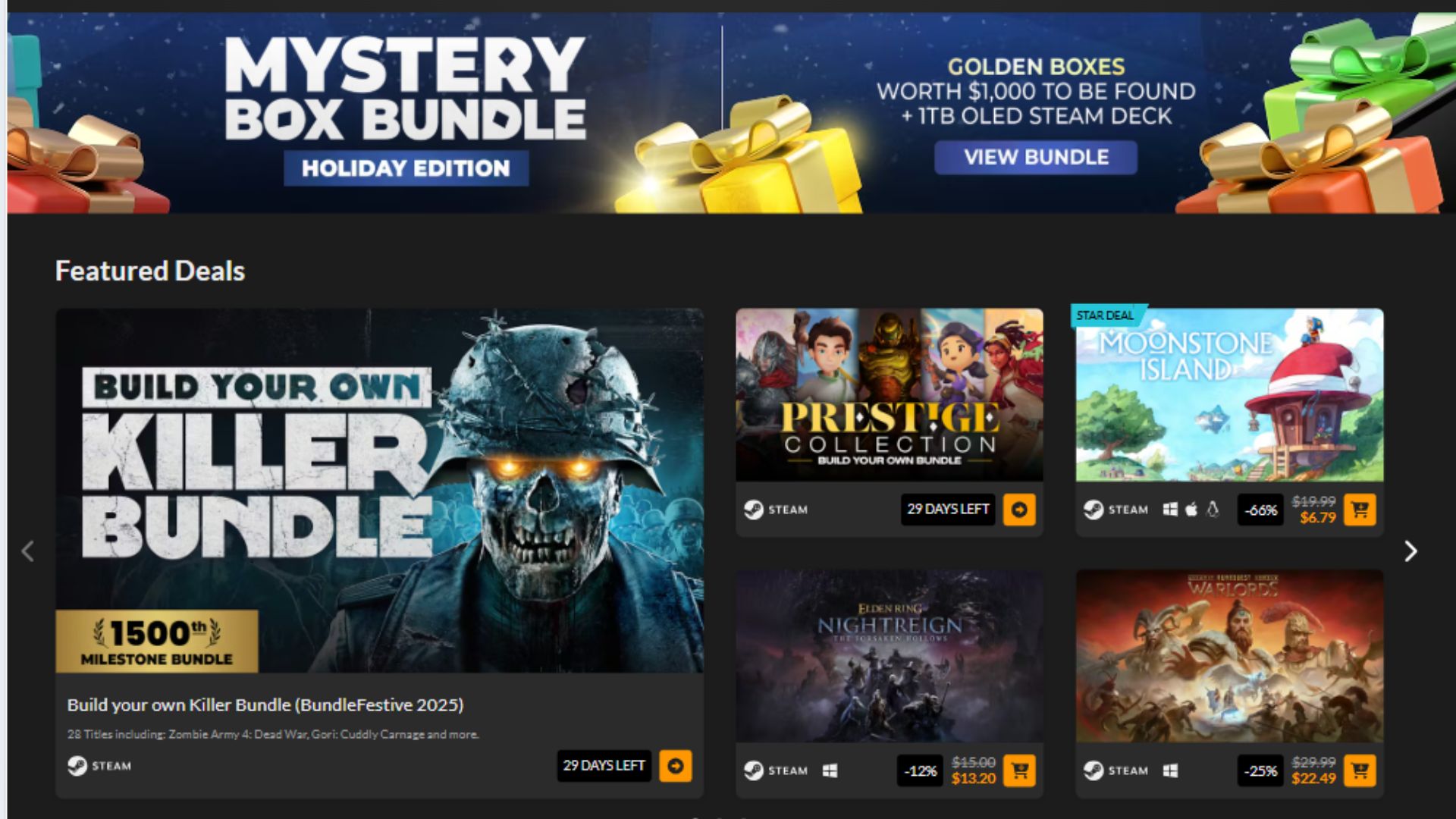
Best for: Bundle enthusiasts seeking curated quality and mystery bundles
Pricing from: Bundles from $3.99 to $24.99; individual games at competitive sale prices
Key features: Star Deals with 10-minute flash sales, Build Your Own Bundle system, Mystery Bundles, curated themed bundles, Steam key delivery, loyalty XP rewards program, frequent site-wide sales
Fanatical (formerly Bundle Stars) has evolved into one of PC gaming's most reliable deal sources, combining Humble's bundle approach with more frequent rotation and flash deal mechanics. The Star Deals system features 10-minute flash sales refreshing every few hours, creating urgency-driven discounts up to 95% off. The Build Your Own Bundle feature lets you select specific games from a curated list and receive tiered discounts (typically 3 games for $4.99, 5 for $7.49, 10 for $11.99), providing customization absent from traditional fixed bundles.
Mystery Bundles represent Fanatical's unique value proposition—pay a set price ($3-20) to receive random games from a curated pool, with guaranteed minimum value and potential for games worth significantly more than paid. While controversial (you might receive games you won't play), the risk-reward appeals to library collectors and deal hunters willing to gamble for exceptional value. The platform's curation ensures mystery bundles contain generally well-reviewed games rather than pure shovelware.
Themed bundles (Platinum Collection, Diamond Bundle) offer curated selections of quality titles rather than quantity-focused padding. Fanatical works directly with publishers as an authorized reseller, ensuring key legitimacy. The loyalty XP system rewards repeat purchases with increasing discounts and exclusive offers, incentivizing platform loyalty. Regular site-wide sales (monthly typically) compete directly with Steam's pricing while providing Steam keys that activate in your existing library.
Pros:
Star Deals flash sales create exceptional short-window discounts
Build Your Own Bundle customization allows selective purchasing
Mystery Bundles offer high-risk, high-reward value hunting
Curated bundles emphasize quality over quantity
Loyalty rewards program benefits repeat customers
Cons:
Mystery Bundles can result in unwanted game collections
Flash deal system requires frequent checking or notification setup
Bundle game overlap common for active bundle buyers
Smaller indie focus than mainstream AAA titles
Limited refund options compared to Steam/GOG
6. Green Man Gaming
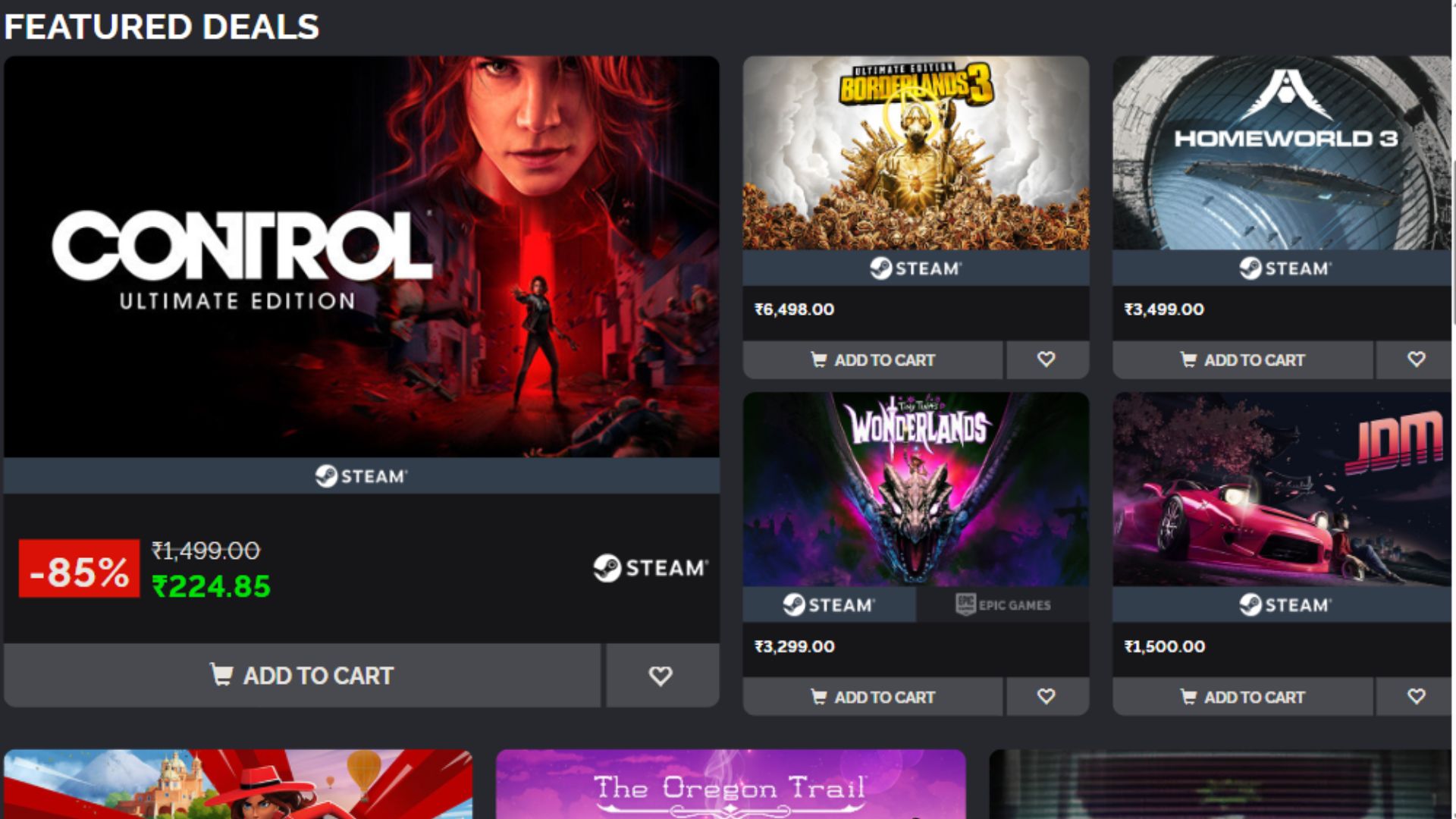
Best for: Pre-order discounts and VIP rewards for frequent purchasers
Pricing from: New releases typically 15-25% off MSRP; older titles during sales 50-90% off
Key features: VIP rewards program with increasing discounts (gold/silver tiers), pre-order discounts on upcoming releases, Steam/Epic/Origin/uPlay key delivery, XP currency rewards, seasonal sales, voucher code system
Green Man Gaming carved its niche by offering pre-order discounts when most platforms sell at full MSRP, making it the go-to destination for day-one purchasers wanting to save 15-25% on anticipated releases. This approach benefits gamers who don't want to wait months for sales but refuse to pay full price, striking a middle ground between patient gaming and immediate access. The platform's relationships with publishers enable authorized discounted pre-orders that activate on Steam, Epic, or other platforms depending on the game.
The VIP rewards program operates on a tiered system where purchase volume determines discount levels—higher tiers (Silver, Gold) receive better base discounts on all purchases plus exclusive offers and early access to sales. XP currency earned from purchases provides additional discounts on future transactions, creating a self-reinforcing value loop for loyal customers. Voucher codes frequently circulate (often 10-20% off) stackable with existing sale prices, though terms vary by promotion.
Green Man Gaming's legitimacy as an authorized reseller is verified, though they've faced historical controversy about key sourcing that has since been resolved through transparent publisher partnerships. The platform offers games across all major PC storefronts, not just Steam, providing flexibility for multi-platform library management. Regular seasonal sales compete with Steam's pricing, while the daily deals and flash sales provide reason to check back frequently.
Pros:
Consistent pre-order discounts save 15-25% on new releases
VIP rewards program benefits frequent purchasers
XP currency provides additional discount stacking
Multi-platform key delivery (Steam, Epic, Origin, uPlay)
Frequent voucher codes enhance already-discounted prices
Cons:
VIP tiers require significant spending to unlock best discounts
Historical key sourcing controversy (now resolved)
Website can feel cluttered with excessive promotions
Regional pricing sometimes disadvantages non-US customers
Refund policy more restrictive than Steam/GOG
7. Xbox Game Pass

Best for: Console and PC gamers wanting unlimited access via subscription
Pricing from: $10.99/month (PC), $16.99/month (Ultimate with console + cloud gaming)
Key features: 400+ games included in subscription, day-one first-party Microsoft releases, EA Play included (Ultimate), cloud gaming on mobile/browser, cross-platform saves, family sharing (up to 5 people), regular rotation of new additions
Xbox Game Pass fundamentally changes the value equation from purchasing individual games to subscription access, providing over 400 games for a Netflix-like monthly fee. The platform's killer feature is day-one availability of all Microsoft first-party titles (Starfield, Halo, Forza, etc.) valued at $70 each—playing just two new releases annually makes the subscription cost-effective. EA Play's inclusion adds another 50+ games from EA's catalog, while regular third-party additions ensure fresh content monthly.
The PC Game Pass ($10.99) and Ultimate ($16.99) tiers create flexibility—PC-only gamers save money, while console owners or cloud gaming users justify Ultimate's premium. Family plan sharing (up to 5 people for $22/month total) makes the per-person cost remarkably low. The rotation model means games leave the service eventually, but Microsoft provides advance notice and discount purchase options if you want permanent ownership. Popular games typically remain available for 12+ months.
Game Pass suits players who maintain a backlog, enjoy game discovery, or play new releases briefly without long-term replay intentions. For gamers who complete and move on from titles, the subscription model dramatically outperforms purchasing. However, players who replay favorites indefinitely or primarily play a single multiplayer game for years may find purchasing more economical long-term. The catalog's quality varies—AAA highlights mix with indies of varying appeal.
Pros:
Exceptional value for 2+ new releases annually at $70 each
Day-one first-party Microsoft releases included
400+ game library provides extensive variety
Family sharing spreads cost across 5 people
Cloud gaming enables playing without downloads
Cons:
Games eventually leave service requiring rental mindset
Subscription fatigue adds to monthly entertainment costs
Best value only if actively playing multiple games monthly
Not ideal for single-game players or replay-focused gamers
Requires continuous subscription to maintain access
8. PlayStation Plus
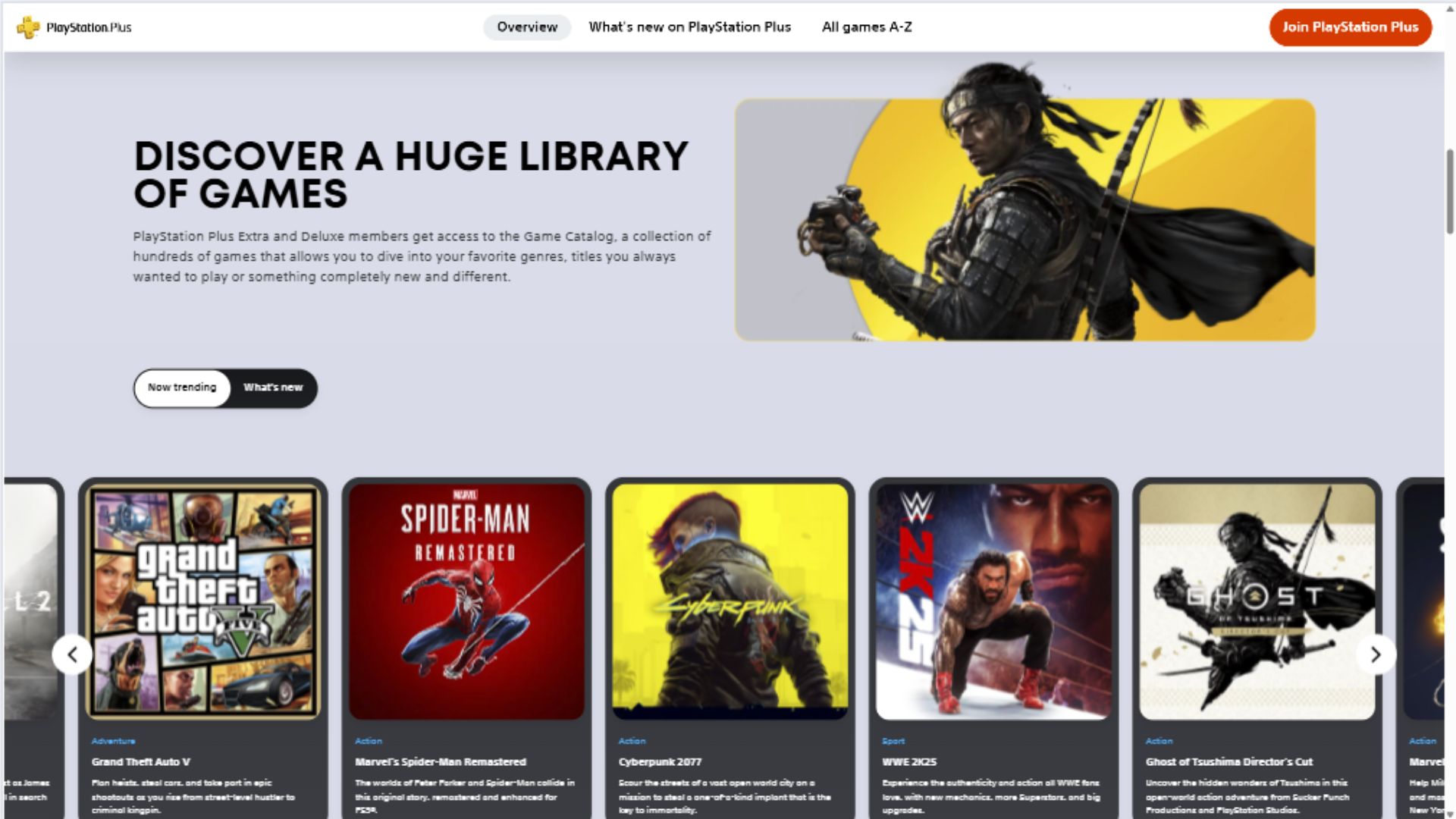
Best for: PlayStation console owners wanting monthly free games and online multiplayer
Pricing from: $9.99/month Essential, $14.99/month Extra (400+ games), $17.99/month Premium (740+ games with classics)
Key features: Monthly free games (3+ titles), online multiplayer access, exclusive discounts, cloud save storage, game help feature, Extra/Premium tiers provide extensive catalog access, PlayStation classics collection
PlayStation Plus Essential ($9.99/month) provides the baseline value proposition PlayStation owners require for online multiplayer, with monthly free games serving as bonus value. The 2-3 games offered monthly range from indies to AAA titles, building a substantial library over time for subscribed players. Unlike Game Pass where games rotate out, PS Plus games claimed during your subscription remain playable as long as you maintain membership, encouraging continuous subscription rather than on-off cycling.
The Extra ($14.99) and Premium ($17.99) tiers transform PS Plus into Sony's Game Pass competitor, providing catalog access to 400+ (Extra) or 740+ (Premium) games including many first-party Sony titles, though notably without day-one new releases. The Premium tier adds PlayStation classics from PS1/PS2/PSP eras and game trials for upcoming releases. For PlayStation owners with game backlogs or interest in older Sony exclusives, Extra/Premium provide excellent value, though they don't match Game Pass's new release inclusion.
The monthly free games' quality varies significantly—some months deliver genuine AAA hits like God of War or Spider-Man, while others feature lesser-known indies. The exclusive store discounts (typically additional 10% off sale prices) stack with Sony's seasonal sales to create competitive pricing for PlayStation digital purchases. Cloud save storage prevents loss of progress, though Sony's implementation is less seamless than Xbox's.
Pros:
Required for online multiplayer with monthly game bonuses
Claimed games remain accessible during subscription
Extra/Premium tiers provide substantial catalog access
Exclusive discounts stack with sale prices
PS1/PS2 classics library on Premium tier
Cons:
Essential tier offers less than Game Pass for similar price
No day-one new release inclusion like Game Pass
Monthly games are hit-or-miss quality
Claimed games require continuous subscription access
Premium tier pricing approaches two subscriptions' cost
9. itch.io
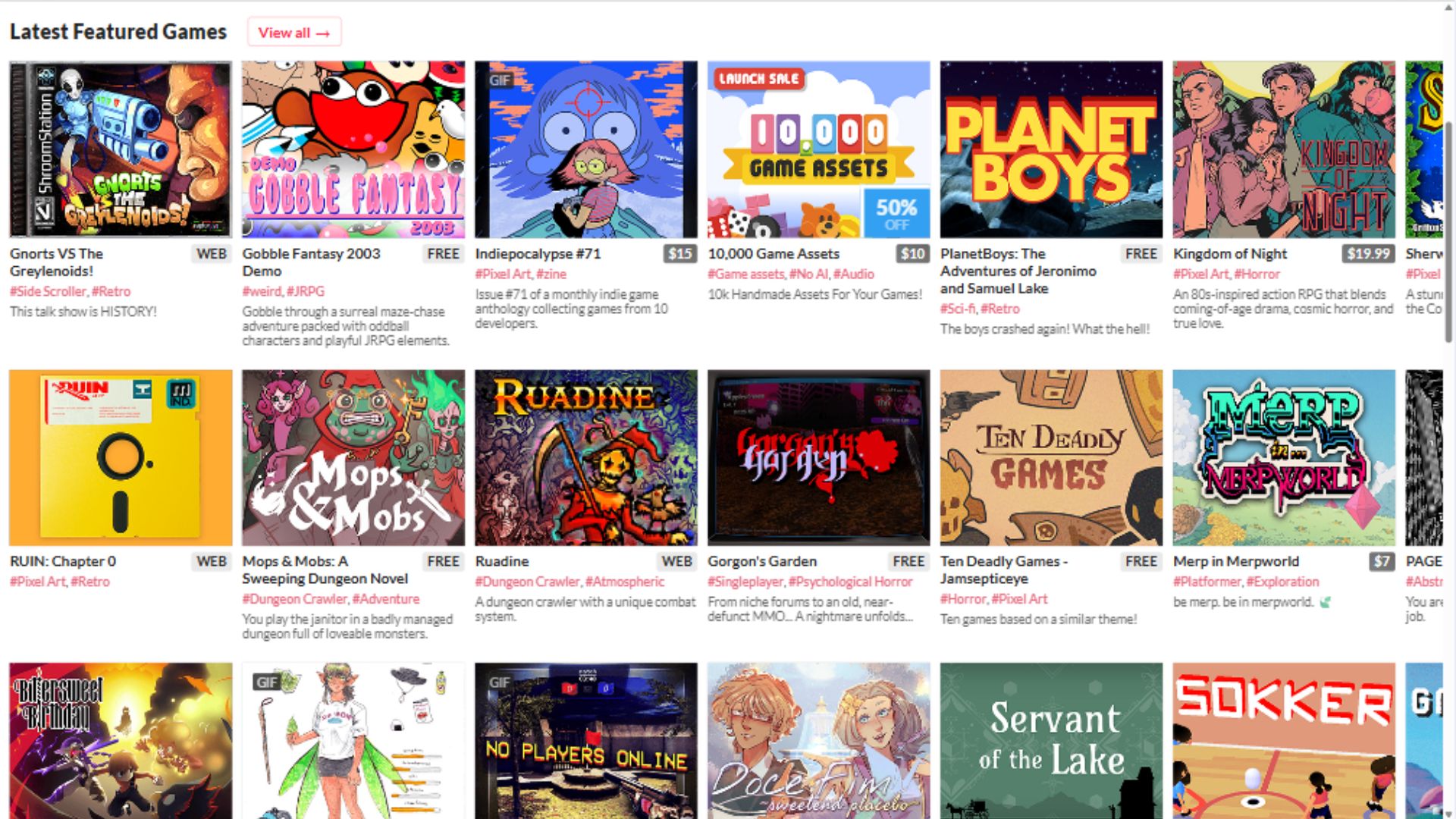
Best for: Indie game enthusiasts and developers wanting flexible pricing models
Pricing from: Pay-what-you-want (including free), suggested prices typically $3-20
Key features: 300,000+ indie games and assets, pay-what-you-want pricing, developer-direct sales (no minimum cut), DRM-free downloads, game jams and community events, adult content allowed, completely open submission, itch.io app for library management
itch.io operates as gaming's most open marketplace, allowing developers to publish without curation or approval processes and set flexible pricing including pay-what-you-want models where buyers decide fair value (even $0). This radical approach creates a platform teeming with experimental games, game jam entries, visual novels, tabletop RPGs, and creative projects that wouldn't exist on traditional storefronts. The deal-hunting appeal comes from developers offering premium content at voluntary pricing or massive discounts to build audiences.
The Bundle for Racial Justice and Equality (2020) exemplified itch.io's community-driven value, raising $8.1 million for charity while providing 1,700+ games for $5 minimum donation. Regular charity bundles (Ukraine relief, Palestinian aid) continue this tradition, offering hundreds of games for nominal fees while supporting causes. The platforming emphasis on discoverability over commercialization means hidden gems abound for patients shoppers willing to browse beyond mainstream releases.
itch.io's completely DRM-free approach and developer-friendly revenue split (developers set their own revenue share, defaulting to 90/10 favoring creators) make it the most ethical marketplace for supporting independent developers directly. The adult content allowance creates space for developers censored elsewhere. The quality variation is extreme—masterpieces exist alongside experimental prototypes, requiring shoppers to evaluate carefully rather than relying on platform curation.
Pros:
Pay-what-you-want pricing allows setting your own value
Most developer-friendly platform (90/10 revenue split default)
100% DRM-free downloads
Regular charity bundles provide exceptional value
300,000+ games including experimental and niche content
Cons:
No curation means quality varies wildly
Discovery difficult with overwhelming quantity
Many games are prototypes or incomplete projects
Limited refund protections
Interface less polished than commercial storefronts
10. CDKeys
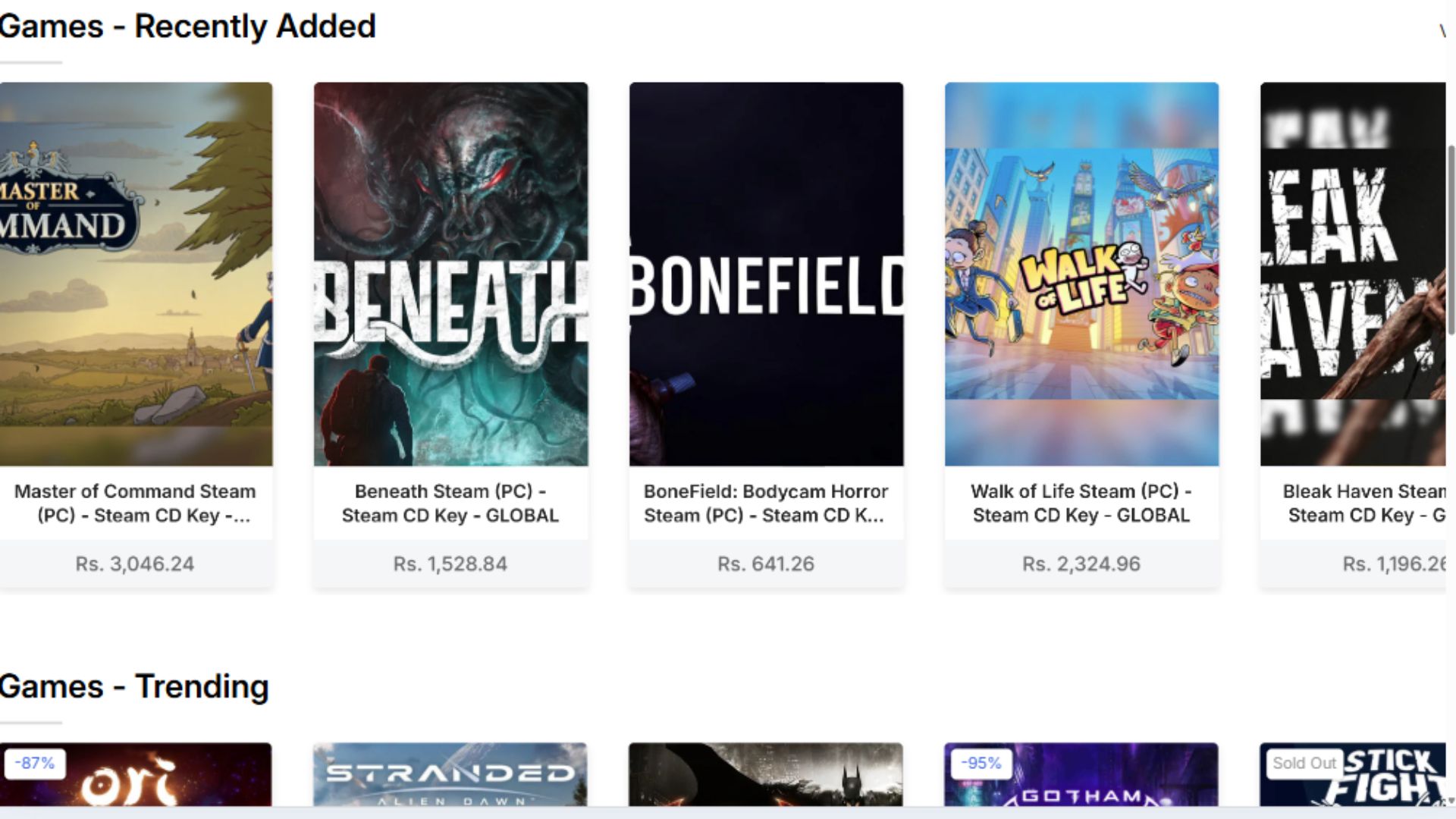
Best for: Discounted digital codes for games and subscription services
Pricing from: Games typically 20-40% below retail; subscription services 30-50% off official prices
Key features: Deep discounts on game keys, discounted Xbox/PlayStation/Nintendo subscriptions, immediate digital delivery, frequent flash sales, loyalty reward system, multi-platform keys (Steam, Origin, uPlay, etc.)
CDKeys operates in the gray market reseller space, offering game keys and subscription codes at significant discounts compared to official storefronts. The platform's appeal comes from pricing often 20-50% below retail on new releases and subscription services—Xbox Game Pass Ultimate codes frequently sell for 30-40% less than Microsoft's official pricing, creating substantial savings for long-term subscribers. The immediate digital delivery and Steam/console activation mean no practical difference from official purchases aside from price.
The legitimacy question looms over CDKeys and similar resellers—while they're not outright key reselling marketplaces like G2A (which source keys from users), CDKeys functions as a business acquiring keys through regional pricing arbitrage, bulk sales, and promotional codes. This places them in ethical gray area: they're not outright scams (keys generally work), but purchases don't always support developers as effectively as official stores. Major publishers and platform holders discourage these services, though they've never faced the same condemnation as fraudulent key resellers.
For budget-conscious gamers willing to accept gray market ethics, CDKeys provides genuine savings on games and subscription services. The Xbox Game Pass Ultimate and PlayStation Plus discounts particularly stand out, converting annual subscriptions that would cost $204 official to approximately $120-140 through CDKeys. The platform's longevity (operating since 2013) and generally functional keys suggest relative reliability within the gray market space, though buyers assume some risk.
Pros:
Significant discounts (20-50% off) versus official pricing
Excellent subscription service deals (Game Pass, PS Plus)
Immediate digital delivery of working keys
Loyalty rewards provide additional savings
Operating since 2013 with generally reliable reputation
Cons:
Gray market ethics questionable—doesn't always support developers
Platform holders discourage these services
No guarantee of key regional compatibility
Minimal customer support compared to official platforms
Keys occasionally revoked (rare but possible)
Comparison Summary
Price and Value Models: Steam offers the largest selection with predictable seasonal sales. Humble Bundle and Fanatical provide bundle value (multiple games for single low prices). Epic gives away free games weekly. GOG focuses on DRM-free ownership. Green Man Gaming specializes in pre-order discounts. Xbox Game Pass and PlayStation Plus operate subscription models. itch.io enables pay-what-you-want. CDKeys discounts through gray market arbitrage.
Legitimacy Spectrum: Steam, GOG, Epic, Humble, Fanatical, and Green Man Gaming are completely legitimate authorized retailers working directly with publishers. Xbox Game Pass and PlayStation Plus are first-party platform services. itch.io is direct developer-to-consumer. CDKeys operates in ethical gray area—keys work but sourcing methods are opaque and potentially disadvantage developers.
Best for Different Gamers: Patient gamers wanting the deepest discounts should monitor Steam's seasonal sales and Humble Bundle. Free-game collectors should claim Epic's weekly offerings. DRM-free advocates need GOG. Pre-order buyers save most at Green Man Gaming. Active players consuming multiple games monthly benefit from Xbox Game Pass. Console owners require PlayStation Plus for multiplayer. Indie enthusiasts find hidden gems on itch.io. Budget-focused gamers willing to compromise on ethics save most at CDKeys.
Regional Considerations: Steam, GOG, and PlayStation Plus implement regional pricing favoring lower-income countries. Epic and Xbox Game Pass offer more uniform global pricing. CDKeys' regional arbitrage can provide better value for high-cost regions but creates complications with key activation. Humble and Fanatical have region-specific bundles with availability variations.
Buying Guide
Who Needs Multiple Platforms: Savvy gamers maximize savings by using different platforms for different purposes rather than loyalty to a single storefront. Monitor Steam for seasonal sales, claim Epic's free games weekly, subscribe to Humble Choice for monthly value, and use price comparison sites (IsThereAnyDeal) to identify best current pricing across authorized retailers. Building a multi-platform strategy ensures you never overpay while accessing each platform's unique advantages.
How It Works: Digital storefronts sell either direct licenses (Steam, Epic, GOG store accounts) or keys that activate elsewhere (Humble, Fanatical, GMG provide Steam keys). Subscription services (Game Pass, PS Plus) provide temporary access requiring ongoing payment. Gray market resellers (CDKeys) sell keys obtained through unofficial but generally functional channels. Understanding these distinctions helps evaluate when to purchase where.
Essential Features to Consider:
DRM Philosophy: GOG's complete DRM-free approach provides true ownership with offline installers. Steam's DRM is non-intrusive requiring only initial online authentication. Epic and others vary by game. Subscription services inherently involve DRM as access depends on active membership. Consider whether you value ownership or access.
Refund Policies: Steam's 14-day, 2-hour policy is industry standard. GOG extends to 30 days. Epic matches Steam. Humble and key resellers offer limited or no refunds after revealing keys. Subscriptions generally allow cancellation with no refunds for unused time. Evaluate risk tolerance against refund protections.
Platform Ecosystem: Steam provides the richest ecosystem with community features, workshop mods, user reviews, and social functions. GOG Galaxy unifies multi-platform libraries. Epic is streamlined but feature-light. Consider whether you value community features or just want games.
Payment Methods: Official platforms accept major credit cards and PayPal. Regional options (Alipay, iDeal, etc.) vary by platform. CDKeys and gray market sites often add payment processing fees. Consider convenience and security of payment options.
Price Tracking: Use IsThereAnyDeal.com or similar services to track historical pricing across authorized retailers, set price alerts for wishlist games, and avoid overpaying when better deals exist elsewhere. Manual monitoring across 10+ platforms is impractical—aggregate tracking services are essential.
Pricing Overview
Free Game Acquisition: Epic Games Store provides 52+ free games annually worth $500-1,000+ in retail value. Steam occasionally offers free weekends and permanent free-to-keep promotions (less frequent). GOG runs periodic free game giveaways. Claiming these consistently builds a substantial library at zero cost, though games skew toward older titles or promotional periods.
Budget Gaming ($5-15 monthly): Humble Choice at $11.99 monthly provides the best consistent value, delivering $150-300 retail value monthly in curated games. PC Game Pass at $10.99 offers unlimited access to 400+ games. Watching for bundle deals on Humble and Fanatical (typically $3-20) allows selective purchasing when specific games interest you.
Moderate Spending ($30-50 monthly): Combining selective purchases during Steam seasonal sales with one subscription service (Game Pass or Humble Choice) balances building owned library with accessing rotating content. Strategic pre-ordering through Green Man Gaming (15-25% off) on must-play releases reduces full-price spending. This approach yields 10-20 new games monthly mixing owned and accessed.
Maximum Value Strategy: Claim Epic's free games weekly (0 cost, $500-1,000 annual value). Subscribe to Humble Choice ($144 annually for ~100 games). Use IsThereAnyDeal to purchase only during historical low prices on Steam/GOG. This multi-platform approach delivers 150+ games annually for under $200 total, averaging $1-2 per game versus $20-70 retail.
Gray Market Risks vs. Savings: CDKeys-style discounts save 20-50% but carry risks including potential key revocation, ethical concerns about developer support, and minimal customer service. The savings are genuine and keys usually work, but evaluate whether the ethics and risks justify the discounts compared to waiting for official sales that provide similar savings while properly compensating developers.
FAQ
Q: Is it legal to buy from key reseller sites?
Buying keys from authorized resellers (Humble Bundle, Fanatical, Green Man Gaming) is completely legal—these sites work directly with publishers. Gray market sites like CDKeys exist in legal ambiguity: buying is legal for consumers, but keys may be obtained through methods publishers discourage (regional pricing arbitrage, bulk promotional codes). User-to-user marketplaces like G2A carry higher fraud risks with keys sometimes obtained through stolen credit cards. Stick to authorized resellers when possible, understand the ethical trade-offs with gray market, and avoid user-to-user marketplaces entirely.
Q: Should I wait for sales or buy games at launch?
This depends on your patience and FOMO tolerance. Single-player games depreciate rapidly—within 6-12 months, most titles hit 50%+ discounts. Multiplayer games benefit from launch population. Story-driven games risk spoilers if waiting. If a game will sit in your backlog unplayed for months anyway, waiting for sales is objectively better value. Use price tracking to identify typical discount timelines for genres you prefer. For must-play launches, Green Man Gaming's pre-order discounts (15-25% off) split the difference.
Q: Are subscription services like Game Pass worth it?
Game Pass provides exceptional value if you play 2-3+ games monthly—at $10.99-16.99 monthly, you break even versus purchasing if you'd otherwise buy 2-3 games annually at $40-70 each. The value diminishes if you primarily play one game long-term (better to buy it), complete games slowly (building backlog of unplayed purchases), or prefer replaying favorites (rental model doesn't suit). Calculate your actual gaming habits: monthly active games, completion rate, replay tendencies. Game Pass suits explorers and completionists; purchasing suits focused players and replayers.
Q: How do I avoid missing deals?
Set up a systematic approach: add desired games to Steam wishlist for email alerts, use IsThereAnyDeal to set price alerts across multiple stores, follow r/GameDeals on Reddit for community-posted sales, claim Epic's free games every Thursday, check Humble Bundle first Tuesday of each month for Choice reveals, and monitor your email for sale notifications from subscribed platforms. Most critically, define your target price before a game releases—decide in advance what you'll pay, then wait for that price rather than impulse buying at worse discounts.
Q: Can I get banned for using VPNs to access regional pricing?
Yes—using VPNs to circumvent regional pricing violates Steam, GOG, Epic, and most platform terms of service, risking account bans including loss of entire purchased library. While enforcement is inconsistent, the risk isn't worth the savings given legitimate deals regularly match or exceed VPN-accessed regional pricing. CDKeys and gray market sites profit from regional arbitrage, but as the buyer, you simply purchase keys normally without violating platform TOS (though ethics remain debatable). Never use VPNs to manipulate storefront pricing directly.