
We've spent weeks researching and comparing dozens of student loan refinancing companies to bring you this definitive guide. We looked at interest rates, loan terms, customer service, eligibility requirements, and special perks to identify the lenders that consistently deliver real value to borrowers. Whether you're a high earner looking for the lowest rates or someone who needs flexible terms, we've found options that could work for your situation.
Top 10 at a Glance
SoFi – Best for comprehensive member benefits and career support
Earnest – Best for flexible repayment customization
Laurel Road – Best for healthcare professionals
Splash Financial – Best for comparing multiple lenders at once
CommonBond – Best for social impact and fixed-rate loans
ELFI – Best for personalized service and quick decisions
LendKey – Best for working with community banks and credit unions
PenFed – Best for military members and their families
Citizens Bank – Best for multi-year rate discount programs
RISLA – Best for borrowers in the Northeast with lower credit scores
1. SoFi – Best for Comprehensive Member Benefits and Career Support
SoFi has become one of the most recognized names in student loan refinancing, and for good reason. Beyond competitive rates, they've built an entire ecosystem of benefits for members, including career coaching, financial planning, networking events, and even help with your job search if you become unemployed.
What sets SoFi apart is their commitment to your overall financial wellness, not just your loan. They offer rate discounts for autopay, and there are absolutely no origination fees, application fees, or prepayment penalties. You can refinance both federal and private loans, with terms ranging from 5 to 20 years. Their unemployment protection program pauses your payments if you lose your job, giving you breathing room while you search for new employment.
Pricing: Variable rates starting around 5.49% APR; fixed rates starting around 5.99% APR (rates vary based on creditworthiness and other factors)
Pros:
Extensive member benefits including career services and financial advising
Unemployment protection with payment pause
No fees whatsoever – no origination, application, or prepayment penalties
Option to add a cosigner to qualify for better rates
Rate discounts available for autopay enrollment
Cons:
Requires strong credit and steady income to qualify
No option for extending terms beyond 20 years
Minimum loan amount of $5,000 may not work for small refinances
You'll lose federal loan protections if refinancing federal loans
2. Earnest – Best for Flexible Repayment Customization
Earnest takes a uniquely personalized approach to student loan refinancing. Instead of forcing you into standard 5-, 10-, or 15-year terms, Earnest lets you customize your repayment timeline down to the month. Want to pay off your loan in exactly 8 years and 7 months? You can do that.
This lender also considers more than just your credit score when evaluating your application. They look at your savings patterns, earning potential, and overall financial picture, which can be especially helpful for recent graduates who haven't built extensive credit histories yet. Earnest offers both fixed and variable rates, and you can skip one payment every 12 months if you need temporary relief – a feature that can be a lifesaver during unexpected financial challenges.
Pricing: Variable rates starting around 5.64% APR; fixed rates starting around 5.89% APR (actual rates depend on individual qualifications)
Pros:
Highly customizable loan terms from 5 to 20 years, adjustable by the month
Skip one payment per year without penalty after 12 months of on-time payments
Considers holistic financial picture beyond just credit score
No fees for origination, prepayment, or late payments
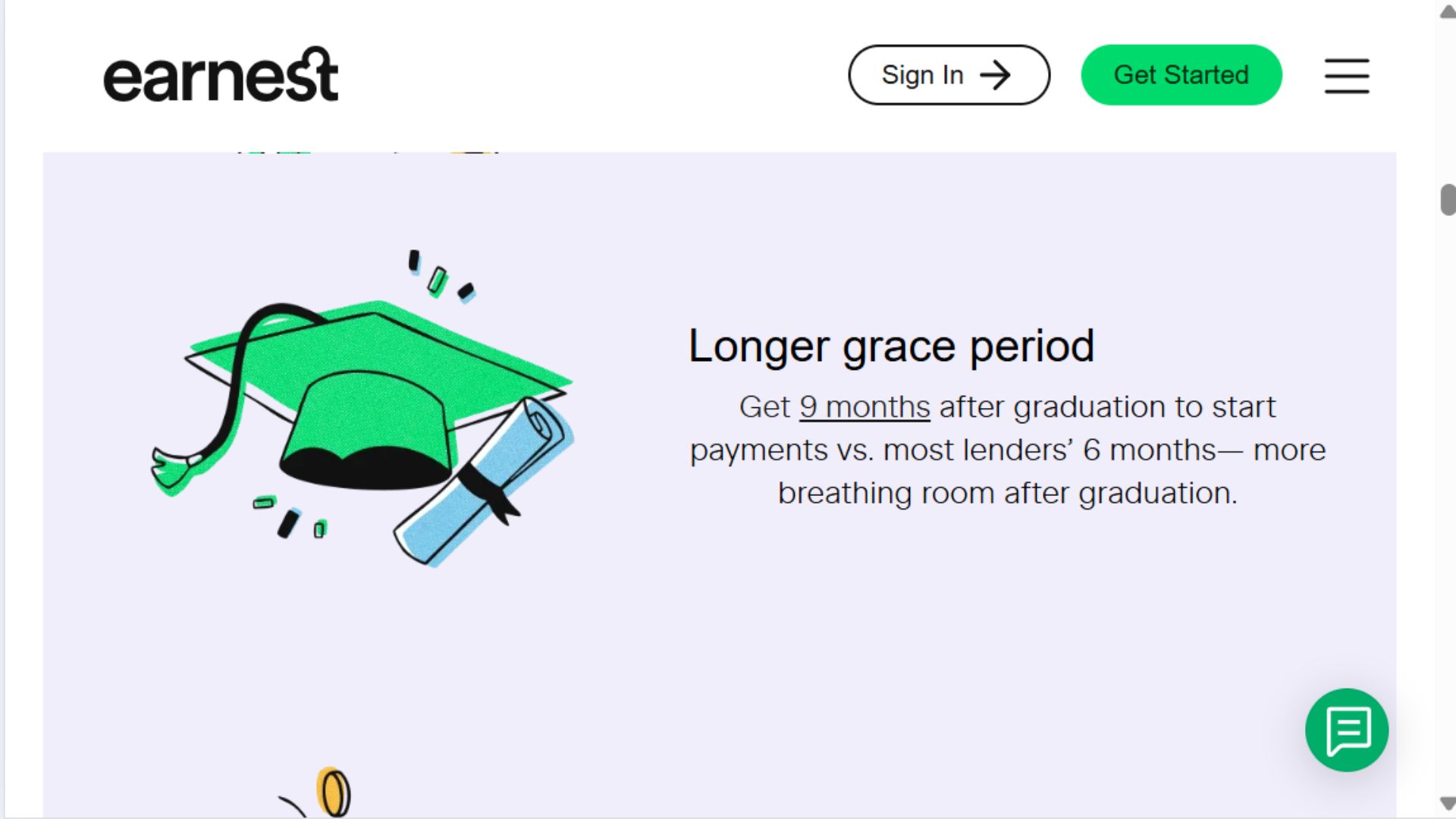
Nine-month grace period before payments begin after refinancing
Cons:
Requires a minimum credit score of 650
Must have graduated or be within one semester of graduating
Lower loan minimums available but may require higher income
Customer service primarily available during business hours
3. Laurel Road – Best for Healthcare Professionals
Originally founded to serve medical professionals, Laurel Road understands the unique financial situation of doctors, dentists, nurses, and other healthcare workers. They offer some of the most competitive rates in the industry and welcome applications from residents and fellows who are still in training.
Laurel Road doesn't charge any application fees, origination fees, or prepayment penalties, and they process applications quickly – often providing loan decisions within days. Their customer service team is known for being responsive and knowledgeable about the specific challenges healthcare professionals face, from delayed earning potential during residency to high debt loads from graduate programs. While they're ideal for medical professionals, Laurel Road accepts applications from borrowers in any field who meet their credit and income requirements.
Pricing: Variable rates starting around 5.49% APR; fixed rates starting around 5.75% APR (rates subject to credit and income verification)
Pros:
Specializes in serving healthcare professionals at all career stages
No fees – zero origination, application, or prepayment charges
Will refinance loans for residents and fellows still in training
Fast application process with quick decisions
Bonus cash back offers for new customers (promotions vary)
Cons:
Requires good to excellent credit for best rates
Limited term flexibility compared to some competitors
No unemployment protection or payment pause options
Must have graduated to qualify
4. Splash Financial – Best for Comparing Multiple Lenders at Once
Splash Financial operates differently than traditional lenders – they're actually a marketplace that connects you with credit unions and banks offering student loan refinancing. With one application, you can receive multiple offers and compare rates from various lenders side by side, making it easier to find the best deal without filling out dozens of forms.
This approach is particularly valuable because different lenders may offer you different rates based on their specific criteria. One might love your employment history, while another focuses more on your credit score. Splash Financial's network includes over 30 lending partners, and they specialize in serving professionals like lawyers, doctors, engineers, and other high-earning career paths. Their platform is user-friendly, and there's no obligation to accept any offer – you can simply compare and decide what works best.
Pricing: Rates vary by lender but generally range from 5.24% to 9.99% APR for both variable and fixed options (dependent on lender and borrower qualifications)
Pros:
Compare multiple loan offers with a single application
Access to credit unions and smaller banks that may offer competitive rates
No impact on your credit score for initial rate checking
Specializes in serving high-income professionals
Free to use with no platform fees
Cons:
Doesn't service loans directly – works through partner lenders
Customer service experience varies depending on which lender you choose
May require higher incomes or credit scores depending on partner
Some borrowers may find fewer options than expected
5. CommonBond – Best for Social Impact and Fixed-Rate Loans

CommonBond combines competitive refinancing options with a social mission: for every loan funded, they help send a child to school through their partnership with Pencils of Promise. If you want your refinancing to make a broader impact, this might resonate with you.
Beyond their social responsibility program, CommonBond offers solid rates, particularly on fixed-rate loans. They provide a hybrid forbearance program that allows you to pause payments for up to 24 months over the life of your loan if you face financial hardship, which offers more flexibility than many competitors. Their customer service consistently receives high marks, and they've been recognized for their transparency and borrower-friendly practices. CommonBond also offers an MBA loan product specifically designed for business school students.
Pricing: Variable rates starting around 5.74% APR; fixed rates starting around 5.94% APR (final rates based on credit review and income)
Pros:
Social impact program donates to education for every loan funded
Up to 24 months of forbearance available during financial hardship
No application, origination, or prepayment fees
Excellent customer service ratings
Particularly competitive fixed-rate options
Cons:
Requires a minimum loan amount of $5,000
Must have graduated to be eligible
Income requirements may be higher than some competitors
Limited term length options compared to larger lenders
6. ELFI (Education Loan Finance) – Best for Personalized Service and Quick Decisions
ELFI takes pride in offering a more personal touch in the student loan refinancing world. When you apply, you're assigned a dedicated student loan advisor who guides you through the entire process and remains your point of contact for questions. This level of service can be invaluable if you're new to refinancing or want expert guidance.
What's particularly impressive about ELFI is their speed – they can often provide loan decisions within 15 minutes and fund loans in as little as one week after approval. They work with Southeast Bank as their lending partner and offer competitive rates with no application, origination, or prepayment fees. ELFI also provides helpful educational resources on their website, including calculators and guides to help you determine if refinancing makes sense for your situation.
Pricing: Variable rates starting around 5.28% APR; fixed rates starting around 5.48% APR (rates depend on creditworthiness and other factors)
Pros:
Dedicated student loan advisor assigned to each borrower
Extremely fast decisions – often within 15 minutes
Quick funding once approved (as fast as one week)
No fees for application, origination, or prepayment
Helpful educational resources and planning tools
Cons:
Requires excellent credit for the best rates
Minimum loan amount of $10,000
Limited to borrowers who have graduated
Fewer flexible features compared to some competitors
7. LendKey – Best for Working with Community Banks and Credit Unions
LendKey operates as a lending marketplace that connects borrowers with community banks and credit unions across the country. This model can result in more competitive rates because credit unions are member-owned and often offer better terms than large commercial banks.
By working through local and regional financial institutions, LendKey provides a unique combination of competitive national rates and local service. You can refinance both federal and private student loans with terms ranging from 5 to 20 years. Many of their lending partners offer rate discounts if you already have a relationship with them, such as an existing checking account. The application process is straightforward, and LendKey handles the coordination between you and the lender, simplifying what could otherwise be a complicated process.
Pricing: Variable rates starting around 5.49% APR; fixed rates starting around 5.89% APR (actual rates determined by partner institution and borrower profile)
Pros:
Access to competitive rates from credit unions and community banks
May receive additional discounts for existing banking relationships
Flexible term options from 5 to 20 years
No prepayment penalties
Supports borrowers through partner coordination
Cons:
Loan servicing experience varies by partner institution
Must meet each lender's specific eligibility requirements
Some borrowers may have limited options depending on location
Minimum loan amounts vary by lender
8. PenFed (Pentagon Federal Credit Union) – Best for Military Members and Their Families

PenFed is a credit union that has served the military community since 1935, and their student loan refinancing program reflects their commitment to military members, veterans, and their families. While you don't have to be military-affiliated to join PenFed, they offer special benefits for those who are.
PenFed offers competitive rates and, as a credit union, returns profits to members through better rates and lower fees. They have a reputation for flexibility with applicants and may consider borrowers with lower credit scores than some competitors require. You can refinance up to 100% of your student loan debt, and there are no application, origination, or prepayment fees. To access their products, you'll need to become a PenFed member, which requires opening a savings account with a minimum $5 deposit.
Pricing: Variable rates starting around 5.74% APR; fixed rates starting around 6.49% APR (membership required; rates vary by creditworthiness)
Pros:
Excellent option for military members, veterans, and their families
Credit union structure often means better rates and member benefits
May work with lower credit scores than some competitors
No application, origination, or prepayment fees
Refinance up to 100% of your student loan debt
Cons:
Must become a credit union member (requires $5 savings account)
Variable rate options may be more limited
Fixed rates may be slightly higher than some competitors
Processing times can be longer than online-only lenders
9. Citizens Bank – Best for Multi-Year Rate Discount Programs

Citizens Bank stands out with their robust rate discount program that can lower your interest rate by up to 0.50% through various qualifying relationships. If you set up autopay, have an existing Citizens Bank checking account, or meet loyalty requirements, you can stack these discounts for significant savings over the life of your loan.
As a traditional bank with decades of experience, Citizens offers the stability and resources of a large financial institution while still maintaining competitive rates. They provide both fixed and variable rate options with terms from 5 to 20 years, and they'll refinance both federal and private student loans. Citizens also has a strong online platform and mobile app, making it easy to manage your loan on the go. Their customer service is available through multiple channels, including phone, online chat, and in-person at branch locations.
Pricing: Variable rates starting around 5.99% APR; fixed rates starting around 6.19% APR (before discounts; rates with autopay and relationship discounts can be lower)
Pros:
Multiple rate discount opportunities (up to 0.50% total)
Strong mobile app and online platform for loan management
Traditional bank with branch locations for in-person support
Flexible terms from 5 to 20 years
Option to release cosigners after meeting certain requirements
Cons:
Base rates may be slightly higher before discounts
Requires strong credit and income to qualify
Must maintain relationships with Citizens to keep certain discounts
Federal loan protections lost when refinancing federal loans
10. RISLA (Rhode Island Student Loan Authority) – Best for Borrowers in the Northeast with Lower Credit Scores

RISLA is a nonprofit organization originally created to serve Rhode Island residents, but they now accept applications from borrowers in several Northeastern states. What makes RISLA unique is their mission-driven approach and willingness to work with borrowers who might not qualify elsewhere, including those with lower credit scores.
As a nonprofit, RISLA isn't focused on maximizing profits, which often translates to more flexible lending criteria and borrower-friendly policies. They offer fixed-rate refinancing options and provide excellent customer service with dedicated loan advisors. RISLA also stands out for their financial education resources and commitment to helping borrowers understand their options. While their rates may not always be the absolute lowest in the market, they serve an important role for borrowers who need a lender willing to look beyond a perfect credit score.
Pricing: Fixed rates starting around 6.24% APR (rates depend on credit profile and are generally competitive for borrowers with fair credit)
Pros:
Nonprofit organization with mission to help borrowers
More flexible credit requirements than many competitors
Excellent personalized customer service
Strong financial education and counseling resources
Serves borrowers who might not qualify elsewhere
Cons:
Limited to borrowers in certain Northeastern states
Generally only offers fixed-rate options
Rates may be higher than premium lenders for excellent credit borrowers
Smaller operation with fewer technological features than larger companies
What Is Student Loan Refinancing?
Student loan refinancing is the process of taking out a new loan from a private lender to pay off one or more existing student loans. The new loan comes with its own interest rate, repayment term, and monthly payment amount. Essentially, you're replacing your old loans with a fresh start.
When you refinance, a private lender pays off your current student loans and issues you a new loan with new terms. If you qualify for a lower interest rate than you're currently paying, refinancing can save you money – sometimes thousands of dollars over the life of your loan. You can refinance federal student loans, private student loans, or a combination of both, consolidating multiple payments into one monthly bill.
It's important to understand that refinancing is different from federal loan consolidation. Refinancing always involves a private lender and results in a new interest rate, while federal consolidation combines federal loans into a new federal loan with a weighted average of your existing rates.
Benefits of Student Loan Refinancing
Lower Interest Rates: The primary benefit of refinancing is securing a lower interest rate than you're currently paying. If your credit score has improved since you first borrowed, or if market rates have dropped, you could qualify for a significantly better rate. Even a 1% reduction can translate to thousands in savings, especially on large loan balances.
Simplified Payments: If you're juggling multiple student loans with different servicers, due dates, and interest rates, refinancing can simplify your life. You'll consolidate everything into one monthly payment, making it easier to budget and reducing the risk of missing a payment.
Flexible Repayment Terms: Refinancing gives you the option to adjust your repayment timeline. You can choose a shorter term to pay off debt faster and save on interest, or extend your term to lower your monthly payment and improve cash flow. This flexibility lets you align your student loans with your current financial situation and goals.
Release a Cosigner: Some refinancing lenders offer cosigner release programs, which can free a parent or family member from their obligation on your loan after you've made a certain number of on-time payments and meet other requirements.
Save Money Over Time: By lowering your interest rate, reducing your term length, or both, you can save substantial money over the life of your loan. Many borrowers save $10,000 to $30,000 or more by refinancing, depending on their loan balance and rate reduction.
What to Look for When Choosing a Student Loan Refinancing Company
Interest Rates and APR: Compare both fixed and variable rate options. Fixed rates stay the same for the life of your loan, providing predictable payments, while variable rates can fluctuate with market conditions but often start lower. Make sure you're comparing APR (annual percentage rate), which includes fees, not just the interest rate.
Fees and Costs: The best refinancing lenders charge no application fees, origination fees, or prepayment penalties. Avoid any lender that tries to charge you upfront fees for refinancing – there's no reason to pay for this service when many quality lenders offer it for free.
Repayment Term Options: Look for lenders that offer flexibility in choosing your repayment term, typically ranging from 5 to 20 years. The right term for you depends on whether you prioritize lower monthly payments (longer terms) or paying less interest overall (shorter terms).
Eligibility Requirements: Each lender has different standards for credit scores, income, employment, and graduation status. Some require excellent credit and high income, while others are more flexible. Consider whether you'll need a cosigner to qualify for competitive rates.
Customer Service and Support: Read reviews about each lender's customer service experience. Look for companies that offer multiple ways to contact them, have responsive support teams, and receive positive feedback from existing customers.
Hardship Options: Life happens, so look for lenders that offer forbearance, unemployment protection, or payment pause options if you face financial difficulties. These safety nets can be crucial during unexpected job loss or emergencies.
Additional Perks and Benefits: Some lenders offer valuable extras like career coaching, financial planning, rate discounts for autopay or loyalty, or cash back bonuses. While these shouldn't be the primary reason to choose a lender, they can provide extra value.
Federal Loan Considerations: If you're refinancing federal student loans, remember that you'll lose federal protections like income-driven repayment plans, Public Service Loan Forgiveness eligibility, and federal forbearance options. Make sure the benefits of refinancing outweigh what you're giving up.
Frequently Asked Questions
Is student loan refinancing worth it?
Refinancing is worth it if you can secure a significantly lower interest rate (typically at least 0.5% to 1% lower) and don't need federal loan protections. It makes the most sense for borrowers with stable income, good credit, and private loans or federal loans they're confident they won't need federal repayment programs for. Calculate your potential savings using online calculators, and consider your long-term plans before refinancing federal loans, as you'll permanently lose access to federal benefits.
How does refinancing affect my credit score?
Initially, refinancing may cause a small, temporary dip in your credit score due to the hard credit inquiry and the new account opening. However, over time, refinancing can actually improve your credit by reducing your debt-to-income ratio as you pay down the loan and by demonstrating consistent on-time payment history. Most borrowers see their scores recover within a few months and often increase over the long term with responsible repayment.
Can I refinance my student loans more than once?
Yes, you can refinance your student loans multiple times if you continue to qualify and can secure better rates. Many borrowers refinance again after their income increases, their credit score improves, or when market interest rates drop. There are no limits on how many times you can refinance, though you should consider whether the savings justify going through the process again and any timing restrictions individual lenders might have.
What credit score do I need to refinance student loans?
Most lenders require a minimum credit score of 650 to 680, though the best rates typically go to borrowers with scores of 720 or higher. However, requirements vary significantly by lender – some specialized lenders work with borrowers in the 600s, while others primarily serve those with excellent credit. If your score is below 650, you might need a creditworthy cosigner to qualify or should focus on improving your credit before applying.