
We're covering the destinations that consistently earn the respect of food travelers and locals alike, along with what to actually order, what makes each city's scene unique, and a few practical tips so your trip doesn't come with a stomachache attached.
Top 10 at a Glance
Bangkok, Thailand
Mexico City, Mexico
Singapore
Hanoi, Vietnam
Istanbul, Turkey
Marrakech, Morocco
Taipei, Taiwan
Mumbai, India
Osaka, Japan
New Orleans, USA
1. Bangkok, Thailand
Bangkok might be the single most famous street food city on earth, and it earns that reputation block by block. Vendors set up entire kitchens on the sidewalk, wok-frying pad kra pao in minutes flat while som tam gets pounded fresh to order in a mortar and pestle right in front of you.
What to try: pad kra pao (spicy basil stir-fry), boat noodles, and mango sticky rice from a cart near any BTS station. Chinatown's Yaowarat Road turns into a food festival every night, with seafood grilling curbside and lines forming for specific vendors who've been perfecting one dish for decades.
Why it matters: Bangkok street food isn't a budget alternative to real dining, it's often considered the best food in the city, full stop. Some stalls have even earned Michelin recognition without ever getting a proper storefront.
2. Mexico City, Mexico
Mexico City runs on tacos, and not the kind you're used to back home. Tacos al pastor, spinning on a vertical spit shaved straight off a trompo, are the signature dish, but the city's street food scene goes far deeper, from quesadillas stuffed with squash blossoms to elote slathered in crema, cheese, and chili powder.
What to try: tacos al pastor near any late-night taqueria, tlacoyos from a market stall, and churros dipped in Mexican hot chocolate. The Roma and Condesa neighborhoods have dense clusters of stands, but some of the best food is found in less touristy areas like Doctores.
Why it matters: This is a cuisine built on centuries of technique passed down through families, and the street stalls are often more skilled and more consistent than sit-down restaurants charging triple the price.
3. Singapore
Singapore turned street food into an institution, literally. Hawker centers are government-organized food courts where dozens of independent vendors serve dishes representing Chinese, Malay, and Indian culinary traditions side by side, and several stalls have earned Michelin stars while still charging just a few dollars a plate.
What to try: Hainanese chicken rice, laksa, and char kway teow at hawker centers like Maxwell Food Centre or Chinatown Complex. Each stall usually specializes in one or two dishes they've perfected, so don't expect a huge menu, expect precision.
Why it matters: Singapore proves that street food can be world-class, hygienic, and affordable all at once, making it one of the most approachable entry points for first-time street food travelers.
4. Hanoi, Vietnam
Hanoi's street food scene revolves around plastic stools, steaming broth, and vendors who've been making the same dish for generations. Pho was born in northern Vietnam, and Hanoi remains one of the best places on earth to eat it, alongside bun cha, the grilled pork and noodle dish made famous internationally after a well-known presidential visit.
What to try: pho bo (beef pho) in the early morning, bun cha for lunch, and egg coffee as an only-in-Hanoi specialty. The Old Quarter is dense with vendors, many operating from the same tiny storefront or sidewalk spot for decades.
Why it matters: Hanoi food culture is built around ingredients so fresh they're often bought that same morning, giving dishes a clarity of flavor that's hard to replicate elsewhere.
5. Istanbul, Turkey
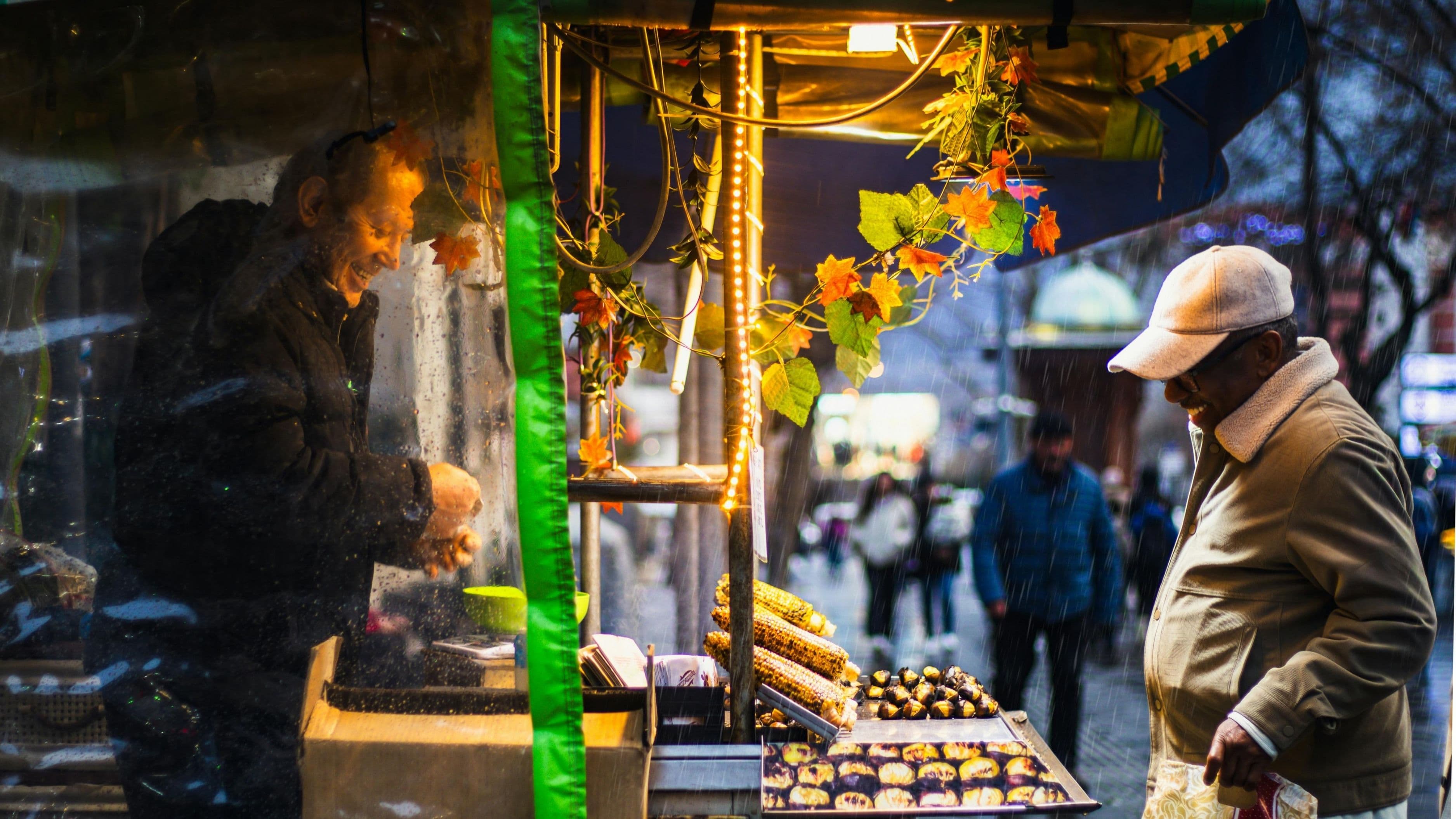
Istanbul sits at the crossroads of two continents, and its street food reflects that blend of Mediterranean, Middle Eastern, and Central Asian influence. Simit vendors line nearly every corner with their sesame-crusted bread rings, while balik ekmek, grilled fish sandwiches sold from boats docked along the Bosphorus, offer a meal with a view included.
What to try: simit with tea for breakfast, balik ekmek near Eminonu, and doner kebab carved fresh at nearly any street stand. Kumpir, a loaded baked potato piled high with toppings, has become a favorite among both locals and visitors.
Why it matters: Istanbul's street food scene reflects thousands of years of trade routes converging in one place, giving the city a food culture unlike anywhere else in the region.
6. Marrakech, Morocco
Jemaa el-Fnaa square transforms every evening into one of the most atmospheric food markets in the world, with dozens of stalls firing up grills, ladling out tagines, and serving fresh-squeezed orange juice for pennies. The energy alone makes it worth visiting, but the food holds up just as well.
What to try: grilled merguez sausage, harira soup, and snail soup for the adventurous. Freshly baked msemen (Moroccan flatbread) from a nearby vendor makes a great snack while you wander.
Why it matters: The nightly transformation of the square into an open-air food market is a genuine cultural experience, not a tourist gimmick, and locals eat here just as often as visitors.
7. Taipei, Taiwan
Taipei's night markets are practically their own tourism category. Shilin and Raohe night markets pack in hundreds of vendors selling everything from stinky tofu to bubble tea, and the sheer variety means you could visit five nights in a row and never eat the same thing twice.
What to try: braised pork rice, oyster omelets, and the city's famous fried chicken cutlets, larger than the plate they're served on. Bubble tea originated in Taiwan, so this is the place to try the real thing.
Why it matters: Taipei's night market culture is deeply woven into daily life, functioning as social gathering spots as much as dining destinations.
8. Mumbai, India
Mumbai's street food is fast, bold, and built for a city that never really slows down. Vada pav, often called India's answer to the burger, is sold from carts on nearly every corner, while pav bhaji sizzles on massive flat griddles at dinner-hour food stalls.
What to try: vada pav, pav bhaji, and bhel puri from a beachside vendor at Chowpatty Beach. Look for stalls with a consistent line of local customers, that's usually the strongest sign of quality and freshness.
Why it matters: Mumbai street food reflects the pace and diversity of the city itself, blending influences from across India into dishes built for eating on the move.
9. Osaka, Japan
Osaka carries the nickname "Japan's kitchen," and its street food scene centers on a handful of iconic dishes rather than sprawling variety. Takoyaki, octopus-filled batter balls cooked in special molded pans, and okonomiyaki, a savory pancake loaded with cabbage and toppings, both originated in this city.
What to try: takoyaki fresh off the griddle in Dotonbori, okonomiyaki cooked tableside, and kushikatsu, breaded and fried skewers dipped in a shared sauce (with a strict no-double-dipping rule).
Why it matters: Osaka's food culture places enormous emphasis on technique and consistency, so even simple street snacks are made with real precision.
10. New Orleans, USA
New Orleans earns its spot on this list through a street food culture built around Creole and Cajun flavors that developed nowhere else. Po'boys, muffulettas, and beignets dusted in powdered sugar represent a food identity shaped by French, African, Spanish, and Caribbean influence.
What to try: a fried shrimp po'boy from a French Quarter counter, beignets at a walk-up window, and a muffuletta split for sharing. Food trucks and walk-up counters throughout the city serve dishes that rival any sit-down restaurant.
Why it matters: New Orleans proves street food culture isn't limited to Asia or Latin America, American cities have their own deep-rooted traditions worth traveling for.
Quick Takeaway
If you only have time for one trip, Bangkok and Singapore offer the most beginner-friendly entry points with strong food safety standards and dense concentrations of vendors. For deeper cultural immersion, Hanoi, Marrakech, and Mumbai reward travelers willing to explore beyond the main tourist strips.
What to Avoid
Skip stalls with no line and food that's been sitting out uncovered, freshness and turnover are your best indicators of safety. Avoid drinking tap water or ice from unclear sources in most of these destinations, stick to bottled or filtered water instead. Don't assume the priciest-looking stall is the best, some of the most legendary vendors operate out of the simplest setups. And pace yourself, sampling everything in one sitting will wear out even a serious food traveler.
FAQ
Is street food safe to eat while traveling? Generally yes, especially at busy stalls with high turnover. Watch for freshly cooked food, avoid anything lukewarm or pre-made, and trust vendors with visible lines of local customers.
What's the best way to find good stalls? Follow the locals, look for consistent lines, and don't be afraid to ask hotel staff or locals for their personal favorites rather than relying only on guidebooks.
Should I bring anti-diarrheal medication when trying street food abroad? It's a reasonable precaution for sensitive stomachs, along with hand sanitizer and staying hydrated with safe water sources.
Conclusion
Street food isn't a backup plan for budget travelers, it's often the most authentic and memorable way to experience a destination's food culture. Whether it's a bowl of pho in Hanoi or takoyaki in Osaka, these ten cities prove that some of the best meals in the world are the ones eaten standing up.
📚 Sources
Michelin Guide – Bib Gourmand Street Food Selections – guide.michelin.com
Singapore Tourism Board – Hawker Culture – visitsingapore.com
CDC – Food and Water Safety While Traveling – cdc.gov/travel