Here's exactly what works, what it costs, and how to actually do it.
Top 10 at a Glance
Door draft stoppers and gap seals – lowest cost, fast fix
Heavy curtains or soundproof curtains – blocks window noise
Rugs and carpet padding – tackles floor noise and echo
Weatherstripping around doors and windows – seals sound leaks
Furniture placement and bookshelves – free-ish sound buffer
Acoustic foam panels – reduces echo and some sound transfer
Mass loaded vinyl (MLV) – serious sound blocking on a budget
Soundproof curtains + door sweep combo – layered mid-tier fix
Green glue and drywall damping – for renovation-level projects
Full acoustic room treatment – professional-grade, higher cost
1. Door Draft Stoppers and Gap Seals
What it is: A simple foam or fabric strip that sits at the base of your door, blocking the gap where most sound sneaks through.
Why it matters: That inch-wide gap under most interior doors is one of the biggest sound leaks in any room, and it's almost always ignored.
How to apply it: Measure the width of your door, buy a draft stopper or door sweep, and attach it with adhesive strips or screws depending on the type. It takes less than ten minutes.
Key benefit: Costs under $15 and noticeably cuts hallway noise and voices bleeding through.
Tip: Look for a double-sided draft stopper if the door swings both directions, so it doesn't fall off when the door opens.
2. Heavy Curtains or Soundproof Curtains
What it is: Thick, densely woven curtains hung over windows to absorb sound before it enters or exits the room.
Why it matters: Windows are thin compared to walls, and single-pane glass in particular lets a lot of outside noise through, especially traffic and street sounds.
How to apply it: Choose curtains rated for sound absorption or go with heavy blackout curtains as a budget alternative, and make sure they extend past the window frame on all sides for maximum coverage.
Key benefit: Reduces incoming noise noticeably while also improving insulation and blocking light.
Best for: Bedrooms and home offices facing busy streets.
Watch for: Regular thin curtains won't do much – the weight and density of the fabric is what actually blocks sound.
3. Rugs and Carpet Padding
What it is: Thick rugs or carpet padding placed over hard flooring to absorb impact noise and reduce echo.
Why it matters: Hard floors like hardwood or tile reflect sound instead of absorbing it, which makes footsteps, dropped items, and even voices louder and echoier than they need to be.
How to apply it: Lay a thick rug with a dense pad underneath, covering as much floor space as your budget allows – full wall-to-wall coverage works best, but even a large area rug helps.
Key benefit: Cuts both the noise you make and the echo in the room, and it's an easy DIY project with no tools required.
Best for: Apartments with downstairs neighbors or rooms used for recording or calls.
4. Weatherstripping Around Doors and Windows
What it is: Adhesive foam or rubber strips applied around the edges of doors and windows to seal small gaps.
Why it matters: Just like the gap under a door, small gaps around the frame let sound pass through even when everything looks closed and sealed.
How to apply it: Clean the door or window frame, measure the perimeter, and apply the weatherstripping directly to the frame where it meets the door or window when closed.
Key benefit: Extremely cheap – often under $10 for a full roll – and it also helps with drafts and energy efficiency.
Tip: Combine this with a door draft stopper for a noticeably quieter room without spending more than $25 total.
5. Furniture Placement and Bookshelves
What it is: Strategically placing furniture, especially bookshelves and upholstered pieces, against shared walls to add mass and absorb sound.
Why it matters: Sound travels more easily through empty, hard-surfaced rooms. Adding soft or dense objects breaks up sound waves before they can bounce around or pass through walls.
How to apply it: Push a filled bookshelf, couch, or wardrobe against the wall you share with a noisy neighbor or a busy street, prioritizing dense, filled furniture over hollow pieces.
Key benefit: Free if you already own the furniture, and it works passively without any installation.
Best for: Renters who can't modify walls or install anything permanent.
6. Acoustic Foam Panels
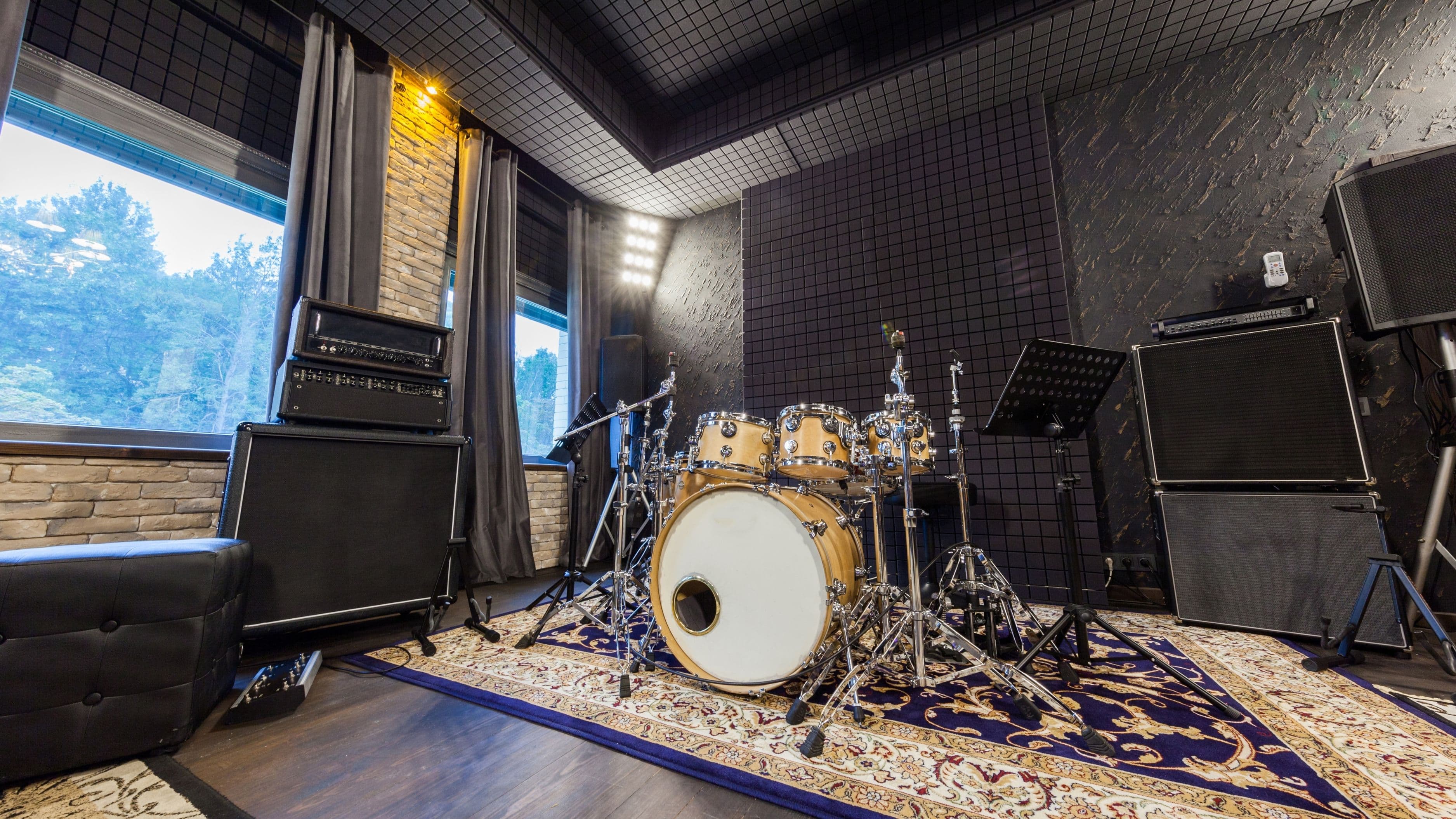
What it is: Foam panels, often the wedge or pyramid-shaped kind you've seen in podcast studios, mounted on walls to absorb sound within the room.
Why it matters: Acoustic foam is great at reducing echo and reflection inside a room, which matters a lot for recording, calls, or just making a room feel less harsh acoustically. It's worth knowing upfront that foam absorbs sound inside the room better than it blocks sound from leaving or entering.
How to apply it: Buy a pack of panels, use adhesive strips or mounting tape, and cover key reflection points – typically the wall behind your speakers or microphone, and the wall directly across from it.
Key benefit: Noticeably improves sound quality for calls, streaming, or recording, and a basic pack starts around $20 to $40.
Watch for: Don't expect foam alone to stop sound from a neighboring room – it's an echo fix, not a full soundproofing solution.
7. Mass Loaded Vinyl (MLV)
What it is: A dense, flexible vinyl material designed specifically to block sound transmission through walls, floors, or ceilings.
Why it matters: MLV is one of the most effective budget-friendly materials for actually blocking sound from passing through a surface, rather than just absorbing echo within a room.
How to apply it: Cut MLV to size and attach it to the wall using adhesive or staples, then cover it with drywall, fabric, or paneling depending on how finished you want the look.
Key benefit: Significantly reduces sound transfer for a fraction of the cost of full wall reconstruction, typically $1.50 to $3 per square foot.
Best for: Shared walls with noisy neighbors, home theaters, or music practice rooms.
Watch for: It's heavy and can be a bit of a project to install solo – having a second person help makes it much easier.
8. Soundproof Curtains and Door Sweep Combo
What it is: Pairing soundproof curtains with a door sweep and weatherstripping for a layered, mid-tier soundproofing setup.
Why it matters: No single cheap fix solves every sound leak in a room, but combining a few targeted, budget-friendly options tackles multiple weak points at once.
How to apply it: Install the door sweep and weatherstripping first, since those are the fastest fixes, then add soundproof curtains to windows and any exposed hard surfaces.
Key benefit: For under $100 total, this combo meaningfully reduces noise from multiple directions instead of leaving one obvious gap unaddressed.
Best for: Renters who want noticeable results without any wall modification.
9. Green Glue and Drywall Damping
What it is: A viscoelastic damping compound applied between two layers of drywall to reduce sound vibration passing through the wall.
Why it matters: This is a step up in commitment and cost, but it's one of the most effective methods for actually blocking sound through a wall rather than just dampening it within a room.
How to apply it: Apply Green Glue compound between an existing wall and a new layer of drywall, then screw the new layer into place, letting the compound cure as directed.
Key benefit: Dramatically reduces sound transmission through walls, making it a strong option for home studios or shared-wall apartments where noise is a constant issue.
Watch for: This requires actual renovation work and isn't reversible easily, so it's best for homeowners or long-term renters with permission to modify the wall.
10. Full Acoustic Room Treatment
What it is: A combination of acoustic panels, bass traps, diffusers, and sometimes structural changes like double drywall or decoupled framing, designed by someone with real acoustic treatment experience.
Why it matters: If sound quality and isolation are critical – for a home studio, podcast room, or media room – a full treatment addresses both echo control and sound blocking comprehensively rather than piecing together partial fixes.
How to apply it: This usually involves either hiring an acoustic consultant or doing extensive research to plan panel placement, wall treatment, and ceiling treatment based on your room's specific dimensions and use case.
Key benefit: The most complete solution available, with results that noticeably outperform any single item on this list.
Best for: Serious home studios, podcasters, or anyone treating a dedicated media or music room.
Watch for: Costs can range widely from a few hundred dollars for a DIY approach to several thousand for professional consultation and materials, so this is the option to save for rather than rush into.
How to Choose
If you're renting and can't modify anything permanent, stick with items 1 through 6 and the combo in item 8 – they're all reversible and budget-friendly. If you own your home or have a long-term lease with permission to modify walls, items 7, 9, and 10 offer real structural sound blocking rather than just echo reduction. Start with the cheapest fixes first, since a door sweep and weatherstripping alone often solve a surprising amount of the problem before you spend a dollar on anything bigger.
Quick Takeaway
Soundproofing doesn't have to mean a full renovation. Start with the free and low-cost fixes – door seals, rugs, and furniture placement – and layer in bigger investments like MLV or Green Glue only if you need more serious sound blocking. Most people find that combining three or four items from this list solves 80% of their noise problem without needing to touch item 10 at all.
FAQ
What's the cheapest way to soundproof a room? Door draft stoppers and weatherstripping are the cheapest options, often costing under $25 total, and they address one of the most common sound leak points in any room.
Does acoustic foam actually block sound from other rooms? Not really. Acoustic foam reduces echo and improves sound quality within a room, but it doesn't significantly block sound from passing through walls. For that, materials like MLV or Green Glue are more effective.
Can I soundproof a rented apartment without damaging the walls? Yes. Curtains, rugs, door seals, weatherstripping, and furniture placement are all fully reversible and don't require any permanent modification.
How much does it cost to fully soundproof a room? It depends heavily on the approach. A basic combo of curtains, rugs, and door seals can cost under $100, while a full professional acoustic treatment can run several hundred to a few thousand dollars.
📚 Sources
Acoustical Society of America – Sound Absorption Basics, https://acousticalsociety.org/
U.S. Department of Energy – Weatherization and Sealing Guidance, https://www.energy.gov/energysaver/weatherstripping
National Institute of Building Sciences – Acoustic Design Resources, https://www.nibs.org/