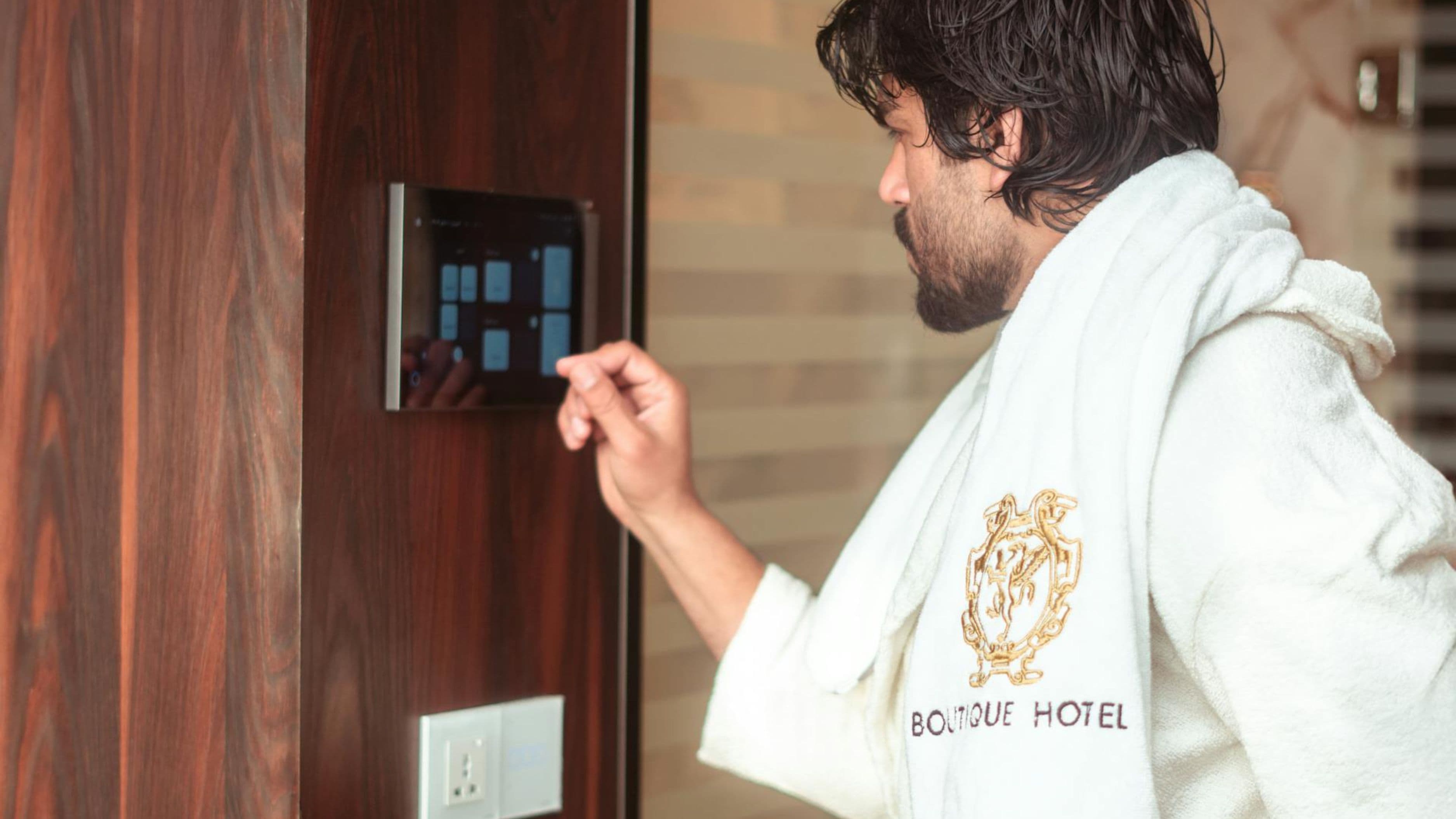
Whether you're a hotel operator evaluating technology investments, a developer planning a new property, or a frequent traveler seeking cutting-edge accommodations, understanding the smart hotel landscape is essential. The integration of IoT devices, AI-powered systems, mobile apps, and automation is transforming hospitality from a service industry into an experience industry where technology enables personalization at scale.
Top 10 Best Smart Hotel Brands & Technology Providers
Hilton Digital Key / Connected Room – Best for major brand consistency across properties
Marriott Bonvoy Mobile App – Best for loyalty integration and mobile-first experiences
Yotel – Best for compact, tech-optimized urban stays
CitizenM – Best for millennial-focused design with intuitive room controls
Zoku – Best for extended-stay hybrid living/working environments
Aloft Hotels (Chatbotlr) – Best for voice-controlled rooms and AI assistance
Equinox Hotel – Best for wellness-integrated smart technology
ASSA ABLOY Hospitality (Visionline) – Best for comprehensive hotel access control systems
Volara – Best for voice AI platform deployment across hotel brands
Intelity – Best for unified guest experience management platforms
Methodology
Our evaluation considered six critical criteria to identify leading smart hotel brands and technology providers:
Technology Integration: Breadth and depth of smart features including mobile check-in, digital keys, room automation, voice control, personalization capabilities, and IoT device connectivity.
Guest Experience: User interface intuitiveness, reliability, actual convenience delivered versus promised, and measurable impact on guest satisfaction scores.
Operational Efficiency: Backend systems supporting staff productivity, maintenance alerts, energy management, housekeeping coordination, and data analytics for property optimization.
Scalability & Compatibility: Ability to retrofit existing properties versus requiring new construction, integration with property management systems, and applicability across different property types and sizes.
Security & Privacy: Data protection measures, compliance with regulations (GDPR, CCPA), transparent privacy policies, and cybersecurity architecture protecting both guests and property systems.
Market Adoption & Reviews: Real-world deployment scale, guest feedback across review platforms, industry recognition, and operator testimonials regarding ROI and performance.
Detailed Reviews
1. Hilton Digital Key / Connected Room
Best for: Travelers prioritizing reliability and consistency across a large global network of properties
Pricing: Guest-facing features are complimentary for Hilton Honors members; implementation costs for properties vary based on scope (typically $1,500-$3,000 per room for full Connected Room retrofits)
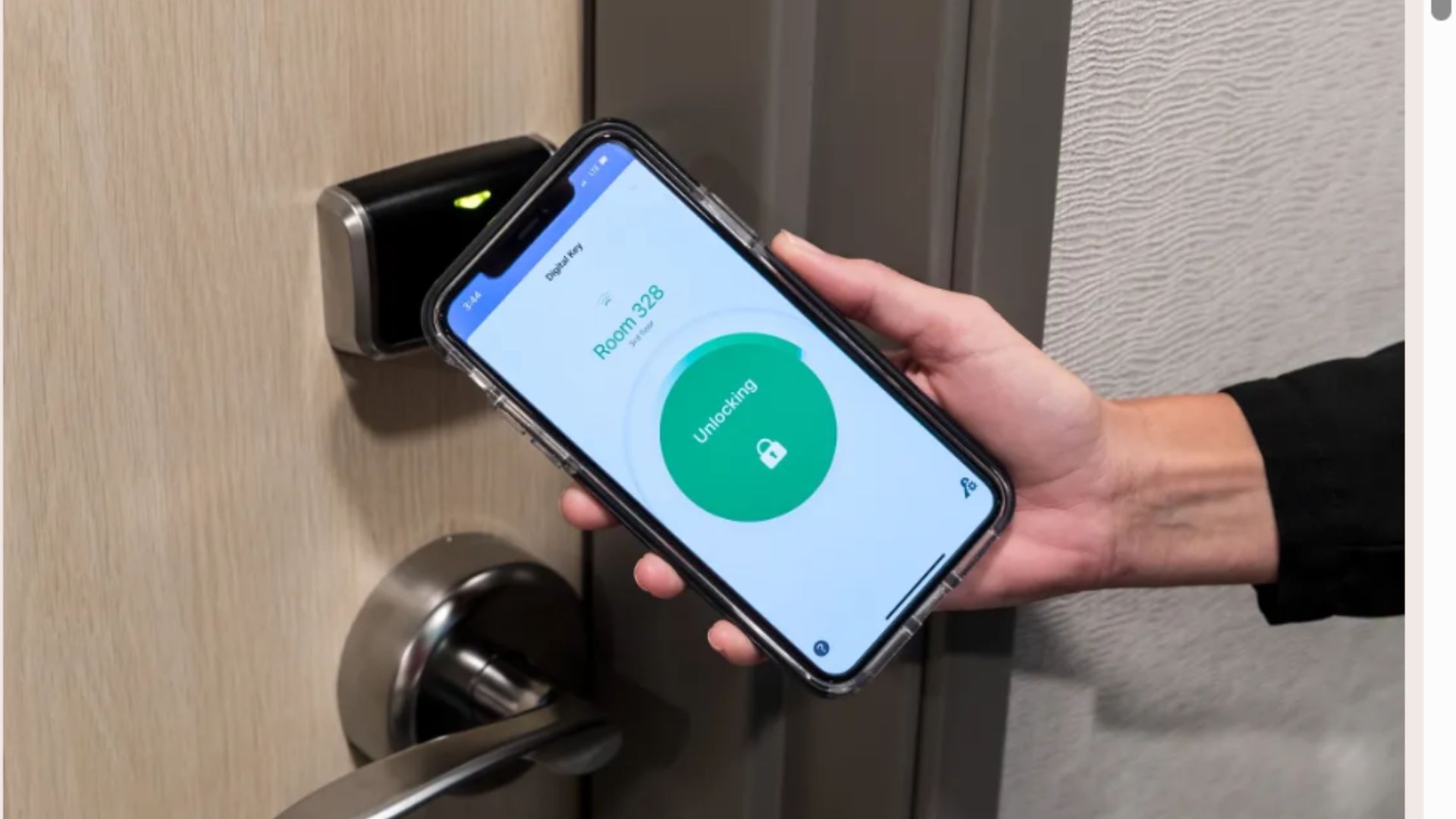
Key Features: Hilton's Digital Key technology, available across 5,700+ properties worldwide, allows guests to bypass the front desk entirely by selecting rooms through the Hilton Honors app and unlocking doors via smartphone Bluetooth. The Connected Room experience elevates this foundation with in-room automation controlled through the same app—guests adjust temperature, lighting, window treatments, and entertainment systems without learning new interfaces or downloading property-specific apps. The system remembers preferences across stays, automatically configuring rooms to individual specifications upon check-in.
Hilton's implementation stands out for its operational maturity and scale. Unlike newer competitors still refining systems through trial and error, Hilton has deployed Digital Key across diverse property types (full-service resorts, select-service hotels, extended-stay properties) and geographical markets, demonstrating reliability across varied use cases. The Connected Room technology partners with leading providers (Legrand, ASSA ABLOY, Sonifi) to ensure consistent experiences regardless of underlying infrastructure. Recent additions include voice control through Amazon Alexa integration and wellness features like circadian lighting that adjusts color temperature throughout the day.
Pros:
Massive global footprint ensures consistent experience across travel destinations
Mature technology with years of refinement and guest feedback integration
No separate apps required—everything managed through primary Hilton Honors app
Strong security infrastructure with proven track record at scale
Preference memory across properties creates true personalization
Cons:
Connected Room features limited to select properties, not universally available
Technology feels incremental rather than revolutionary compared to boutique competitors
Some guests report Bluetooth connectivity issues requiring troubleshooting
Retrofitting older properties is expensive, creating inconsistent availability
Privacy concerns around data collection across multiple stays and properties
2. Marriott Bonvoy Mobile App
Best for: Loyalty program members seeking comprehensive mobile control across the world's largest hotel portfolio
Pricing: Free for guests; implementation costs for properties range from $1,000-$4,000 per room depending on technology package selected
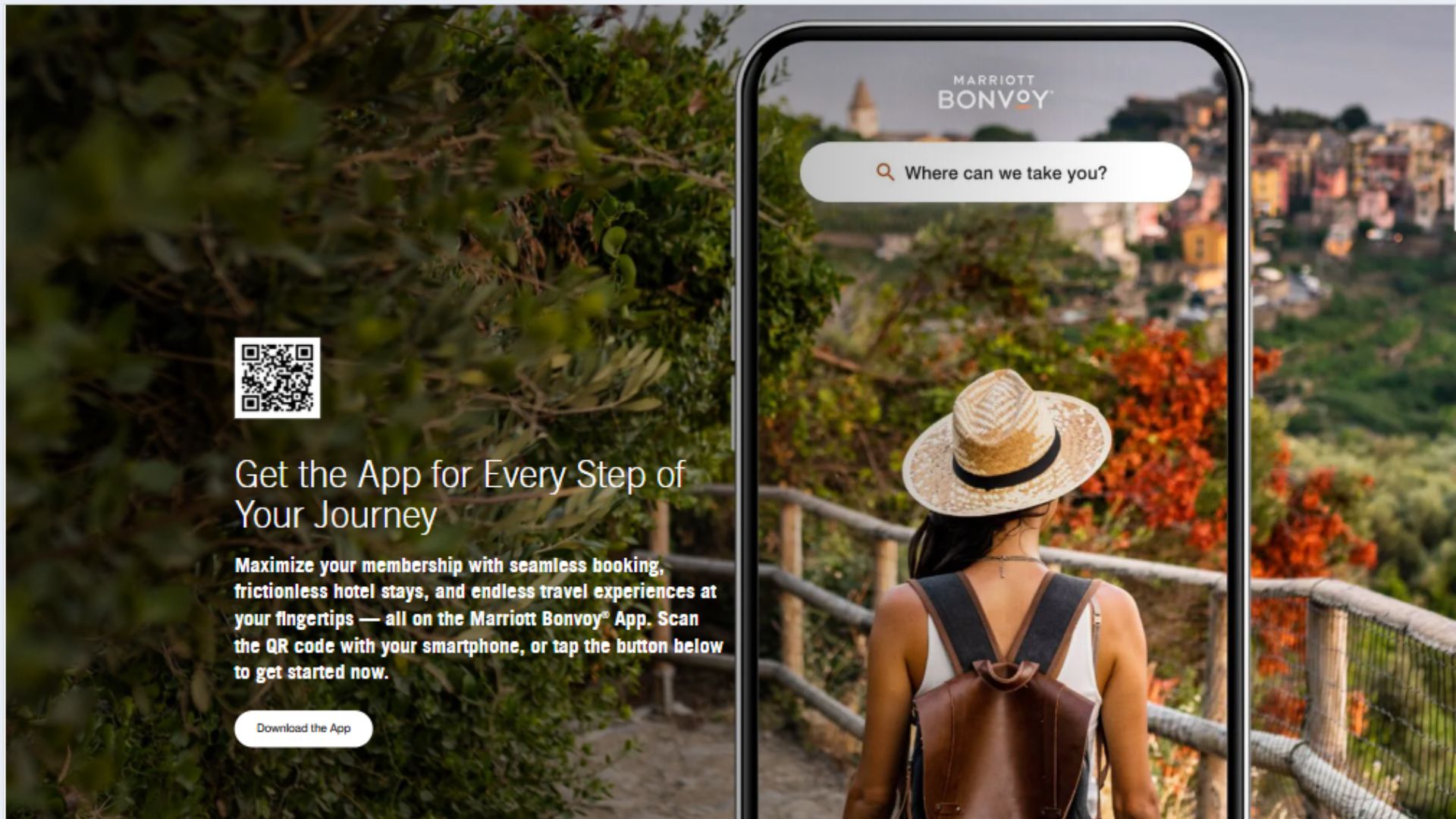
Key Features: Marriott's mobile-first strategy leverages the Bonvoy app as a unified interface for over 8,000 properties across 30 brands. Mobile check-in with digital room keys has been deployed to more than 4,500 hotels, while the Mobile Requests feature allows guests to order amenities, request services, or report issues directly to staff without phone calls or front desk visits. The app provides real-time updates on room readiness, facilitates mobile checkout, and integrates with smart room features at select properties for climate and entertainment control.
What distinguishes Marriott's approach is the integration of personalization through its loyalty program data. The system tracks guest preferences across stays—pillow type, room temperature, preferred floor level, minibar preferences—and proactively configures available rooms accordingly. Select properties feature IoT-enabled rooms that automatically adjust settings based on profile data, while staff receive notifications about guest preferences before arrival. Marriott's recent partnerships with Netflix, Spotify, and other streaming services allow guests to access personal entertainment accounts on in-room devices without credential sharing or logout hassles.
Pros:
Largest deployment scale of any hotel loyalty program mobile technology
Deep personalization leveraging extensive historical guest preference data
Mobile Requests feature significantly improves service delivery speed
Entertainment streaming integration solves major guest pain point
Consistent experience across multiple brand tiers (Ritz-Carlton to Fairfield)
Cons:
Smart room features available at only a fraction of portfolio
App can be overwhelming with features varying significantly by property
Digital key implementation spotty at franchised locations
Some users report app performance issues and crashes
Limited innovation compared to boutique tech-forward brands
3. Yotel
Best for: Travelers seeking efficient, tech-optimized stays in urban centers with premium-small-space design
Pricing: Rooms typically $100-$300/night depending on location; technology is standard, not add-on cost
Key Features: Yotel pioneered the "cabin" concept—compact, highly efficient rooms maximizing functionality per square foot through smart design and technology. Self-service check-in kiosks eliminate traditional front desks, while the SmartBed system uses motorized adjustments to transform configurations throughout the day. Rooms feature the Mood Pad—a bedside tablet controlling all room functions (lighting scenes, temperature, entertainment, blackout shades) through intuitive touchscreen interface. Properties include automated luggage storage, robotic room service delivery at some locations, and communal spaces designed for digital nomads.
The brand's Japanese-inspired efficiency philosophy means every technology serves a purpose rather than existing as novelty. Rainfall showerheads maximize the bathing experience in compact bathrooms, while adjustable SmartBeds create daytime workspace by raising into sofa configurations. Yotel's tech infrastructure supports the operational model—automated systems reduce staffing requirements, allowing properties to maintain competitive pricing despite prime urban locations. Recent additions include sustainability monitoring showing guests their real-time energy consumption and carbon footprint, gamifying conservation behaviors.
Pros:
Exceptional space efficiency through smart design and technology
Intuitive in-room control systems requiring no learning curve
Self-service model keeps prices competitive in expensive cities
Strong sustainability focus with transparent consumption monitoring
Unique aesthetic appealing to design-conscious travelers
Cons:
Compact rooms not suitable for extended stays or larger groups
Limited personal service compared to traditional hotels
Technology-dependent experience frustrating when systems malfunction
Primarily urban locations limit applicability for leisure travelers
Less luxurious feel despite technological sophistication
4. CitizenM
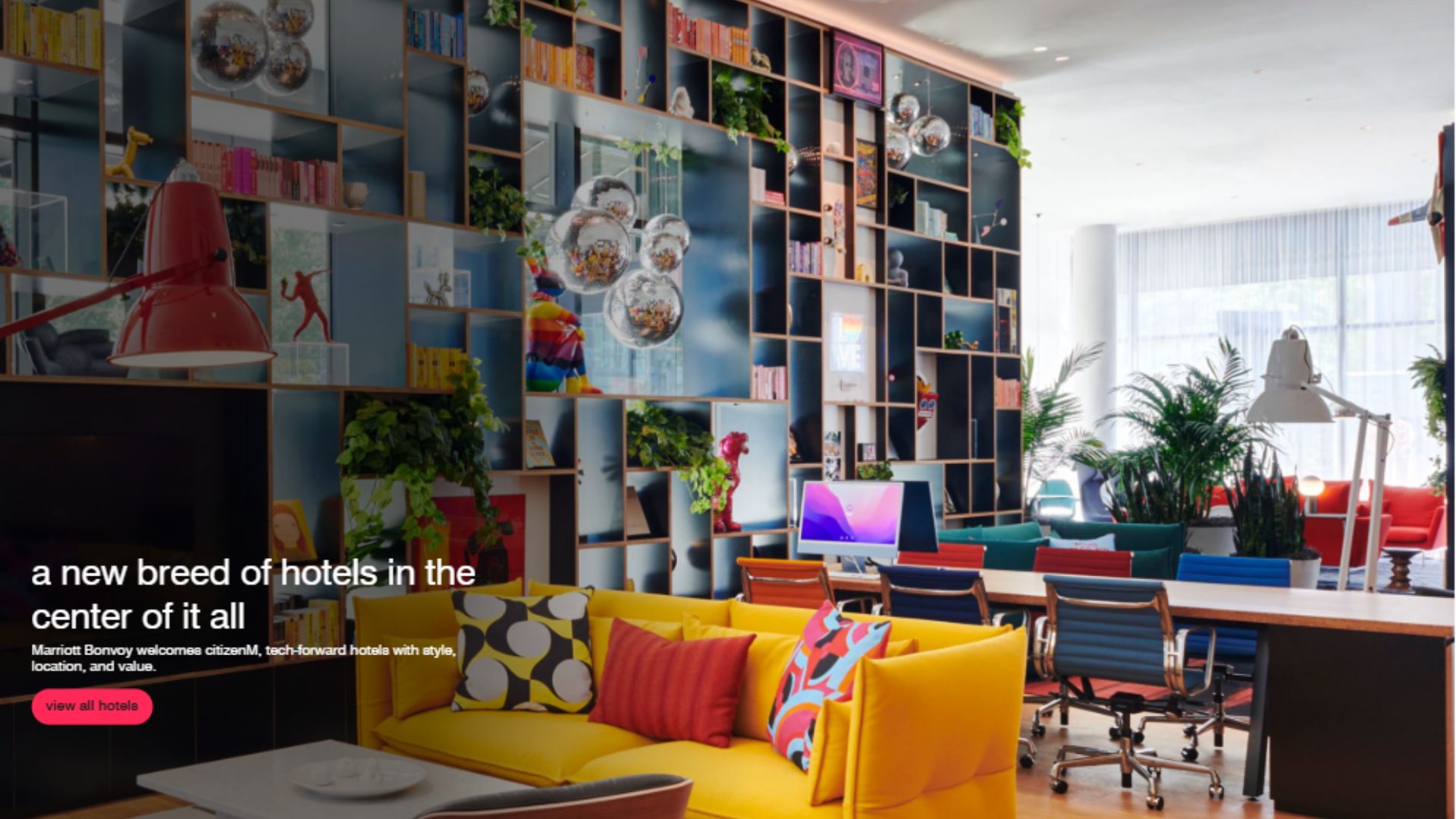
Best for: Design-forward travelers seeking intuitive technology in architecturally distinctive properties
Pricing: Typically $120-$350/night; technology included in base rate
Key Features: CitizenM's proprietary MoodPad tablet (mounted bedside) serves as the command center for all room functions—controlling lighting (including color and intensity), temperature, blackout blinds, and entertainment systems. The interface design prioritizes simplicity, with large icons and clear labeling eliminating the confusion common with over-complicated hotel room technology. Unlike competitors offering apps, CitizenM's dedicated hardware ensures reliability and eliminates compatibility issues across different guest smartphones. The tablet also provides hotel information, local area guides, and direct communication with staff.
Beyond in-room technology, CitizenM distinguishes itself through communal spaces designed for contemporary travelers. Living rooms feature extensive self-service food and beverage options available 24/7, workspaces with abundant power outlets and printing facilities, and carefully curated art installations creating Instagram-worthy environments. The brand's technology philosophy extends to operations—advanced forecasting algorithms optimize staffing levels and inventory, while predictive maintenance systems identify equipment issues before guest impact. CitizenM's architecture frequently features bold, conversation-starting design that attracts guests seeking experiences beyond generic hotel stays.
Pros:
Industry-leading intuitive interface requiring virtually no instruction
Dedicated hardware eliminates smartphone compatibility issues
Architectural distinctiveness creates memorable experiences
Efficient operations keep pricing competitive for quality delivered
Strong brand consistency across global locations
Cons:
Smaller room footprints than traditional hotels
Technology reliance means system failures significantly impact experience
Limited property count compared to major chains
No traditional front desk, which some guests find disconcerting
Focus on efficiency sometimes feels impersonal
5. Zoku
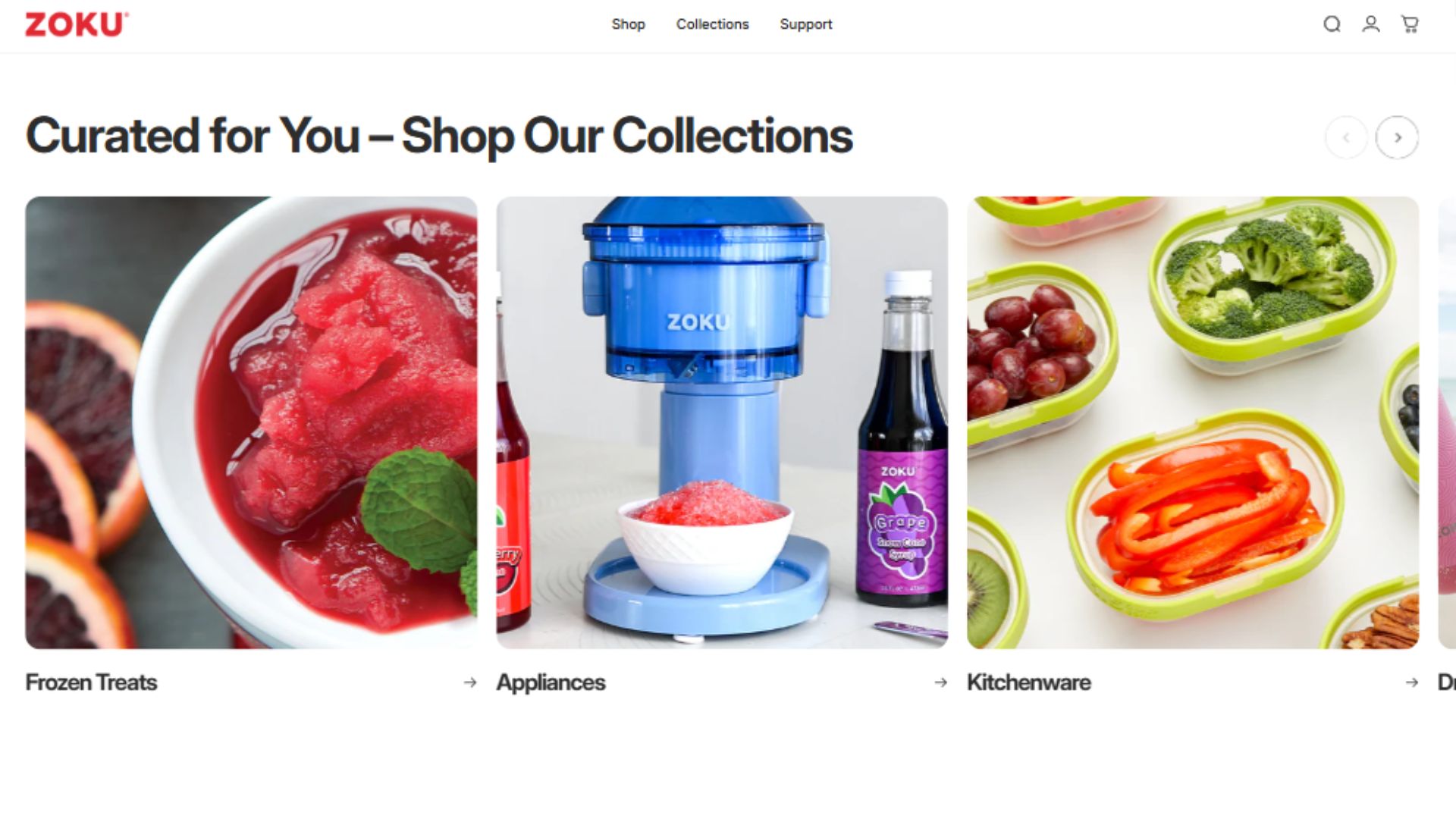
Best for: Extended-stay guests and digital nomads requiring seamless living/working environment integration
Pricing: Rooms/lofts $150-$400/night with discounts for weekly and monthly stays; coworking spaces accessible to guests
Key Features: Zoku (Japanese for "tribe" or "family") reimagines extended-stay hospitality through hybrid accommodations functioning as home, office, and social club simultaneously. Lofts feature transformable furniture including tables that fold away, sleeping lofts accessible via stairs creating distinct zones, and full kitchens with quality appliances. The proprietary Living Kitchen concept provides communal cooking and dining spaces designed for social interaction, while integrated coworking areas include meeting rooms, phone booths, and collaboration zones. Technology permeates every aspect—smart locks enable flexible access, high-speed WiFi reaches every corner, and mobile apps control room climate and access.
The platform's genius lies in anticipating digital nomad needs before they arise. Rooms include abundant international power outlets, adjustable task lighting for video calls, desk surfaces at proper ergonomic heights, and soundproofing suitable for client conversations. The community app connects residents for networking, skill sharing, and social events, creating belonging often missing from hotel stays. Zoku's operational technology manages complex billing for varying stay lengths, coordinates shared resource booking (meeting rooms, kitchen equipment), and facilitates package delivery and storage for long-term guests.
Pros:
Purpose-built for extended stays with residential functionality
Seamless work/life integration through thoughtful design and technology
Community features reduce isolation common in long hotel stays
Flexible booking (nightly to monthly) with transparent pricing
Exceptional for digital nomads and remote workers
Cons:
Limited locations (primarily European cities currently)
Higher price point than standard extended-stay hotels
Community focus may not appeal to privacy-seeking travelers
Smaller footprint means limited availability during peak periods
Technology assumes high comfort level with self-service
6. Aloft Hotels (Chatbotlr)
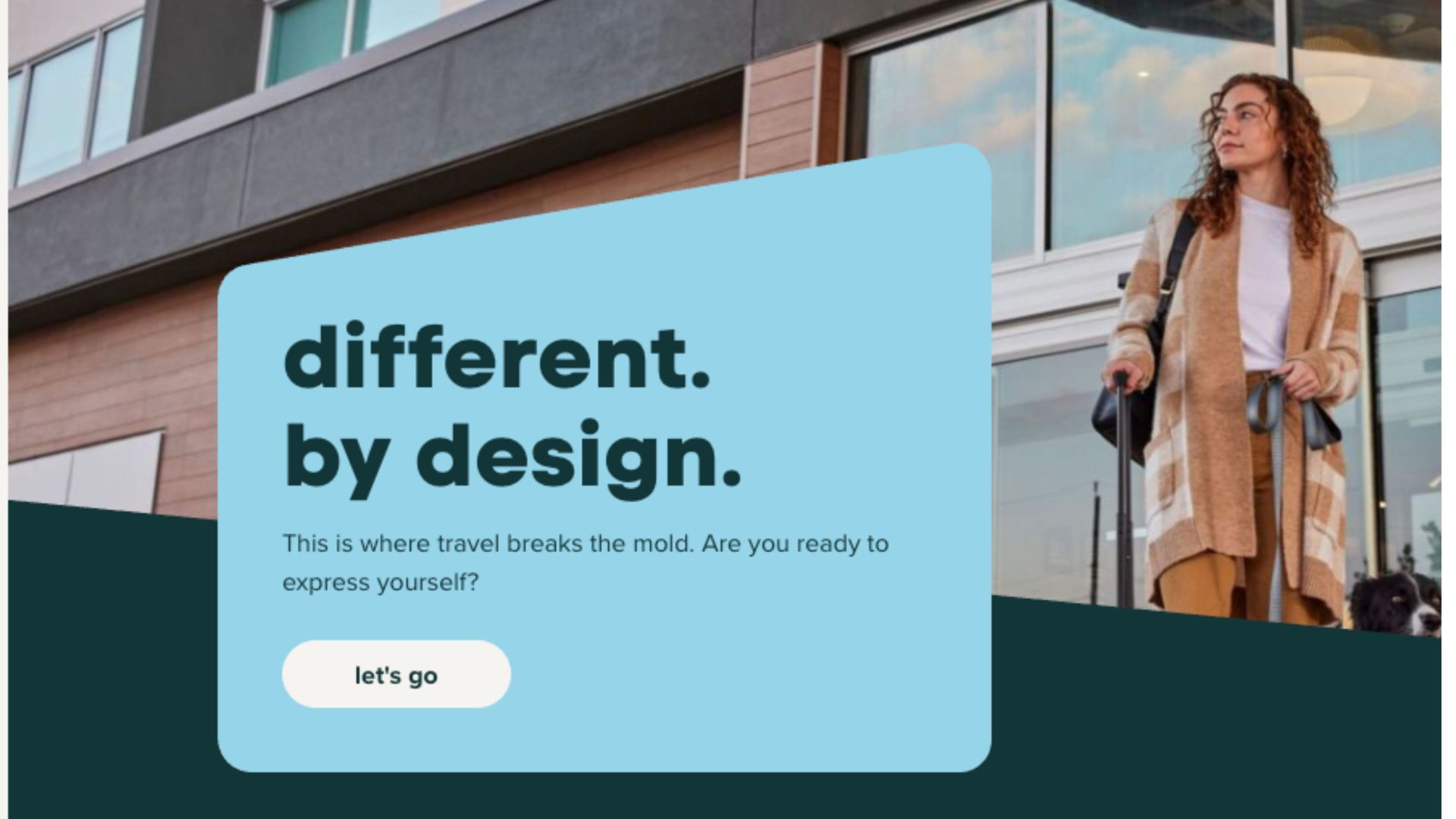
Best for: Voice technology enthusiasts seeking Alexa-powered room control across accessible price points
Pricing: Typically $100-$250/night; voice technology included at participating properties
Key Features: Aloft Hotels partnered with Amazon to deploy Alexa for Hospitality across its portfolio, making voice-controlled rooms accessible at mid-tier pricing. Echo devices in rooms respond to voice commands for controlling temperature, lighting, entertainment, and information requests ("Alexa, set the temperature to 68 degrees" or "Alexa, what time is breakfast?"). The system connects to Aloft's service infrastructure, allowing guests to request amenities, report maintenance issues, or order room service through natural language rather than phone calls or apps. The Chatbotlr text messaging service provides an alternative channel for guests preferring typed communication.
Aloft's implementation demonstrates how established brands can adopt cutting-edge technology without requiring premium pricing or boutique positioning. The voice control works reliably because Amazon's platform has been refined through millions of consumer installations, and the hospitality-specific version includes privacy features addressing guest concerns (physical microphone mute buttons, no recording of conversations, automatic deletion of voice histories). Beyond room control, Alexa provides local recommendations, plays music through quality speakers, and connects to personal accounts for familiar experiences. The technology particularly resonates with younger travelers already comfortable with voice assistants at home.
Pros:
Familiar Alexa interface eliminates learning curve for many guests
Voice control genuinely convenient for hands-free operation
Mid-tier pricing makes smart hotel experiences accessible
Strong privacy controls address data collection concerns
Works reliably due to mature underlying platform
Cons:
Not all Aloft properties have deployed the technology yet
Some guests uncomfortable with always-listening devices
Limited to Alexa ecosystem, no Google or Siri integration
Voice recognition struggles with strong accents or speech patterns
Basic implementation compared to custom systems at luxury properties
7. Equinox Hotel

Best for: Wellness-focused travelers seeking technology that optimizes health, sleep, and fitness performance
Pricing: Premium tier, typically $500-$1,200/night; wellness technology integrated into experience
Key Features: Equinox Hotel applies its fitness brand expertise to hospitality, creating environments where technology actively supports wellness goals. Rooms feature circadian lighting systems that adjust color temperature throughout the day (cool blue tones in morning, warm amber in evening) to support natural sleep-wake cycles. Temperature and humidity are precisely controlled for optimal sleep conditions, while air purification systems remove allergens and pollutants. In-room fitness equipment includes Technogym cardio machines and Peloton bikes connecting to personal accounts, eliminating excuses for skipping workouts.
The room's tech ecosystem integrates with Equinox's fitness ecosystem—workout performance data syncs across platforms, trainers can access relevant health metrics during gym sessions, and recovery recommendations adapt based on sleep quality measured by room sensors. Bathrooms feature vitamin C-infused showers that neutralize chlorine, while rainfall showerheads offer temperature therapy protocols (hot/cold contrast for muscle recovery). The sleep program includes sound therapy options, blackout automation that engages at specified times, and wake-up protocols using gradual light and temperature changes rather than jarring alarms. For travelers serious about maintaining wellness routines on the road, Equinox's technology eliminates typical obstacles.
Pros:
Unmatched integration of wellness science and hospitality technology
Circadian lighting and sleep optimization deliver measurable benefits
Fitness equipment quality and integration rivals home setups
Air quality management creates noticeably healthier environment
Strong appeal to health-conscious travelers willing to pay premium
Cons:
Extremely limited locations (New York City currently, select expansion)
Premium pricing restricts accessibility to affluent travelers
Wellness focus may feel excessive for casual travelers
Technology complexity requires adjustment period
Brand association with fitness may intimidate some guests
8. ASSA ABLOY Hospitality (Visionline)

Best for: Hotel operators seeking comprehensive, enterprise-grade smart lock and access control systems
Pricing: Implementation typically $800-$2,000 per door depending on features and property size; enterprise pricing for multi-property rollouts
Key Features: ASSA ABLOY dominates hospitality access control with Visionline, the wireless smart lock platform powering digital key systems for major brands including Hilton, Marriott, Hyatt, and IHG. The system uses RFID and Bluetooth technology enabling multiple credential types (traditional keycards, mobile keys, wearables) through a single lock infrastructure. For hotel operators, Visionline provides centralized management across entire portfolios—issuing and revoking credentials remotely, monitoring access events in real-time, integrating with property management systems, and generating detailed audit trails for security and compliance.
The platform's sophistication extends beyond basic access control. Locks communicate energy-saving triggers (adjusting HVAC and lighting based on occupancy), report battery status before failures occur, and track usage patterns informing maintenance schedules. Integration with revenue management systems enables dynamic room assignment based on availability without reissuing keys, while housekeeping applications receive automatic notifications when guests depart. ASSA ABLOY's scale means continuous innovation—recent additions include mobile key sharing for families and groups, geofencing that speeds check-in when guests approach properties, and integration with smart room automation platforms.
Pros:
Industry-leading reliability with proven performance at massive scale
Comprehensive integration with all major property management systems
Superior security features protecting guests and properties
Operational efficiency gains through automation and data insights
Future-proof platform with continuous enhancement and support
Cons:
Significant upfront investment for property-wide deployment
Requires integration expertise for optimal configuration
Overkill for small independent properties with simple needs
Proprietary system creates vendor lock-in
Training required for staff to leverage full capabilities
9. Volara
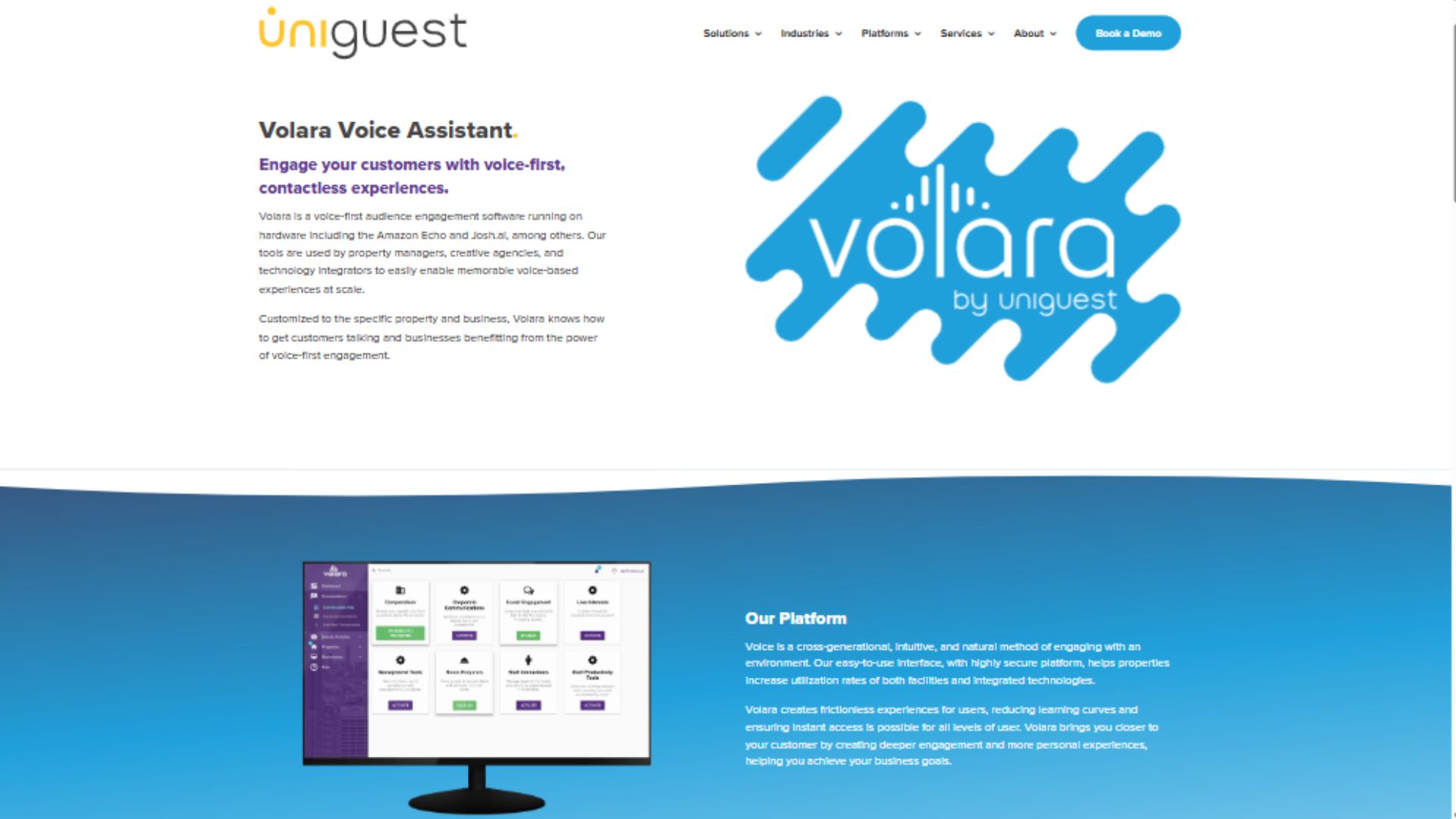
Best for: Hotel brands seeking to deploy voice AI across properties without building proprietary technology
Pricing: Licensing model, typically $10-$30 per room per month depending on features and property size
Key Features: Volara provides the hospitality industry's leading voice AI platform, enabling hotels to deploy voice assistants (Amazon Alexa, Google Assistant, custom interfaces) with hospitality-specific functionality and enterprise-grade security. The platform bridges consumer voice technology and hotel operational systems—when guests ask for housekeeping, order room service, or request amenity delivery, Volara routes requests to appropriate staff systems automatically. The platform supports multilingual capabilities essential for international properties, customizable brand voices, and integration with loyalty programs for personalized responses.
For hotel operators, Volara solves the complexity of deploying voice technology at scale. The platform handles device provisioning and management across hundreds or thousands of rooms, ensures guest privacy through automatic data deletion and voice history suppression, maintains regulatory compliance (GDPR, CCPA), and provides analytics about guest usage patterns. Voice commands can trigger smart room controls (climate, lighting, entertainment), access hotel information (pool hours, restaurant menus, local directions), and complete transactions (ordering amenities, extending stays). Volara's implementation includes white-glove deployment services, ongoing support, and regular feature updates as voice technology evolves.
Pros:
Turnkey solution eliminating need for hotels to build proprietary technology
Supports multiple voice platforms providing guest choice
Enterprise-grade privacy and security addressing hospitality concerns
Deep integration with hotel operational systems
Continuous innovation as voice AI technology advances
Cons:
Ongoing monthly fees add operational costs
Requires strong WiFi infrastructure for reliable performance
Guest adoption varies—some never use voice features
Platform dependency creates operational continuity risk
Setup complexity for highly customized implementations
10. Intelity
Best for: Luxury and upscale properties seeking unified guest experience platforms with custom branding
Pricing: Enterprise pricing, typically $15-$40 per room per month plus implementation fees
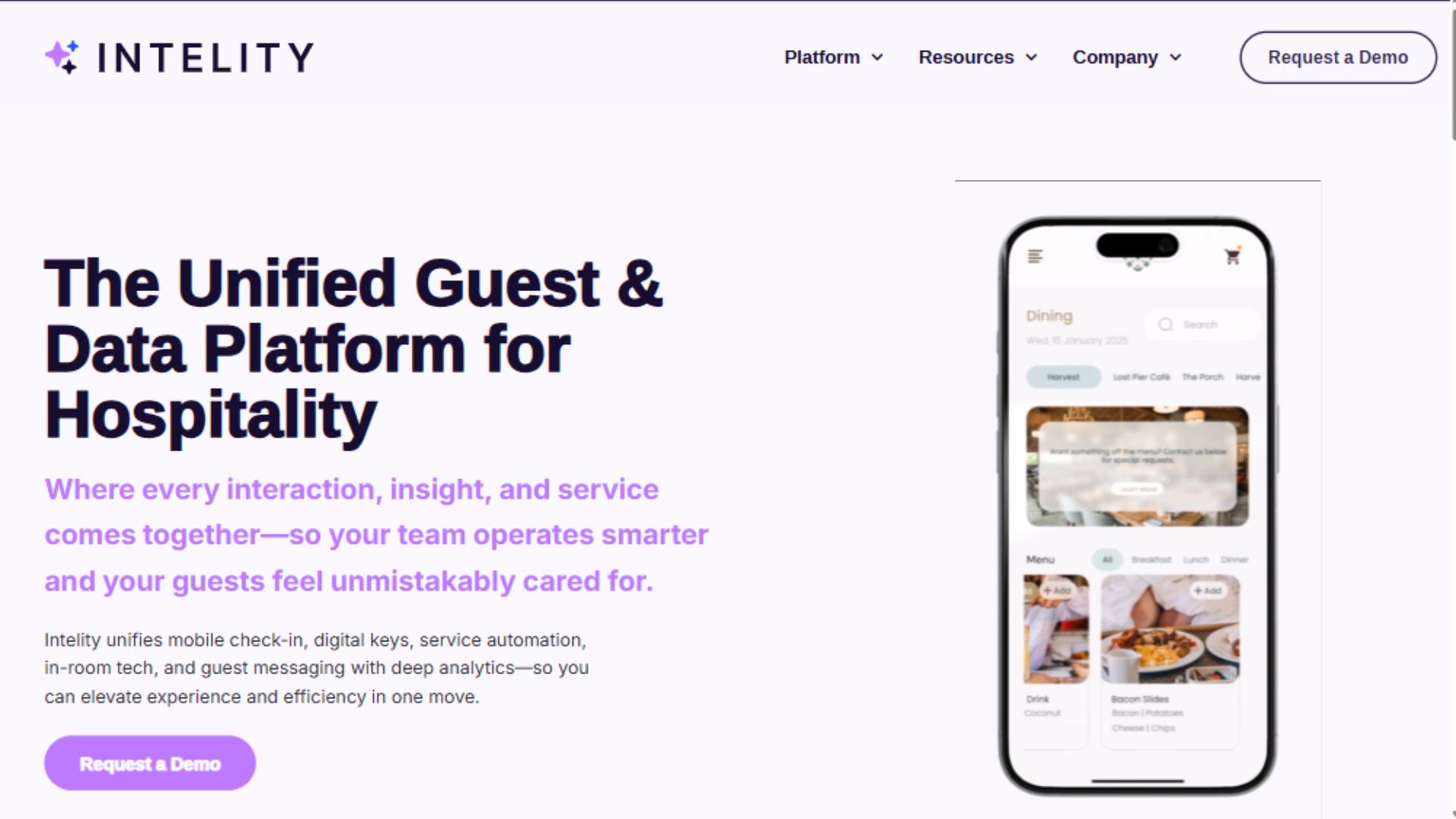
Key Features: Intelity's guest experience platform unifies multiple touchpoints—mobile apps, in-room tablets, kiosks, staff applications—into a single branded ecosystem. Hotels can customize interfaces matching their aesthetic while providing functionality spanning reservations and check-in, digital concierge services, in-room controls, service requests, dining reservations, spa bookings, and local experiences. The platform's intelligence layer learns guest preferences across stays, proactively suggesting relevant services and creating personalized itineraries. Staff applications connect directly to guest requests, enabling real-time status updates and coordinated service delivery.
The platform's strength lies in its white-label flexibility—luxury brands can create bespoke experiences without generic third-party branding, while maintaining operational benefits of proven technology. Intelity integrates with existing property systems (PMS, POS, housekeeping, spa, golf) creating seamless data flow eliminating duplicate entry and synchronization issues. Analytics dashboards provide insights about service utilization, revenue generation from upsells, guest satisfaction patterns, and operational efficiency metrics. The platform scales from single luxury properties to entire portfolios, with enterprise management tools coordinating consistent experiences across brands and locations.
Pros:
Highly customizable interfaces maintaining brand identity
Comprehensive functionality replacing multiple point solutions
Strong analytics capabilities informing operational decisions
Excellent integration with luxury property systems and services
Proven reliability at high-end properties with demanding guests
Cons:
Premium pricing limiting accessibility for mid-market properties
Implementation complexity requiring significant project management
Ongoing customization and maintenance requires resources
Guest adoption varies despite sophisticated technology
Platform switching costs create long-term commitment pressure
Comparison Summary
Price Positioning: Smart hotel technology spans from complimentary guest-facing features (major chain mobile apps) to premium experiences (Equinox, CitizenM, boutique brands) commanding $200-$1,200/night. For operators, implementation costs range from $1,000-$4,000 per room for retrofits (digital locks, smart thermostats, basic automation) to $10,000+ for comprehensive Connected Room transformations. Technology platforms for operators follow subscription models ($10-$40 per room monthly) plus implementation fees.
Implementation Complexity: Major chains (Hilton, Marriott) benefit from centralized technology teams and standardized deployments, while independent properties face greater complexity requiring technology consultants or platform providers (Intelity, Volara, ASSA ABLOY). Boutique brands (Yotel, CitizenM) design properties around technology from inception, avoiding retrofit challenges. Cloud-based platforms reduce on-premise infrastructure requirements, lowering barriers for smaller properties.
Target Guest Segments: Business travelers prioritize reliability and efficiency (Hilton Digital Key, Marriott mobile features), while millennial/Gen Z guests gravitate toward design-forward brands with intuitive technology (CitizenM, Yotel). Wellness-focused travelers seek Equinox-style integration of health technology, and digital nomads prefer extended-stay hybrids (Zoku). Luxury travelers expect white-glove service enhanced by invisible technology rather than technology as the primary draw.
Best Use Cases:
Frequent business travelers: Major chain apps (Hilton, Marriott) providing consistency globally
Urban weekend trips: Tech-forward boutiques (CitizenM, Yotel) offering compact efficiency
Extended stays: Hybrid concepts (Zoku) balancing residential and hotel features
Wellness retreats: Equinox Hotel for health-optimized environments
Hotel operators: Platform providers (ASSA ABLOY, Volara, Intelity) enabling smart features at scale
Buying Guide
Who Needs Smart Hotel Technology?
For Travelers: Smart hotel technology benefits anyone seeking enhanced convenience, personalization, or efficiency during stays. Business travelers gain time through mobile check-in and keyless entry, avoiding front desk queues. Extended-stay guests appreciate residential features like full kitchens, flexible workspaces, and community connections. Tech enthusiasts enjoy experimenting with latest innovations like voice control and IoT automation. Wellness-focused travelers benefit from sleep optimization, air quality management, and fitness integration. Even technology skeptics experience advantages through invisible improvements—energy-efficient climate control, predictive maintenance preventing disruptions, and staff efficiency enabled by better information systems.
For Hotel Operators: Properties of virtually any size benefit from smart technology, though optimal implementations vary. Boutique properties (under 50 rooms) gain competitive differentiation through distinctive technology experiences and operational efficiency offsetting limited staff. Mid-size properties (50-200 rooms) leverage automation for labor cost control while improving guest satisfaction. Large hotels and resorts use sophisticated platforms managing complex operations across multiple outlets and service lines. Franchisees within major brands benefit from corporate technology investments, while independent properties must evaluate ROI of technology investments against alternative capital uses.
How Smart Hotel Technology Works
Smart hotel ecosystems integrate five core technology layers working together:
1. Access Control: Digital locks using RFID, Bluetooth, or NFC enable keyless entry via smartphones, keycards, or wearables. Systems integrate with property management platforms for automatic credential provisioning upon reservation.
2. Room Automation: IoT sensors and controllers manage climate (thermostats, humidity), lighting (intensity, color temperature, scenes), window treatments (blackout shades, privacy curtains), and entertainment (TVs, audio systems). Control interfaces include physical tablets, mobile apps, voice commands, or wall panels.
3. Guest Applications: Mobile apps and in-room interfaces provide information (hotel services, local area), enable service requests (housekeeping, maintenance, amenities), facilitate transactions (dining reservations, spa bookings, minibar purchases), and offer entertainment (streaming services, games, content).
4. Operational Systems: Backend platforms coordinate staff activities—housekeeping receives real-time occupancy status, maintenance gets automated alerts, concierge accesses guest preferences, and management monitors analytics dashboards tracking performance metrics.
5. Data & Intelligence: Machine learning analyzes patterns across thousands of stays, identifying opportunities for personalization (preferred room temperature, pillow type), predicting needs (proactive amenity delivery), and optimizing operations (energy usage, staffing levels, preventive maintenance).
Key Features to Consider
For Guests Evaluating Hotels:
Keyless entry reliability: Digital keys should work consistently without connectivity issues or battery concerns
Control interface intuitiveness: Room controls should be immediately understandable without instructions
Personalization depth: Systems remembering preferences across stays create genuine value
Privacy transparency: Clear policies about data collection, usage, and retention
Technology maturity: Established implementations more reliable than bleeding-edge experiments
For Operators Selecting Technology:
Integration capabilities: Seamless connection with existing PMS, POS, and operational systems
Scalability: Architecture supporting growth from pilot properties to portfolio-wide deployment
Support quality: Responsive vendor support critical for guest-facing technology
Total cost of ownership: Include implementation, training, maintenance, subscriptions, and upgrade cycles
Guest satisfaction impact: Demonstrated improvements in review scores and loyalty metrics
Energy savings: Quantifiable reductions in utility costs through automated efficiency
Future-proofing: Platform evolution plans and vendor commitment to ongoing innovation
Pricing Overview
Guest-Facing Costs
Most smart hotel technology is included in room rates rather than charged separately. Exceptions include premium streaming services, advanced room customization at luxury properties, or optional upgrades (room selection fees, early check-in via app). Technology-forward brands (CitizenM, Yotel) price competitively with traditional hotels despite higher construction costs, achieving this through operational efficiency. Luxury smart hotels (Equinox) command significant premiums ($500-$1,200/night), positioning technology as part of comprehensive elevated experiences rather than standalone features.
Operator Investment Levels
Basic Smart Hotel Package ($1,000-$2,000/room):
Digital lock system with mobile key capability
Smart thermostats with occupancy-based automation
Basic in-room tablet or TV-based controls
Mobile app for guest services and requests
Comprehensive Connected Room ($3,000-$7,000/room):
Advanced access control with multiple credential types
Full room automation (lighting, shades, climate, entertainment)
Voice control integration
Streaming service connectivity
Occupancy sensors triggering energy management
Staff communication systems
Premium Technology Experience ($8,000-$15,000+/room):
Custom-branded guest experience platform
Advanced personalization with AI-driven recommendations
Wellness features (circadian lighting, air quality)
Extensive IoT sensor network
Integrated operational analytics
High-end entertainment and connectivity infrastructure
Platform Subscriptions ($10-$40/room/month):
Volara voice AI platform: $10-$30/room/month
Intelity guest experience platform: $15-$40/room/month
ASSA ABLOY Visionline management: Varies by contract
Additional costs for payment processing, integrations, support
DIY vs. Professional Implementation
DIY/Prosumer Approach: Smaller properties (under 20 rooms) can implement basic smart features using consumer-grade products—smart locks from August or Schlage ($150-$300/door), Nest thermostats ($200-$250), Philips Hue lighting ($50-$200/room), and Amazon Echo devices ($50-$100). Total investment: $500-$1,000/room. Challenges include reliability at commercial scale, lack of centralized management, security vulnerabilities, and limited integration with hospitality systems.
Professional Hospitality Solutions: Properties requiring reliability, security, scalability, and integration should engage hospitality technology specialists or platform providers. Professional implementations include site surveys, infrastructure upgrades (WiFi, power, networks), system integration, staff training, and ongoing support. While significantly more expensive ($3,000-$10,000+/room), professional solutions deliver measurable ROI through operational savings, reduced maintenance calls, energy efficiency, and competitive positioning enabling premium pricing.
Hybrid Approach: Some independent properties successfully combine commercial-grade core systems (professional digital locks, reliable WiFi) with carefully selected consumer products for secondary features (entertainment, voice control). This requires technical expertise evaluating commercial reliability of consumer products and accepting greater hands-on management responsibility.
Frequently Asked Questions
Are smart hotel features actually useful, or just marketing gimmicks?
Utility varies significantly by specific feature and guest type. Mobile check-in and digital keys provide genuine convenience—bypassing front desk lines saves meaningful time for business travelers. Room control automation (adjusting climate, lights from bed) offers real comfort improvement over walking to wall switches. Voice assistants receive mixed reviews; some guests use them extensively while others never activate. Entertainment streaming integration is universally praised, solving the frustration of unable to access personal accounts on hotel TVs. The most valuable smart features are those solving existing pain points (waiting at front desk, forgetting room cards, complicated TV remotes) rather than adding novelty for its own sake. Guest satisfaction data shows smart hotels averaging 10-15% higher review scores when technology reliably enhances rather than complicates the experience.
How secure is my personal data at smart hotels with all this connected technology?
Security varies dramatically by implementation quality and operator commitment to best practices. Reputable brands and platform providers implement enterprise-grade security including encrypted communications, isolated guest networks preventing device-to-device access, automatic credential expiration, and data minimization principles (collecting only necessary information). Voice assistants at properly configured hotels don't record conversations, and interaction histories are automatically deleted. The primary risks come from poorly implemented systems using default passwords, unencrypted communications, or inadequate network segmentation. Before staying, research the hotel brand's privacy policy, verify they comply with relevant regulations (GDPR in Europe, CCPA in California), and ask front desk about data handling practices. Use guest networks rather than connecting to open WiFi, avoid linking personal streaming accounts at properties you distrust, and physically cover or unplug smart speakers if concerned about privacy.
Do I need to download hotel-specific apps for every property, or are there universal solutions?
Major chains (Hilton, Marriott, IHG, Hyatt) provide single apps accessing all their brand properties, eliminating multiple downloads. Independent boutique hotels often partner with technology platforms enabling features through web apps accessed via browsers rather than requiring installation. Some cutting-edge properties use in-room tablets as primary interfaces, eliminating guest device requirements entirely. Voice control through Alexa or Google doesn't require hotel-specific apps—commands work through familiar consumer interfaces. For frequent travelers, downloading major chain apps once provides access to thousands of properties. The industry is gradually moving toward standardization—OpenKey and other initiatives aim to enable digital keys across multiple brands through single apps—though adoption remains limited. Practically, expect downloading 3-5 major chain apps to cover 80% of smart hotel stays.
Can hotels reduce rates since smart technology reduces labor costs?
The relationship between smart technology and pricing is complex. Technology does generate operational savings through reduced front desk interactions, automated service routing, optimized energy usage, and preventive maintenance. However, most hotels reinvest these savings into enhanced experiences, property upgrades, or maintaining profitability rather than directly reducing rates. Tech-forward mid-market brands (Yotel, CitizenM) do price competitively because technology enables efficient operations, though they position this as value rather than explicitly cheap. Premium smart hotels charge higher rates, framing technology as luxury amenity justifying premiums. The realistic expectation: smart technology enables better experiences at given price points rather than dramatically cheaper rates. Budget-conscious travelers benefit from mid-tier brands using technology to deliver quality approaching upscale hotels at lower costs, though rock-bottom budget rates remain at properties with minimal technology investment.
What happens if smart room technology malfunctions during my stay?
Reputable smart hotels maintain traditional backup systems and responsive support protocols. Digital key systems always include physical key override options accessible to staff. Voice control and automation failures revert to manual switches and thermostats. Most properties monitoring room systems proactively receive alerts about malfunctions and address issues before guest impact. When problems occur, front desk staff should immediately dispatch maintenance or offer room changes if quick resolution isn't possible. Guest satisfaction research shows technology reliability is critical—a single malfunction creates more negative perception than absence of technology entirely. Before booking tech-centric hotels, check recent reviews for mentions of technology issues and staff responsiveness. During stays, report problems immediately rather than tolerating them; properties using technology as competitive advantage typically prioritize rapid resolution. Major chain guarantees sometimes include compensation for technology failures impacting stay quality.