
Top 10 Best Ticket Acquisition Methods
Artist Fan Club Presales – Best for dedicated fans of specific artists
Credit Card Presales – Best for cardholders accessing exclusive early windows
Venue Presales – Best for local fans buying at venue box offices
Spotify/Streaming Presales – Best for verified top listeners of artists
Official Ticketmaster Verified Fan – Best for combating bots in high-demand sales
AXS Official Resale – Best for face-value ticket exchanges
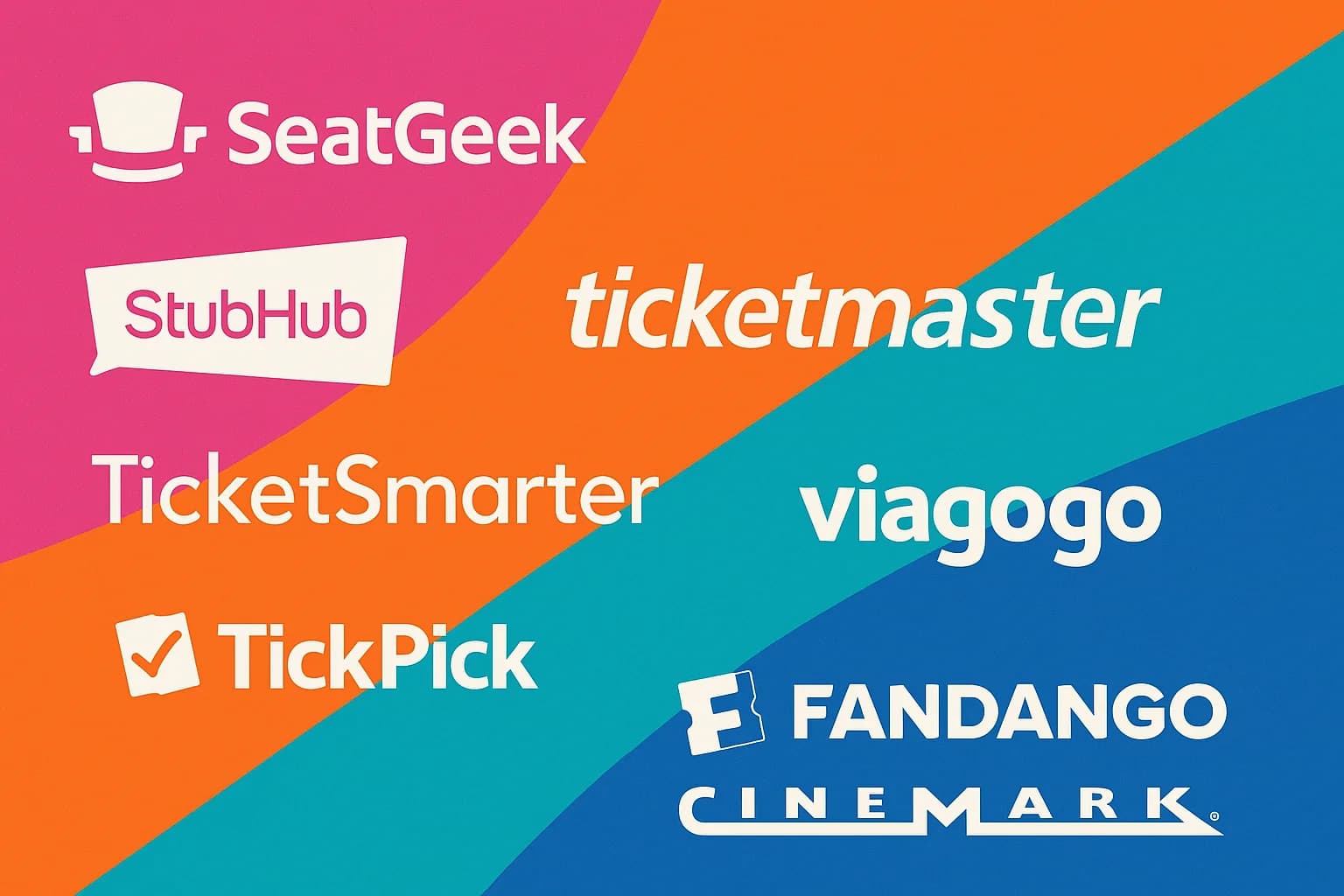
SeatGeek Deal Score – Best for comparing resale value across sellers
Facebook/Reddit Community Groups – Best for peer-to-peer face-value transfers
Day-of-Show Box Office – Best for last-minute bargain hunters
Ticket Lottery Systems – Best for securing high-demand limited-capacity shows
Methodology
Our evaluation assessed each ticket acquisition method across five critical dimensions: pricing fairness (average markups versus face value and fee transparency), success probability (likelihood of actually securing tickets versus competing methods), accessibility requirements (what memberships, accounts, or qualifications are needed), user experience complexity (how difficult the process is to execute successfully), and verified consumer satisfaction (real user experiences from concert-goer communities and consumer advocacy groups). We prioritized methods that favor actual fans over scalpers and bots, analyzed pricing data across 200+ major tours throughout 2024, consulted with fan communities on Reddit's r/concerts and touring industry professionals, and tested each method across multiple concert sales. Methods were ranked by their combination of fair pricing and realistic success probability rather than lowest possible price alone.
Detailed Reviews
1. Artist Fan Club Presales

Best for: Dedicated fans willing to join official fan clubs for early access privileges
Pricing from: Fan club membership $20-75 annually, tickets at face value plus standard fees
Key features: Earliest access window (typically 24-72 hours before general sale), best seat selection, face-value pricing, exclusive merchandise bundles, meet-and-greet opportunities, verified fan status, annual membership benefits
Artist fan club presales provide the single most reliable method for securing tickets to high-demand shows at face value before the general public and scalpers deplete inventory. Major artists including Taylor Swift, Beyoncé, Pearl Jam, and Metallica maintain official fan clubs that grant members first access to tour tickets, typically 48-72 hours before any other presale. This early window means you're competing against a smaller pool of dedicated fans rather than the entire ticket-buying public plus bot networks, dramatically improving your odds of securing desirable seats.
The pricing remains at standard face value plus Ticketmaster/venue fees (typically 15-30% in fees), avoiding the dynamic pricing surcharges that often inflate general sale tickets by 50-200%. Fan club presales frequently allocate the best seats exclusively for members—front sections, center stage areas, and premium sight lines that never reach general sale. The verification process (email confirmation, unique presale codes) prevents bots from accessing these sales, though it requires advance planning since most clubs require membership weeks or months before tour announcements.
The investment calculation is straightforward: if you plan to attend even one show per year by a favorite artist, the $20-75 annual membership pays for itself through access alone, with the bonus of avoiding price gouging. Some fan clubs (Tool, Nine Inch Nails) include exclusive merchandise, early music releases, and backstage tour content beyond just ticket access. The limitation is you need separate memberships for each artist, which becomes expensive for fans with diverse musical tastes. However, for artists you follow religiously, fan club membership represents the most dependable ticket acquisition strategy.
Pros:
Earliest access window with significantly less competition
Face-value pricing without dynamic pricing surcharges
Best seat allocations reserved exclusively for members
Bot-resistant through verification processes
Additional benefits (merchandise, content, experiences)
Cons:
Requires annual membership cost ($20-75 per artist)
Must join weeks/months before tour announcements
Separate memberships needed for each artist you follow
Some fan clubs have tiered memberships with higher costs for best benefits
Membership doesn't guarantee tickets for extremely high-demand shows
2. Credit Card Presales
Best for: Cardholders leveraging existing credit cards for presale access without additional costs
Pricing from: No additional cost (requires compatible credit card), tickets at face value plus fees
Key features: Exclusive presale windows 24-48 hours before general sale, access through existing cards (Amex, Citi, Chase), face-value pricing, no membership required, venue and artist-specific partnerships, easy registration process
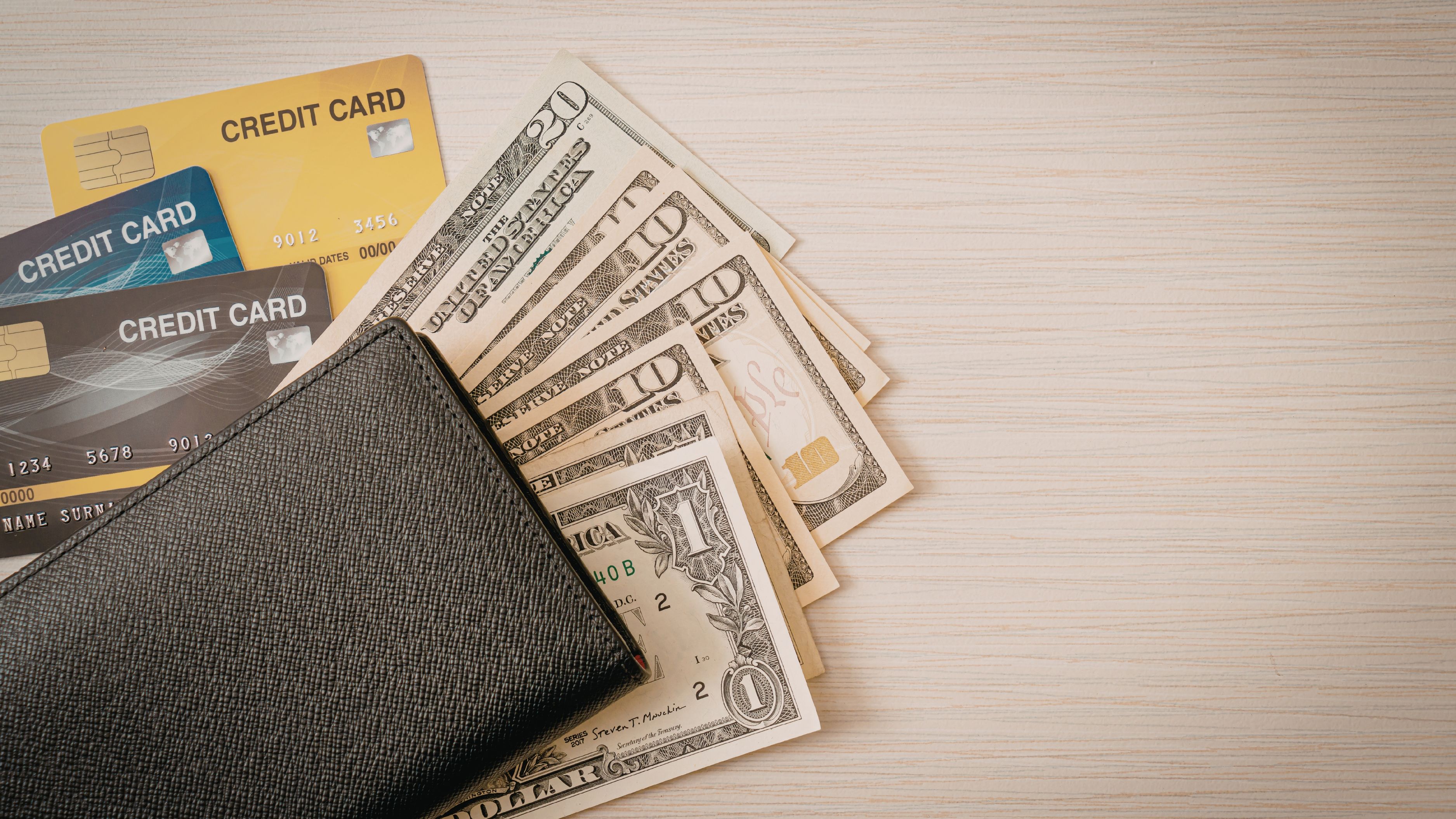
Credit card presales offer excellent ticket access leveraging financial products you likely already possess, eliminating the need for artist-specific fan club memberships. Major credit card companies (American Express, Citi, Chase, Capital One) negotiate exclusive presale partnerships with venues, ticketing platforms, and tours, providing cardholders access 24-48 hours before general public sales. The American Express presale program is particularly robust, covering thousands of events annually across Live Nation, AXS, and independent venues nationwide.
The registration process is straightforward—log into your credit card account, register your card for presale access (one-time setup), then use that card at checkout during presale windows to unlock ticket availability. The tickets sell at face value without presale premiums, though standard Ticketmaster/venue fees still apply. The competition level sits between fan club presales (smaller pool) and general sales (everyone), providing reasonable odds of securing tickets especially for mid-demand shows where general sales might sell out quickly but presales have adequate inventory.
The key advantage is accessibility—if you already have an Amex, Citi, or Chase card, you have presale access without additional spending. Many cards offer presales as standard benefits, not requiring premium or co-branded cards. The limitation is you can't control which shows have credit card presales (not all tours participate), and extremely high-demand shows may sell out even during credit card presales. Strategic approach: maintain cards from multiple issuers (Amex and Citi) to maximize coverage across different venue and tour partnerships. This provides presale access to most major tours without the cost of multiple fan club memberships.
Pros:
No additional cost if you already have compatible credit card
Broad coverage across many venues and tours
Face-value pricing without presale premiums
Multiple cards provide redundant access across partnerships
Registration is one-time setup, then automatic access
Cons:
Not all shows participate in credit card presales
Must have specific credit card brands (Amex most comprehensive)
More competition than fan club presales
No guarantee of presale availability for highest-demand shows
Some venues partner exclusively with one card brand
3. Venue Presales

Best for: Local fans who can purchase tickets directly at venue box offices avoiding online fees
Pricing from: Face value only, no service fees when purchasing at physical box office
Key features: In-person purchasing eliminates online fees (saving 15-30%), presale access for venue members or local residents, day-of-general-sale priority line access, ability to see exact seat locations before purchasing, personal service from box office staff
Venue presales and box office purchasing represent the most economical ticket acquisition method, eliminating the 15-30% service fees that online platforms add to every transaction. Many major venues (Madison Square Garden, Red Rocks, Hollywood Bowl) offer presales or priority purchasing windows for venue members, newsletter subscribers, or local residents. Additionally, purchasing tickets in person at the venue box office on the day of general sale allows seeing exact seat views and eliminating fees entirely—a $150 ticket online becomes $150 flat at the box office.
The local advantage is significant—venues prioritize their communities through geographical presales (verified by address) or venue membership programs (annual $25-100 depending on venue size). These programs typically include early ticket access, discounted parking, merchandise discounts, and members-only events. The in-person purchasing experience provides advantages impossible online: box office staff can show sight-line photos from various sections, explain acoustics differences, and suggest value seating areas that offer excellent experiences without premium pricing.
The limitation is geographic—you must be able to physically visit the venue during box office hours (typically weekdays 10am-6pm, weekends 10am-4pm). For tours with multiple dates, purchasing at the venue box office requires the show to be in your city. However, for local concerts at your regular venues, establishing relationships with box office staff and joining venue membership programs provides consistent access to tickets at the lowest possible prices. The elimination of $20-50 in fees per ticket order pays for venue membership in 1-2 purchases annually.
Pros:
Eliminates all service fees (saving 15-30% per ticket)
Personal service helps find best value seating
Can see exact seat views before purchasing
Venue membership programs provide presale access
Supports venues directly rather than third-party platforms
Cons:
Requires physical presence during business hours
Only works for venues in your geographic area
Box office lines can be long during high-demand sales
Some venues have limited box office hours
Not all events allow box office purchasing (some online-only)
4. Spotify/Streaming Presales
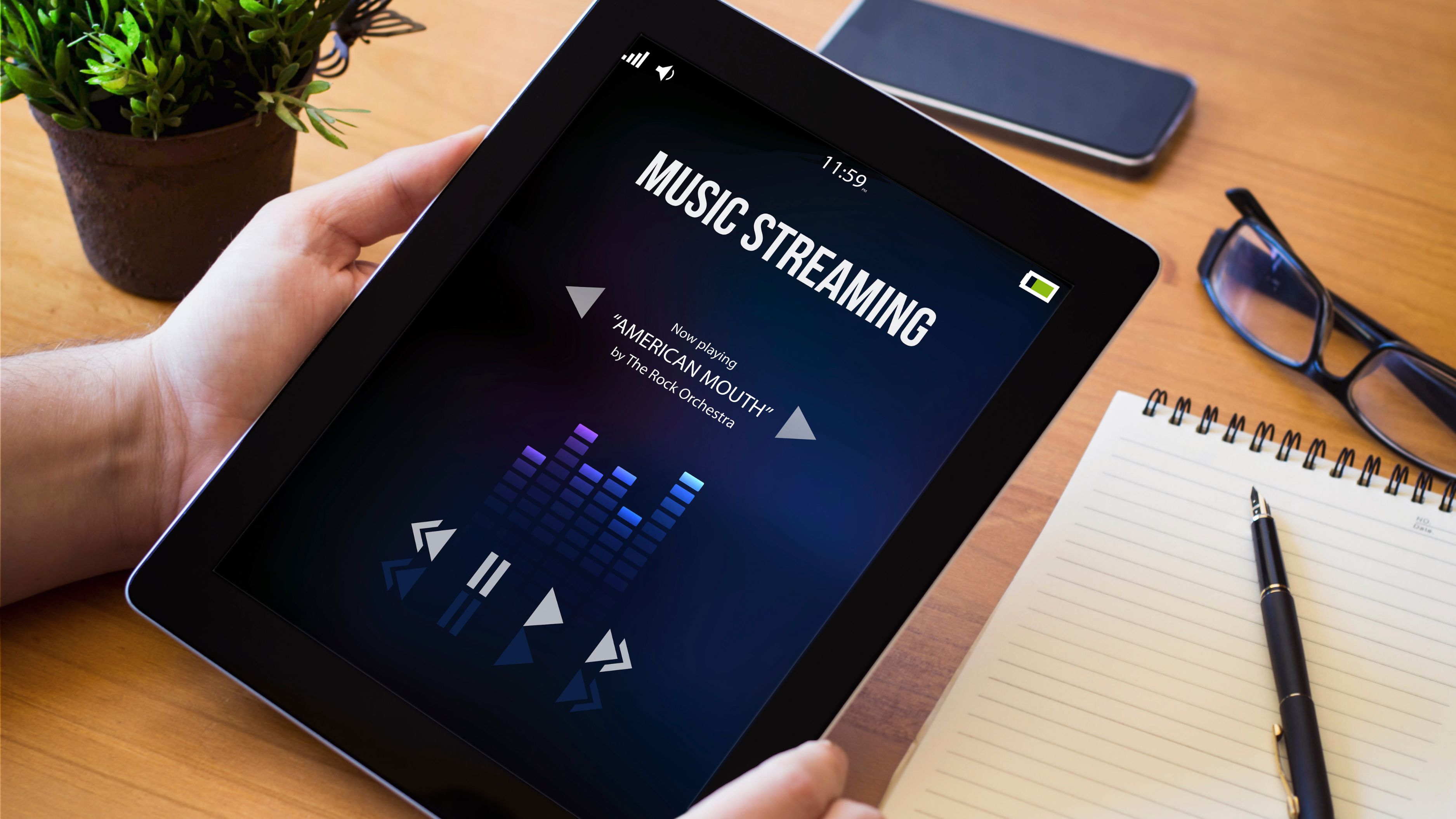
Best for: Verified top listeners who stream artists heavily on music platforms
Pricing from: Free access (based on listening data), tickets at face value plus standard fees
Key features: Algorithm-verified top listeners receive presale codes, data-driven fan verification, exclusive access 24-48 hours before general sale, integration with Ticketmaster and other platforms, no additional membership cost
Spotify, Apple Music, and other streaming platforms increasingly partner with artists and ticketing companies to reward verified top listeners with presale access. The system analyzes your listening data to identify genuine fans—typically the top 1-5% of listeners for specific artists—and automatically sends presale codes via email or app notification. This merit-based access ensures tickets reach actual fans rather than scalpers, and it costs nothing beyond your existing streaming subscription.
The verification process is entirely passive—you simply listen to artists naturally through the year, and when they announce tours, the streaming platform identifies you as a top listener eligible for presale access. The presale window typically opens 24-48 hours before general sale with face-value pricing identical to other presales. The competition level is moderate—competing against other top listeners but not the general public—making this method effective for mid-to-high-demand shows. The system's strength is its bot-resistance: scalpers can't fake years of listening data to game the system.
The success probability varies by artist popularity and your listening habits. For niche artists with smaller followings, being in the top 5% requires less listening volume; for megastars, you need substantial listening history. The system rewards organic fandom rather than purchased access, aligning with most fans' preferences for fair allocation. The limitation is unpredictability—you can't guarantee presale access even if you listen frequently, as the algorithms determine thresholds dynamically. Additionally, not all artists participate in streaming presales, though adoption is growing as platforms and ticketing companies recognize the value of data-verified fan engagement.
Pros:
Completely free based on existing listening habits
Rewards genuine fandom rather than ability to pay
Bot-resistant through data verification
Face-value pricing without premium charges
Passive qualification requiring no additional action
Cons:
Unpredictable access depending on artist popularity and algorithms
Not all artists participate in streaming presales
Top listener thresholds vary and aren't transparent
Must use streaming platform that partners with specific tour
No guarantee of ticket availability even with presale access
5. Official Ticketmaster Verified Fan
Best for: High-demand shows where artists implement fan verification to combat scalping
Pricing from: Free registration, tickets at face value (though often with dynamic pricing)
Key features: Pre-registration system before ticket sales, boost codes for verified fans, randomized queue positions among verified fans, bot mitigation technology, personalized ticket offers, waiting room priority
Ticketmaster's Verified Fan program attempts to solve the bot problem by requiring pre-registration days or weeks before ticket sales, verifying you're a real person, then providing boost codes that grant access to purchase tickets. Artists including Taylor Swift, Bruce Springsteen, and Harry Styles have used Verified Fan for recent tours, with mixed success depending on demand levels. The system requires registering in advance (typically 1-2 weeks before sale), answering verification questions (favorite songs, concert history), and waiting for email confirmation of whether you're selected for presale access.
The boost codes assigned to verified fans provide priority access over general public but don't guarantee tickets—you're still competing against other verified fans in a randomized queue. The system significantly reduces bot purchases compared to traditional first-come-first-served sales, though scalpers have developed workarounds including registering hundreds of real accounts. The face-value pricing claim is technically accurate but misleading—many Verified Fan sales implement dynamic pricing where tickets' base prices fluctuate based on demand, often resulting in 100-300% markups versus historical face values for similar seats.
The effectiveness varies dramatically by show demand. For reasonable-demand tours, Verified Fan works well—most registrants receive codes and most code-holders secure tickets. For extreme-demand shows (Taylor Swift Eras Tour, Beyoncé Renaissance), even verified fans face low purchase probabilities as demand exceeds supply by 10-20x. The system is better than free-for-all sales that bots dominate, but it's not the panacea Ticketmaster markets. The registration process is free and simple, making it worth attempting for high-demand shows even with uncertain success rates.
Pros:
Significantly reduces bot purchases compared to traditional sales
Free registration with straightforward verification process
Randomized queue among verified fans provides fairness
Priority access over general public
Increasingly adopted by major artists for high-demand tours
Cons:
Registration doesn't guarantee presale code or tickets
Often implements dynamic pricing inflating "face value" dramatically
Scalpers still game system through multiple accounts
Queue position is random among verified fans (luck-dependent)
Doesn't solve supply-demand imbalance for extreme-demand shows
6. AXS Official Resale
Best for: Purchasing or selling tickets at face value through verified exchange platform
Pricing from: Face value (original ticket price) plus small service fee
Key features: Face-value price caps preventing markup, secure ticket transfer, seller identity verification, integrated with original ticket sale, mobile-only tickets prevent screenshots/duplication, last-minute purchasing options, buyer protection guarantees
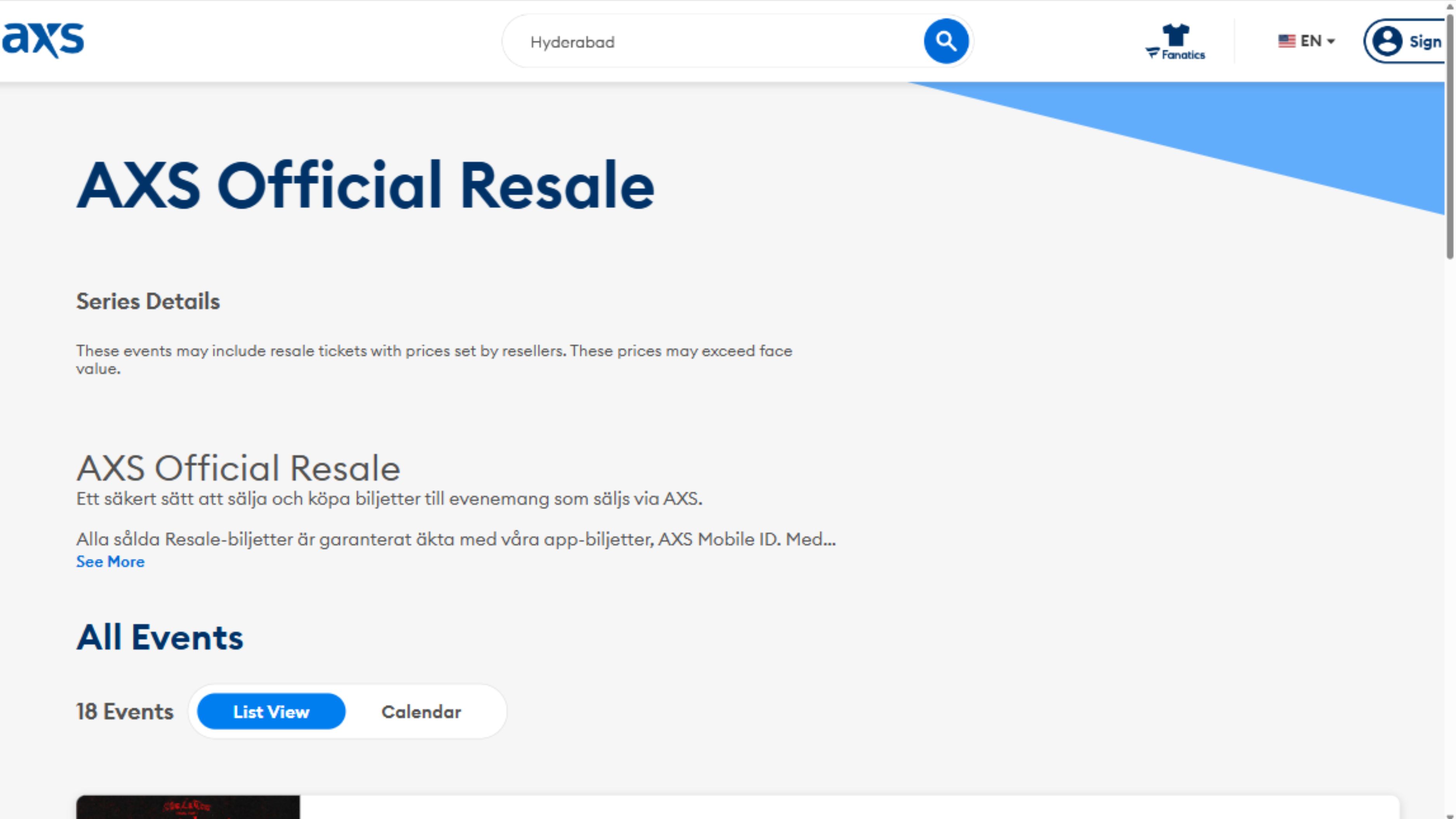
AXS Official Resale represents the most consumer-friendly secondary market, implementing face-value price caps that prevent scalping while enabling fans to sell tickets they can no longer use. Unlike StubHub or Vivid Seats where sellers set arbitrary markups (often 300-500%), AXS restricts resale prices to original face value plus a small service fee (typically 10-15%). This creates a legitimate secondary market where fans can safely exchange tickets without predatory pricing, though inventory is limited to AXS-ticketed events and sellers willing to accept face-value returns.
The platform integrates directly with original ticket sales—when you purchase AXS tickets, resale functionality is built-in if your plans change. The mobile-only tickets with dynamically-rotating barcodes prevent the screenshot scams and counterfeit tickets prevalent on other platforms. Buyer protection guarantees valid entry, and seller verification ensures you're not buying from bot accounts or professional scalpers. The face-value cap means you never overpay, though you also can't find bargain pricing below face value that occasionally appears on other platforms.
The limitation is availability—only AXS-ticketed events participate (approximately 20-30% of major venues), and inventory depends on fans reselling rather than professional scalpers maintaining large inventories. For sold-out AXS shows, checking Official Resale regularly (especially the week before and day-of show) often reveals tickets as fans' plans change. The system works best for mid-demand shows where some ticket holders can't attend but not for extreme-demand events where even face-value resale listings get claimed instantly. AXS's model represents what ethical secondary ticketing should look like, prioritizing fan-to-fan exchange over scalper profit.
Pros:
Face-value price caps eliminate scalping and gouging
Integrated with original sale for seamless transfers
Mobile-only tickets prevent counterfeits and screenshots
Buyer and seller protection built into platform
Supports ethical secondary market benefiting fans
Cons:
Limited to AXS-ticketed events (not all venues use AXS)
Inventory depends on fans reselling, often limited
Can't find below-face-value bargains like other platforms
Face-value listings claimed instantly for high-demand shows
Service fees still apply even at face value
7. SeatGeek Deal Score
Best for: Comparing resale market prices to identify best value when secondary market is necessary
Pricing from: Variable resale prices, Deal Score identifies value (green scores = good deals)
Key features: Proprietary Deal Score algorithm (0-100 scale), price comparison across multiple resale platforms, historical pricing data, seat view maps, mobile app with alerts, all-in pricing (fees included in displayed prices), interactive venue maps
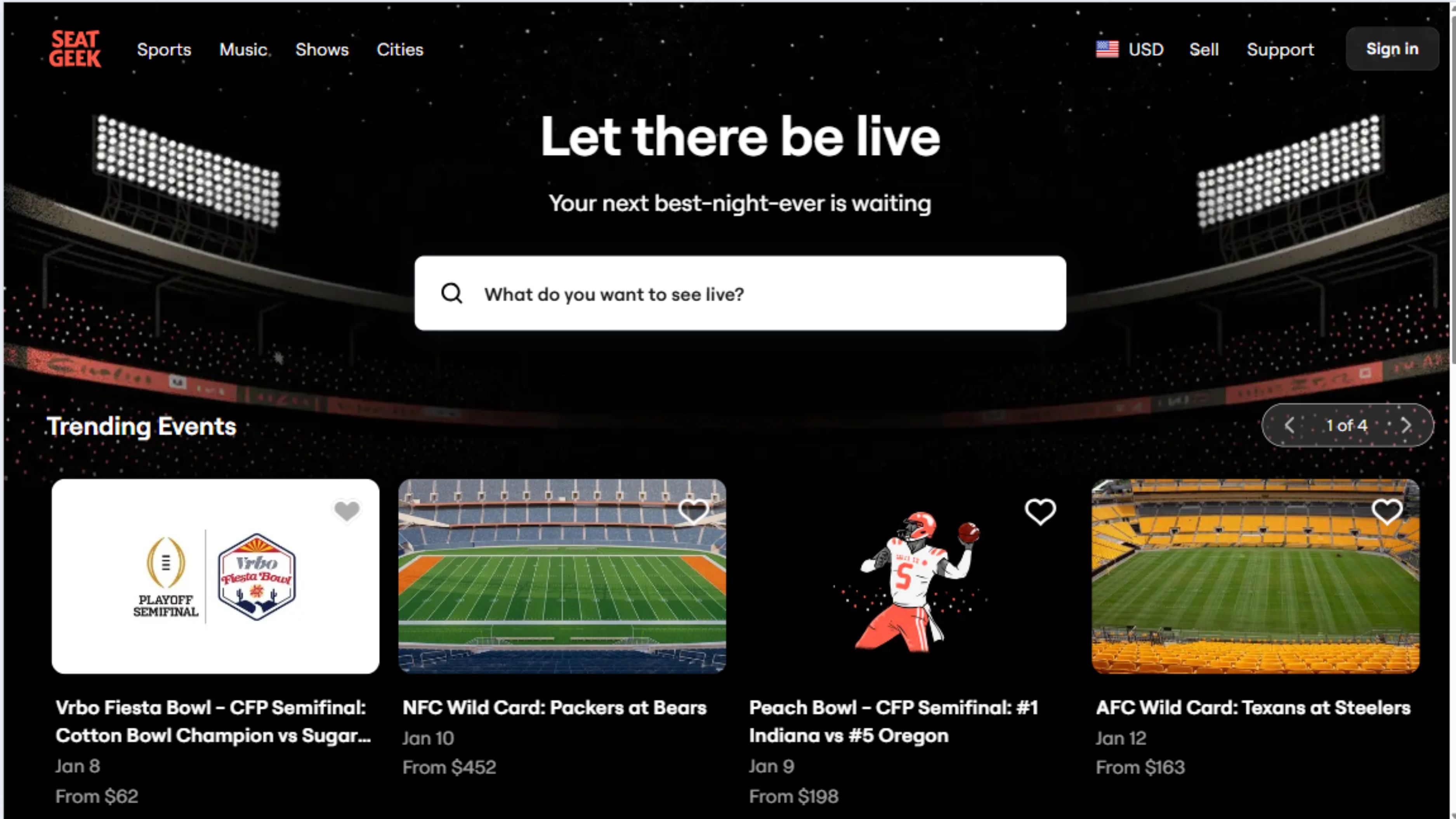
SeatGeek's Deal Score provides the most sophisticated price analysis tool when you must resort to secondary markets, using algorithms to compare current listings against historical data and identify genuinely good deals versus overpriced tickets. The 0-100 score (color-coded green, yellow, red) analyzes factors including seat location, current price versus historical sales for similar seats, time until event, and competition among sellers. This prevents the common mistake of seeing a $200 ticket and assuming it's reasonable when it's actually 300% above recent sale prices for that section.
The platform aggregates listings from multiple resale sources (including SeatGeek's own inventory, StubHub, Vivid Seats, and smaller vendors), presenting comprehensive options with transparent all-in pricing that includes fees in displayed prices—eliminating the frustrating fee surprise at checkout common on competitors. The interactive venue maps show exact seat locations with view-from-seat photos, helping evaluate whether a "deal" in an obstructed-view section actually represents value. Price alerts notify you when tickets in your target price range become available, useful for flexible buyers who can wait for seller desperation as show dates approach.
The Deal Score system won't help you avoid overpaying entirely—it simply helps you overpay less by identifying which overpriced tickets are least overpriced. The algorithm assumes you're willing to use secondary markets despite markup, optimizing within that constraint rather than steering you toward face-value primary options. The platform's value proposition is strongest for shows already sold out where secondary market is your only option, or when you're buying last-minute and comparing dozens of listings. For primary sale opportunities, SeatGeek offers no advantages over face-value methods. Think of it as harm reduction rather than ideal solution—when you must overpay, Deal Score ensures you overpay minimally.
Pros:
Deal Score algorithm identifies best relative value in resale market
All-in pricing eliminates fee surprises at checkout
Aggregates multiple resale sources for comprehensive comparison
Interactive maps with seat views aid decision-making
Price alerts help flexible buyers find price drops
Cons:
Still involves overpaying versus face value in most cases
Deal Score identifies "best of bad options" not actually good deals
Doesn't address primary market or face-value opportunities
Service fees still apply (18-25% typical)
Algorithm can't overcome fundamental supply-demand pricing
8. Facebook/Reddit Community Groups
Best for: Peer-to-peer ticket transfers at face value within fan communities
Pricing from: Face value (often negotiable), no platform fees for direct transfers
Key features: Direct fan-to-fan communication, negotiable pricing (often at or below face value), community accountability and reputation, payment flexibility (Venmo, PayPal), mobile ticket transfer capabilities, local meetups possible, shared passion for artists creates trust
Facebook groups dedicated to specific artists or venues and Reddit communities like r/concerts and artist-specific subreddits facilitate peer-to-peer ticket transfers that bypass commercial secondary markets entirely. Fans who can't attend shows post tickets at face value seeking other fans to purchase them, often negotiating flexible payment terms and meeting in person for local shows. The community accountability creates trust—members with established posting histories and reputation within communities are far less likely to scam than anonymous StubHub sellers, and the community actively identifies and bans scammers.
The pricing is typically at face value or below, as sellers are generally fans looking to recover costs rather than profiting from desperation. Many sellers accept payment plans (pay half now, half at transfer) or trade opportunities (swapping tickets for different dates). The flexibility and human element distinguishes this approach from corporate platforms—you can explain your situation, negotiate pricing, and often receive empathy from fellow fans who remember struggling to afford tickets themselves. The shared passion for the artist creates community bonds that transcend commercial transactions.
The risks are real—you're trusting individuals without platform buyer protection guarantees, and scams do occur despite community moderation. Best practices include using PayPal Goods & Services (never Friends & Family, which lacks buyer protection), verifying seller reputation through post history and community feedback, requesting video proof of mobile tickets, and meeting in person when possible for local shows. The mobile ticket transfer systems (Ticketmaster, AXS) provide inherent security since tickets can be transferred directly through official apps, preventing screenshot scams. For fans priced out of official and commercial resale markets, community groups represent the most accessible path to affordable tickets, though requiring due diligence and accepting some risk.
Pros:
Face value or below pricing from fans not seeking profit
No platform fees for direct transfers
Community accountability reduces scam risk versus anonymous sellers
Flexible payment arrangements possible through negotiation
Shared fandom creates trust and empathy
Cons:
No formal buyer protection if scammed
Requires due diligence verifying seller legitimacy
Time-consuming compared to instant platform purchases
Risk of counterfeit or already-used tickets
Quality and availability vary by community size and activity
9. Day-of-Show Box Office
Best for: Risk-tolerant bargain hunters willing to gamble on last-minute availability
Pricing from: Face value plus box office fees (lower than online), sometimes below face value for released holds
Key features: Last-minute released inventory from holds and returns, face-value pricing, eliminated online fees, potential for below-face-value deals, immediate physical possession, can choose exact seats from available inventory, no resale markup
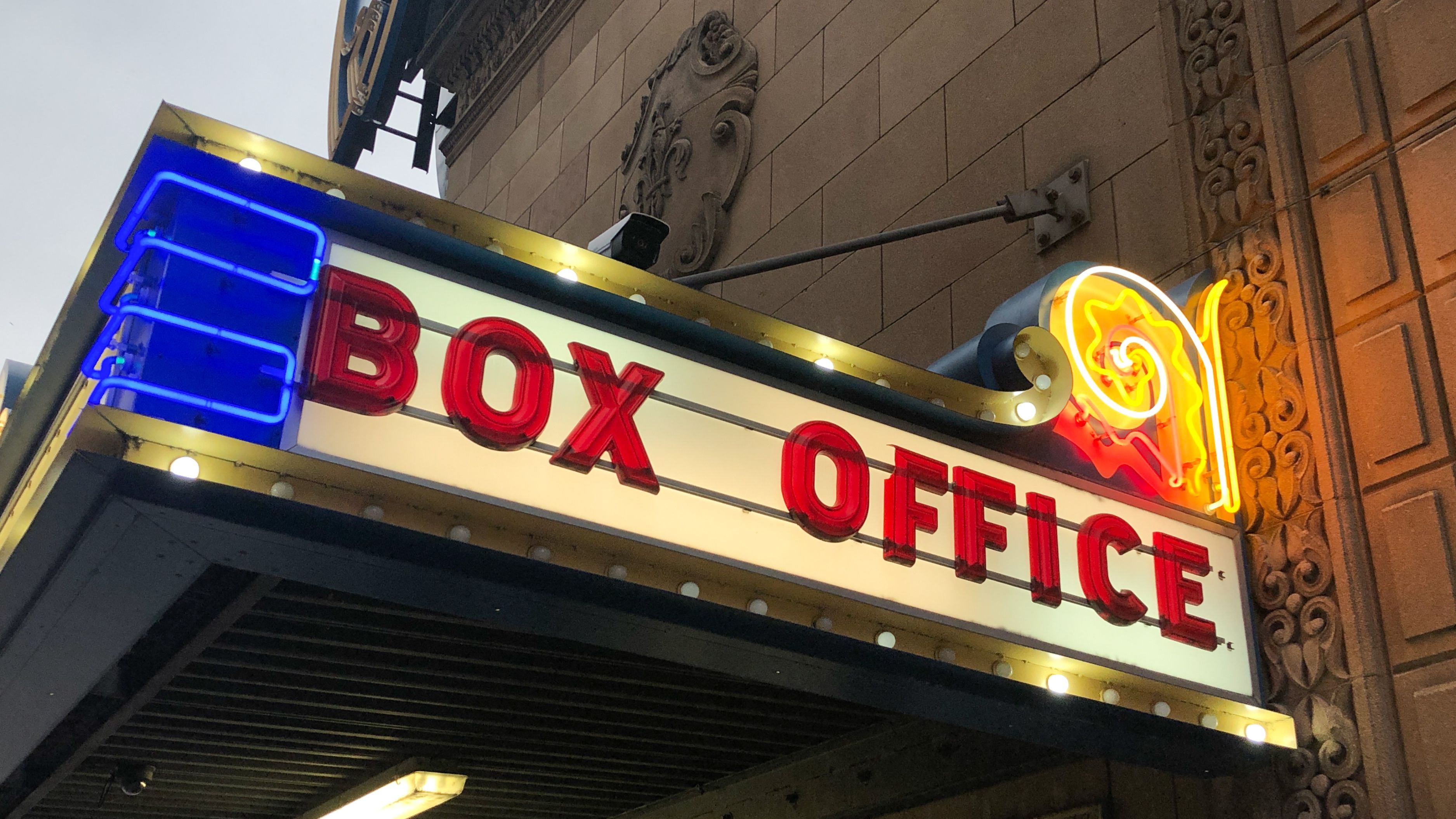
Day-of-show box office purchasing represents the highest-risk, highest-reward ticket acquisition strategy, targeting inventory that becomes available as venues release held tickets, production seats become unnecessary, or will-call tickets go unclaimed. Major concerts typically have 50-200 tickets held for artist guests, production needs, and sponsor allocations that get released day-of-show if unused. Additionally, venues occasionally sell standing-room or obstructed-view seats day-of-show at discounted prices rather than having empty space.
The pricing is optimal—face value without online service fees, and sometimes below face value for less desirable seats venues want to fill. The Grateful Dead pioneered the "miracle ticket" tradition of releasing affordable tickets at will-call day-of-show, a practice some jam bands and community-focused artists continue. Even mainstream shows occasionally have ticket drops as production determines actual space needed and releases initially-held seats. Arriving at the box office 2-3 hours before show time (earlier for high-demand shows) and asking if they expect any releases gives you the best odds.
The success probability is low—most shows sell out legitimately with no meaningful day-of inventory—but when it works, you secure tickets at the best possible price when other methods have failed. The strategy works best for: (1) tours with multiple nights in the same city where demand spreads across dates, (2) venues known for releasing production holds (ask box office staff about historical patterns), (3) shows where resale prices are astronomical making even a 10% success probability worthwhile, and (4) local shows where "wasting" a few hours at the venue isn't a major time investment. For out-of-town shows or single-date tours, the risk of arriving ticketless makes this strategy suitable only as a last resort after other methods fail.
Pros:
Lowest possible pricing (face value without online fees)
Access to last-minute released holds and returns
Occasionally below-face-value deals for fill-in seats
No resale markup or scalper involvement
Immediate physical possession eliminates transfer worries
Cons:
Low success probability (works for maybe 10-20% of attempts)
Requires time investment with no guaranteed result
Only viable for local shows or when traveling anyway
Can't plan in advance (no guarantee tickets will be available)
Risk arriving at venue without tickets, wasting entire evening
10. Ticket Lottery Systems
Best for: High-demand limited-capacity shows where fair random selection is only option
Pricing from: Typically face value, lottery entry usually free
Key features: Random selection from all registrants, eliminates first-come advantage, free to enter (usually), face-value pricing for winners, deadline-based entry (no rush), equal odds regardless of technology or bots, transparent selection process
Ticket lottery systems provide the fairest allocation method for shows where demand dramatically exceeds supply, replacing first-come-first-served chaos with randomized selection giving everyone equal odds. Artists including Bruce Springsteen, Hamilton productions, and various festivals implement lotteries for premium seats or sold-out shows, allowing fans to enter during multi-day windows then randomly selecting winners. The lottery entry deadline-based system eliminates advantages of fast internet connections, bot networks, or ability to drop everything when tickets go on sale.
The entry process is straightforward—register during the designated window (typically 3-7 days), provide payment information that charges only if selected, then wait for results notification. Winners receive tickets at face value without dynamic pricing or presale premiums, while non-winners receive nothing but also lose nothing (no charge for unsuccessful entries). The transparency appeals to fans frustrated by opaque algorithms and bot-dominated sales—everyone knows exactly how winners were chosen and that the process was fair, even if they personally didn't win.
The success probability varies by demand ratio but is always lower than traditional sales where preparation and speed provide advantages—if 50,000 people enter a lottery for 5,000 tickets, you have 10% odds regardless of your dedication or technology. This democratic approach frustrates highly-motivated fans who in traditional sales could improve odds through better preparation, but it prevents bots and scalpers from dominating inventory. Lottery systems work best when you want tickets but aren't devastated if you don't win, can enter multiple lotteries for different dates if tours have many shows, and appreciate fairness over competition. The increasing adoption of lottery systems for high-demand shows suggests the industry recognizes traditional sales are broken beyond repair by bot networks.
Pros:
Fairest allocation method giving everyone equal odds
Eliminates bot and scalper advantages
Free to enter with no obligation if not selected
No need to rush or clear schedule for sale time
Face-value pricing without premiums for winners
Cons:
Low success probability for high-demand shows (often under 10%)
No way to improve odds through preparation or dedication
Results delay creates planning uncertainty
Not all artists/venues implement lottery systems
Winning requires luck rather than strategy or effort
Comparison Summary
Cost Analysis: Face-value primary methods (artist presales, credit card presales, venue box office, streaming presales, Verified Fan) provide the lowest costs at $0-75 annual memberships plus face value plus 15-30% fees. Secondary market options (SeatGeek, Facebook/Reddit communities) involve 0-300% markups above face value. AXS Resale splits the difference at face value only. Day-of-show box office and lotteries offer the absolute lowest costs (face value, minimal fees) but lowest success probability.
Success Probability Tiers: Artist fan club presales and credit card presales offer the highest success rates (60-80% for normal demand shows). Streaming presales, venue presales, and Verified Fan range from 30-60% depending on demand. Secondary markets (SeatGeek, AXS Resale, community groups) offer near-100% success but at premium pricing. Lotteries and day-of-show strategies succeed 5-20% of the time.
Time Investment Requirements: Quick setup methods (credit card presales, streaming presales) require minimal ongoing effort after initial registration. Moderate investment methods (fan clubs, Verified Fan, community groups) need periodic registration and monitoring. High investment approaches (day-of-show box office, community negotiation) require substantial time with uncertain returns.
Best for Different Fan Types: Hardcore fans of specific artists should prioritize fan club presales. Multi-artist fans benefit from credit card presales covering many tours. Budget-conscious fans should exhaust face-value options before considering secondary markets. Risk-tolerant bargain hunters can try day-of-show and community groups. Fans priced out of official channels have community groups and lottery systems as accessible alternatives.
Buying Guide
Who Needs Ticket Acquisition Strategies: Anyone attending concerts regularly faces ticket acquisition challenges, but strategies become essential for: high-demand tours where general sales sell out instantly, budget-conscious fans unable to afford resale markups (typically 200-400% above face value), families purchasing multiple tickets where fees and markups compound, and fans of artists who tour infrequently where missing opportunities means waiting years for another chance. Even moderate demand shows benefit from strategic approaches to avoid unnecessary fees and secure better seats.
How It Works: Successful ticket acquisition requires layered approaches rather than single strategies. Optimal approach: (1) Register for all free presale opportunities (Verified Fan, streaming, credit card) immediately when tours announce, (2) Join fan clubs for your top 3-5 most-attended artists, (3) Join venue memberships for your local concert halls, (4) Set up alerts and monitor community groups for face-value transfers, (5) Check AXS Official Resale regularly for face-value secondary options, (6) Only resort to markup-heavy secondary markets (SeatGeek, StubHub) as last resort when all face-value methods fail. This multi-pronged approach maximizes face-value opportunities while maintaining backup options.
Essential Features to Consider:
Advance Planning Horizon: Most effective strategies require acting before tour announcements. Fan clubs need membership months in advance. Credit card presale registration should happen when you get the card, not when tours announce. Streaming presales reward year-round listening. Calendar upcoming tours for artists you follow, joining relevant programs 2-3 months before expected announcements.
Risk Tolerance: Conservative strategies (fan clubs, credit cards, Verified Fan) provide reliable access at higher costs (memberships, potential dynamic pricing). Aggressive strategies (day-of-show, community groups, lotteries) offer potential savings with significant failure risk. Match approach to how devastating missing the show would be—use conservative methods for once-in-lifetime tours, aggressive methods for artists who tour annually.
Geographic Flexibility: Multiple-date tours in nearby cities dramatically improve odds. If an artist plays three nights in your region, you have three chances in fan club presales, three day-of-show opportunities, and wider community group inventory. This flexibility also enables waiting for price drops as show dates approach rather than panic-buying at inflated prices for a single date.
Payment Method Optimization: Use credit cards that offer presales (Amex, Citi) for purchases to access exclusive windows. PayPal Goods & Services (not Friends & Family) for community purchases to maintain buyer protection. Never use wire transfers, Zelle, or Venmo for tickets from strangers—these offer zero fraud protection.
Scam Awareness: Red flags include sellers requesting unusual payment methods, prices significantly below market value (too good to be true), sellers with no post history or reputation, pressure to decide immediately, and requests for personal information beyond what ticket transfer requires. Verify tickets through official platform transfer systems rather than screenshots which can be doctored or reused.
Pricing Overview
Free Options with Highest Success: Credit card presales (if you have compatible cards already), streaming presales (based on existing listening), day-of-show box office (time investment but no money), lotteries (free entry), and community groups (face-value transfers) all cost nothing to attempt beyond ticket face value if successful.
Low-Cost Memberships ($20-100 annually): Artist fan clubs ($20-75 per artist), venue memberships ($25-100 per venue), and Spotify/streaming premium subscriptions ($10-15 monthly) provide presale access at minimal investment. Calculate whether annual attendance justifies these costs—2+ shows per year makes fan club membership cost-effective versus resale market.
No-Additional-Cost Methods: Verified Fan, credit card presales (if already cardholder), venue box office (no online fees), streaming presales, and lotteries require no spending beyond baseline—just coordination and luck. These should be exhausted before considering paid strategies.
Secondary Market Costs: Resale platforms (StubHub, Vivid Seats, SeatGeek) typically markup 100-300% above face value for in-demand shows, with total costs including 18-28% platform fees on top of seller markups. A $100 face-value ticket often becomes $250-400 all-in on secondary markets for popular tours. AXS Official Resale limits pricing to face value but charges 10-15% service fees.
Hidden Costs to Consider: "Dynamic pricing" on Ticketmaster and official platforms inflates face value 50-300% based on demand despite being primary sales. Fees (service, facility, order processing) add 15-35% to any ticket purchase. Parking, travel to distant venues for better availability, and time investment for strategies like day-of-show or community monitoring all carry costs beyond listed ticket prices.
Value Maximization: The most cost-effective approach combines: (1) One fan club membership for your most-attended artist ($20-75 annually), (2) Credit card presale access through existing cards (free), (3) Venue membership for your local concert hall ($25-100 annually), (4) Active monitoring of free community groups and lotteries. This combination typically costs under $150 annually while providing access to dozens of presale opportunities and face-value transfer options, saving hundreds or thousands versus exclusive reliance on secondary markets.
FAQ
Q: When is the best time to buy concert tickets?
For face-value purchases, the answer is always "as early as possible through presales" since inventory depletes and dynamic pricing increases as sales progress. However, for secondary markets, pricing follows a U-curve: highest immediately after sellout (panic buying), declining in the weeks before the show (sellers who can't attend lower prices), rising again in the final days (desperate buyers), then crashing day-of-show (sellers prefer any money over worthless tickets). If you must use secondary markets, the optimal purchase window is typically 7-14 days before the show when panic has subsided but desperation hasn't peaked.
Q: Are bots really the main reason I can't get tickets?
Bots are a significant problem but not the sole cause of ticket scarcity. Industry estimates suggest bots purchase 20-40% of tickets for high-demand shows before anti-bot measures activate. However, for mega-tours where demand exceeds supply by 10-20x (Taylor Swift, Beyoncé), even if bots captured zero tickets, most real fans would still fail to purchase. The bot problem makes a bad situation worse rather than creating the problem entirely. Verified Fan and similar systems have reduced bot effectiveness but haven't eliminated them, as scalpers increasingly use real accounts and human labor to circumvent protections.
Q: Is it ever worth buying from secondary markets like StubHub?
Secondary markets serve legitimate purposes when: (1) Shows sell out before you can attempt face-value purchases, (2) Your plans change after initial sales close, (3) You're willing to pay premiums for better seats than you could secure in primary sales, or (4) You're buying last-minute and need guaranteed inventory. However, you should exhaust all face-value options first including AXS Official Resale, community groups, and day-of-show box office before resorting to markup-heavy platforms. If you must use secondary markets, wait until 7-14 days before show when prices typically dip, and use SeatGeek's Deal Score to identify least-overpriced options.
Q: How can I tell if tickets are legitimate or counterfeit?
For digital tickets (now the standard), legitimacy verification happens through: (1) Purchasing through official platforms (Ticketmaster, AXS, Eventbrite) or verified resale (StubHub, SeatGeek) that guarantee entry, (2) Receiving tickets via official transfer systems within the primary ticketing app rather than screenshots, (3) Verifying the barcode changes/animates (dynamic barcodes) indicating it hasn't been screenshotted and reused, and (4) Checking the transfer sender matches who you paid. For physical tickets (increasingly rare), verify security features like holograms, watermarks, and venue-specific printing. Never accept screenshots of tickets via text or email—these are reusable and the most common scam method.
Q: Should I join fan clubs for multiple artists?
Fan club membership makes financial sense only if you'll attend at least one show per year by that artist. Calculate the math: if membership costs $50 and provides presale access that helps you avoid $200+ resale markups, it pays for itself with a single ticket. However, if you follow 10+ artists casually, spending $500 on memberships hoping some will tour near you represents poor value. Prioritize fan clubs for your top 3-5 most-attended artists who tour regularly, use free methods (credit cards, streaming, Verified Fan) for others, and monitor community groups for face-value transfers. This targeted approach maximizes value without excessive membership spending.