The problem? The RPG genre is enormous. Hundreds of titles all promise epic stories, and most of them don't deliver on that promise at the level the best ones do. This list cuts straight to the ten games that actually earned their reputation for storytelling – ranked by narrative depth, character writing, world-building, and how completely they pull you in from start to finish.
If you're picking your next RPG based on story quality alone, this is the list to start with.
Top 10 at a Glance
The Witcher 3: Wild Hunt
Baldur's Gate 3
Planescape: Torment
Final Fantasy XIV: A Realm Reborn (+ Expansions)
Disco Elysium
Mass Effect 2
Persona 5 Royal
Dragon Age: Origins
Nier: Automata
Divinity: Original Sin 2
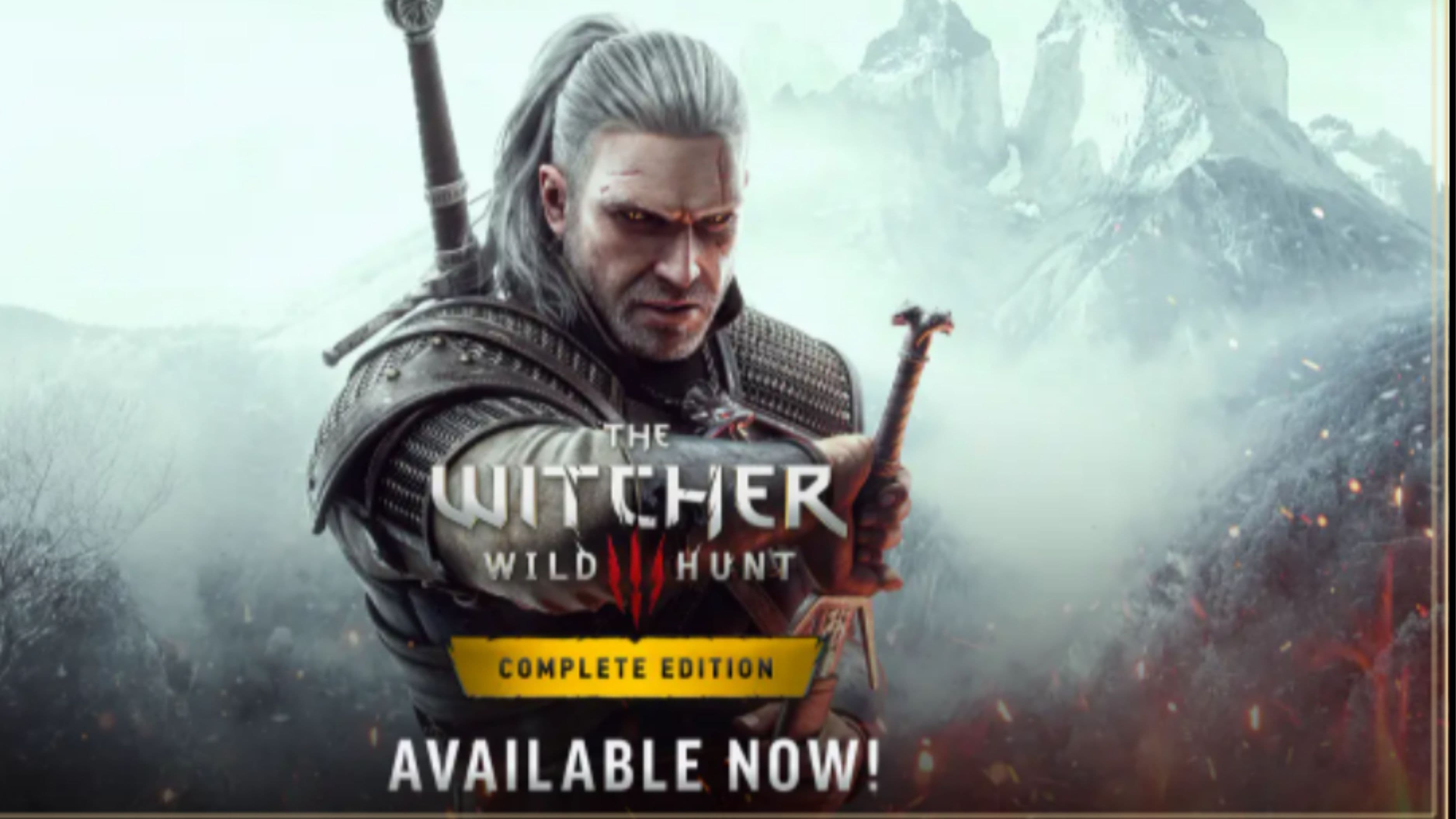
1. The Witcher 3: Wild Hunt – The Gold Standard for RPG Storytelling
What it is: CD Projekt Red's open-world action RPG following Geralt of Rivia, a monster hunter searching for his adopted daughter across a war-torn fantasy world based on Andrzej Sapkowski's novels.
Why the story hits so hard: The Witcher 3 doesn't tell one story – it tells dozens of interlocking ones, and nearly all of them are exceptional. The main quest involving Ciri and the Wild Hunt is emotionally devastating when it lands. But what truly separates this game is the side quest writing. Quests that would be throwaway filler in any other RPG – helping a ghost resolve unfinished business, deciding the fate of a cursed village, navigating a brutal civil war with no clear right side – are written with the complexity and care most games reserve for their main narrative.
The game operates in moral grey. There are no clean heroic choices. Geralt is a man who's seen enough of the world to know that good intentions and terrible outcomes go hand in hand, and the story reflects that at every turn. Its two expansions, Hearts of Stone and Blood and Wine, are widely considered among the best DLC narratives ever made.
Best for: Players who want an adult, morally complex fantasy story with characters that feel genuinely human. The 100+ hour main game plus expansions offer one of the most complete narrative experiences in gaming.
Tip: Don't skip side quests. Some of the best writing in the game is buried in content most players mistake for optional filler.
2. Baldur's Gate 3 – The Modern RPG Benchmark
What it is: Larian Studios' massive D&D-adapted RPG set in the Forgotten Realms, following a group of strangers who share a mind-flayer tadpole infection and must navigate a world-threatening conspiracy while managing their own survival.
Why the story hits so hard: Baldur's Gate 3 is a storytelling achievement in the way it makes every player's experience feel personal and specific. The game tracks hundreds of decisions across three acts and reflects them back in ways that feel genuinely consequential – choices made in Act 1 have ripple effects in Act 3 that you couldn't have predicted. The companion characters are among the best-written in RPG history: complex, contradictory, funny, damaged, and capable of genuine growth depending on how your relationship with them develops.
What makes it exceptional is that the story doesn't funnel everyone toward the same beats. Different origin characters, different choices, and different companion relationships produce meaningfully different experiences of the same events. Gale's personal quest plays nothing like Shadowheart's. Both are extraordinary. The game rewards curiosity – players who explore, experiment with dialogue options, and engage with companions deeply get a fundamentally richer narrative than those who rush the main path.
Best for: Players who want a deep, choice-driven narrative where their decisions feel real and companions feel like actual people. Also the best entry point for anyone curious about D&D storytelling without needing to know the rules.
Tip: Play the full game at least twice – once as yourself, once as a Dark Urge origin character. The experience is radically different and both are worth the time.
3. Planescape: Torment – The Game That Asked "What Can Change the Nature of a Man?"
What it is: A 1999 Black Isle RPG set in the bizarre, philosophy-drenched Planescape universe, following an immortal amnesiac called The Nameless One who must piece together his fractured past across one of gaming's most original settings.
Why the story hits so hard: No RPG before or since has put the same weight on pure narrative and dialogue as Planescape: Torment. The game is built around a single thematic question – "What can change the nature of a man?" – and every character, every quest, and every conversation circles back to it. You're not saving the world. You're uncovering who you were, what you've done, and whether any of it can be undone. The companions are deeply strange and deeply memorable: a floating, sarcastic skull, a chaste succubus, a construct with a forgotten history. Each has a story that rewards investment.
By modern standards the graphics are ancient and the interface is dated. None of that matters. The writing is so good that Planescape: Torment is still cited by game developers and writers as a benchmark 25 years after release. If you've never played it, the Enhanced Edition on modern platforms removes the friction.
Best for: Players who prioritize story over mechanics and want an RPG experience that treats narrative like literature. Not for people who need modern production values to stay engaged.
Tip: Put your points into Intelligence and Wisdom, not combat stats. This is a game where talking your way through situations opens more of the story than fighting does.
4. Final Fantasy XIV: A Realm Reborn + Expansions – The MMO That Earned Its Tears
What it is: Square Enix's massively multiplayer online RPG, initially a catastrophic 2010 launch that was completely rebuilt and relaunched in 2013 – and has since become one of the most beloved stories in the entire Final Fantasy franchise.
Why the story hits so hard: Final Fantasy XIV's story arc, running from A Realm Reborn through the Shadowbringers and Endwalker expansions, is a genuinely epic narrative that builds its emotional payoffs over hundreds of hours with the patience of a great novel. What makes it remarkable is that it achieves this in an MMO format – a genre not typically associated with emotionally resonant storytelling. The Shadowbringers expansion in particular is widely considered one of the best stories in RPG history, with a villain whose motivations are more understandable than most heroes in other games.
Endwalker, the conclusion of the game's first major story arc, had players reporting genuine emotional breakdowns at specific story beats – not because of cheap manipulation, but because the game had spent years making you care about these characters and their world. That kind of payoff only comes from long-form, carefully constructed narrative.
Best for: Players with patience and the willingness to invest in a long-form story that pays off enormously. The early A Realm Reborn content is slow; push through to Heavensward, where the quality leap is significant.
Tip: The base game is free to play up through the first expansion. Commit the time to reach Heavensward before deciding whether to continue.
5. Disco Elysium – The Most Original RPG Story Ever Written
What it is: ZA/UM's genre-defying RPG casting you as a detective with complete amnesia – not just of the case, but of his own identity – trying to solve a murder in a crumbling fictional city while rebuilding his sense of self from scratch.
Why the story hits so hard: Disco Elysium doesn't have combat. It has conversation, skill checks, internal monologue, and one of the most densely written worlds in gaming. The city of Revachol is a setting built around the ruins of a failed revolution, and the game uses your detective's investigation to explore politics, ideology, grief, addiction, and the specific sadness of a world where the dream of something better died. It's funny and devastating in the same paragraph, sometimes in the same sentence.
The internal monologue system – where your character's various psychological traits argue with each other about how to handle situations – is unlike anything else in gaming. Your stats have opinions. Your body has opinions. The experience of playing it is closer to reading a great novel than playing most other RPGs, and the writing quality backs that comparison up.
Best for: Players who want something genuinely unlike every other RPG, with writing quality at a literary level. People who need action or traditional RPG combat will bounce off this quickly.
Tip: Don't try to optimize your build on your first playthrough. Pick the character type that sounds most interesting to you and lean into it – the game rewards commitment to a perspective.
6. Mass Effect 2 – The Best Character-Driven RPG Narrative in Sci-Fi Gaming
What it is: BioWare's sci-fi action RPG, the middle chapter of the original Mass Effect trilogy, in which Commander Shepard assembles a crew of morally complicated specialists for a suicide mission into deep space.
Why the story hits so hard: Mass Effect 2 is the clearest example in gaming of what happens when a developer builds an entire game around character investment rather than plot mechanics. The story structure – recruit your squad, earn their loyalty, go on the mission – is simple. What makes it extraordinary is the execution. Each companion's loyalty mission is essentially a short story about who they are, what haunts them, and what they're capable of when someone actually gives a damn about them. Completing all of them before the final mission makes the ending hit in a way it simply can't if you've rushed through.
The game also demonstrated that choice and consequence could carry real emotional weight in a mainstream RPG. Who survives the suicide mission depends entirely on decisions made across tens of hours. Some of those outcomes are brutal, and they're brutal because the game did its job making you care.
Best for: Sci-fi fans and anyone who wants a character-ensemble story where the relationships feel earned. Can be played without the first Mass Effect, though the full trilogy is the ideal experience.
Tip: Do every companion's loyalty mission before starting the point of no return. The final mission's outcome depends on it, and the stories themselves are worth it regardless.
7. Persona 5 Royal – Style, Substance, and a Story About Who Gets to Be Heard
What it is: Atlus's JRPG following a group of high school students who discover they can enter a supernatural realm called the Metaverse and change the hearts of corrupt adults – while navigating normal teenage life in Tokyo.
Why the story hits so hard: Persona 5 Royal works on two levels simultaneously. On the surface it's a stylish heist narrative with some of the best visual and audio design in gaming history. Underneath that, it's a story about powerlessness – about what it means to be young, to be disbelieved by adults in authority, and to decide whether to accept the world as it is or refuse to. The game's central theme lands with real force precisely because the characters feel their powerlessness so specifically. Ryuji's story, Ann's story, Futaba's story – each one is grounded in something recognizably painful before it becomes something triumphant.
The Royal version adds a third semester that recontextualizes the entire story in a way that earns genuine emotional complexity the original ending lacked. It's the definitive version by a significant margin.
Best for: JRPG fans and anyone drawn to stories about youth, rebellion, and identity. The 80–100 hour runtime is a commitment, but it's paced well enough that it rarely drags.
Tip: Pay attention to your Social Link activities outside of dungeons. The character development that happens in everyday Tokyo moments is what makes the story beats inside the Metaverse land.
8. Dragon Age: Origins – The Last Great BioWare Fantasy Epic
What it is: BioWare's dark fantasy RPG following a Grey Warden – a warrior bound to fight a demonic plague called the Blight – as they build an alliance across a fractured kingdom on the verge of collapse.
Why the story hits so hard: Dragon Age: Origins earns its place on this list primarily through the sheer weight of its choices and the quality of its companion writing. The game's origin system – six different starting stories depending on your race and class – gives your character a genuine personal stake in the world before the main story even begins. That investment compounds throughout. Decisions about who to ally with, who to sacrifice, and how to end the Blight all have meaningful consequences that vary significantly between playthroughs.
The companions – Alistair, Morrigan, Leliana, Zevran, Wynne – are drawn with the kind of nuance that makes BioWare's best work feel like literature. Alistair's arc in particular is one of the best character stories in the studio's catalogue. The game came out in 2009 and still gets replayed regularly specifically because the story and characters hold up.
Best for: Fantasy fans who want rich companion relationships and genuine moral weight in their story choices. A good entry point for players new to the deeper end of the RPG genre.
Tip: Choose your origin carefully the first time – it shapes your emotional relationship to the world more than any other single decision. Human Noble and Dalish Elf offer particularly strong narrative foundations.
9. Nier: Automata – The RPG That Uses Its Own Structure to Tell Its Story
What it is: PlatinumGames' action RPG set in a post-apocalyptic Earth where android soldiers fight a proxy war against alien machines, following androids 2B, 9S, and A2 across multiple interconnected playthroughs.
Why the story hits so hard: Nier: Automata is the most formally inventive RPG on this list. The game requires multiple complete playthroughs to tell its full story – and the second and third routes aren't repetition, they're genuinely different perspectives on the same events that reframe everything you thought you understood. By the time you reach the true ending, the story has used its own game structure to explore free will, the purpose of memory, the construction of identity, and what it means to keep fighting when you don't know if the cause is real.
The game asks questions it refuses to answer neatly, and that refusal feels honest rather than evasive. It's the rare RPG where the philosophy isn't decorative – it's structural, woven into how the narrative is delivered rather than just what the characters say.
Best for: Players who want a story that challenges them conceptually and rewards patience with its layered structure. Action game fans who've been skeptical of RPG storytelling will find the combat accessible while the narrative surprises them.
Tip: Play all three main routes before stopping. Ending A alone is incomplete. Endings A, B, and C together form the actual story the game is telling.
10. Divinity: Original Sin 2 – Where Player Choices Create the Story
What it is: Larian Studios' isometric RPG (the predecessor team to Baldur's Gate 3) following a group of Sourcerers – people with dangerous magical abilities – who must survive a world that wants them dead while navigating a conflict over divine power.
Why the story hits so hard: Divinity: Original Sin 2 earns its place here through the remarkable responsiveness of its world to player choices. The game is built around the idea that every major character has a goal, every faction has an agenda, and your decisions genuinely shift the outcome in ways that feel earned rather than cosmetic. The origin characters – Ifan, Lohse, Sebille, Beast, Fane, the Red Prince – each carry personal storylines that interweave with the main plot in satisfying ways, and playing cooperatively with friends adds a layer of emergent storytelling that solo play can't replicate.
The game's final act is particularly notable for how much it varies depending on accumulated decisions. It's also the clearest proof of concept for everything Larian went on to do with Baldur's Gate 3 – you can see the design philosophy fully formed here, even if BG3 eventually refined and expanded it.
Best for: Players who want a complex, choice-driven RPG with strong replayability. Excellent in co-op if you have friends willing to commit to a long-form story together.
Tip: Don't play on the default difficulty if you want to focus on story. Custom difficulty settings let you tune the combat challenge while keeping the full narrative experience accessible.
Quick Takeaway
Every RPG on this list earns its spot through a different kind of storytelling strength. The Witcher 3 and Baldur's Gate 3 are the broadest recommendations – high production value, accessible, and consistently excellent. Disco Elysium and Planescape: Torment are for players who want something more literary and unconventional. Nier: Automata and Final Fantasy XIV reward patience with payoffs that hit harder the more you invest.
The one thing every game on this list shares: they all respect the player's intelligence. None of them talk down to you, and none of them mistake spectacle for substance. That quality – treating the person playing as someone capable of engaging with a complex, difficult, genuinely human story – is what separates the best RPG narratives from everything else.
FAQ
Which RPG on this list has the best story for a first-time RPG player? Baldur's Gate 3 or Mass Effect 2 are the strongest entry points. Both are narrative-driven, relatively accessible mechanically, and built around character relationships that don't require deep genre knowledge to appreciate.
Is Planescape: Torment still worth playing in 2025? Yes, with the Enhanced Edition available on modern platforms. The interface is dated but the writing is genuinely timeless. If you're a reader who plays RPGs for story, it's essential.
How long does it take to finish these games? It varies significantly. Disco Elysium runs 20–30 hours. Mass Effect 2 is 25–40 hours. The Witcher 3 with expansions runs 100–150 hours. Final Fantasy XIV's full story arc is 200+ hours. Know what you're signing up for before you start.
Which of these games has the most replayability? Baldur's Gate 3 and Dragon Age: Origins have the most meaningfully different playthroughs due to origin characters and choice systems. Nier: Automata requires multiple playthroughs to complete its story by design.
Are any of these games available on PlayStation or Xbox? Yes – most titles on this list have PlayStation and Xbox versions. The Witcher 3, Baldur's Gate 3, Persona 5 Royal, Mass Effect 2 (via Legendary Edition), and Nier: Automata are all available on current-gen consoles.
Planescape: Torment and Disco Elysium are primarily PC titles, though Disco Elysium had console versions released.
What's the difference between Persona 5 and Persona 5 Royal? Persona 5 Royal is the definitive version, adding a new character, a full third semester, and significant quality-of-life improvements. Always play Royal – the original version is obsolete.
The best RPG stories don't just entertain you – they change how you think about the fictional worlds and, sometimes, the real one. Every game on this list has done that for players who gave it the time it deserved. Start with whatever speaks most to your current mood, and don't rush. These are stories best experienced slowly.
📚 Sources
The Witcher 3: Wild Hunt – CD Projekt Red Official Overview: https://www.thewitcher.com/en/witcher3
Baldur's Gate 3 – Larian Studios Official Site: https://baldursgate3.game/news
Planescape: Torment Enhanced Edition – Beamdog: https://www.beamdog.com/games/planescape-torment-enhanced-edition/
Final Fantasy XIV – Square Enix Official Story Overview: https://www.finalfantasyxiv.com/en/lodestone/topics/
Disco Elysium – ZA/UM Official Site: https://discoelysium.com
Mass Effect Legendary Edition – EA Official: https://www.ea.com/games/mass-effect/mass-effect-legendary-edition
Persona 5 Royal – Atlus Official: https://atlus.com/p5r/
Dragon Age: Origins – BioWare Overview: https://www.bioware.com/games/dragon-age-origins/
Nier: Automata – Square Enix Official: https://www.jp.square-enix.com/nierautomata/en/
Divinity: Original Sin 2 – Larian Studios: https://larian.com/games/divinity-original-sin-2.html
🔍 Explore Related Topics
Best open world RPGs with great stories
RPG games with the most player choices
Final Fantasy XIV beginner guide for new players
Best JRPGs of all time ranked
Disco Elysium tips for first-time players
Mass Effect trilogy in what order to play
Baldur's Gate 3 best origin characters for story
RPG games with multiple endings explained
Best story-driven games that aren't RPGs
Witcher 3 hearts of stone vs blood and wine which is better