
Top 10 at a Glance
Betterment – Best for hands-off automated retirement investing
Personal Capital – Best for comprehensive wealth management and tracking
Fidelity Go – Best for low-cost robo-advisory with human support
Wealthfront – Best for tech-savvy investors who want advanced automation
Acorns – Best for beginners who struggle to save consistently
Vanguard Digital Advisor – Best for index fund enthusiasts seeking rock-bottom fees
Empower Retirement Planner – Best free retirement calculator and planning tools
Blooom – Best for optimizing your existing 401(k)
Human Interest – Best for self-employed and small business owners
Ellevest – Best for women-focused retirement planning and goal-setting
Detailed Reviews
1. Betterment – Best for Hands-Off Automated Retirement Investing
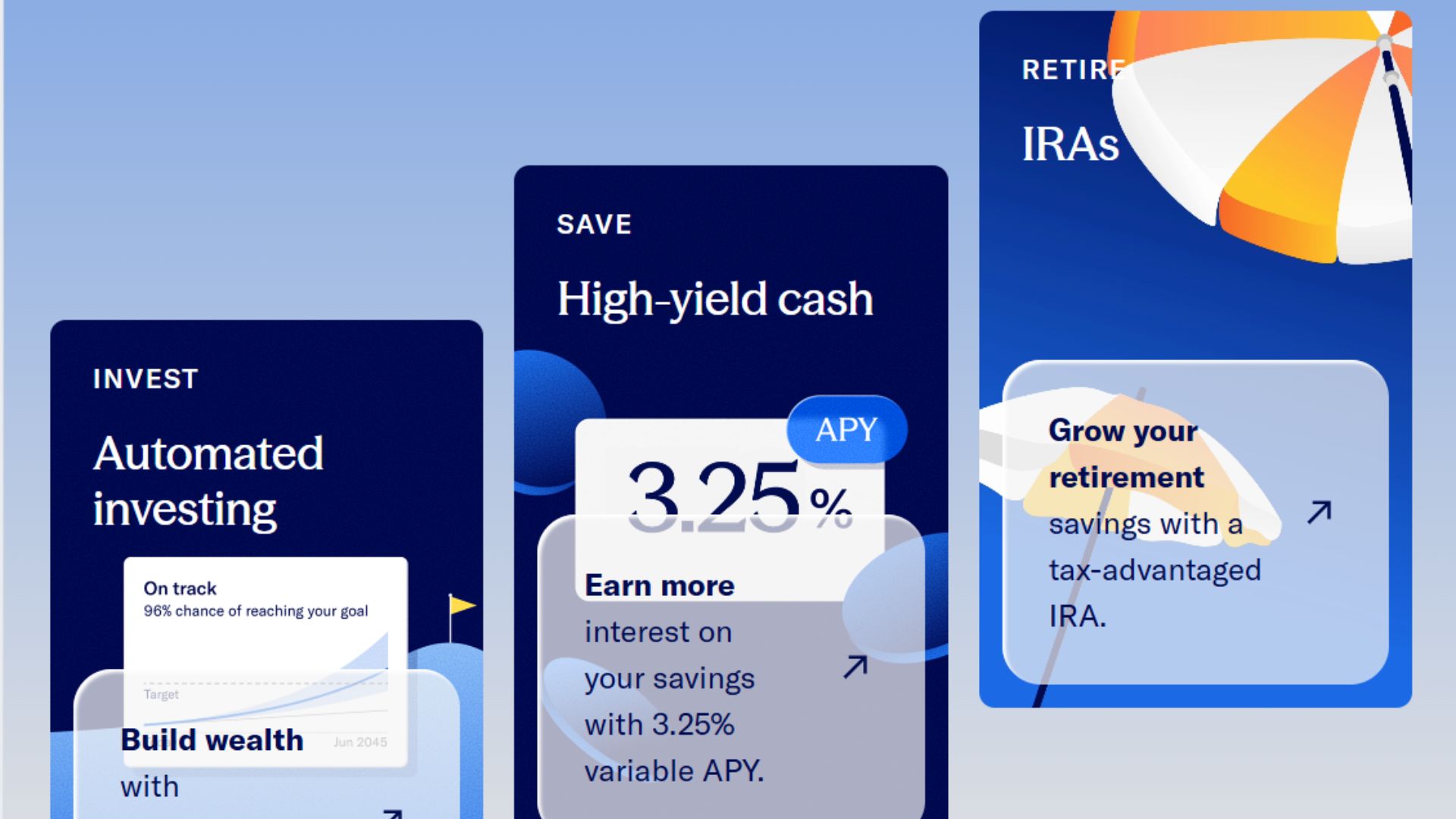
Betterment pioneered the robo-advisor revolution and remains one of the smartest choices for millennials and Gen Z investors who want retirement savings on autopilot. This platform handles everything from asset allocation to rebalancing to tax-loss harvesting, so you can focus on your career and life while your money grows in the background.
What makes Betterment shine is its goal-based approach to investing. You tell it when you want to retire and how much you'll need, and it creates a personalized portfolio using low-cost ETFs. The platform automatically adjusts your investments as you age, getting more conservative as retirement approaches. Plus, the clean interface makes it incredibly easy to visualize your progress and see exactly where you stand.
Pricing starts at 0.25% annually for the Digital plan (no minimum balance), or 0.65% for Premium, which includes unlimited access to certified financial planners. Both plans also charge the underlying ETF expense ratios, which typically total around 0.10%.
Pros:
Excellent tax-loss harvesting features that can save you money
Goal-based investing makes retirement planning intuitive
Automatic portfolio rebalancing keeps you on track
No account minimum for digital plan
Access to human advisors with Premium plan
Cons:
Annual fee can add up on larger balances
Limited investment options beyond ETFs
No direct indexing for accounts under $100,000
Premium plan requires $100,000 minimum
2. Personal Capital – Best for Comprehensive Wealth Management and Tracking

Personal Capital (now Empower) takes a holistic approach that goes way beyond basic retirement investing. This platform is perfect for millennials and Gen Z professionals who are starting to build real wealth and want to see everything in one place—checking accounts, savings, investments, loans, and retirement accounts all sync together for a complete financial picture.
The free tools alone are incredibly powerful. You get a retirement planner that models different scenarios, investment checkups that analyze your 401(k) fees, and spending trackers that help you find money to save. The dashboard shows your net worth at a glance and projects your retirement readiness based on your current trajectory. For those with more complex finances or higher balances, the paid wealth management service pairs you with dedicated financial advisors who provide personalized strategies.
The free tools are completely free (obviously), while the paid wealth management service requires a $100,000 minimum and charges between 0.49% to 0.89% annually depending on your balance.
Pros:
Outstanding free retirement planning calculators and tools
Aggregates all your accounts for complete visibility
Investment analyzer identifies high fees in your current portfolios
Sophisticated modeling for different retirement scenarios
Personalized advice from CFPs with wealth management service
Cons:
Wealth management service has high minimum balance
Can be overwhelming if you just want simple investing
Mobile app isn't as polished as competitors
Some users report syncing issues with certain banks
3. Fidelity Go – Best for Low-Cost Robo-Advisory with Human Support

Fidelity Go brings the reliability of one of America's largest investment firms into the robo-advisor space, offering an incredibly cost-effective option for younger investors. What sets it apart is the backing of Fidelity's massive resources—you get access to some of the same research and support that wealthier investors use, but in an automated, affordable package that's perfect for building your retirement nest egg.
The platform creates diversified portfolios using Fidelity Flex mutual funds with zero expense ratios, which means you're only paying the advisory fee with no hidden fund costs. Your investments are automatically rebalanced, and Fidelity's coaches are available if you need guidance. The interface isn't as flashy as some competitors, but it's straightforward and gets the job done without unnecessary complexity.
Fidelity Go charges absolutely nothing for accounts under $25,000, then just 0.35% annually for larger balances. With zero expense ratios on the underlying funds, your total cost stays incredibly low.
Pros:
Completely free for balances under $25,000
Zero expense ratios on underlying investments
Access to Fidelity's customer service and coaches
Backed by a trusted financial institution with decades of experience
Low $10 minimum to start investing
Cons:
Interface feels dated compared to newer competitors
Fewer bells and whistles than standalone robo-advisors
Limited customization options for portfolios
No tax-loss harvesting for most accounts
4. Wealthfront – Best for Tech-Savvy Investors Who Want Advanced Automation
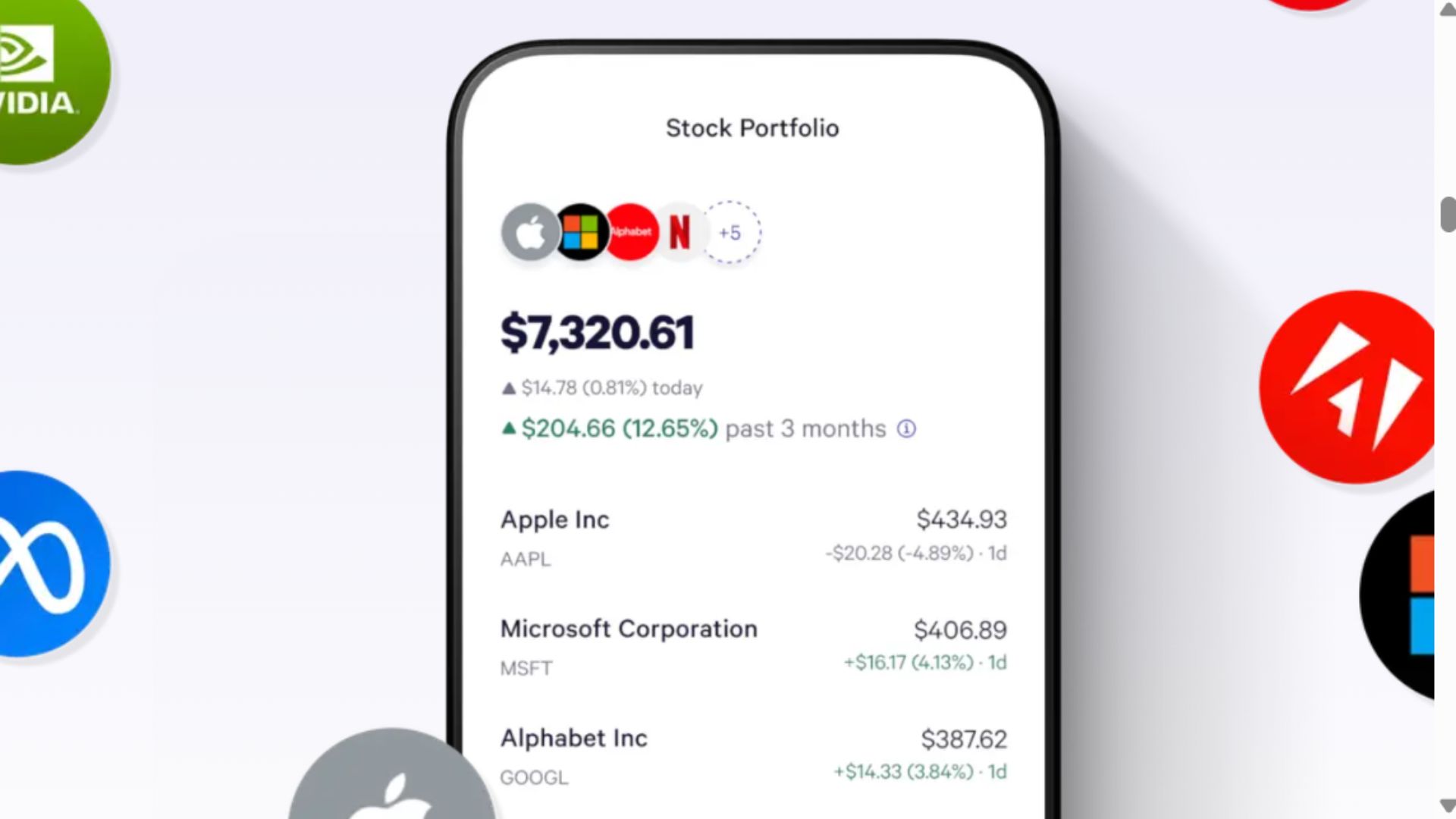
Wealthfront is the robo-advisor for people who love optimization and want their money working as efficiently as possible. This platform goes beyond basic automated investing with features like direct indexing, stock-level tax-loss harvesting, and a sophisticated planning tool that models your entire financial life—not just retirement, but buying a home, taking a sabbatical, or starting a business.
The Path financial planning tool is genuinely impressive, showing you how different decisions impact your long-term wealth. Want to see how buying a $400,000 house affects your retirement? Curious if you can afford to take a year off to travel? Path runs the numbers instantly. Wealthfront also offers a cash account with competitive rates and a stock investing account, making it a true all-in-one platform for millennials building wealth across multiple goals.
Wealthfront charges 0.25% annually with a $500 minimum to start. The underlying ETF expense ratios add roughly another 0.10%. There are no trading fees or transfer fees.
Pros:
Path planning tool is one of the best in the industry
Stock-level tax-loss harvesting for accounts over $100,000
Diversified portfolios with smart beta and risk parity options
Free financial planning even if you don't invest with them
Automatic dividend reinvestment and rebalancing
Cons:
$500 minimum might be steep for beginners
No access to human financial advisors
Some advanced features only available for larger accounts
Limited customer service compared to traditional firms
5. Acorns – Best for Beginners Who Struggle to Save Consistently

Acorns tackles the biggest challenge young people face: actually getting started with saving. This micro-investing app rounds up your everyday purchases to the nearest dollar and invests the spare change automatically. Buy a $3.50 coffee? Acorns invests the extra 50 cents. Over time, these tiny amounts add up to real money in your retirement account without you feeling the pinch.
Beyond the signature round-ups feature, Acorns offers "Found Money" where you earn cash back at partner retailers that goes straight into your investment account, and it can automatically deposit a percentage of your paycheck into retirement. The portfolios are built by Nobel Prize-winning economist Harry Markowitz and range from conservative to aggressive based on your goals. While it's not the most sophisticated platform, it's perfect for people in their 20s who need that psychological nudge to start building wealth.
Acorns offers three tiers: Personal ($3/month) for investment and retirement accounts, Personal Plus ($6/month) which adds investment for kids, and Premium ($12/month) which includes access to financial advisors and more advanced features.
Pros:
Round-ups make saving completely painless and automatic
Low flat monthly fee instead of percentage
Found Money program rewards you for shopping
Great educational content about investing basics
IRA options available for retirement-focused saving
Cons:
Flat fee can be expensive on small balances (percentage-wise)
Limited investment customization options
No tax-loss harvesting features
Portfolios are fairly basic compared to competitors
6. Vanguard Digital Advisor – Best for Index Fund Enthusiasts Seeking Rock-Bottom Fees

Vanguard literally invented the index fund, and their robo-advisor brings that same low-cost philosophy to automated retirement investing. If you're a millennial or Gen Z investor who's done your homework and believes in simple, low-cost index investing for the long haul, Vanguard Digital Advisor offers institutional-quality portfolios at prices that are hard to beat.
Your portfolio gets built using Vanguard's legendary index funds and ETFs, which already have some of the lowest expense ratios in the industry. Add the robo-advisor fee, and you're still paying less than most competitors' total costs. You'll get automatic rebalancing, and if you need human advice, Vanguard's advisors are available (though not as extensively as some competitors). The platform isn't fancy—Vanguard is known for function over flash—but for retirement savings where you want to set it and forget it for decades, that's perfectly fine.
Vanguard Digital Advisor charges 0.20% annually with a $3,000 minimum investment. When you factor in Vanguard's ultra-low fund expense ratios (often 0.05% or less), you're looking at total costs around 0.25% or lower.
Pros:
Lowest total costs in the industry
Backed by Vanguard's stellar reputation and research
Simple, no-nonsense portfolios focused on long-term growth
Automatic rebalancing keeps you on target
Access to Vanguard advisors for guidance
Cons:
$3,000 minimum is high for beginners
No tax-loss harvesting offered
Basic interface lacks modern features
Limited investment options beyond Vanguard funds
7. Empower Retirement Planner – Best Free Retirement Calculator and Planning Tools

Empower (formerly Personal Capital) offers some of the most sophisticated free retirement planning tools available anywhere, making it perfect for DIY millennials and Gen Z investors who want to crunch the numbers themselves. You don't need to invest a dime with them to access calculators that run Monte Carlo simulations, model Social Security strategies, and project your retirement readiness based on your actual spending patterns.
The retirement planner syncs with your existing accounts—401(k)s, IRAs, taxable accounts, whatever you have—and shows you whether you're on track. You can adjust variables like retirement age, expected spending, and Social Security claiming age to see how different choices affect your outcome. The platform also includes an investment checkup that analyzes whether you're paying too much in fees across all your accounts, which is incredibly valuable for catching expensive funds in your 401(k).
The retirement planning tools are completely free. If you want to invest with Empower's wealth management service, there's a $100,000 minimum and fees range from 0.49% to 0.89% depending on balance.
Pros:
Completely free sophisticated retirement modeling tools
Monte Carlo simulations show probability of success
Links all your accounts for accurate projections
Fee analyzer helps you spot expensive investments
No obligation to use their paid services
Cons:
Interface can feel cluttered for simple needs
Some aggressive marketing for their paid services
Syncing issues with some financial institutions
Mobile experience isn't as smooth as the desktop version
8. Blooom – Best for Optimizing Your Existing 401(k)
Most young workers have retirement money sitting in their employer's 401(k) but have no idea if they've made smart investment choices. Blooom specializes in fixing exactly this problem. This service connects to your existing 401(k) (it works with over 97% of plans) and analyzes whether your investments are properly diversified, whether fees are too high, and whether your allocation matches your risk tolerance and timeline.
Blooom then provides specific recommendations for improving your 401(k)—like "swap Fund A for Fund B to lower fees" or "you're too heavy in large-cap stocks." For paid subscribers, they'll actually implement the changes for you and continuously monitor and rebalance your account. It's like having a financial advisor specifically for your 401(k), which is often the single largest retirement account for millennials and Gen Z workers.
Blooom offers a free analysis of your 401(k), then charges $10 per month or $96 annually for ongoing management and rebalancing. No percentage-based fees, just a flat subscription.
Pros:
Free initial analysis shows exactly what's wrong with your 401(k)
Flat monthly fee doesn't increase as your balance grows
Works with almost any employer 401(k) plan
Ongoing monitoring and rebalancing included
Simple interface focused on one task
Cons:
Only handles 401(k)s and 403(b)s, not other accounts
Can't overcome bad investment options in your plan
Limited financial planning beyond 401(k) optimization
No human advisor access for questions
9. Human Interest – Best for Self-Employed and Small Business Owners
If you're a millennial or Gen Z entrepreneur, freelancer, or side-hustler, Human Interest makes it incredibly easy to set up and manage a retirement plan for yourself (and any employees). This platform offers 401(k) plans designed specifically for small businesses and self-employed individuals, with low costs and minimal administrative headaches—no mountain of paperwork or expensive accountants required.
Human Interest handles all the compliance and regulatory filing automatically, which is huge because those requirements scare many small business owners away from offering retirement plans. The investment lineup uses low-cost index funds, and the platform provides employees (including you) with simple tools to set contribution amounts and choose investments. For solopreneurs, it's one of the easiest ways to max out retirement contributions beyond a basic IRA, potentially allowing you to save $66,000 or more annually.
Pricing starts at $120 per month base fee plus $8 per employee per month for the 401(k) plan. Self-employed individuals with no employees can access lower-cost options. Investment fees on the underlying funds are typically 0.10% to 0.15%.
Pros:
Makes 401(k) plans accessible for freelancers and small businesses
Automatic compliance and regulatory filing
Higher contribution limits than IRAs
Low-cost index fund investment options
Great for maximizing tax-advantaged retirement savings
Cons:
Monthly fees add up compared to solo 401(k) at brokerages
Requires some admin work if you have employees
Less flexibility than self-directed plans
Overkill if you're just starting out with small balances
10. Ellevest – Best for Women-Focused Retirement Planning and Goal-Setting

Ellevest was built specifically with women's financial realities in mind—factors like longer lifespans, career breaks, and the wage gap. For millennial and Gen Z women building their financial futures, this platform offers investment strategies calibrated to these realities plus a supportive community and educational resources that don't patronize. You can invest for retirement alongside other goals like building an emergency fund or saving for a home.
What makes Ellevest unique is how it approaches goal planning. Rather than just asking about your retirement age and target number, it accounts for women's longer life expectancies and the reality that careers aren't always linear. The platform offers multiple portfolio options including impact investing funds focused on companies with diverse leadership. Beyond investing, Ellevest provides career coaching, financial planning workshops, and a community where women share advice and support.
Ellevest Digital starts at $5 per month (or $50 annually), Ellevest Plus is $9 per month (includes unlimited access to financial planners), and Ellevest Executive is 0.50% annually with a $250,000 minimum. All plans have no investment minimum.
Pros:
Investment strategies built around women's specific needs
No account minimums to get started
Impact investing options align investments with values
Access to financial planners at affordable price points
Supportive community and educational resources
Cons:
Limited to women (though you can gift memberships)
Investment options not as extensive as larger platforms
Annual percentage fee kicks in at higher balances
Interface can feel too simplified for experienced investors
Your Guide to Retirement Planning Tools
What Are Retirement Planning Tools?
Retirement planning tools are digital platforms, apps, and services designed to help you build wealth for your future. They range from basic calculators that project how much you'll have at retirement to comprehensive wealth management platforms that handle everything from investing to tax optimization. Modern tools use automation, artificial intelligence, and behavioral psychology to make retirement saving easier, helping you invest consistently without constant hands-on management.
These tools have democratized access to strategies that were once only available to the wealthy. Features like automatic rebalancing, tax-loss harvesting, and sophisticated portfolio allocation used to require expensive financial advisors—now they're built into apps you can access from your phone. For millennials and Gen Z, these tools are particularly valuable because they meet you where you are: comfortable with technology, often starting with small amounts, and managing your finances primarily through digital channels.
Benefits of Using Retirement Planning Tools
The biggest benefit is simply getting started. These tools remove the intimidation factor and complexity that stops many young people from saving for retirement. Instead of researching individual investments or figuring out asset allocation, you answer a few questions and the tool builds an appropriate portfolio for you. Automation ensures you keep investing even when life gets busy—set up automatic contributions and your retirement account grows in the background while you focus on your career, relationships, and living your life.
Financial benefits are significant too. Most retirement planning tools offer lower fees than traditional financial advisors, meaning more of your money actually gets invested and compounds over time. Features like tax-loss harvesting can save hundreds or thousands in taxes annually. Automatic rebalancing keeps your portfolio properly allocated without you needing to monitor it constantly. Many tools also help you optimize contributions across different account types (401(k), IRA, taxable accounts) to minimize taxes and maximize growth.
Perhaps most importantly, these tools provide visibility and accountability. You can see exactly how much you've saved, whether you're on track, and how small changes to your contributions or timeline affect your retirement readiness. This visibility helps you make informed decisions about tradeoffs—like whether that expensive apartment or car today is worth delaying retirement or reducing your financial security later.
What to Look for When Choosing a Retirement Planning Tool
Start by assessing your current situation and what you actually need. If you're just starting out with small amounts, look for tools with no or low minimums and flat fees rather than percentage-based charges. If you already have a 401(k) and just need help optimizing it, specialized 401(k) tools make more sense than full robo-advisors. If you have multiple financial goals beyond retirement, choose platforms that handle goal-based planning.
Fee structure matters tremendously over decades of investing. Compare not just the advisory fee but also the underlying investment costs. A platform charging 0.30% in advisory fees plus 0.10% in ETF expenses costs you 0.40% total annually. Over 30 years on a $100,000 balance, that half-percent difference between providers could mean tens of thousands of dollars. Look for transparency about all fees—some platforms aren't upfront about total costs.
Consider what level of human support you want. Pure robo-advisors are cheapest but give you no one to call with questions. Hybrid services offer access to financial planners for an extra fee. Traditional brokerages with robo-advisor arms like Fidelity Go and Vanguard Digital Advisor split the difference—mostly automated but with customer service when needed. Also evaluate the investment philosophy. Do you want straightforward index funds, socially responsible investing options, or more active management? Make sure the tool's approach aligns with your values and beliefs about investing.
Frequently Asked Questions
How much should millennials and Gen Z save for retirement?
A common guideline is to save 15% of your pre-tax income toward retirement, including any employer match. If you're in your 20s, even starting with 10% and increasing it over time can set you up well thanks to compound growth. The earlier you start, the less you need to save monthly because your money has more time to grow. Use retirement calculators to model your specific situation—your target depends on factors like desired retirement age, expected lifestyle, and other income sources like Social Security. If 15% feels impossible right now, start with what you can afford and increase contributions whenever you get a raise.
Are robo-advisors safe for long-term retirement investing?
Yes, robo-advisors are generally safe for long-term retirement investing. Your money is held at established, regulated financial institutions (often major custodians like Charles Schwab or Apex Clearing) and is protected by SIPC insurance up to $500,000. The major robo-advisors use well-established investing principles—diversification, low-cost index funds, and appropriate asset allocation—that have worked for decades. The automation doesn't introduce new risks; it just applies proven strategies consistently. That said, all investing carries market risk, meaning your balance will fluctuate. The key is staying invested long-term rather than panicking during market downturns, which is actually easier with robo-advisors since they rebalance automatically.
Can I use multiple retirement planning tools at once?
Absolutely, and many people do. You might use a robo-advisor for your IRA, Blooom to optimize your 401(k), and Empower's free tools to track everything in one place. Just make sure your overall allocation makes sense across all accounts—look at your total portfolio, not each account in isolation. For example, if both your IRA and 401(k) are 100% stocks, you're not actually diversified even though you're using different platforms. Also watch for overlapping fees—paying multiple percentage-based fees on the same dollars can erode returns. Using free tools for planning and tracking while paying for investment management where it makes sense is often the smartest approach.
What's the difference between a traditional IRA and Roth IRA for young investors?
Traditional IRAs give you a tax deduction now but you pay taxes when you withdraw in retirement. Roth IRAs offer no upfront deduction but all withdrawals in retirement are tax-free. For most millennials and Gen Z workers, Roth IRAs are better because you're likely in a lower tax bracket now than you will be later. You pay taxes on the money at today's lower rate, then enjoy tax-free growth and withdrawals for decades. Roth IRAs also offer more flexibility—you can withdraw contributions (not earnings) anytime without penalty, which helps if you need emergency money. Traditional IRAs make more sense if you're already in a high tax bracket and expect to be in a lower one during retirement, which is less common for younger workers still building their careers.