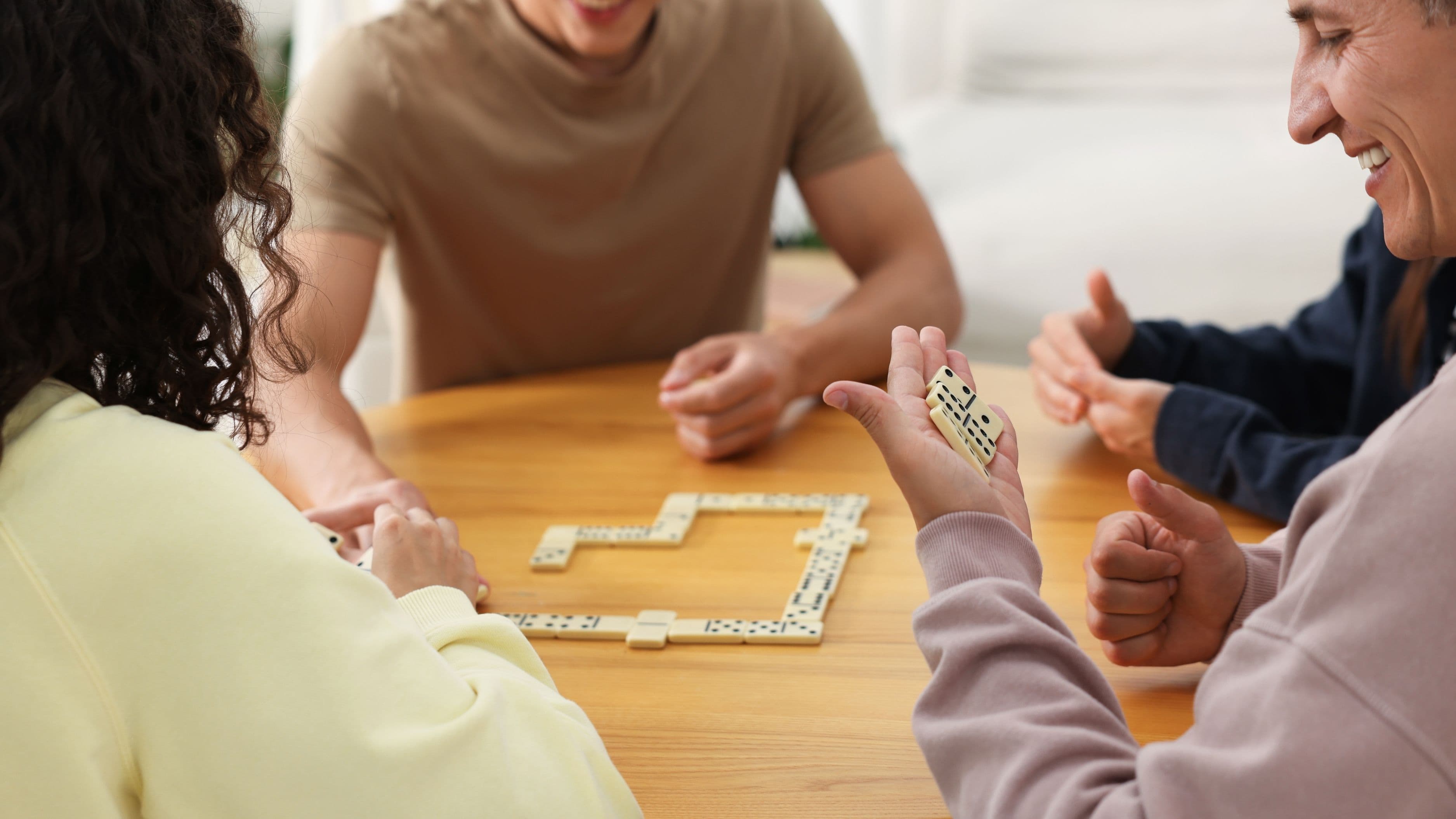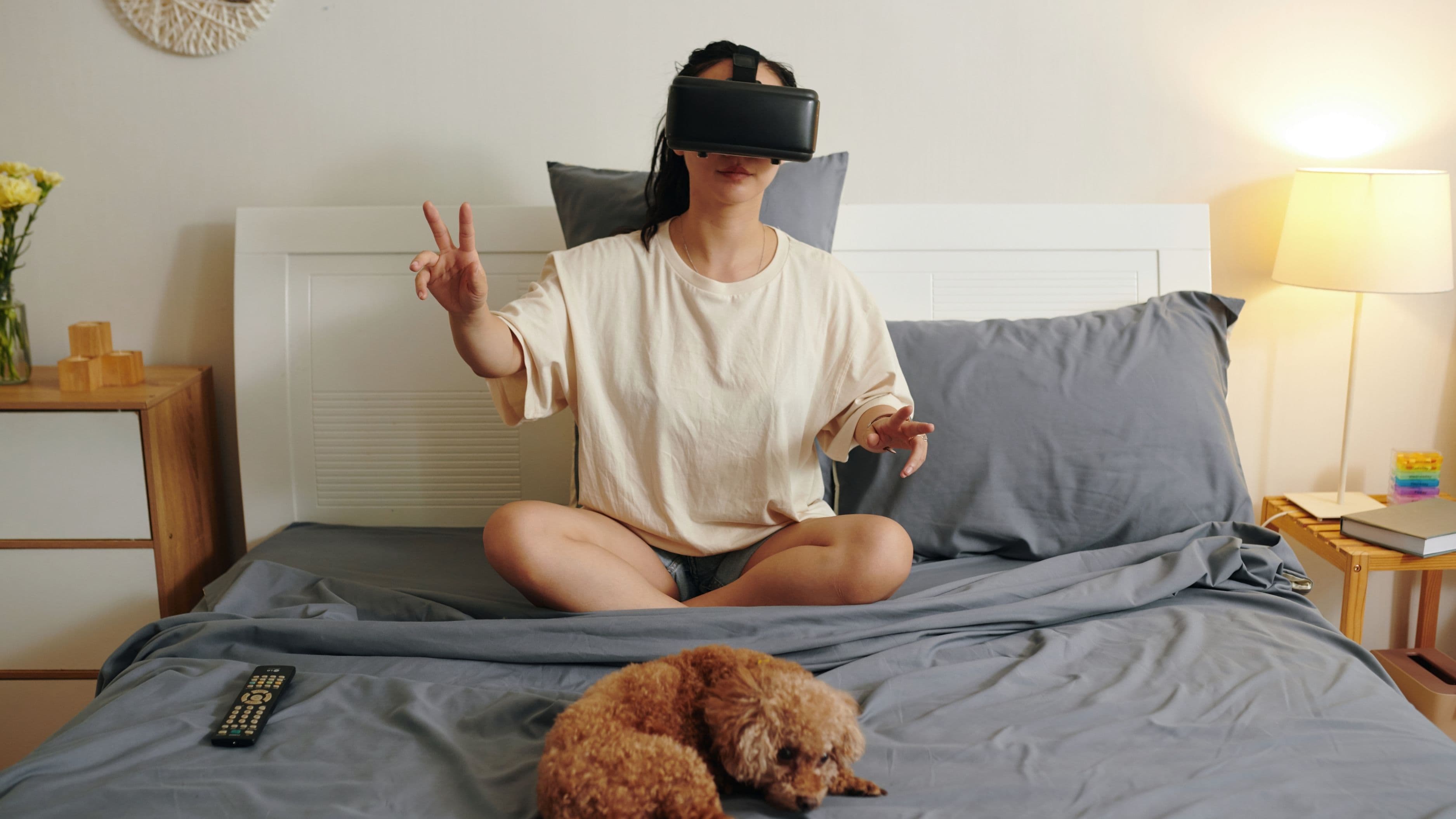

The puzzle genre has never been richer. From timeless analog classics that predate the digital age to breathtakingly designed video games that use the medium in ways nothing else can, from solitary mathematical meditations to competitive word games that pit you against a global community, there's a puzzle format perfectly matched to every kind of thinker. We reviewed dozens of options across platforms, formats, and cognitive disciplines — weighing depth of mental engagement, replayability, accessibility, and that elusive quality of making you feel genuinely smarter for having played — to bring you ten puzzle games that truly deliver.
🧩 Top 10 at a Glance
The New York Times Crossword – Best for vocabulary, lateral thinking, and cultural knowledge
Portal 2 – Best for spatial reasoning and physics-based problem solving
Sudoku – Best for pure logical deduction and numerical pattern recognition
The Witness – Best for observational thinking and environmental puzzle mastery
Wordle – Best for a daily vocabulary and deductive reasoning workout
Lumosity – Best for structured, science-backed cognitive training across multiple disciplines
Chess – Best for strategic foresight, pattern recognition, and competitive depth
Monument Valley – Best for spatial perception and M.C. Escher-style geometric puzzles
Baba Is You – Best for rule-breaking, meta-logic, and genuinely original puzzle design
Jigsaw Puzzles (Physical) – Best for visual processing, patience, and focused mindfulness
🧠 Full Reviews
1. The New York Times Crossword — Best for Vocabulary, Lateral Thinking, and Cultural Knowledge
What It Is & Who It's Best For
The New York Times Crossword is the gold standard of word puzzles — a daily mental workout that has been published continuously since 1942 and remains one of the most beloved and intellectually rigorous puzzle formats in the world. Monday puzzles are accessible to beginners; Saturday puzzles are among the most demanding word puzzles published anywhere. It's best for language lovers, trivia enthusiasts, and anyone who wants a daily cognitive challenge that builds vocabulary, general knowledge, and the specific skill of lateral thinking — the ability to approach a clue from an unexpected angle.
Key Features & Differentiators
What makes the NYT Crossword uniquely valuable as a mind-sharpening tool is the breadth of knowledge it demands and rewards. A single puzzle might require you to know a Latin phrase, a 1970s sitcom character, a chemical element's symbol, a jazz musician, and a piece of literary wordplay — often within the same themed grid. Constructor Will Shortz (crossword editor since 1993) has shaped the puzzle into a culturally rich, intellectually playful format that goes well beyond simple vocabulary recall. The Mini Crossword (a 5×5 version) offers a two-minute daily warm-up, while the full 15×15 puzzle provides a satisfying 15–45 minute workout depending on the day of week.
Platform: Print, NYT Games app (iOS/Android), web browser.
Pricing: Included in NYT Games subscription (~$5/month or $40/year); standalone or as part of NYT All Access bundle.
Pros:
Unmatched legacy and editorial quality — 80+ years of refinement
Difficulty scales across the week, making it accessible to all levels
Builds vocabulary, general knowledge, and lateral thinking simultaneously
The Mini is a perfect low-commitment daily habit for busy schedules
Strong community (solvers share solve times, discuss clues) adds social dimension
Cons:
Subscription required for full access — not free beyond a limited trial
Saturday difficulty can be genuinely discouraging for newer solvers
Cultural references skew toward certain demographics — some solvers find the Ameri-centric knowledge base limiting
App interface, while functional, lacks the tactile satisfaction of a printed puzzle
2. Portal 2 — Best for Spatial Reasoning and Physics-Based Problem Solving
What It Is & Who It's Best For
Portal 2 is a first-person puzzle game developed by Valve in which you solve physics-based challenges using a portal gun — a device that creates linked spatial portals on surfaces, allowing you to teleport yourself and objects across rooms in ways that defy conventional geometry. It's best for visual-spatial thinkers who want their brain pushed into genuinely unfamiliar territory, and for anyone who has ever wondered what it would feel like to think in four dimensions. It is widely considered the greatest pure puzzle video game ever made.
Key Features & Differentiators
What Portal 2 does that almost no other puzzle game achieves is make you feel genuinely, measurably smarter as you progress. Early puzzles introduce concepts (momentum, redirection, surface types) and late puzzles combine those concepts in ways that feel impossible until the solution clicks — and when it does, the satisfaction is profound. The two-player co-op mode adds a collaborative problem-solving layer that demands genuine communication and spatial coordination between partners, making it one of the best co-op cognitive experiences in gaming. Valve's writing — darkly funny, narratively surprising — makes the whole experience as entertaining as it is challenging.
Platform: PC (Steam), PlayStation 3/4, Xbox 360/One (backward compatible).
Pricing: Around $10 on Steam; frequently on sale for $2.50.
Pros:
Widely regarded as the greatest puzzle video game ever made — with strong justification
Spatial reasoning demands are genuinely unlike any other puzzle format
Co-op mode adds collaborative problem-solving that's rare and excellent
Darkly funny writing makes it as enjoyable to experience as it is to solve
Extraordinary value — a 10–12 hour experience for under $10
Cons:
Requires a gaming PC, PlayStation, or Xbox — not available on mobile or Nintendo Switch
Some players experience motion sickness in first-person perspective
Puzzle solutions occasionally require precise timing as well as logical thinking — can frustrate pure puzzle fans
No new content since 2011 — the experience is fixed, with no procedural generation
3. Sudoku — Best for Pure Logical Deduction and Numerical Pattern Recognition
What It Is & Who It's Best For
Sudoku is a logic-based number placement puzzle in which a 9×9 grid must be filled so that every row, column, and 3×3 subgrid contains all digits from 1 to 9 exactly once. Despite the numbers, Sudoku requires zero mathematical ability — it is purely a deductive logic exercise. It's best for analytical thinkers who want a clean, self-contained puzzle with no ambiguity: there is exactly one correct solution, reachable entirely through logic, and every step toward it is a small act of reasoned elimination.
Key Features & Differentiators
What makes Sudoku a genuinely powerful cognitive tool is the layered nature of its deductive demands. Beginner puzzles require only simple elimination; intermediate puzzles introduce "naked pairs" and "hidden singles" requiring more sophisticated pattern recognition; expert puzzles demand X-Wing, Swordfish, and other advanced techniques that require holding multiple conditional logic chains in working memory simultaneously. The format is infinitely scalable — you can spend three minutes on an easy puzzle or three hours on an expert one.
Sudoku variants (Killer Sudoku, Diagonal Sudoku, Samurai Sudoku) extend the base concept in genuinely challenging new directions.
Platform: Newspaper, dedicated apps (Sudoku.com, Good Sudoku), NYT Games.
Pricing: Free in print newspapers and many apps; premium apps $2–$5.
Pros:
Zero prior knowledge required — pure deductive logic accessible to anyone
Scales from beginner to expert difficulty with genuine depth at every level
Infinite replayability — no two grids are the same
Portable and screen-optional — pen and paper works perfectly
Research supports Sudoku as an effective working memory exercise
Cons:
Can feel repetitive for solvers who don't actively seek harder difficulty levels
No narrative or visual reward — purely abstract, which suits some minds but not others
Advanced techniques have a steep learning curve that can feel like a wall rather than a challenge
App versions vary enormously in quality — some generate puzzles with multiple solutions (a flaw)
4. The Witness — Best for Observational Thinking and Environmental Puzzle Mastery
What It Is & Who It's Best For
The Witness is a first-person exploration puzzle game set on a mysterious deserted island covered in hundreds of panel-based puzzles and environmental secrets. Created by Jonathan Blow (Braid), it contains no instructions, no tutorials, and no explicit guidance of any kind — you observe, deduce, and teach yourself the rules of each puzzle type through careful attention. It is one of the most demanding and rewarding puzzle experiences ever designed, best for patient, observational thinkers who find joy in the act of figuring things out from first principles.
Key Features & Differentiators
The Witness's central design philosophy is radical respect for the player's intelligence: it never condescends, never explains, and never holds your hand. Every puzzle type on the island has rules that can be inferred entirely from observation — and the moment of understanding those rules (the "aha" experience) is among the most genuinely pleasurable cognitive moments any game has produced. Beyond the panel puzzles, the island itself contains dozens of environmental secrets that require an entirely different kind of observational awareness — noticing the shape of shadows, the angle of branches, the arrangement of stone — which trains a form of attention that carries into real-world perception.
Platform: PC (Steam/Epic), PlayStation 4, iOS (iPad recommended).
Pricing: Around $40; frequent sales bring it to $10.
Pros:
The most genuinely educational puzzle game ever designed — teaches you how to learn, not just what to solve
Environmental secrets layer a second, deeper puzzle game beneath the visible panel puzzles
Stunning visual design makes exploration intrinsically pleasurable
No hand-holding whatsoever — complete respect for the player's intelligence
"Aha" moments are among the most satisfying in any puzzle format
Cons:
Players who don't connect with the self-directed learning approach find it impenetrable and frustrating
Some players report genuine feelings of isolation — the world is beautiful but deliberately empty
Completion requires extraordinary patience — not designed for casual or short-session play
A small number of puzzle types are considered unfair even by fans of the game
5. Wordle — Best for a Daily Vocabulary and Deductive Reasoning Workout
What It Is & Who It's Best For
Wordle is a daily word-guessing game in which players have six attempts to identify a secret five-letter word, receiving color-coded feedback after each guess: green for correct letter in the correct position, yellow for correct letter in the wrong position, grey for a letter not in the word. It's best for anyone who wants a quick, daily mental warm-up that exercises vocabulary, deductive reasoning, and the specific skill of using partial information to progressively narrow a solution space — the same cognitive process that underlies scientific reasoning and medical diagnosis.
Key Features & Differentiators
Wordle's genius is its constraint: one puzzle per day, shared by the entire global community. The constraint creates a ritual quality — a two-minute daily cognitive touchpoint — and the communal aspect (everyone solving the same puzzle simultaneously) turns a solo exercise into a social one. The deductive process it trains is genuinely transferable: forming hypotheses, testing them against evidence, revising your model, and narrowing toward a conclusion is a fundamental reasoning skill. The NYT's Connections, Spelling Bee, and Strands games extend the format in different cognitive directions — vocabulary breadth, lateral association, and hidden-word recognition respectively.
Platform: Web browser (nytimes.com/games/wordle), free.
Pricing: Free. NYT Games subscription unlocks the full archive and related games.
Pros:
Completely free — the most accessible game on this list
Two-minute daily commitment makes it sustainable as a long-term cognitive habit
Deductive reasoning process is genuinely transferable to real-world problem solving
Global community creates a pleasant shared experience
NYT's companion games (Connections, Spelling Bee) extend the cognitive variety significantly
Cons:
Single daily puzzle limits play for those who want more
Solution word choices have occasionally drawn criticism for obscurity or regional variation
Optimal starting word strategies (CRANE, SLATE, AUDIO) can make early play feel mechanical rather than creative
No long-term progression or difficulty scaling — the format is fixed
6. Lumosity — Best for Structured, Science-Backed Cognitive Training
What It Is & Who It's Best For
Lumosity is a brain training platform developed in partnership with neuroscientists, offering a structured suite of games designed to target specific cognitive functions: memory, attention, processing speed, problem solving, and mental flexibility. Rather than a single puzzle format, it's a complete cognitive training system with over 50 games that adapt to your performance level and track progress across cognitive domains over time. It's best for anyone who wants a deliberate, measured approach to mental fitness — less like a fun puzzle and more like a gym program for the brain.
Key Features & Differentiators
What distinguishes Lumosity from casual puzzle apps is the science-informed design and measurement infrastructure behind it. Games are built to isolate and exercise specific cognitive processes — Speed Match targets processing speed; Memory Matrix challenges spatial memory; Train of Thought tests multitasking — and the platform generates a Lumosity Performance Index (LPI) that tracks your cognitive performance across sessions over time. Research published in peer-reviewed journals has validated measurable improvements in specific cognitive tasks through regular Lumosity training. The daily training program (3–5 games in 10–15 minutes) makes it practical as a morning cognitive warm-up routine.
Platform: iOS, Android, web browser.
Pricing: Free limited access; premium subscription ~$12/month or $60/year.
Pros:
Science-informed design with peer-reviewed research backing specific cognitive benefits
Targets multiple cognitive functions rather than a single skill set
Progress tracking provides measurable evidence of cognitive improvement over time
10–15 minute daily program is a practical, sustainable cognitive training commitment
Adapts difficulty to your performance level — never too easy, never impossibly hard
Cons:
Subscription cost is higher than most puzzle apps
Some critics argue that improvements in Lumosity tasks don't reliably transfer to real-world cognitive performance
Game design prioritizes cognitive targeting over entertainment — not as intrinsically fun as other options on this list
FTC settled a complaint with Lumosity in 2016 over overstated cognitive benefit claims — context worth knowing
7. Chess — Best for Strategic Foresight, Pattern Recognition, and Competitive Depth
What It Is & Who It's Best For
Chess is 1,500 years old and still the most cognitively demanding two-player strategy game ever devised. Each player commands 16 pieces across a 64-square board, attempting to checkmate the opponent's king through a combination of tactical calculation, strategic planning, pattern recognition, and psychological pressure. It's best for competitive thinkers who want an inexhaustible mental challenge — a game where there is always a stronger player to learn from and always a deeper level of understanding to reach. The cognitive ceiling is, for practical purposes, infinite.
Key Features & Differentiators
What makes chess uniquely valuable as a mind-sharpening tool is the multi-layered nature of its cognitive demands. Tactical calculation (seeing combinations 3–10 moves ahead), strategic planning (long-term pawn structure, piece placement, king safety), pattern recognition (memorized opening theory, endgame technique), and psychological reading of the opponent all operate simultaneously in a serious game. Chess.com and Lichess have made the game more accessible than ever — providing puzzle trainers, game analysis, grandmaster lessons, and rated competition against players at your exact level. The Queen's Gambit cultural moment dramatically expanded the community, and the Hikaru Nakamura and Magnus Carlsen streaming era has made elite chess more watchable than ever.
Platform: Physical board; Chess.com (web, iOS, Android); Lichess (free, open-source).
Pricing: Physical sets from $15 (functional) to thousands (collectible); Chess.com free with premium from $5/month; Lichess completely free.
Pros:
The deepest and most cognitively demanding two-player game in existence
Puzzle trainer mode (on Chess.com and Lichess) provides structured tactical training in 5-minute daily sessions
Rated competition ensures you always play opponents at your genuine skill level
Research consistently links chess practice to improved math ability, reading comprehension, and critical thinking
Infinite depth — no player has ever fully mastered chess, which means the challenge never disappears
Cons:
Learning curve for complete beginners is steep — basic tactics take meaningful time to internalize
A single serious game can run 30–90 minutes — a significant time commitment
Competitive online play can expose beginners to toxic or unsportsmanlike opponents
Opening theory at intermediate and advanced levels requires significant memorization work
8. Monument Valley — Best for Spatial Perception and Geometric Puzzle Artistry
What It Is & Who It's Best For
Monument Valley is a mobile puzzle game in which you guide a silent princess named Ida through a series of impossible architectural structures — M.C. Escher-inspired geometric worlds where staircases loop back on themselves, towers rotate to create new pathways, and spatial perspective is the primary puzzle-solving tool. It's best for visual-spatial thinkers who appreciate beauty as much as challenge, and for anyone who wants a puzzle experience that feels more like interactive art than a brain test. It is one of the most aesthetically exquisite games ever designed.
Key Features & Differentiators
Monument Valley's puzzles are solved by rotating, folding, and reconfiguring the architecture around Ida to create paths that appear impossible from a fixed viewpoint — exploiting the gap between two-dimensional visual perspective and three-dimensional spatial reality. This trains a specific and valuable cognitive skill: the ability to mentally rotate and reorient spatial information, which research links to performance in mathematics, engineering, and science. The visual language — inspired by Escher, Islamic geometric art, and Japanese minimalism — is extraordinarily beautiful, making each puzzle feel like a meditation rather than a test.
Platform: iOS, Android.
Pricing: $4.99 for the original; $4.99 for Monument Valley 2; both available as a bundle.
Pros:
Among the most beautiful visual experiences in mobile gaming
Spatial reasoning puzzles train a genuinely valuable and transferable cognitive skill
Meditative pacing makes it equally suitable for stress relief and cognitive engagement
Accessible to all ages and experience levels — no prior gaming knowledge required
Excellent introduction to puzzle gaming for non-gamers
Cons:
Very short — the original is completable in 2–3 hours, limiting long-term engagement
Puzzle difficulty is relatively gentle — experienced puzzle gamers may find it insufficiently challenging
No procedural generation — once solved, puzzles offer limited replay value
Premium price for mobile content that some players feel is brief
9. Baba Is You — Best for Rule-Breaking Meta-Logic and Original Puzzle Design
What It Is & Who It's Best For
Baba Is You is an indie puzzle game with a deceptively simple visual presentation and one of the most genuinely original mechanics in the history of the genre: the rules of each puzzle are physically present on screen as movable word blocks, and you can push those words around to change the rules of the game itself. "BABA IS YOU" — the rule that makes your character controllable — can be broken apart. "WALL IS STOP" can be rewritten. "FLAG IS WIN" can be redirected. It's best for lateral thinkers and rule-questioners who want a puzzle game that rewards the most unconventional thinking possible.
Key Features & Differentiators
The cognitive demand Baba Is You places on players is genuinely unlike anything else on this list: you're not just solving puzzles within a fixed ruleset, you're identifying which rules can be broken and how breaking them creates new solutions. This requires a form of meta-logical thinking — reasoning about the structure of the problem rather than just within it — that is the hallmark of genuinely creative intelligence. Solutions that seem absurd or impossible are often exactly correct. The game has over 200 levels across its main campaign and DLC, ranging from tutorials to puzzles that have stumped experienced players for weeks.
Platform: PC (Steam), Nintendo Switch, iOS, Android.
Pricing: Around $15 on Steam and Switch; $7 on mobile.
Pros:
The most conceptually original puzzle mechanic in modern game design
Trains meta-logical thinking that is genuinely rare among puzzle formats
200+ levels provide substantial long-term engagement
Available on Switch for comfortable portable play
"Aha" moments when a solution clicks are among the most distinctive in puzzle gaming
Cons:
Some puzzles are so abstract that solutions feel arbitrary rather than discoverable — a genuine design flaw acknowledged by fans
Visual presentation is extremely minimal — not an aesthetic experience like Monument Valley
Difficulty curve has sharp spikes that can halt progress frustratingly
Meta-logical demands may feel alienating to puzzle solvers who prefer clear, consistent rules
10. Jigsaw Puzzles (Physical) — Best for Visual Processing, Patience, and Focused Mindfulness
What It Is & Who It's Best For
The physical jigsaw puzzle — a format that has existed since the 1760s — has experienced a significant cultural revival, with sales surging during the pandemic years and remaining elevated as people seek screen-free, tactile leisure activities. Assembling a jigsaw puzzle exercises visual-spatial processing, pattern recognition, short-term memory, and the specific cognitive virtue of sustained focus — the ability to concentrate on a detailed, complex task over extended time without digital distraction. It's best for anyone who wants a mindful, meditative cognitive activity that produces something tangible, beautiful, and shareable.
Key Features & Differentiators
What makes jigsaw puzzles uniquely valuable in a screen-saturated era is their tactile, analog nature. The physical act of sorting, rotating, and placing pieces engages fine motor coordination alongside visual cognition in a way that screen-based puzzles cannot. Research from the University of Michigan found that jigsaw puzzle solving engages multiple cognitive processes simultaneously — including perceptual reasoning, working memory, and mental rotation — making it one of the most broadly activating passive leisure activities studied. Modern puzzle makers (Ravensburger, White Mountain, Cloudberries, Galison) have elevated the format with exceptional image quality, precise die-cutting, and artistic commissions that make completed puzzles genuinely frame-worthy.
Platform: Physical (tabletop); digital versions available in apps like Jigsaw Puzzle (iOS/Android).
Pricing: 500-piece puzzles $12–$20; 1,000-piece puzzles $18–$35; premium and artistic editions $30–$60; 5,000+ piece puzzles $60–$120.
Pros:
Screen-free, tactile activity in a digitally overloaded world
Engages multiple cognitive processes simultaneously — visual, spatial, memory, fine motor
Meditative, stress-reducing quality that digital puzzle games rarely replicate
Completed puzzles can be framed and displayed — a tangible product of your effort
Genuinely social — a puzzle on the table invites contribution from anyone who passes
Cons:
Requires dedicated table space for the duration of assembly — impractical in small living spaces
Pieces get lost, especially with children or pets — a frustrating and irreversible problem
Limited replayability — reassembling the same puzzle is rarely as satisfying as the first time
High-piece-count puzzles (2,000+) demand very significant time investment to complete
📖 Your Quick Guide to Puzzle Games and Brain Health
What Is Cognitive Engagement Through Puzzles?
Puzzle games engage the brain in active problem-solving — requiring it to form hypotheses, recognize patterns, hold multiple variables in working memory, and adapt strategies when initial approaches fail. Unlike passive consumption (watching TV, scrolling social media), puzzle solving demands focused cognitive effort that activates the prefrontal cortex, hippocampus, and visual-spatial processing regions of the brain. Regular cognitive engagement through challenging puzzles is associated with maintained mental sharpness, improved working memory, and — in long-term studies — reduced risk of cognitive decline.
Benefits of Regular Puzzle Play
Working memory: Holding multiple puzzle constraints in mind simultaneously — the essence of Sudoku, Chess, and crosswords — directly exercises working memory capacity.
Pattern recognition: Identifying recurring structures across different contexts is a foundational cognitive skill exercised intensively by chess, Sudoku, and jigsaw puzzles.
Lateral thinking: Crosswords, Wordle, and Baba Is You reward approaching problems from unexpected angles — a skill with direct professional and creative applications.
Spatial reasoning: Portal 2, Monument Valley, and jigsaw puzzles exercise mental rotation and spatial visualization — skills linked to mathematical ability and engineering aptitude.
Stress reduction: The focused, absorbing quality of puzzle solving creates a flow state that reduces cortisol and provides genuine psychological rest from other demands.
What to Look for When Choosing a Puzzle Game
Match the cognitive target: Different puzzles develop different skills. If you want to improve vocabulary and lateral thinking, crosswords and Wordle are your tools. For spatial reasoning, Portal 2 and Monument Valley. For pure logic, Sudoku and Chess. For creative thinking, Baba Is You. Choose deliberately rather than defaulting to whatever's most familiar.
Difficulty scaling: The best puzzle games grow with you — offering beginner accessibility without sacrificing expert depth. Games that can challenge you today and in five years (Chess, Sudoku, NYT Crossword) offer dramatically more long-term value than those with a fixed difficulty ceiling.
Session length fit: Some puzzle games suit short daily sessions (Wordle, Sudoku, Mini Crossword); others reward long immersive sessions (Portal 2, The Witness, Chess). Match the format to your actual schedule and attention span rather than your idealized one.
Analog vs. digital: Physical puzzles (jigsaw, physical chess, newspaper crossword) offer tactile engagement and screen-free cognitive activity that has genuine value in a digitally saturated lifestyle. Don't default to apps when a physical format might serve you better.
Fun first: The most cognitively beneficial puzzle is the one you'll actually play regularly. A game that's technically optimal for brain health but that you find tedious will be abandoned after a week. Choose the format that genuinely engages and entertains you — sustained engagement is the real cognitive multiplier.
❓ Frequently Asked Questions
Q: Do puzzle games actually make you smarter? A: The research is nuanced but encouraging. Puzzle games demonstrably improve performance in the specific cognitive skills they exercise — chess players show better pattern recognition, Sudoku solvers show improved working memory performance, spatial puzzle players show better mental rotation ability. Whether these gains transfer broadly to general intelligence ("fluid intelligence") is more contested. The most honest answer: puzzle games make you better at the cognitive skills they demand, and many of those skills (logical deduction, pattern recognition, lateral thinking) have genuine real-world applications. They're not a magic IQ pill, but regular challenging cognitive engagement is consistently associated with maintained mental sharpness across the lifespan.
Q: What's the best puzzle game for someone with no prior experience? A: Wordle is the ideal entry point — it's free, takes two minutes daily, requires no setup or learning curve, and immediately demonstrates the satisfaction of deductive puzzle solving. Monument Valley is the best entry point for visual puzzle games — approachable, beautiful, and confidence-building. For physical puzzles, a 500-piece jigsaw is the universally recommended starting point: challenging enough to be engaging, completable in a few sessions, and genuinely satisfying to finish.
Q: How much time should I spend on puzzle games for cognitive benefit? A: Most cognitive training research suggests that 15–20 minutes of focused, challenging puzzle engagement daily is more beneficial than sporadic longer sessions. Consistency matters more than duration — a daily 15-minute crossword or chess puzzle session maintains cognitive engagement more effectively than a three-hour Sunday puzzle marathon. The key word is challenging: puzzles that are too easy don't stimulate meaningful cognitive effort. Seek out difficulty levels that require genuine mental effort without becoming so frustrating that the session ends prematurely.
Q: Are puzzle apps as effective as physical puzzles for brain health? A: Both have genuine cognitive value, and the best choice depends on your goals and lifestyle. Digital apps offer immediate feedback, adaptive difficulty, progress tracking, and portability that physical formats can't match. Physical formats offer tactile engagement, screen-free activity, social invitation (a puzzle on the table draws people in), and the specific fine motor coordination component that digital versions don't provide. For maximum cognitive benefit, a mix of both — daily digital puzzles for routine engagement, physical puzzles for screen-free sessions — is more valuable than either alone.