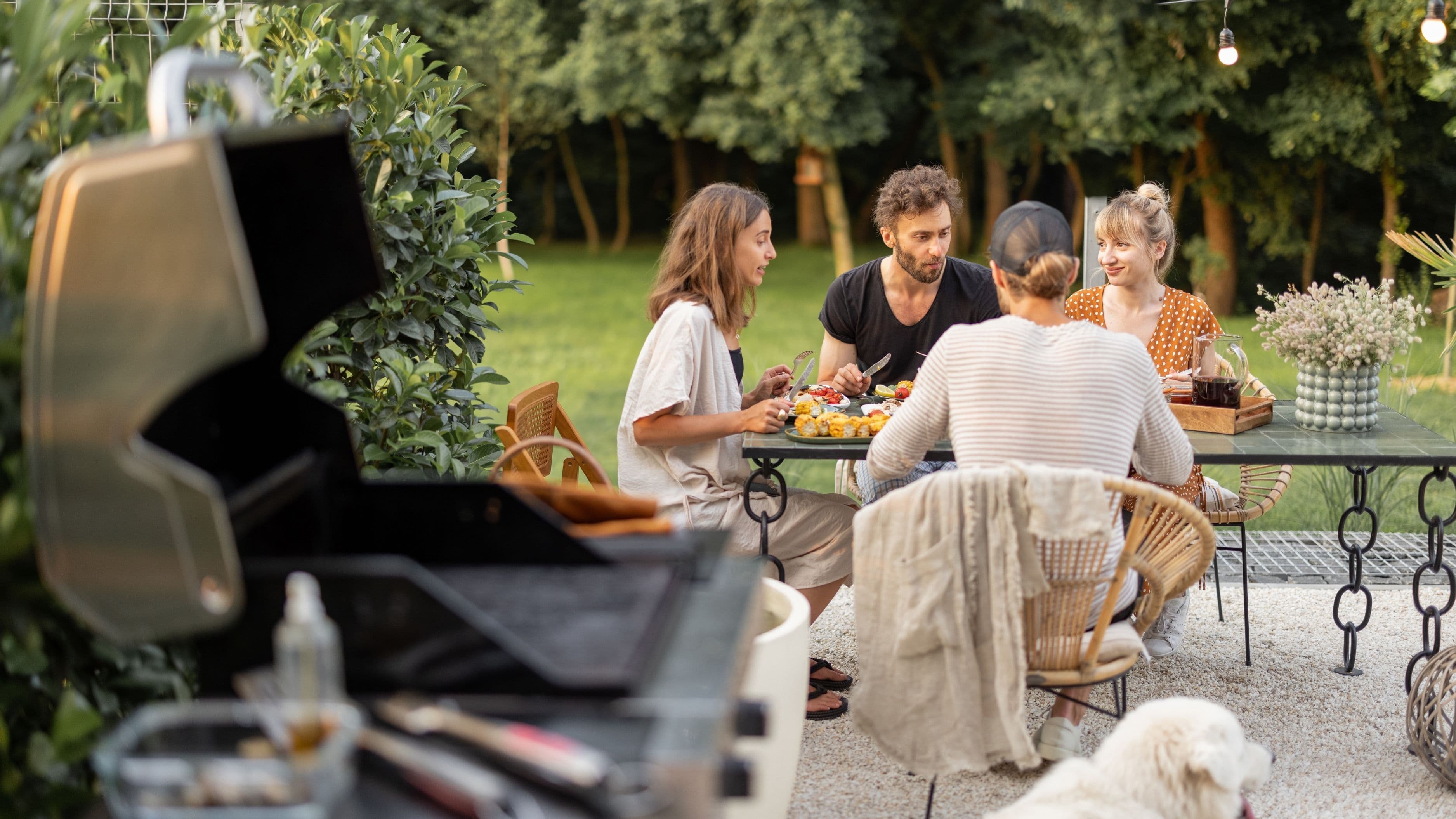

This list cuts through the noise. These are the 10 outdoor furniture pieces that deliver the best return on investment, whether you're outfitting a small apartment balcony, a sprawling backyard, or something in between.
Top 10 at a Glance
Teak Dining Table
Aluminum Sectional Sofa
Adirondack Chairs
Weather-Resistant Outdoor Rug
Powder-Coated Steel Dining Chairs
Deep-Seat Lounge Chair with Sunbrella Cushions
Folding Bistro Table and Chairs Set
Outdoor Daybed or Chaise Lounge
Hardwood or Composite Bench
Storage Ottoman with Waterproof Lid
1. Teak Dining Table
Teak is the gold standard of outdoor wood furniture – and for good reason. Its natural oils make it highly resistant to moisture, insects, and rot without any chemical treatment required. A quality teak dining table will outlast almost every other outdoor material on the market, often lasting 20 to 50 years with minimal maintenance. It weathers to a beautiful silver-gray patina if left untreated, or holds its warm honey color with a little teak oil applied once or twice a year.
The upfront cost is significant – expect to pay anywhere from $800 to $3,000+ depending on size and quality – but spread that cost over two decades and it's one of the most economical outdoor purchases you can make. Cheap alternatives like pine or eucalyptus won't stand up to the same conditions and will need replacing far sooner.
Best for: Homeowners who entertain regularly outdoors or want a centerpiece piece that performs year-round in varied climates.
Key tip: Look for Grade A teak (the heartwood from mature trees) rather than Grade B or C, which come from younger trees and have less natural oil content.
2. Aluminum Sectional Sofa
Aluminum is the most underrated material in outdoor furniture. It's lightweight, completely rust-proof, and incredibly durable – all without the price tag of premium teak. A powder-coated aluminum sectional gives you the comfort and layout flexibility of an indoor sofa with weather resistance that can handle year-round exposure in most climates. Unlike wrought iron, aluminum won't corrode. Unlike wicker, it won't unravel. Unlike wood, it won't warp or splinter.
A well-made aluminum sectional typically runs $600 to $2,500 depending on size and cushion quality. The cushion fabric matters as much as the frame – look for Sunbrella or similarly solution-dyed acrylic fabric that resists UV fading, mildew, and moisture. A sectional also gives you the freedom to reconfigure your layout depending on the occasion, which adds real long-term value.
Best for: Anyone with a medium to large patio who wants versatile seating that holds up without constant upkeep.
Key tip: Opt for thicker gauge aluminum (check for frame thickness specs) and removable, machine-washable cushion covers whenever possible.
3. Adirondack Chairs
Few outdoor pieces are as iconic – or as genuinely functional – as the Adirondack chair. The wide armrests, reclined seat angle, and low profile make them legitimately comfortable for hours of sitting, not just aesthetically appealing. When made from the right materials, they're also incredibly durable. Look past painted pine versions (they'll peel and rot within a few seasons) and invest in HDPE poly lumber or teak Adirondacks instead.
HDPE Adirondacks are made from recycled high-density polyethylene plastic, and they're arguably the lowest-maintenance outdoor furniture option available. They don't splinter, rot, fade, or need any seasonal treatment. Teak versions carry the same longevity benefits outlined above. Quality Adirondacks in either material typically run $150 to $400 per chair – a worthwhile spend for something you'll be using for 15 to 20+ years.
Best for: Anyone who wants a reliable, zero-maintenance lounging option that works equally well on a porch, deck, or lawn.
Key tip: Test the chair before buying if possible – ergonomics vary significantly between manufacturers, and the height and recline angle make a real difference in long-term comfort.
4. Weather-Resistant Outdoor Rug
An outdoor rug is one of the most cost-effective ways to elevate an outdoor space, and the gap between a good one and a bad one is enormous. Cheap indoor rugs dragged outside will mildew, fade, and fall apart within a single season. A purpose-built outdoor rug made from polypropylene or recycled plastic fibers will resist moisture, UV exposure, mold, and heavy foot traffic – and can simply be hosed down when it gets dirty.
A quality outdoor rug in the $100 to $400 range will define your seating area, protect your deck surface, add warmth and texture, and last for several years with virtually no maintenance. In terms of transformation per dollar spent, a well-chosen outdoor rug delivers some of the best ROI of anything on this list. Sizes matter too – a common mistake is going too small, which makes the space feel cramped rather than cohesive. Aim for a rug that fits under all the legs of your seating arrangement.
Best for: Any outdoor space that needs definition, warmth, or a finished look without a major investment.
Key tip: Make sure the rug has drainage holes or an open weave construction so water doesn't pool underneath – trapped moisture leads to mold and deck damage over time.
5. Powder-Coated Steel Dining Chairs
If you love the look of metal dining chairs but can't stretch the budget to wrought iron, powder-coated steel is the smart middle ground. The powder-coating process applies a dry polymer finish through electrostatic attraction and heat-curing, creating a surface that's far more durable than standard paint and significantly more resistant to chipping, scratching, fading, and corrosion. When that coating is intact, steel chairs hold up remarkably well outdoors.
Quality powder-coated steel dining chairs typically run $80 to $250 each. They pair well with almost any outdoor dining table material and come in a wide range of styles from minimalist industrial to traditional bistro. They're also heavy enough to stay put in wind – a practical benefit that cheap plastic chairs simply don't offer. Keep them covered or stored during extended wet seasons to maximize lifespan, and touch up any chips in the coating promptly to prevent rust from developing.
Best for: Anyone who wants stylish, sturdy outdoor dining seating at a more accessible price point than premium materials.
Key tip: Look for chairs with stainless steel hardware (bolts and screws), not just steel frames – standard steel hardware is the first thing to rust on otherwise well-made chairs.
6. Deep-Seat Lounge Chair with Sunbrella Cushions
There's a meaningful difference between an outdoor chair you can tolerate sitting in and one you genuinely don't want to get out of. Deep-seat lounge chairs – with seat depths of 25 to 30 inches and thick cushions – fall into the second category. Combined with Sunbrella fabric (the industry benchmark for outdoor performance textiles), you get a seating experience that rivals indoor furniture without the weather vulnerability.
Sunbrella fabric is solution-dyed rather than surface-dyed, meaning the color goes all the way through the fiber rather than sitting on top of it. The result is a fabric that resists UV fading for years longer than standard outdoor fabrics, repels water, resists mildew, and cleans easily with mild soap and water. A deep-seat lounge chair with quality Sunbrella cushions typically runs $400 to $1,500 depending on frame material. It's a piece worth buying once rather than replacing every two or three seasons.
Best for: Anyone who wants a genuine outdoor relaxation spot – reading, lounging, afternoon naps – not just occasional seating.
Key tip: Store or cover cushions when not in use for extended periods, even with Sunbrella fabric. Unnecessary UV exposure shortens any fabric's life.
7. Folding Bistro Table and Chairs Set
Flexibility is a seriously undervalued quality in outdoor furniture, and a quality folding bistro set delivers it in spades. When you're not entertaining, it folds flat and tucks against a wall or into a storage closet. When you need an extra spot for coffee, a small meal, or working outside, it's ready in 30 seconds. For small balconies, side yards, or apartment patios, a bistro set often makes more practical sense than a fixed dining arrangement.
The difference between a cheap bistro set and a good one comes down to materials. Aluminum or powder-coated steel frames with slatted metal or resin seats outlast their painted steel or low-grade plastic counterparts significantly. Expect to spend $150 to $450 for a quality two-seat set. French-style bistro sets in particular have a timeless aesthetic that works in almost any outdoor setting, from a downtown apartment balcony to a cottage garden.
Best for: Small spaces, secondary seating areas, balconies, or anyone who needs outdoor furniture that can be easily stored during off-seasons.
Key tip: Check the folding mechanism before buying – cheap hinges are a common failure point. Look for solid metal hinges rather than plastic locking mechanisms.
8. Outdoor Daybed or Chaise Lounge
If your outdoor space gets enough sun to genuinely sunbathe or afternoon-nap in, a quality outdoor daybed or chaise lounge is worth every dollar. This is where the outdoor room concept fully comes to life – a piece that isn't just functional but genuinely luxurious. Done right, it becomes the most-used piece of furniture you own from May through September.
Material choices matter enormously here. Aluminum or teak frames with Sunbrella cushions are the standard for weather-resistant quality. Synthetic wicker (resin wicker over aluminum frames) is also a solid option and tends to look more resort-like. Expect to spend $500 to $2,500 for a piece that will hold up for years. The investment makes most sense for homeowners with dedicated outdoor areas they use regularly – if your outdoor space gets serious use in warm months, this pays for itself in enjoyment very quickly.
Best for: Homeowners with private yards, pool areas, or spacious decks who use their outdoor space regularly during warmer months.
Key tip: Measure your space carefully before buying – daybeds are larger than they appear in product photos, and one that's too big will make a space feel cluttered rather than luxurious.
9. Hardwood or Composite Bench
A well-placed outdoor bench is one of the most versatile pieces of furniture you can add to a yard or garden. It functions as extra seating when you're entertaining, a transitional spot at an entryway, a focal point at the end of a garden path, or a quiet place to sit in the morning before the day starts. Unlike chairs, a bench serves the space itself, not just whoever happens to be sitting in it.
For investment-grade benches, the same material hierarchy applies – teak and HDPE poly lumber are the top picks for longevity and minimal maintenance. A teak garden bench typically costs $300 to $800 and will last for decades. Composite or HDPE versions can be found for less and carry similar durability benefits. Avoid softwood benches unless you're prepared to seal, sand, and refinish them regularly – without that maintenance, they'll deteriorate quickly.
Best for: Gardens, entryways, pool decks, or any outdoor space that benefits from flexible, secondary seating or a natural focal point.
Key tip: Consider the purpose before choosing a style. A backless bench maximizes seating capacity but isn't ideal for extended sitting. A bench with a backrest is more comfortable but takes up more space.
10. Storage Ottoman with Waterproof Lid
Storage ottomans are the quiet workhorses of outdoor spaces. They do double duty as extra seating, a footrest, a side table, and hidden storage – all in one piece. Outdoor cushions, throw blankets, pool toys, gardening gloves, extension cords – a large outdoor storage ottoman can hold everything you want nearby but out of sight. For anyone who struggles with outdoor clutter, it's one of the most functional investments on this list.
Look for models with UV-resistant, waterproof shells and lids that seal properly to protect contents from rain. Resin-based ottomans are the most durable and weather-resistant. Sizes range from compact 30-gallon options to large 120-gallon deck boxes that can hold several chair cushions. Quality options run $100 to $400 depending on size and material. Given how much organizational work they do, that's an easy investment to justify.
Best for: Anyone who wants to maximize outdoor organization without sacrificing aesthetics or additional seating capacity.
Key tip: Check the lid locking mechanism – some models don't seal securely enough to keep moisture out in heavy rain. Look for weather-stripped lids on any storage ottoman you're relying on to protect cushions or fabrics.
Quick Takeaway
The best outdoor furniture investments share a few things in common: they're made from materials rated for prolonged outdoor exposure (teak, aluminum, HDPE, powder-coated steel, Sunbrella fabric), they're built to last more than five years, and they serve a genuine function rather than just looking good on a product page. Spending more upfront on the right pieces almost always beats buying cheap replacements year after year.
If you're starting from scratch, prioritize the pieces you'll use most. A dining table and chairs for a family that eats outside regularly. Lounge chairs for a couple that reads on the deck every weekend. A bistro set for a small balcony that gets used for morning coffee. Match the investment to how you actually use your outdoor space, not to what looks good in a showroom.
FAQ
What outdoor furniture material lasts the longest? Teak and HDPE poly lumber consistently rank as the most durable outdoor furniture materials. Both resist moisture, UV exposure, and temperature changes without significant maintenance. Powder-coated aluminum is close behind for frames and bases.
Is it worth buying outdoor furniture covers? Yes, for most materials. Covers significantly extend the life of cushions, frames, and wood surfaces by reducing UV exposure and moisture contact during off-seasons or extended periods without use. They're especially valuable for pieces you can't easily store indoors.
What's the difference between Sunbrella and other outdoor fabrics? Sunbrella is solution-dyed acrylic, meaning the color is baked into the fiber rather than applied to the surface. This makes it far more fade-resistant than standard outdoor fabrics. It also resists mildew and cleans easily. Most quality outdoor furniture brands offer Sunbrella as a standard or upgrade option.
Should I choose aluminum or steel for outdoor furniture frames? Aluminum is generally the better choice for outdoor use – it's lighter, completely rust-proof, and easier to move. Steel is heavier and can rust if the coating chips. Powder-coated steel is fine in covered or dry climates, but aluminum is the safer long-term bet in humid or rainy environments.
How do I clean outdoor furniture to extend its life? Most outdoor furniture can be cleaned with mild dish soap, warm water, and a soft brush or cloth. Avoid pressure washers on wood and wicker, as high pressure can damage surfaces and drive moisture into joints. Rinse thoroughly and allow to dry completely before covering.
When is the best time to buy outdoor furniture? Late summer (August–September) and end of season (October–November) are the best times to find outdoor furniture on sale as retailers clear inventory. You can also find deals in early spring when new inventory arrives and retailers discount previous-season stock.
📚 Sources
This Old House. Best Outdoor Furniture Materials. https://www.thisoldhouse.com/yards/reviews/best-outdoor-furniture
Consumer Reports. How to Choose Outdoor Furniture. https://www.consumerreports.org/cro/outdoor-furniture/buying-guide/index.htm
Sunbrella. What Makes Sunbrella Fabric Different. https://www.sunbrella.com/en-us/blog/sunbrella-difference
The Spruce. Best Outdoor Rugs Tested and Reviewed. https://www.thespruce.com/best-outdoor-rugs-4844929
Bob Vila. Best Outdoor Furniture Covers. https://www.bobvila.com/articles/best-outdoor-furniture-covers