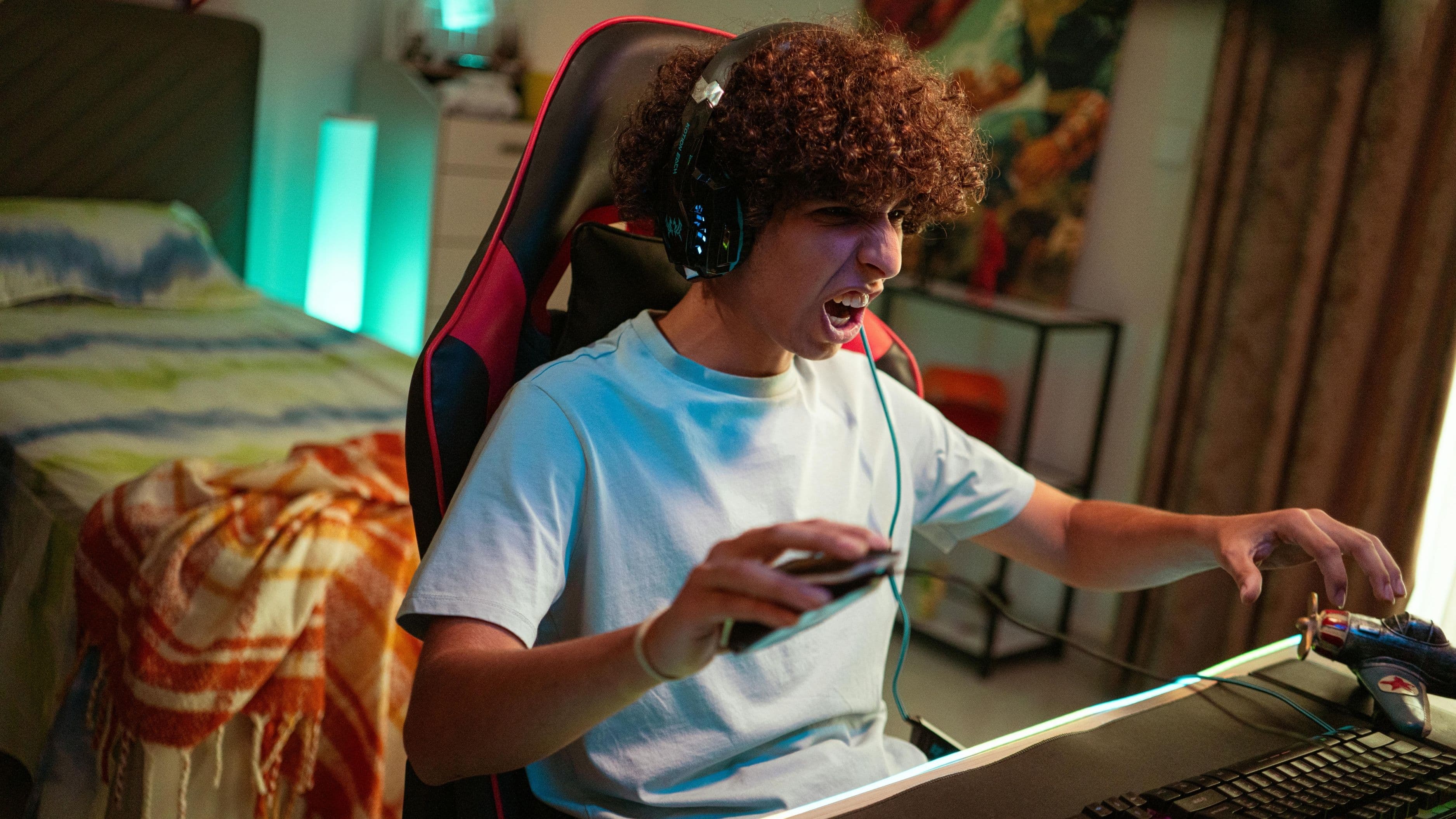

The problem is that most board games are designed for 2–4 players. Scale them up and they either drag on forever, lose their energy, or leave half the table watching while one person takes their turn. The games on this list are different – they're specifically built (or well-suited) for large groups, and they thrive with more people at the table, not despite them.
Here are the 10 best multiplayer board games for large groups, ranked by how well they hold up when things get crowded and loud.
Top 10 at a Glance
Codenames
Wavelength
Just One
Dixit
Jackbox Party Pack (digital/hybrid)
Telestrations
Secret Hitler
Wits & Wagers
One Night Ultimate Werewolf
Quiplash (Jackbox standalone)
1. Codenames
Players: 4–8+
Time: 15–30 min
Age: 14+
Codenames is the gold standard for large group games, and it's been earning that reputation since it hit shelves in 2015. The setup is simple: 25 word cards are laid out in a grid, two teams compete to identify their agents using one-word clues, and a single misstep can hand the game to the other side. What makes it brilliant for big groups is that it naturally scales – more players just means more people debating what a clue means before anyone guesses, which turns every round into a chaotic, hilarious negotiation.
The game's depth comes from the spymaster role. Giving a one-word clue that connects three or four of your team's words without touching the opponent's cards or the assassin is genuinely hard – and watching a confident spymaster get destroyed by their own team's logic is endlessly entertaining. There's also a picture-based version called Codenames: Pictures if your group skews visual or has younger players in the mix.
Best for: Mixed groups, party nights, people who like wordplay and strategy.
Tip: Keep teams balanced. An 8-person game with 4 vs. 4 runs better than 6 vs. 2.
2. Wavelength
Players: 2–12+
Time: 30–45 min
Age: 14+
Wavelength is one of the most genuinely fun social games of the last decade, and it handles large groups better than almost anything else on this list. The concept: a hidden target sits somewhere on a spectrum between two opposites (Hot/Cold, Safe/Dangerous, Underrated/Overrated), and one player has to give a clue that helps their team guess where on the spectrum the target falls. The clue-giver knows the target; everyone else debates where it lands.
The magic of Wavelength is that it sparks real conversations. Arguments about whether a flamingo is closer to "practical" or "impractical" – or whether a library is more "loud" or "quiet" – reveal how differently people think, and the debates are often funnier than the game itself. It's the rare party game that works just as well for people who hate games as it does for competitive players, because there's no "wrong" way to engage with it.
Best for: Mixed groups with different game experience levels, people who enjoy debate and conversation.
Tip: The physical dial mechanism is satisfying, but there's also a free digital companion app if you want to try before you buy.
3. Just One
Players: 3–7 (works well with teams up to 12+)
Time: 20–30 min
Age: 8+
Just One won the Spiel des Jahres (the most prestigious board game award in the world) in 2019, and it earned it. The mechanic is deceptively simple: one player closes their eyes, everyone else writes a one-word clue to help them guess a mystery word – but identical clues cancel out. So if the mystery word is "elephant" and three people write "trunk," none of them count. The challenge is giving a unique clue that's helpful without being obvious.
For large groups, Just One works brilliantly as a team game – split into two or three groups, each playing their own round simultaneously and comparing scores. The cancellation mechanic gets funnier and more chaotic with more players because the odds of duplicate clues go up, and watching someone realize their "perfect" clue was written by four other people is genuinely hilarious. It's also one of the most beginner-friendly games on this list, which makes it ideal when your group has mixed experience levels.
Best for: Family gatherings, mixed ages, casual game nights.
Tip: Play with erasable whiteboards or laminated cards for easier cleanup during back-to-back rounds.
4. Dixit
Players: 3–6 (expandable with multiple sets)
Time: 30–45 min
Age: 8+
Dixit is a storytelling game built around beautifully illustrated, dreamlike cards. Each round, one player gives a clue – a word, phrase, sound, or even a gesture – that describes a card in their hand without being too obvious or too obscure. Everyone else secretly plays a card they think matches the clue, and the group votes on which card was the original. Points go to players who fool some voters but not all of them.
The artwork is genuinely stunning, and it gives Dixit a different energy than most party games – it's more imaginative and a little slower, which actually works in its favor for groups who don't want something that feels like a rapid-fire quiz show. Multiple expansion packs are available, so you can combine them for a much larger card pool and more players. For a group over 6, you'll want at least two sets or a big expansion.
Best for: Creative groups, families with kids, anyone who appreciates art and storytelling.
Tip: Avoid clues that are too literal – the game gets better when everyone leans into metaphor and abstraction.
5. Jackbox Party Pack
Players: 1–8 active players, unlimited audience
Time: 30–90 min
Age: 17+ (most packs)
Jackbox is cheating slightly since it's technically a video game played on a TV or screen – but it belongs on this list because nothing handles massive groups better. Up to 8 people play actively using their phones as controllers, and an unlimited number of additional people can join as "audience" members, voting and influencing the game in real time. For groups of 15, 20, or even 50, it's unmatched.
Each Jackbox Party Pack includes 5 different games, and across the various packs there are dozens of titles to choose from. Standouts include Fibbage (bluff-based trivia), Drawful (pictionary with terrible drawings and funnier wrong answers), and Quiplash (comedy fill-in-the-blank). The learning curve is nearly zero since everything is explained on screen, which makes it ideal for groups where not everyone considers themselves a "board game person." The only requirement is a screen to cast to and a WiFi connection.
Best for: Large parties, office events, groups with a wide range of gaming experience.
Tip: Party Pack 3 or 6 are often recommended as the best starting points for first-timers.
6. Telestrations
Players: 4–12
Time: 30 min
Age: 12+
Telestrations is telephone meets Pictionary, and it's one of the funniest games you can put in front of a large group. Each player starts with a word, draws it, passes their sketchbook to the next person who guesses what it is, and that guess gets drawn by the next person – and so on around the table. By the time each book makes it back to its owner, the original word has usually transformed into something completely unrecognizable, and the reveal of how it happened is the entire point.
The game requires zero competitive skill, which is why it works so well for large groups with different comfort levels. Bad drawings aren't a weakness – they're the source of most of the humor. Telestrations After Dark exists for adult groups who want things to get a little more chaotic, though fair warning: it earns the "After Dark" label. For a standard family-friendly game night, the original version is plenty entertaining.
Best for: Family game nights, office parties, groups who want to laugh more than compete.
Tip: The 12-player edition exists specifically for larger groups – worth buying over the standard 8-player version if you regularly host big gatherings.
7. Secret Hitler
Players: 5–10
Time: 45–75 min
Age: 17+
Secret Hitler is a social deduction game set in 1930s Germany where players are secretly divided into Liberals and Fascists. The Liberals are trying to enact liberal policies and stop Hitler from rising to power; the Fascists are trying to either enact enough fascist policies or get Hitler elected Chancellor. Nobody knows who's who at the start, and the game lives or dies on bluffing, accusation, and reading other players' behavior.
It handles large groups particularly well because more players means more uncertainty – it becomes genuinely hard to track who's lying and who's telling the truth, which is exactly the tension the game is designed to create. Conversations get heated in the best possible way. The name trips some people up, but the game is widely understood as political satire and has been positively reviewed for its educational value as an allegory. A print-and-play version is available free on the designer's website, making it easy to try before purchasing.
Best for: Older teens and adults who enjoy bluffing, social dynamics, and strategic deduction.
Tip: Designate a confident player to explain the rules before you start – a muddled setup kills momentum.
8. Wits & Wagers
Players: 3–7 (party version supports more)
Time: 25–30 min
Age: 10+
Wits & Wagers solves the biggest problem with trivia games: only the people who know the answers have fun. In Wits & Wagers, every player writes down a numerical guess for questions like "How many hot dogs are eaten in the US on July 4th?" – and then everyone bets on whose answer they think is closest. You don't have to know the right answer; you just have to know whose guess is probably best.
This betting mechanic levels the playing field completely. A total trivia novice who reads people well can beat a pub quiz champion who bets too confidently on their own answers. For large groups, the Party Edition supports up to 18 players and comes with a large felt mat and poker chips that make the experience feel genuinely game-show-like. It's one of the most crowd-pleasing trivia formats available.
Best for: Mixed knowledge levels, game show fans, groups with competitive players and casual players alike.
Tip: The Party Edition is worth the upgrade for groups over 8 – the larger components and expanded player count justify the extra cost.
9. One Night Ultimate Werewolf
Players: 3–10
Time: 10–15 min per round
Age: 8+
One Night Ultimate Werewolf condenses the classic Werewolf/Mafia concept into a single chaotic night that lasts about 10 minutes per round. Everyone gets a secret role, a companion app walks everyone through the night phase (so no dedicated moderator needed), and then you have five minutes of pure social chaos before a vote to eliminate one player. No one gets eliminated mid-game and sits watching – everyone plays until the final vote.
The brevity is its biggest strength for large groups. Because rounds are so short, you can play four or five back-to-back in under an hour, which keeps energy high and gives different role combinations a chance to emerge. The app handles all the timing and narration, which removes the biggest friction point from traditional Werewolf. An Ultimate Werewolf version with more roles exists for groups who want longer, more complex games.
Best for: Fast-paced game nights, groups that get bored easily, anyone who loves social deduction without long elimination phases.
Tip: Download the Bezier Games companion app before your gathering – it's free and essential for smooth play.
10. Quiplash (Jackbox Standalone)
Players: 3–8 active, unlimited audience
Time: 15–30 min
Age: 17+
Quiplash deserves its own entry separate from the broader Jackbox packs because it's the single best icebreaker game for large groups that exists right now. The format: two players get the same prompt ("The worst thing to say to your dentist right before they start drilling"), write their funniest answer, and the rest of the group votes for their favorite. Points go to whoever gets the most votes. Simple, fast, and the kind of game where even people who "don't like games" end up crying laughing.
Quiplash runs entirely through phones and a shared screen, handles audience members without a cap, and generates genuinely funny moments out of almost any group dynamic. There's a custom question feature that lets you add inside jokes or personalized prompts, which is a huge win for events like family reunions or team parties. The main caveat is that it's at its best with a sharp, quick-witted crowd – quieter groups may find it a little high-pressure.
Best for: Parties, icebreakers, office events, groups with strong senses of humor.
Tip: Load a few custom questions before the event. Inside jokes and personalized prompts make an already fun game significantly better.
How to Choose the Right Game for Your Group
Not every game on this list works equally well in every situation. Here's a quick guide:
Kids or family-friendly crowd? Go with Just One, Dixit, or Telestrations. All three are gentle, low-pressure, and funny without needing adult humor to land.
Competitive players who want strategy? Codenames and Wits & Wagers both reward strategic thinking while still being approachable for casual players.
You need something that works for 15+ people? Jackbox Party Pack or Quiplash are your best options. No other format handles audiences that size as cleanly.
Short on time or want something fast? One Night Ultimate Werewolf (10-minute rounds) or Quiplash (15–20 minutes) get you in and out quickly without sacrificing fun.
Group full of people who don't know each other? Wavelength, Quiplash, and Telestrations all generate organic conversation and laughter without requiring people to know trivia or have a shared frame of reference.
Quick Tips for Running a Smooth Game Night
Even the best game can fall flat with poor execution. A few things that consistently make game nights better:
Read the rules before people arrive. Nothing kills momentum like fumbling through a rulebook in front of a dozen impatient people. Know the game before you teach it.
Start with something simple. Even if you plan to play a more complex game later, open with something fast and low-stakes – Quiplash or Just One – to warm the room up.
Keep snacks accessible. This sounds trivial but it matters. Hungry people get cranky. Well-fed people are more forgiving of long turns and rules explanations.
Don't force it. If a game isn't landing with your group, it's okay to pivot. Have a backup option ready and don't be precious about abandoning a game that's losing the room.
FAQ
What's the best board game for a group of 10 or more? For 10+ players, Jackbox Party Pack and Quiplash are the most reliable options since they support unlimited audience members through the phone interface. Telestrations (12-player edition) and Codenames also work well with teams at that size.
Are there good board games for groups where some people don't like games? Yes – Telestrations, Wavelength, and Quiplash all work well for reluctant participants because they don't require competitive instincts or prior game knowledge. They generate laughs without making anyone feel like they're being tested.
How long should a game night last? Two to three hours is a sweet spot for most groups. Plan for one longer game or two to three shorter ones. Always end on a high note rather than pushing past when energy starts to dip.
Can these games work outdoors or at events without a table? Most of them need a flat surface and some light. Jackbox and Quiplash are the most flexible since everything runs on phones – you just need a screen to cast to and a stable WiFi connection.
What's the most beginner-friendly game on this list? Just One and Telestrations are the easiest to pick up with zero explanation. Both can be explained in under two minutes and work immediately for players of any age or experience level.
The Bottom Line
The right large-group game doesn't just fill time – it creates shared memories, gets strangers talking, and turns a regular gathering into the kind of night people bring up for years. Whether you want something strategic like Codenames, something creative like Dixit, or something completely chaotic like Telestrations, there's a game on this list that fits your crowd.
Start with what fits your group's energy, keep the rules simple, and let the game do what it's designed to do. The best game night is the one where nobody checks their phone.
📚 Sources
BoardGameGeek – Codenames Game Entry: https://boardgamegeek.com/boardgame/178900/codenames
BoardGameGeek – Wavelength Game Entry: https://boardgamegeek.com/boardgame/262543/wavelength
Spiel des Jahres Official Winners Archive: https://www.spiel-des-jahres.de/en/awarded-games/
BoardGameGeek – Dixit Game Entry: https://boardgamegeek.com/boardgame/39856/dixit
Jackbox Games – Official Site: https://www.jackboxgames.com/party-pack/
BoardGameGeek – Telestrations Game Entry: https://boardgamegeek.com/boardgame/46213/telestrations
Secret Hitler – Official Print and Play: https://www.secrethitler.com/
BoardGameGeek – Wits & Wagers Party Edition: https://boardgamegeek.com/boardgame/61942/wits-wagers-party
Bezier Games – One Night Ultimate Werewolf: https://beziergames.com/products/one-night-ultimate-werewolf
Jackbox Games – Quiplash: https://www.jackboxgames.com/games/quiplash/