
We tested dozens of insurance apps to find the ones that truly deliver on their promises. The best ones don't just digitize your documents—they actively help you understand your coverage, compare options, and get things done faster. From dedicated carrier apps to independent policy managers, we've found the top 10 that make insurance feel less like a chore and more like something you actually have under control.
Top 10 at a Glance
Lemonade – Best for renters and homeowners seeking instant service
State Farm Mobile – Best for bundling multiple policy types
Geico Mobile – Best for quick roadside assistance and claims
Policygenius – Best for comparing and shopping policies
Allstate Mobile – Best for safe driving rewards
USAA Mobile – Best for military members and families
Progressive Mobile – Best for usage-based auto insurance
Cover – Best for managing policies from multiple insurers
MetLife Mobile – Best for employer-sponsored benefits
Liberty Mutual Mobile – Best for personalized policy customization
1. Lemonade – Best for Renters and Homeowners Seeking Instant Service
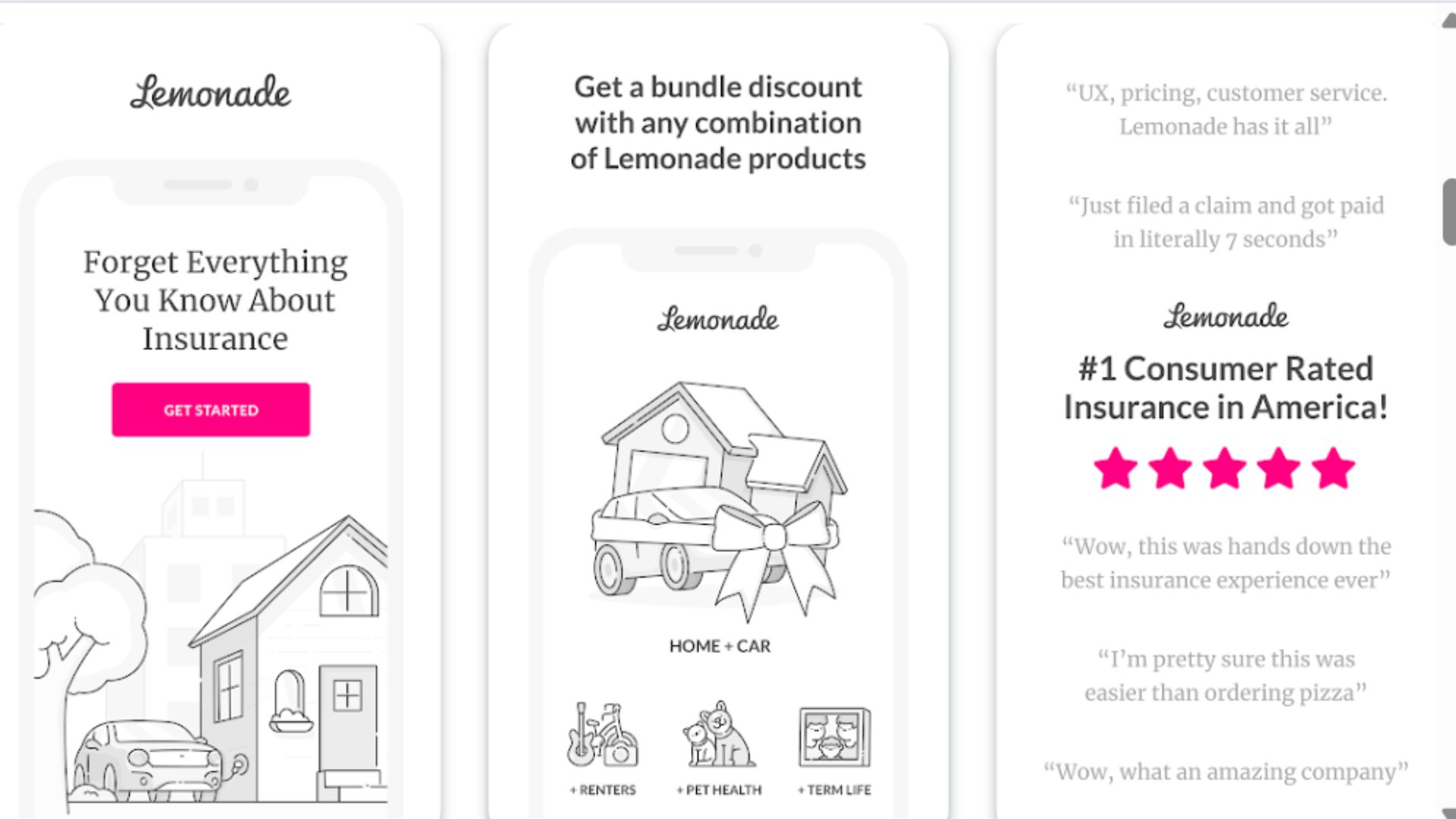
Lemonade burst onto the insurance scene with a promise to make getting covered as easy as ordering takeout, and their app delivers exactly that. Built specifically for renters, homeowners, and pet owners, this AI-powered platform lets you get a quote, purchase a policy, and file a claim—all without talking to a human unless you want to. The app's chatbot, named Maya, guides you through the process in plain English, skipping the insurance jargon that usually makes your eyes glaze over.
What sets Lemonade apart is its lightning-fast claims process. Many users report getting claims approved and paid within minutes, not days or weeks. The app uses AI to detect fraud while processing legitimate claims instantly. If you need to add or change coverage, you can do it right in the app without filling out endless forms. The company also donates leftover money to charities you choose, which adds a feel-good element to an otherwise mundane purchase. Policies start around $5 per month for basic renters insurance, making it accessible for younger users or first-time renters.
Pros:
Claims can be approved in as little as 3 seconds for simple cases
Clean, intuitive interface that makes insurance actually understandable
Month-to-month policies with no long-term commitment required
Charitable giving built into the business model
Digital-first approach means no phone tag with agents
Cons:
Only available in select states (not nationwide yet)
Limited to renters, homeowners, pet, and life insurance—no auto coverage
AI-first approach may frustrate those who prefer human interaction
Coverage limits may be lower than traditional insurers for some situations
2. State Farm Mobile – Best for Bundling Multiple Policy Types
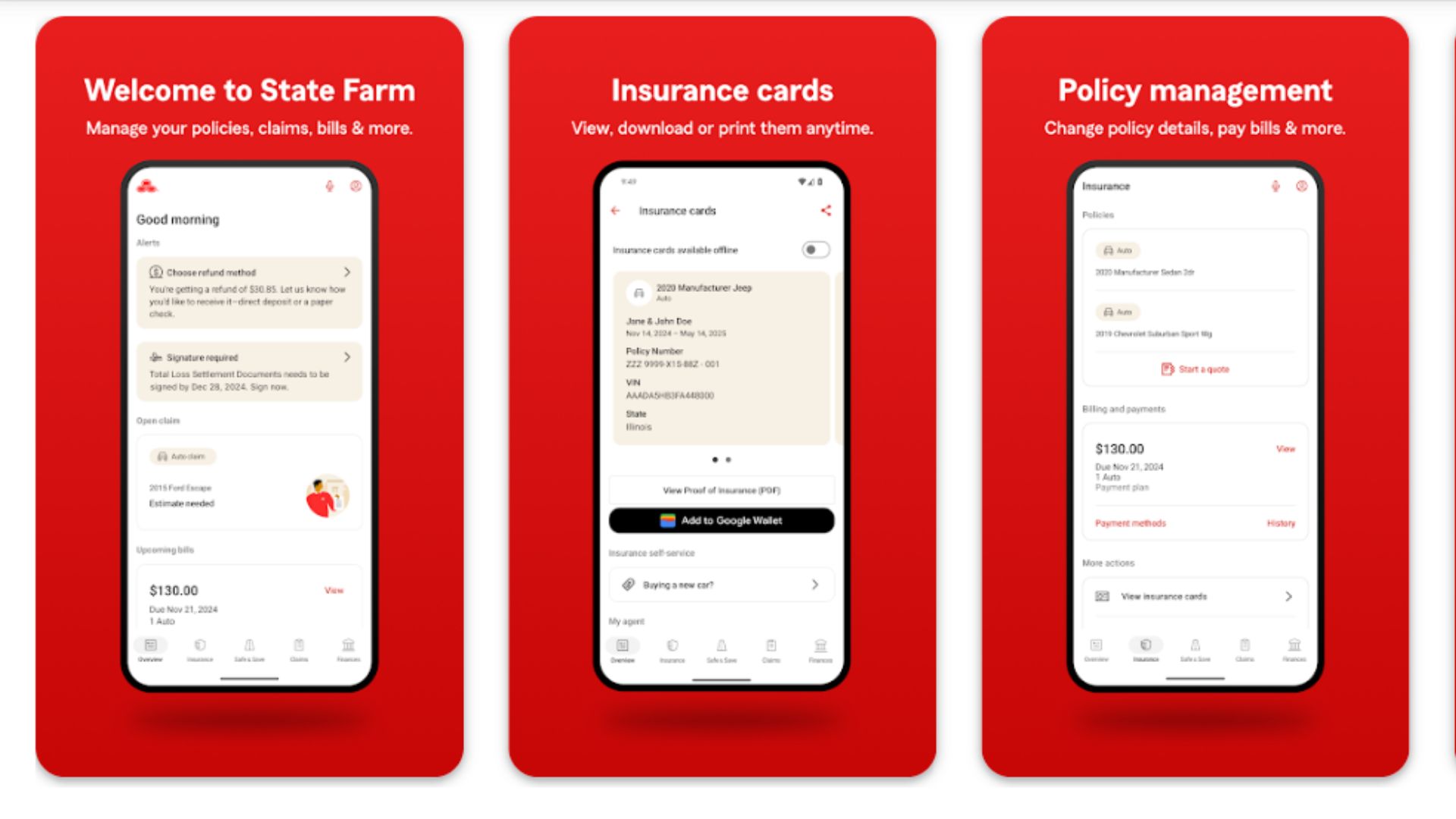
State Farm's mobile app shines when you're juggling more than one type of insurance. If you've got auto, home, renters, and life insurance all with the same company, this app becomes your command center for everything. You can view all your policies in one place, check coverage details, make payments, and even get ID cards instantly when you're at the car rental counter and realize you left yours at home.
The app's Bank Account feature deserves special mention—it lets you track your Drive Safe & Save discount in real time, showing how your driving habits affect your rates. Need to file a claim? You can do it entirely through the app, upload photos of damage, and track the claim's progress without playing phone tag. The app also includes helpful tools like a digital assistant that answers policy questions, though responses are sometimes generic. State Farm serves over 87 million policies, so their extensive agent network means you can also schedule in-person appointments through the app if you prefer face-to-face service. Pricing varies widely based on your coverage and location, but bundling typically saves you 15-25% compared to separate policies.
Pros:
Seamless management of multiple policy types in a single interface
Drive Safe & Save tracking helps lower your auto premiums
Instant digital ID cards eliminate the need for physical copies
Large agent network provides backup human support when needed
Excellent for families managing several drivers and properties
Cons:
Interface feels cluttered when you have many policies
Some features require calling an agent rather than handling in-app
Drive tracking feature drains phone battery faster
App can be slow to load during peak claim periods (after major storms)
3. Geico Mobile – Best for Quick Roadside Assistance and Claims
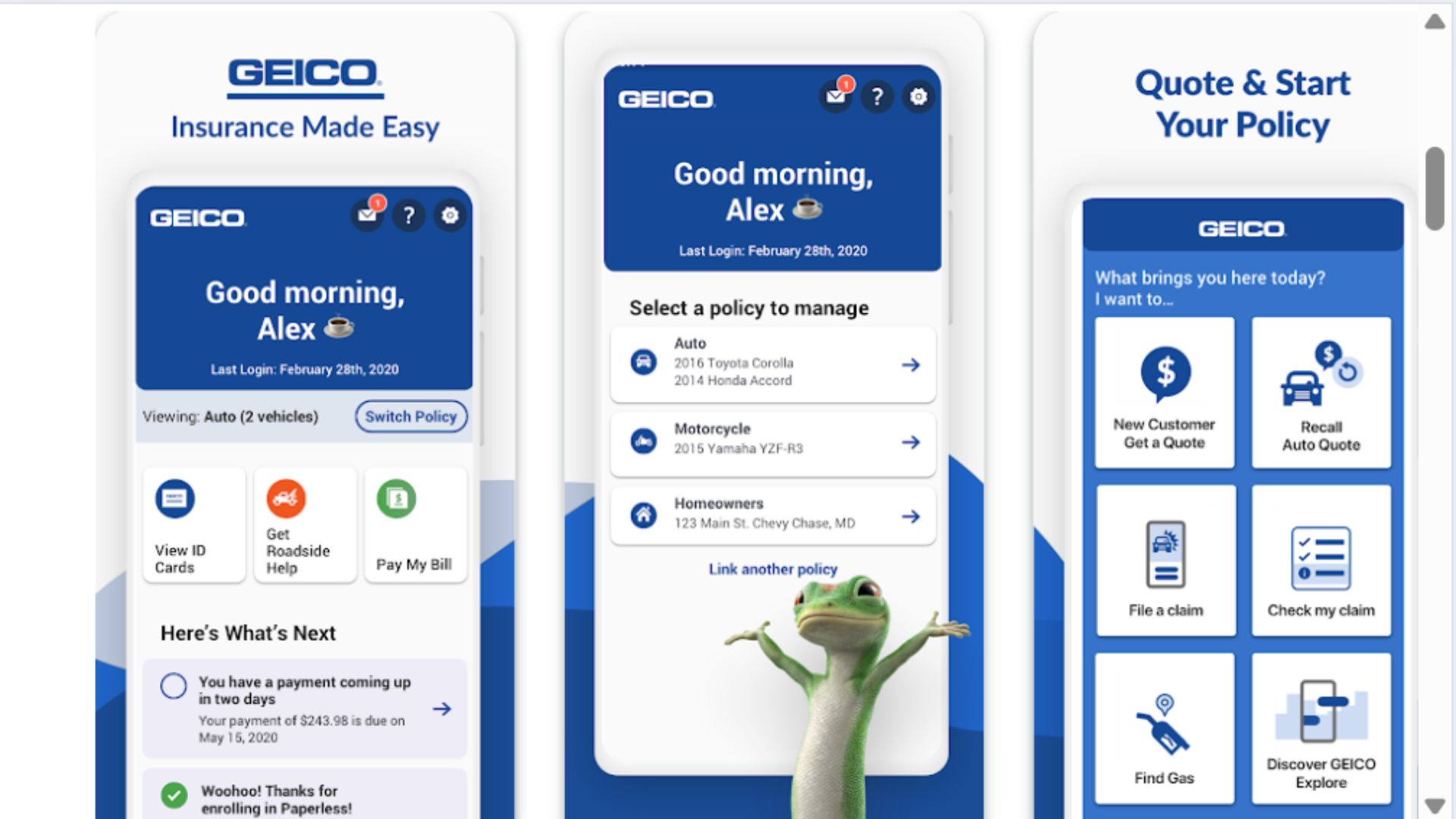
Geico's app focuses on the moments when you actually need your insurance, not just when you're paying for it. The roadside assistance feature is remarkably straightforward—tap a button, and the app uses your phone's GPS to send help to your exact location. No fumbling with addresses or trying to describe which exit you're near. The emergency feature also connects you directly to 911 if needed, and automatically notifies your emergency contacts with your location.
Claims processing through the app is equally smooth, letting you photograph damage, get repair estimates, and schedule work with approved shops without making a single phone call. The virtual assistant can answer most common questions instantly, and the app stores all your vehicle information for quick access during traffic stops or accidents. Geico is known for competitive rates—often 15-20% below the national average—and their app includes a quote tool to easily compare adding another vehicle or driver. The company serves over 28 million policies, so their claims system is well-tested and reliable.
Pros:
GPS-enabled roadside assistance arrives faster than calling a number
One-tap access to emergency services with automatic location sharing
Photo-based claims make accident documentation simple
Competitive pricing with frequent discounts for safe drivers
Digital insurance cards are accepted in all 50 states
Cons:
App occasionally logs you out, requiring frequent re-authentication
Limited to auto, motorcycle, and some property insurance only
Customer service chat can have long wait times during business hours
Some policy changes still require calling rather than in-app adjustments
4. Policygenius – Best for Comparing and Shopping Policies
Unlike apps from specific insurance companies, Policygenius acts as your personal insurance shopping assistant. The app lets you compare quotes from dozens of insurers for life, home, auto, disability, and pet insurance without entering your information repeatedly on different websites. Think of it as the Kayak of insurance—you answer questions once, and the app shows you options ranked by price, coverage, and customer ratings.
What makes Policygenius valuable is the unbiased guidance it provides. Since they're not tied to any single carrier, their recommendations are based on what actually fits your needs, not what makes them the most commission. The app includes educational content that explains insurance concepts in plain English, helping you understand why you might need certain coverage levels. Licensed advisors are available through the app if you want human help, but there's no pressure to use them. Once you purchase a policy through Policygenius, you can store documents and set reminders for renewal dates. The service is free—they earn commission from insurers when you buy, but this doesn't increase your price. Most users find quotes that are 10-40% lower than what they previously paid by shopping around.
Pros:
Compare dozens of insurers in one place without endless data entry
No-pressure environment lets you shop at your own pace
Licensed advisors available for free consultation when needed
Educational content helps you make informed decisions
Stores all your policies even from companies outside their network
Cons:
Not all insurance companies participate in their marketplace
Some insurance types (like specific business coverage) aren't available
Quotes are estimates—final prices may differ after full underwriting
App is primarily a shopping tool, not for managing existing policies long-term
5. Allstate Mobile – Best for Safe Driving Rewards
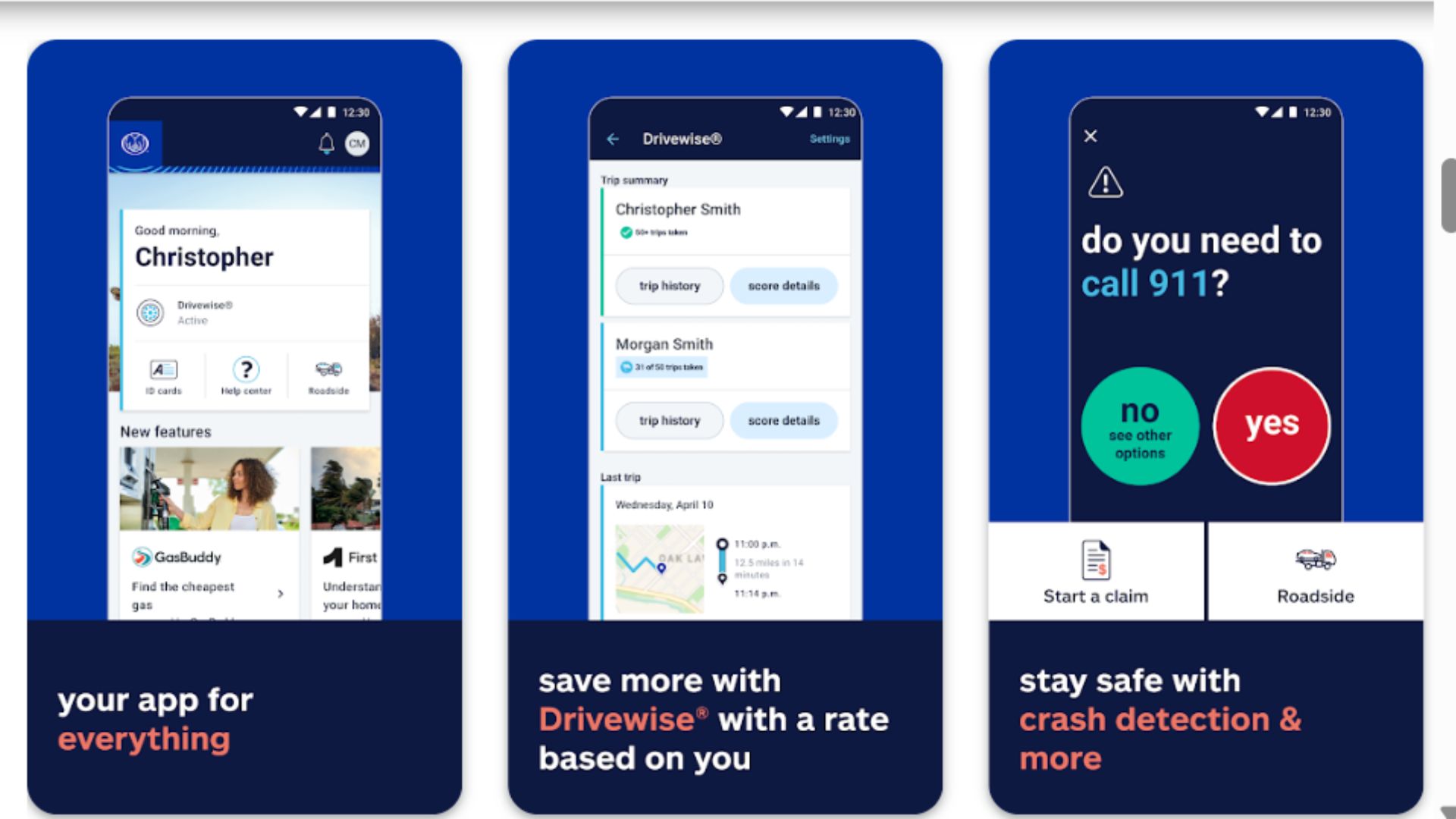
Allstate's Drivewise program, integrated directly into their mobile app, turns your smartphone into a driving coach that can seriously reduce your insurance costs. The app monitors your driving habits—braking, acceleration, speed, and time of day you drive—then calculates your discount based on how safely you drive. Unlike some telematics programs, you can check your driving score anytime and see exactly which behaviors hurt or help your rating. Many users report saving 10-30% on premiums through consistently safe driving.
Beyond the rewards program, the app handles standard insurance tasks efficiently. You can file claims with photos, chat with your agent, pay bills, and access your digital ID cards. The QuickFoto Claim feature is particularly slick—you photograph damage from multiple angles, and the app's AI provides a damage estimate before you even submit the claim. Allstate also offers identity theft protection and roadside assistance features within the app. The company serves over 16 million households, and their extensive local agent network means you can switch between app and in-person service as needed. Base pricing tends to be higher than budget insurers, but the Drivewise discount can make up the difference for safe drivers.
Pros:
Potential for substantial premium reductions through safe driving
Real-time feedback helps you improve driving habits
QuickFoto Claim provides instant damage estimates using AI
Comprehensive coverage options with strong financial stability ratings
Excellent balance of digital tools and human agent support
Cons:
Drivewise tracking requires constant background location access
Safe driving discount resets if you deactivate the tracking feature
Higher base rates than budget competitors like Geico
Some customers find the constant driving monitoring intrusive
Battery drain from continuous GPS and motion tracking
6. USAA Mobile – Best for Military Members and Families
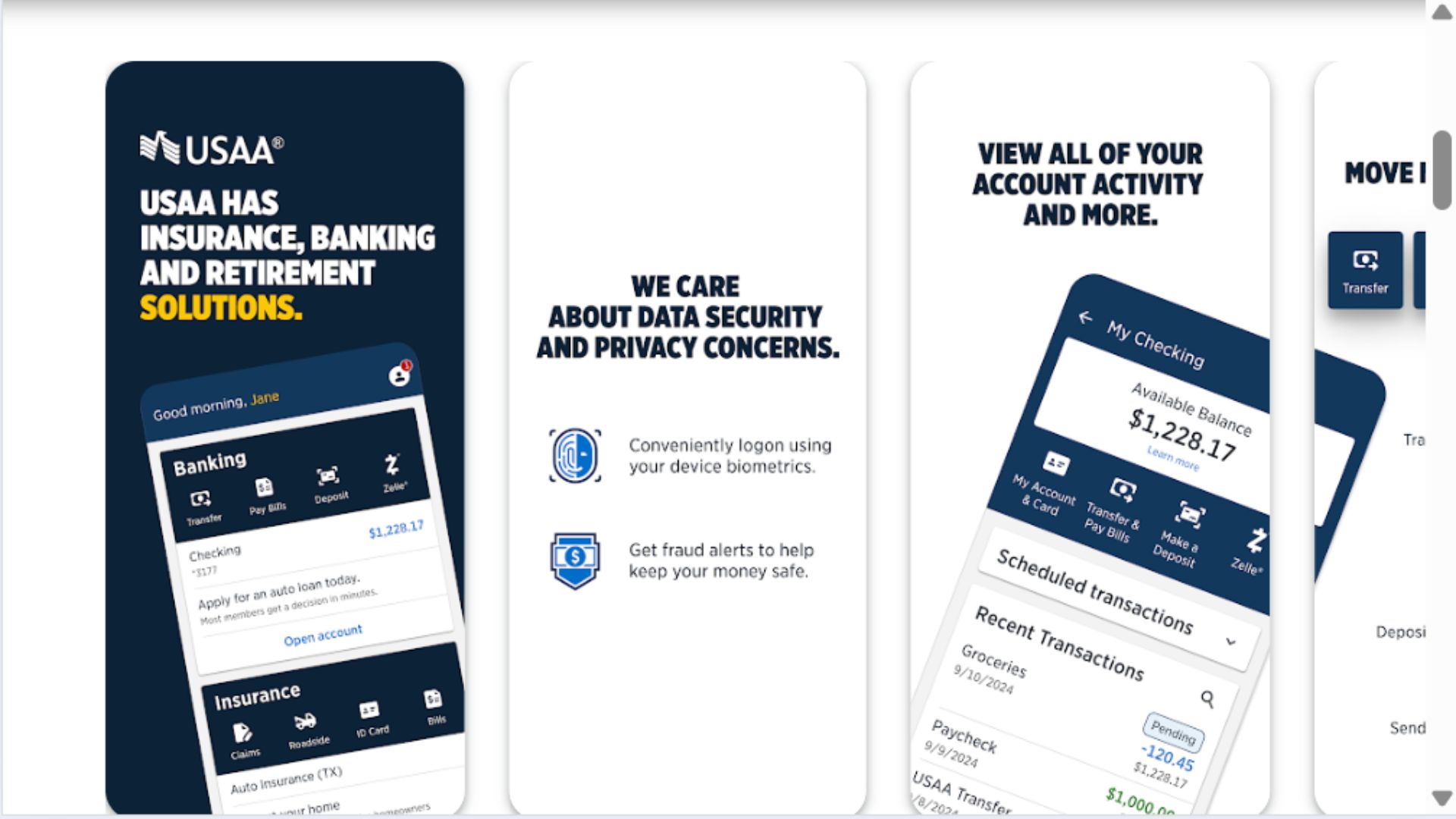
If you're eligible for USAA (military members, veterans, and their families), their mobile app is widely considered the gold standard in insurance apps. The app combines banking, insurance, and investment accounts in one place, making it a true financial command center. For insurance specifically, you get comprehensive management of auto, home, renters, life, and valuable personal property policies. The claims process is streamlined for military life—if you're deployed when your car gets damaged stateside, you can manage everything remotely through the app.
USAA's commitment to their military membership shows in thoughtful features like deployment discounts that automatically activate when you're overseas, and coverage that follows you between duty stations without the usual hassles. The app includes free financial advice, vehicle buying services, and even helps coordinate your move when you receive PCS orders. Customer satisfaction ratings for USAA consistently rank at the top of the industry, with members praising both the app and the company's overall service. Pricing is highly competitive, often 10-15% below national averages, though you must be military-connected to join.
Pros:
Integrated banking and insurance creates seamless money management
Specialized features for deployed service members
Consistently top-rated customer service and claims satisfaction
Competitive rates that often beat other major insurers
Free financial planning and vehicle shopping assistance included
Cons:
Membership restricted to military, veterans, and immediate family
Some features have steep learning curve due to extensive capabilities
Not available in all states for all policy types
App's breadth of services can feel overwhelming for simple tasks
7. Progressive Mobile – Best for Usage-Based Auto Insurance
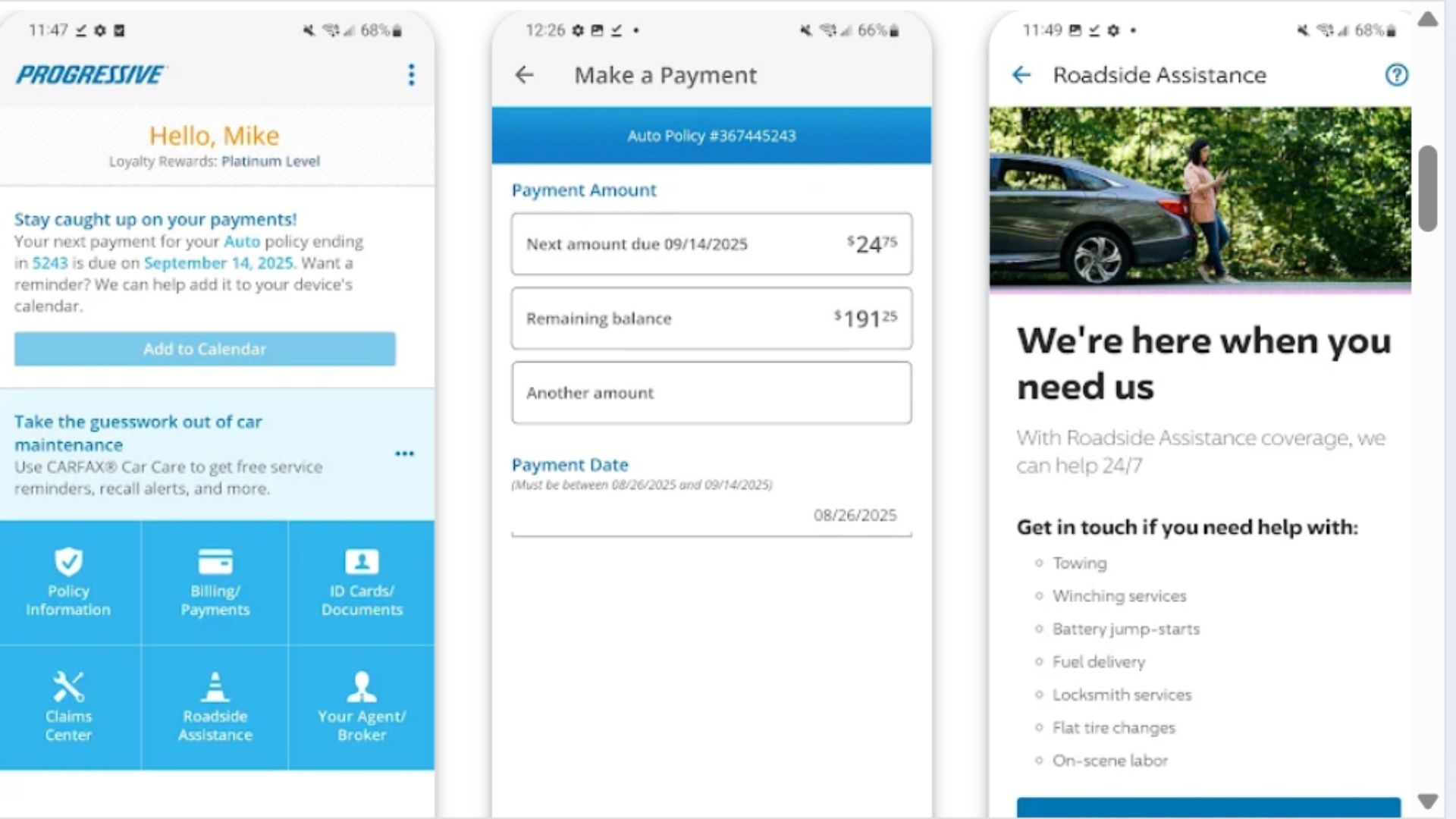
Progressive pioneered usage-based insurance with their Snapshot program, and their mobile app makes it the most flexible option available. Instead of paying based solely on demographic factors, the app tracks how you actually drive and adjusts your rate accordingly. What's unique is Progressive's Name Your Price tool—you tell them what you want to pay, and the app shows you coverage options that fit your budget. This transparency is refreshing in an industry that often feels like you're negotiating in the dark.
The app excels at multi-policy management, particularly if you have recreational vehicles, boats, or RVs alongside your regular auto insurance. Progressive covers more vehicle types than most competitors, and the app handles all of them smoothly. Claims feature a Virtual Assistant that guides you through the process step-by-step, and the Concierge Claim Service assigns you a single point of contact who handles everything from estimate to final payment. You can also bundle home insurance from Progressive's partner companies. Rates vary dramatically based on your driving record and location, but safe drivers with clean records often see savings of 10-30% compared to traditional pricing.
Pros:
Name Your Price tool offers unusual transparency in insurance shopping
Snapshot program rewards actual safe driving, not just demographics
Handles unusual vehicles like RVs, boats, and motorcycles seamlessly
Concierge Claims Service provides dedicated personal support
Quick quote updates when adding or removing vehicles
Cons:
Heavy usage tracking raises privacy concerns for some users
Interface can feel busy with promotional messages
Snapshot device in your car (if not using the app) can be annoying
Bundle discounts are often smaller than single-company competitors
Customer service quality varies significantly by region
8. CoverSure – Best for Managing Policies from Multiple Insurers
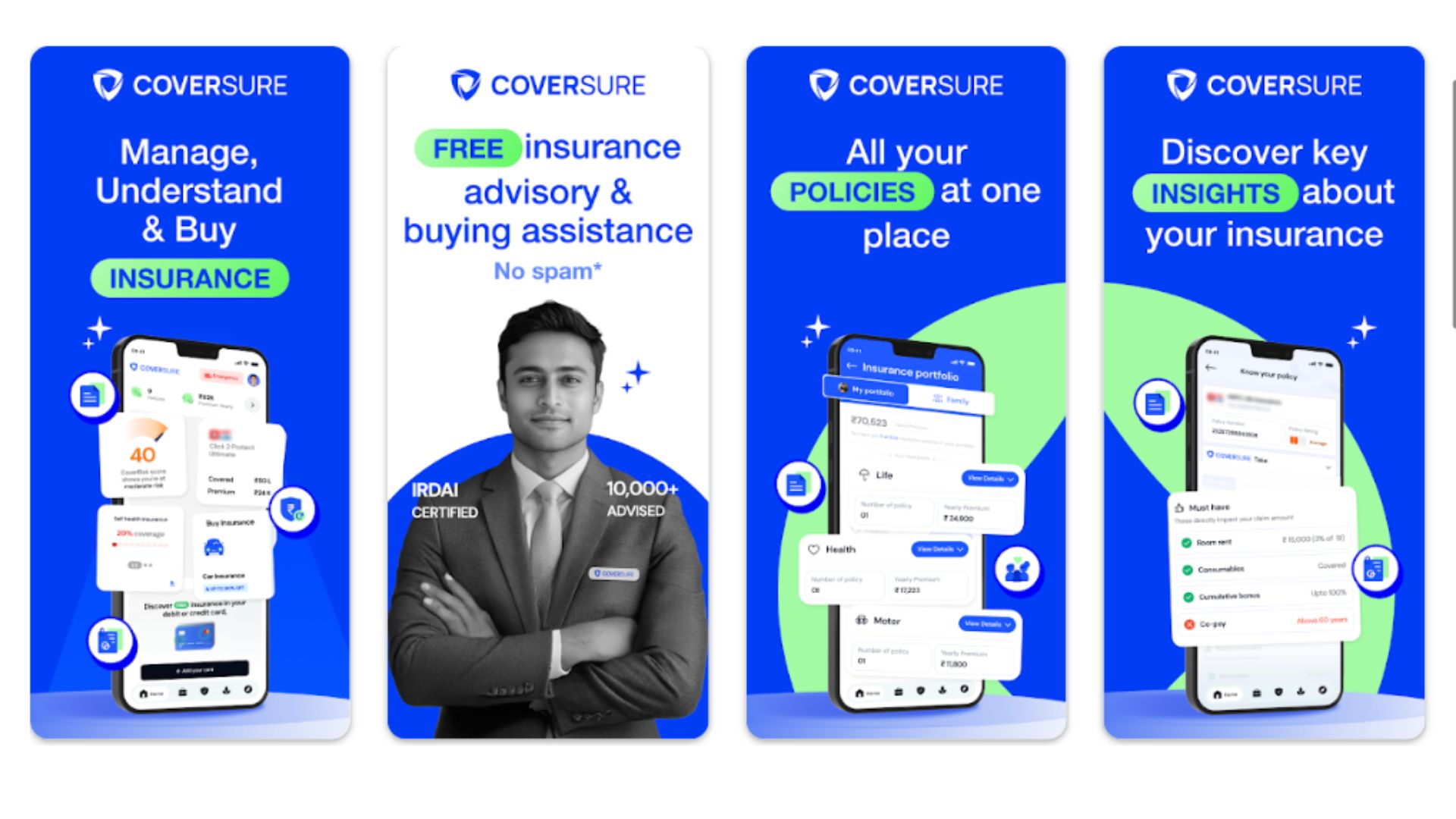
Coversure takes a different approach—instead of selling insurance, it helps you organize policies you already have from any company. Think of it as a universal remote for all your insurance needs. You can scan your policy documents or forward emails, and Coversure AI extracts the important details, creating a searchable database of what you're covered for and what you're paying. This is invaluable if you've got auto insurance from one company, homeowners from another, and life insurance from a third.
The app's real value emerges when you need your insurance information quickly. At the ER with your kid? Pull up your health insurance details instantly. Got in an accident? Your auto policy info and claim phone number are right there. Cover also monitors your policies and alerts you when rates increase or coverage gaps appear. The app can help you shop for better rates by understanding your current coverage and finding comparable options. While Coversure itself is free, it earns referral fees when you switch to a recommended insurer—but there's never pressure to change. For people juggling five or more policies across different companies, this app eliminates the chaos.
Pros:
Works with policies from any insurance company worldwide
AI-powered policy analysis spots coverage gaps and overcharges
Centralized storage means never hunting for policy documents
Free to use with no hidden subscription fees
Renewal reminders prevent accidental lapses in coverage
Cons:
Requires manual uploading of policies (not automatic sync)
Shopping recommendations limited to partner insurance companies
Some policy details may not extract accurately from complex documents
Doesn't handle claims—just documentation and organization
Less useful if you only have one or two policies to manage
9. MetLife Mobile – Best for Employer-Sponsored Benefits
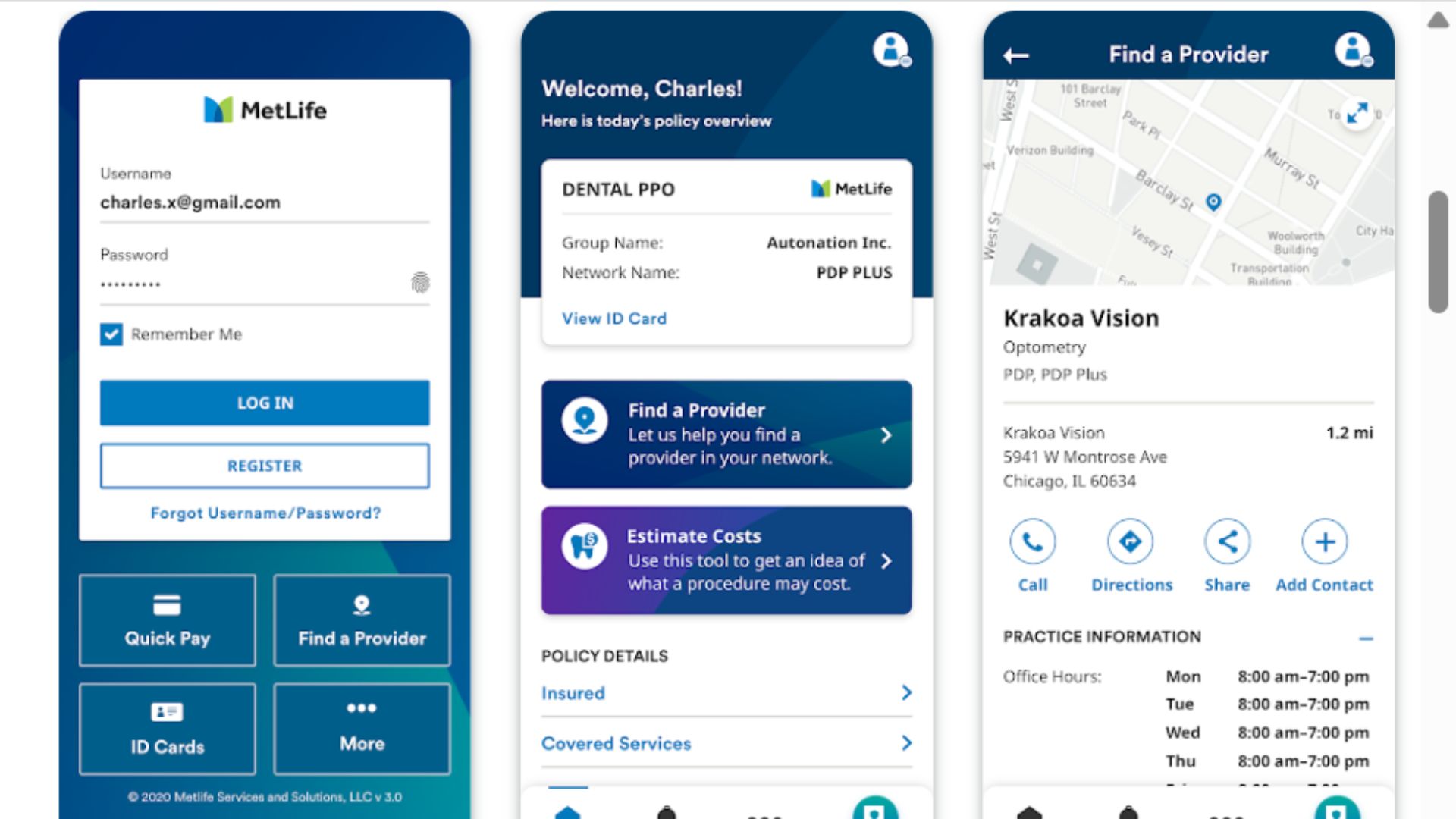
If your employer provides insurance through MetLife, their mobile app becomes your gateway to benefits that are often confusing and underutilized. The app covers life insurance, dental, vision, disability, and legal plans—basically everything except auto and home. What makes it valuable is how it explains your workplace benefits in actual human language. Many people have no idea what their employer-sponsored life insurance actually covers until they explore it in the MetLife app.
The claims process for dental and vision is particularly smooth—you can photograph receipts, submit them through the app, and track reimbursement status in real time. For life insurance, the app includes beneficiary management and a calculator that helps determine if your coverage is adequate as your life circumstances change. The disability insurance section walks you through the claims process with a checklist of required documentation. MetLife serves over 90 million customers globally, so their claims system is robust. There's also a wellness section with health tracking tools and discount programs. Pricing is typically handled through your employer's group rate, which is usually much cheaper than individual policies.
Pros:
Simplifies complex employer benefit packages into understandable terms
Photo-based claims for dental and vision speed up reimbursement
Beneficiary updates can be done entirely in-app
Wellness programs and discounts add extra value beyond insurance
Group rates through employers offer significant cost savings
Cons:
Only useful if your employer uses MetLife for benefits
Limited to workplace-related insurance products
Some features require desktop access for complex tasks
Customer service hours align with business hours, not 24/7
App navigation assumes familiarity with insurance terminology
10. Liberty Mutual Mobile – Best for Personalized Policy Customization
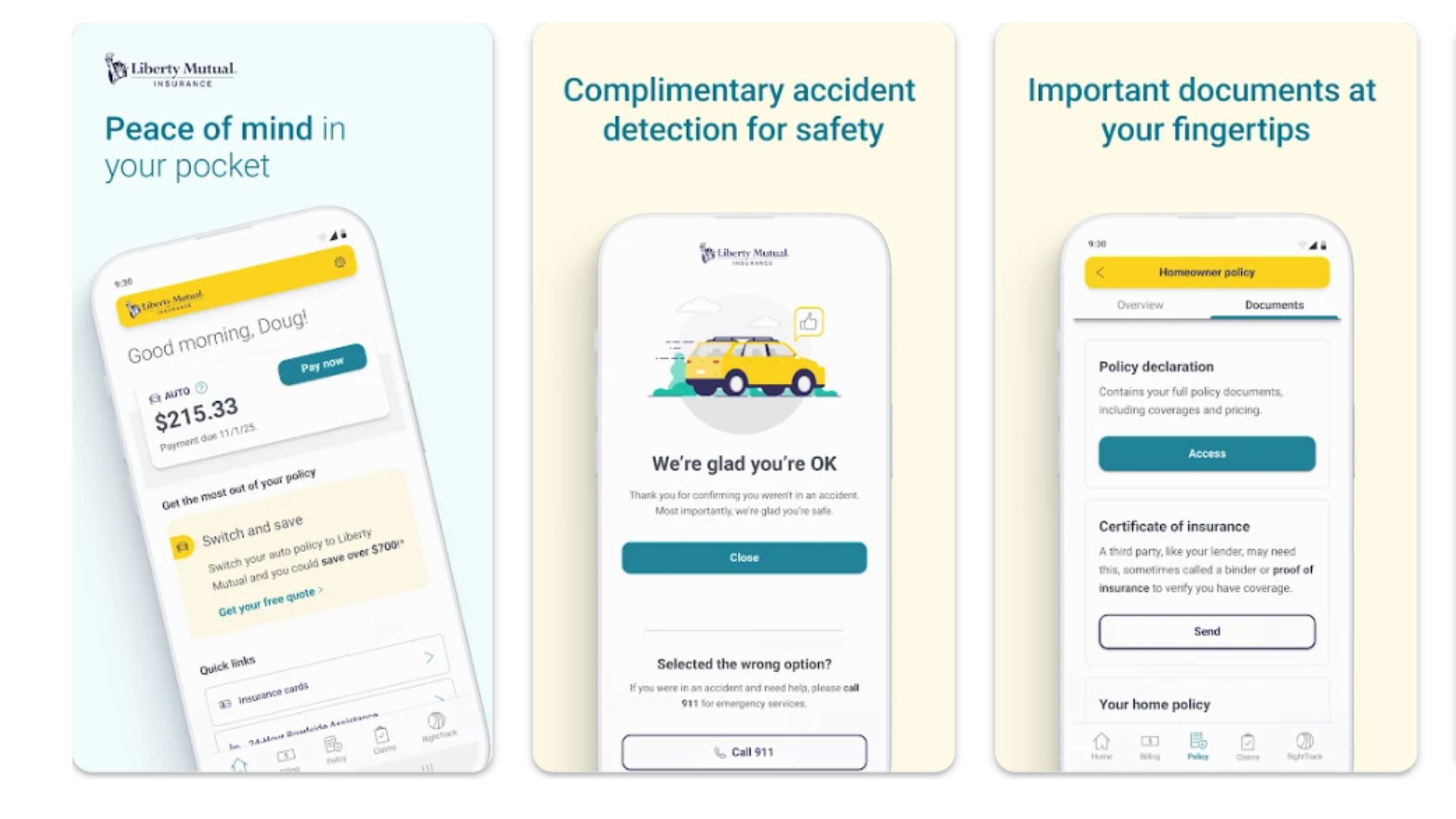
Liberty Mutual's app stands out for the sheer level of customization it offers. Rather than picking from a few preset coverage packages, the app lets you adjust dozens of variables to build a policy that fits your exact situation. Want accident forgiveness but don't need rental car coverage? The app lets you toggle these options and instantly see how each affects your premium. This transparency helps you understand exactly what you're paying for and why.
The RightTrack program, similar to other telematics offerings, monitors your driving and can save you up to 30% on premiums. What's different is Liberty Mutual's flexibility—you can pause tracking during road trips or when lending your car to a teenager learning to drive, without penalty. The app also includes Better Car Replacement coverage, which pays for a car one model year newer if yours is totaled. Claims can be filed and tracked in the app, with options for video estimates if you can't get to a repair shop easily. Liberty Mutual's pricing tends toward the higher end, but frequent discounts (bundling, safe driving, loyalty) can bring costs down 20-40% for many customers.
Pros:
Unprecedented ability to customize coverage to your exact needs
Real-time pricing updates as you adjust coverage levels
RightTrack flexibility accommodates occasional driving variations
Better Car Replacement provides extra peace of mind
Strong financial stability ratings ensure claim payment reliability
Cons:
Higher base prices than budget competitors
Complex customization options can be overwhelming for new buyers
RightTrack savings require several months of driving data
Some regional variations in coverage options and pricing
App performance lags when making multiple coverage changes simultaneously
What Are Insurance Apps?
Insurance apps are mobile applications that let you manage your insurance policies directly from your smartphone or tablet. They essentially put your insurance company in your pocket, giving you 24/7 access to policy information, payment options, claims filing, and customer service without needing to visit an office or make a phone call. These apps range from carrier-specific options (like State Farm or Geico's own apps) to independent platforms that help you shop for or organize policies from multiple companies.
The best insurance apps go beyond simple document storage—they actively help you interact with your coverage in ways that weren't possible before. You can file a claim by photographing car damage at an accident scene, track a repair shop's progress, request roadside assistance with GPS-enabled precision, or get instant proof of insurance when a police officer asks for it. Many apps now include telematics features that monitor your driving or home security, potentially lowering your premiums based on your actual behavior rather than statistical averages.
Benefits of Using Insurance Apps
The most immediate benefit is convenience. Instead of searching through files or waiting on hold, you can access policy details, make payments, or update information in seconds. This matters most during stressful situations—when you've just been in an accident or discovered water damage, the last thing you want is to spend an hour tracking down the right phone number and policy details.
Insurance apps also promote better financial awareness. When you can see all your policies and their costs in one place, it's easier to identify redundant coverage, spot premium increases, or realize you're underinsured in certain areas. Apps with telematics features provide immediate feedback on behaviors that affect your rates, giving you agency over costs that used to feel arbitrary. The transparency many apps offer—like showing how adjusting your deductible affects your monthly premium—helps you make informed decisions rather than just accepting whatever an agent recommends.
Beyond the practical benefits, apps improve response times dramatically. Digital claims can be initiated immediately after an incident, with photos and details captured while everything is fresh. Some apps approve simple claims within hours rather than the days or weeks traditional processes take. Roadside assistance through apps arrives faster because GPS eliminates the back-and-forth of describing your location. These time savings add up, especially when you're dealing with something as time-sensitive as a car that won't start or a burst pipe flooding your basement.
What to Look for When Choosing an Insurance App
Start with functionality that matches your actual needs. If you have multiple policies with one carrier, a comprehensive carrier app makes sense. If you're juggling coverage from several companies, an independent organizer like Cover might be more useful. Think about which insurance tasks you do most often—if you commute long distances, an app with reliable roadside assistance is crucial. If you file frequent small claims (like dental), photo-based claims submission becomes a must-have feature.
Evaluate the claims process specifically, since that's when you'll need the app most. Look for apps that let you file claims entirely through the interface, upload supporting documents easily, and track status in real time. Video or photo estimate features can save you trips to repair shops. Read user reviews focusing on claim experiences—apps that work smoothly for routine tasks sometimes fail during the high-stress claims process.
Consider privacy and data practices, especially for apps with telematics or tracking features. Understand exactly what data is collected, how it's used, and whether you can disable tracking without penalty. Check whether the app requires constant background location access or just uses it during active driving. Review the company's data sharing policies—some sell aggregated data to third parties, which may or may not concern you.
Finally, test the app's usability before you need it urgently. Download it, explore the interface, and make sure you can find key features quickly. Set up digital ID cards and verify they work (some rental car companies have trouble scanning certain formats). Familiarize yourself with how to file a claim so you're not figuring it out roadside after an accident. The best app is worthless if you can't navigate it quickly when stress levels are high.
FAQs
Are insurance apps secure for storing policy information?
Yes, reputable insurance apps use bank-level encryption (typically 256-bit) to protect your data, both when it's stored on your phone and when it's transmitted to their servers. Most require biometric authentication (fingerprint or face recognition) or strong passwords for access. However, you should still protect your phone with a password and avoid using insurance apps on public Wi-Fi without a VPN. Major carriers like State Farm, Geico, and USAA invest heavily in cybersecurity and are often safer than storing paper documents that could be lost or stolen.
Can I really file and manage claims entirely through an app?
For most standard claims, yes. Fender benders, minor home damage, and routine property claims can typically be filed, documented with photos, and tracked completely through insurance apps. You'll usually get a claim number immediately and can communicate with adjusters through the app. However, complex claims—like total loss accidents, major property damage, or disputes over coverage—often still require phone calls or in-person meetings. The app handles the initial reporting and documentation, but a human adjuster takes over for complicated situations.
Do telematics and driving tracking apps really save money?
They can, but results vary widely. Safe drivers with short commutes typically see the biggest savings—often 10-30% off premiums. However, if you drive during high-risk times (late night), make frequent hard stops (common in city driving), or cover many miles annually, your rates might not decrease much or could even increase. Most programs offer a small discount (usually 5-10%) just for participating, so you won't pay more than your original rate. You can usually try tracking for a few months and discontinue if it's not saving you money.
What happens to my app access if I switch insurance companies?
When you cancel a policy, you typically lose access to that carrier's app features within a few days to weeks. Your policy documents usually remain viewable for 30-60 days, but then you'll need to request copies from the company's customer service. This is why apps like Cover that store information independently are valuable—they maintain your policy history even after you switch carriers. Before canceling any policy, download or screenshot important documents, and save your claims history for your records.