
We've spent weeks comparing dozens of high-yield savings accounts from traditional banks, online-only institutions, and credit unions. We looked at interest rates, fees, minimum balance requirements, customer service, mobile app functionality, and those all-important fine-print details. Whether you're building your first emergency fund or parking a six-figure nest egg, we've found accounts that deliver real value in 2026.
Top 10 at a Glance
UFB Direct – Best for maximizing your rate with no strings attached
Laurel Road – Best for healthcare professionals and medical residents
Newtek Bank – Best for business owners who want personal perks
Bask Bank – Best for travelers earning airline miles on savings
Bread Savings – Best for hands-off savers who want simplicity
EverBank – Best for relationship banking with checking integration
CIT Bank – Best for savers willing to maintain higher balances
American Express Personal Savings – Best for brand trust and customer service
Synchrony Bank – Best for ATM access nationwide
Ally Bank – Best for mobile-first banking and financial tools
The Reviews
1. UFB Direct – Best for Maximizing Your Rate With No Strings Attached

UFB Direct consistently ranks among the highest-paying savings accounts without requiring you to jump through hoops. This online bank keeps things refreshingly straightforward: open an account, deposit your money, and watch it grow at one of the most competitive rates available. There's no minimum balance to earn the top APY, and you won't find monthly maintenance fees lurking in the fine print.
What sets UFB Direct apart is its commitment to keeping rates competitive as the Federal Reserve adjusts policy. While some banks advertise high promotional rates that plummet after a few months, UFB has built a reputation for sustainable, market-leading yields. The bank's mobile app is clean and functional, though it won't win design awards. Customer service is responsive through secure messaging, though phone support hours are limited to business days.
The trade-off for these high rates is a bare-bones experience. You won't find budgeting tools, financial planning resources, or a network of branches to visit. UFB Direct is for savers who want their money to work hard without the fluff, making it ideal for emergency funds and short-term savings goals where accessibility and yield matter most.
Pros:
Top-tier APY with no minimum balance requirement
Zero monthly maintenance fees
No initial deposit minimum to open
Simple, transparent account structure
Quick online account opening process
Cons:
Limited customer service hours
No physical branch access
Basic mobile app without advanced features
No checking account option for easy transfers
Six withdrawal limit per statement cycle (federal standard)
2. Laurel Road – Best for Healthcare Professionals and Medical Residents

Laurel Road carved out its niche serving doctors, nurses, and other healthcare workers, and its high-yield savings account reflects that specialized focus. While anyone can open an account, healthcare professionals get white-glove treatment with dedicated support teams who understand the financial challenges of medical careers. The APY sits comfortably in the top tier, and there are no monthly fees or minimum balance requirements to worry about.
The account shines brightest when paired with Laurel Road's other products designed for medical professionals. If you have student loan refinancing or a mortgage through Laurel Road, you'll get relationship perks that sweeten the deal. The bank also offers financial planning resources tailored to doctors navigating residency stipends, practice buy-ins, and retirement planning. Their customer service team actually knows the difference between an attending physician and a fellow, which makes conversations about financial planning remarkably smoother.
For non-healthcare professionals, Laurel Road still delivers a solid high-yield savings option, though you'll miss out on some of the personalized perks. The account includes standard features like mobile check deposit and account alerts, plus you can link external accounts for easy transfers. The main limitation is the lack of a full-service banking ecosystem—you'll need another bank for checking accounts and credit cards.
Pros:
Highly competitive APY for all account holders
Specialized support for healthcare professionals
No monthly fees or minimum balance requirements
Relationship benefits when using multiple Laurel Road products
Strong security features including biometric login
Cons:
No physical branches for in-person service
Limited product offerings beyond loans and savings
Healthcare-specific features less valuable for other professions
No checking account integration
Fewer budgeting tools compared to full-service banks
3. Newtek Bank – Best for Business Owners Who Want Personal Perks
Newtek Bank might not be a household name, but this institution has quietly built one of the most attractive high-yield savings accounts for entrepreneurs and small business owners. While the account is available to anyone, business owners who also bank commercially with Newtek get relationship pricing that bumps the already-competitive rate even higher. The account carries no monthly fees and you can open it with just $100, making it accessible even if you're bootstrapping your first venture.
What makes Newtek particularly appealing is how it bridges personal and business finances without the typical bureaucratic headaches. You can easily move money between personal savings and business checking, schedule transfers around payroll dates, and access customer service reps who actually understand cash flow timing. The bank's website feels more utilitarian than sleek, but it's packed with features that matter—robust reporting, customizable alerts, and seamless integration with accounting software.
Newtek's smaller scale means more personalized service but fewer physical locations. The bank operates primarily online with a handful of branches in the Northeast. If you value a banker who recognizes your name and understands your business cycle, Newtek delivers that small-bank feel with big-bank rates. Just know that you'll need to be comfortable managing most transactions digitally.
Pros:
Enhanced rates available for business banking customers
Low $100 minimum opening deposit
Excellent customer service with business expertise
Easy integration between personal and business accounts
Strong security and fraud protection measures
Cons:
Limited physical branch locations
Website interface could be more modern
Fewer financial education resources than larger banks
Mobile app lacks some advanced features
May require business relationship for best rates
4. Bask Bank – Best for Travelers Earning Airline Miles on Savings
Bask Bank revolutionized high-yield savings by letting you earn American Airlines AAdvantage miles instead of cash interest—or you can choose a traditional APY if you prefer. For frequent travelers, this is a game-changer. Every $1 in your account earns miles based on the current interest rate equivalent, and there's no limit to how many miles you can accumulate. You could literally save for a down payment while simultaneously earning a free vacation.
The account works particularly well for travel hackers who already have credit card strategies dialed in. Unlike credit card miles that require spending, Bask rewards you just for saving money you were going to save anyway. The miles post directly to your AAdvantage account each month, and they never expire as long as you have account activity. You can switch between earning miles and earning cash interest once per calendar year, giving you flexibility as your goals change.
The trade-off is that the cash APY option, while competitive, typically runs slightly below the absolute highest rates on the market. You're essentially paying a small premium for the optionality and the miles-earning feature. Bask also doesn't offer checking accounts or other banking products—it's purely a savings vehicle. But if you're an American Airlines loyalist or someone who values travel rewards, the unique structure makes this account worth serious consideration.
Pros:
Unique option to earn American Airlines miles on savings
No monthly fees or minimum balance requirements
Competitive cash APY if you opt out of miles
FDIC insured like traditional savings accounts
Simple account structure with no hidden catches
Cons:
Cash APY slightly lower than top competitors
Limited to American Airlines miles (no other transfer partners)
No checking account for convenient transfers
Can only switch between miles and cash once yearly
Miles option less valuable if you don't fly American
5. Bread Savings – Best for Hands-Off Savers Who Want Simplicity
Bread Savings (formerly Comenity Direct) strips high-yield savings down to its absolute essence: deposit money, earn interest, done. There's no minimum balance, no monthly fees, no complex tier structures, and no promotional rate games. The APY is consistently among the highest available, and every dollar in your account earns the same rate from the first penny to your millionth. This makes it perfect for people who want to set up automatic deposits and forget about it.
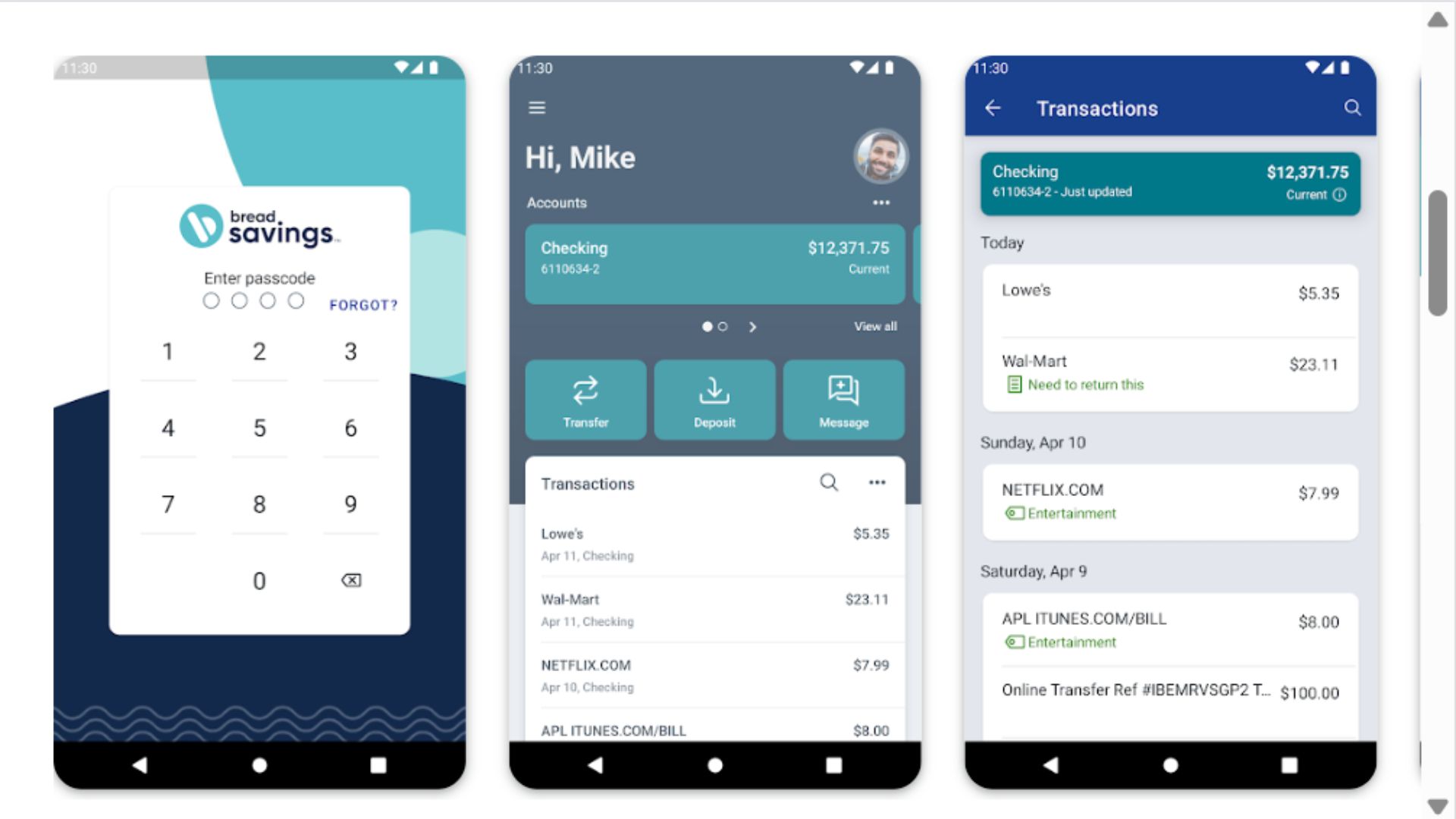
The simplicity extends to the user experience. The website and mobile app are clean, intuitive, and fast—no cluttered dashboards trying to sell you five other products. You can link external bank accounts within minutes, set up recurring transfers, and monitor your balance without wading through unnecessary features. Customer service is available seven days a week through phone, email, and secure messaging, with notably short wait times compared to larger institutions.
This minimalist approach does mean sacrificing bells and whistles. There's no checking account option, no bill pay service, no overdraft protection, and no network of branches. Bread Savings is purely a place to park money and earn interest. But if you already have a primary bank for everyday transactions and you're looking for the highest possible return on your emergency fund or short-term savings, this stripped-down approach actually becomes a strength rather than a weakness.
Pros:
Consistently top-tier APY across all balance levels
Zero fees and no minimum balance requirements
Simple, user-friendly interface without clutter
Seven-day-a-week customer service
Fast and easy account setup process
Cons:
No checking account or other banking products
Limited financial management tools
No physical branches for in-person service
Basic mobile app compared to full-service banks
No bill pay or payment services
6. EverBank – Best for Relationship Banking With Checking Integration
EverBank offers something increasingly rare: a genuinely high-yield savings account from a bank that also provides full checking account services, mortgages, and wealth management. The APY competes with online-only banks, but you get the convenience of moving money instantly between accounts without waiting for ACH transfers. This integration makes EverBank ideal for people who want one institution handling all their banking needs while still earning competitive interest.
The checking account pairing is where EverBank really delivers value. You can set up automatic sweeps that move excess checking funds into savings overnight, maximizing your interest without manual transfers. The bank's mobile app provides a unified view of all your accounts, with smart notifications that alert you when your checking balance dips below your chosen threshold. For people who struggle with savings discipline, these automated features remove the friction and help money accumulate almost invisibly.
EverBank's physical presence is limited, with most customers handling everything online or through the app. While you won't get the branch experience of a traditional bank, the customer service team is notably knowledgeable and empowered to solve problems without escalating. The bank also offers genuinely useful financial planning tools and educational resources. The main consideration is that to unlock the best rates, you'll typically need to maintain combined balances across multiple EverBank products.
Pros:
High-yield savings with full-service banking integration
Instant transfers between linked EverBank accounts
Automated savings sweeps from checking
Unified mobile app for all banking needs
Quality customer service with knowledgeable staff
Cons:
Best rates often require relationship balance minimums
Limited physical branch locations
More complex fee structure than bare-bones online banks
May need multiple products for optimal benefits
Account opening process more involved than simpler options
7. CIT Bank – Best for Savers Willing to Maintain Higher Balances
CIT Bank offers two distinct high-yield savings options, and the top-tier rate is genuinely impressive—but you'll need to maintain a $5,000 minimum balance to access it. For savers with established emergency funds or those setting aside money for a house down payment, this threshold isn't a burden, and the premium rate makes the commitment worthwhile. If your balance drops below the minimum, you'll still earn interest, just at a significantly lower rate that's less competitive with market alternatives.
The bank has built a reputation for rate stability and transparency. CIT clearly explains its rate tiers, doesn't play promotional games with introductory rates that disappear, and adjusts rates quickly when the Federal Reserve moves. The account also comes with a surprisingly robust set of digital banking tools, including savings goal trackers, spending insights when paired with their checking account, and smart budgeting features that actually help you save more effectively.
CIT's customer service deserves special mention—you'll deal with banking specialists rather than script-reading call center workers. The bank also offers a unusual hybrid eChecking account that pays interest when you meet certain requirements, making it possible to earn competitive yields on spending money too. The ecosystem works best when you commit fully to CIT for your primary banking, which isn't for everyone but delivers real value for those who do.
Pros:
Premium APY for balances above $5,000
No monthly maintenance fees at any balance
Excellent savings and budgeting tools
Responsive, knowledgeable customer service
Strong mobile app with useful features
Cons:
$5,000 minimum for top-tier rate
Lower rate for smaller balances less competitive
Limited physical branch access
Best value requires using multiple CIT products
Initial funding can take several days to process
8. American Express Personal Savings – Best for Brand Trust and Customer Service
American Express brings its legendary customer service reputation to high-yield savings, and the account lives up to expectations. The APY consistently ranks near the top of the market, there are no monthly fees, no minimum balance requirements, and you can open an account with any amount. What you're really paying for—or rather, what you're getting free—is the Amex service experience. Phone support is available 24/7, representatives are empowered to solve problems, and the company's dispute resolution process is refreshingly fair.
The account integrates seamlessly if you already have Amex credit cards, with a unified online dashboard and mobile app that shows everything in one place. You can schedule automatic payments from savings to your credit card, set up balance alerts, and even earn bonus Membership Rewards points during occasional promotions. The mobile app is polished and reliable, with features like fingerprint login, instant balance updates, and clean transaction history that makes tracking deposits and withdrawals effortless.
American Express Personal Savings isn't the absolute highest rate on the market, but it's consistently within a few basis points of the leaders. Where it excels is reliability and trust—you never worry about the bank's financial stability, customer service is genuinely helpful, and the account just works without surprises. For people who value peace of mind and the confidence that comes with a established brand, the slight rate difference becomes irrelevant. This is especially appealing for older savers or those new to online banking who want training wheels from a name they recognize.
Pros:
24/7 customer service with genuinely helpful staff
Strong brand reputation and financial stability
No fees and no minimum balance requirement
Excellent mobile app and online experience
Integration with Amex credit card ecosystem
Cons:
APY typically a few basis points below absolute highest
No checking account or other banking services
Limited account features beyond core savings
No physical branches for in-person service
Fewer financial planning tools than full-service banks
9. Synchrony Bank – Best for ATM Access Nationwide

Synchrony Bank solves a problem most high-yield savings accounts ignore: what happens when you actually need to withdraw money quickly? While federal regulations limit savings withdrawals to six per month, Synchrony provides an ATM card linked to your savings account with access to over 400,000 ATMs nationwide through the Allpoint and MoneyPass networks. This makes it the rare high-yield account where you can access cash within minutes, not days, if an emergency strikes.
The APY is genuinely competitive with pure online-only banks, and there are no monthly fees or minimum balance requirements. Synchrony also offers a surprisingly comprehensive suite of savings tools, including multiple sub-accounts with customizable names (one for vacation, one for car repairs, one for medical expenses) that help you mentally earmark money for different goals. The mobile app lets you set targets for each sub-account and tracks your progress with satisfying visual indicators.
The trade-off is that Synchrony remains primarily a savings-focused bank. There's no checking account option, no bill pay, and no external payment features. The ATM card is strictly for withdrawals, not purchases. You'll need another bank for everyday spending, which means maintaining relationships with multiple institutions. But for people who want their emergency fund to earn top-tier interest while remaining genuinely accessible in a crisis, the ATM network access makes Synchrony a standout choice.
Pros:
ATM card with access to 400,000+ fee-free ATMs
Competitive APY with no balance requirements
Multiple sub-accounts for goal-based saving
No monthly fees and easy online account opening
24/7 customer service availability
Cons:
No checking account for everyday banking
ATM card for withdrawals only, not purchases
Six withdrawal limit per month (federal standard)
Limited integration with other financial institutions
No physical branches for in-person support
10. Ally Bank – Best for Mobile-First Banking and Financial Tools
Ally Bank pioneered online banking before it was cool, and their high-yield savings account reflects decades of refinement. The APY sits comfortably among the top tier, there are zero fees, no minimum balances, and the account includes a suite of savings tools that genuinely help you build wealth. What sets Ally apart is the mobile experience—the app is intuitive, fast, and packed with features like automatic savings boosters, spending insights, and customizable bucket categories that make saving feel less like a chore.
The account shines brightest when paired with Ally's checking account and other products. You can set up automatic percentage-based transfers (save 10% of every deposit), create surprise savings that round up purchases to the nearest dollar, and schedule recurring transfers tied to specific goals. The bank's "buckets" feature lets you divide your savings into up to 30 different virtual envelopes without actually opening separate accounts, each with its own name, goal, and contribution schedule. It's the closest thing to a gamified savings experience that actually works.
Ally's customer service is available 24/7, and representatives can actually help with financial planning questions beyond just account mechanics. The bank also offers free overdraft protection, no foreign transaction fees, and a network of 43,000 fee-free ATMs. While Ally isn't always the absolute highest APY at any given moment, the combination of competitive rates, excellent tools, and comprehensive banking services makes it the best all-around option for mobile-first savers who want one institution handling everything.
Pros:
Comprehensive mobile app with excellent savings tools
Bucket system for organizing savings goals
24/7 customer service with knowledgeable staff
Full-service banking with checking, investing, and loans
Large fee-free ATM network
Cons:
APY occasionally a few basis points below top competitors
No physical branches for in-person banking
So many features can feel overwhelming initially
Bucket system requires manual allocation
Best experience requires using multiple Ally products
Your Guide to High-Yield Savings Accounts
What Is a High-Yield Savings Account?
A high-yield savings account is exactly what it sounds like: a savings account that pays significantly more interest than traditional bank savings accounts. While your neighborhood bank might offer 0.01% to 0.10% APY, high-yield accounts typically offer rates 10 to 50 times higher, currently ranging from 4.00% to 5.00% or more. These accounts are almost always offered by online banks or financial institutions with limited physical presence, allowing them to pass the savings from lower overhead costs directly to customers through higher interest rates.
The accounts function identically to regular savings accounts in most ways. Your deposits are FDIC insured up to $250,000 per depositor per institution, meaning your money is just as safe as it would be at any traditional bank. You can deposit and withdraw money (within federal limits of six withdrawals per statement cycle), earn compound interest, and access your funds when needed. The key difference is simply that your money grows faster, helping you combat inflation and actually build wealth rather than watching your purchasing power erode.
Benefits of High-Yield Savings Accounts
The most obvious benefit is more money in your pocket. On a $10,000 balance, the difference between a 0.05% traditional account and a 4.50% high-yield account is $445 per year in interest earnings. Over time, compound interest amplifies these gains significantly. High-yield accounts are particularly valuable for emergency funds, short-term savings goals, and money you need to keep liquid but don't want sitting idle.
Beyond the financial returns, high-yield accounts often come with better digital banking experiences. Online banks compete on technology and customer service since they can't compete on branch locations, so you often get superior mobile apps, faster customer service, and more innovative features compared to traditional banks. Many high-yield accounts also have zero fees and no minimum balance requirements, making them more accessible than traditional savings accounts that nickel-and-dime you for dropping below arbitrary thresholds.
What to Look for When Choosing a High-Yield Savings Account
Interest rate obviously matters, but don't chase the absolute highest APY without considering other factors. Look at the bank's history of rate adjustments—some institutions advertise promotional rates that plummet after a few months, while others maintain consistently competitive rates. Also check for any requirements to earn the advertised rate, such as minimum balances, direct deposit requirements, or limits on the number of accounts you can open.
Pay attention to fees and accessibility. The best high-yield accounts charge zero monthly maintenance fees and have no minimum balance requirements. Consider how you'll fund the account and withdraw money when needed—some banks make it easy to link external accounts and process transfers quickly, while others have slow ACH processing or limited withdrawal options. If you might need emergency access to your funds, look for accounts with ATM cards or overdraft protection features.
Finally, evaluate the broader banking ecosystem and tools. If you want to consolidate your banking relationships, look for institutions that offer checking accounts, credit cards, or other products alongside savings. Consider the mobile app quality, customer service availability, and whether the bank offers features like savings goals, automatic transfers, or financial planning resources that match your needs. The highest rate means nothing if the account is frustrating to actually use.
FAQs
Are high-yield savings accounts safe?
Yes, high-yield savings accounts from FDIC-insured banks are just as safe as traditional savings accounts. Your deposits are protected up to $250,000 per depositor, per institution, by the federal government. The higher interest rates come from lower overhead costs at online banks, not from risky investments or unstable business practices. Always verify that any bank you're considering displays FDIC membership before opening an account.
How often do high-yield savings rates change?
High-yield savings rates are variable and can change at any time, though most banks adjust rates in response to Federal Reserve policy changes. When the Fed raises rates, high-yield account rates typically increase within days or weeks. When the Fed cuts rates, savings rates tend to fall as well. Some banks are more aggressive about adjusting rates than others, so the best account today might not be the best account in six months.
Can I have multiple high-yield savings accounts?
Absolutely, and many financial experts recommend it. You can open accounts at multiple banks to take advantage of different features, maximize FDIC insurance coverage beyond $250,000, or organize savings for different goals. There's no limit to how many savings accounts you can have, though managing multiple accounts does require more administrative effort. Just make sure each account makes sense for your needs rather than chasing small rate differences that don't justify the complexity.
What's the difference between APY and interest rate?
APY (Annual Percentage Yield) reflects the total amount you'll earn in a year, including compound interest, while the interest rate is just the simple rate before compounding. For savings accounts, APY is the number that matters because it shows your actual return. Most banks advertise APY since it's the more attractive number. A 4.50% APY means you'll earn approximately $450 on a $10,000 balance over one year, assuming the rate stays constant and you don't add or withdraw funds.