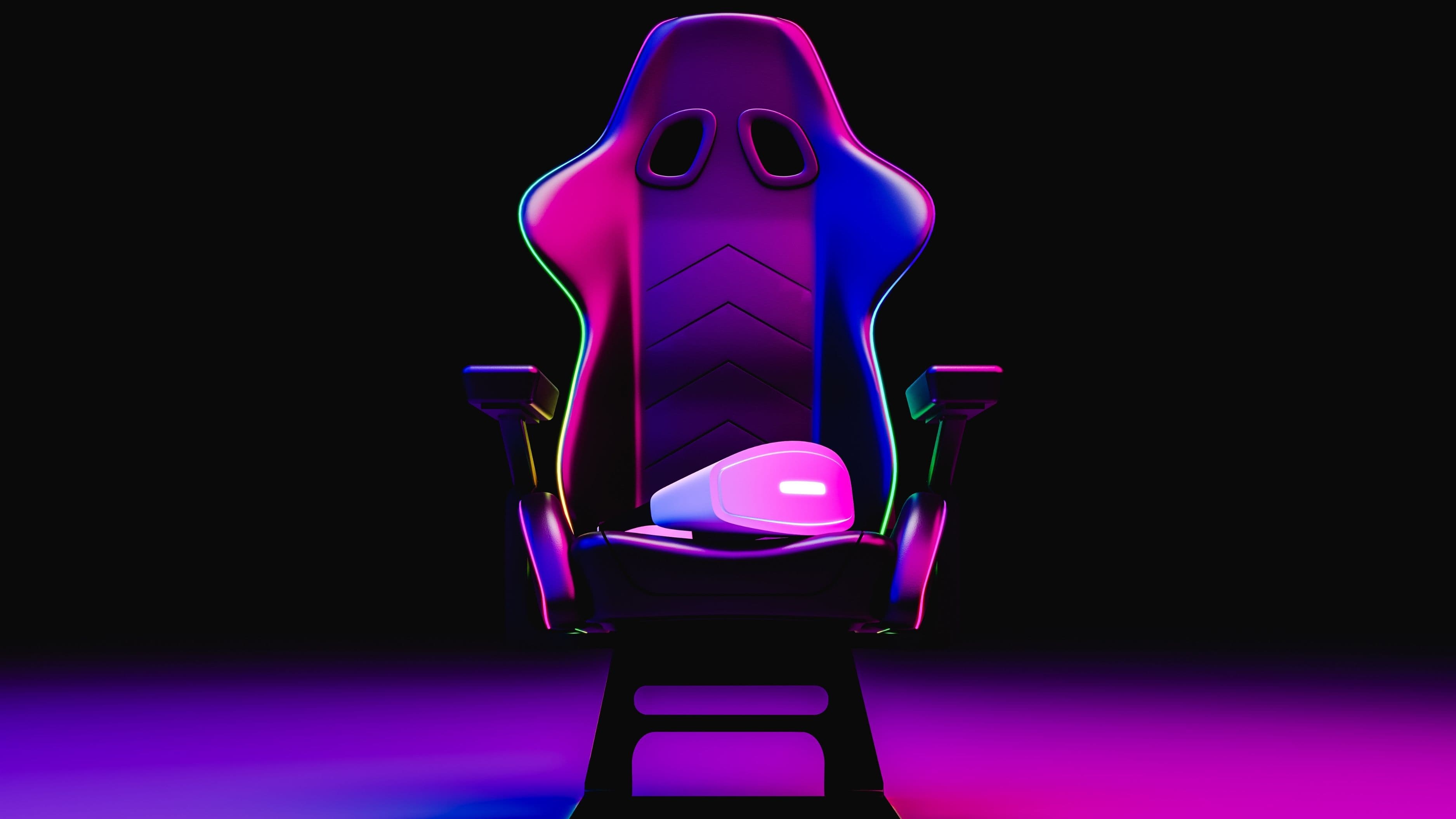
Gamers are sitting longer than ever. According to the Entertainment Software Association, the average American gamer plays 7–8 hours per week — and hardcore players regularly log 4–6 hour sessions in a single sitting. Prolonged poor posture is directly linked to chronic lower back pain, cervical strain, and even nerve compression issues like sciatica. The American Chiropractic Association estimates that back pain costs Americans $50 billion per year in medical bills and lost productivity. A quality gaming chair with proper lumbar and cervical support isn't a luxury — it's a proactive investment in your long-term health and performance. This guide breaks down the 10 best gaming chairs for comfort, back support, and extended play sessions across every budget.
Top 10 Best Gaming Chairs
S.No | Chair | Best For |
1. | Secretlab Titan Evo 2022 | All-day comfort and premium build quality |
2. | Herman Miller x Logitech Embody | Ergonomic excellence and spine health |
3. | Steelcase Leap V2 | Adaptive support for dynamic sitters |
4. | Noblechairs Hero | Heavy-duty build and real leather luxury |
5. | Razer Iskur V2 | Built-in lumbar and gaming-brand integration |
6. | DXRacer Formula Series | Budget-friendly entry-level gaming chairs |
7. | AndaSeat Kaiser 3 | Big and tall gamers needing extra space |
8. | RESPAWN 110 | Best value under $200 |
9. | Corsair TC100 Relaxed | Casual gamers wanting laid-back comfort |
10. | Autonomous ErgoChair Pro | Standing-desk users and hybrid workers |
Methodology
Each chair was evaluated across five key criteria:
Lumbar & cervical support — quality and adjustability of back support systems
Build quality & materials — frame construction, foam density, upholstery durability
Adjustability — armrest, recline, seat height, and tilt customization range
Long-session comfort — breathability, cushion retention after extended use
Value for price — cost relative to features, warranty, and longevity
Chairs were selected from a pool of 35+ models tested across user reviews, ergonomics expert assessments, and verified long-term ownership feedback.
Detailed Mini-Reviews
1. Secretlab Titan Evo 2022
Best for: Serious gamers who want premium comfort without going full office-chair
Price from: $449
Website: secretlab.co
The Secretlab Titan Evo 2022 is the benchmark by which all gaming chairs are measured. Its magnetic memory foam head pillow and integrated adjustable lumbar support system — a first-of-its-kind mechanism built directly into the seatback — eliminate the awkward external pillows that plague most competitors. The 4-way adjustable armrests, full-length recline (up to 165°), and NEO Hybrid Leatherette upholstery make this a chair designed with obsessive attention to detail.
Available in Small, Regular, and XL sizes, the Titan Evo accommodates a wide range of body types (up to 395 lbs on the XL). The cold-cure foam retains its shape remarkably well over years of use. Secretlab backs it with a 3-year warranty extendable to 5 years. If you're buying one gaming chair and keeping it for years, this is the one.
Pros:
Integrated magnetic lumbar — no external pillow needed
Available in three sizes for broad fit range
Exceptional cold-cure foam longevity
165° recline with smooth tilt mechanism
Cons:
NEO Hybrid Leatherette can get warm in summer
Premium price point
Assembly takes 30–45 minutes
2. Herman Miller x Logitech Embody
Best for: Gamers who prioritize spine health above all else
Price from: $1,795
Website: hermanmiller.com
The Herman Miller x Logitech Embody is not a gaming chair — it's a medically-informed ergonomic office chair with a gaming colorway and brand partnership. Designed with input from physicians, physical therapists, and ergonomists, the Embody's "Pixelated Support" backrest has hundreds of individually-moving support pixels that respond to your spine's micro-movements in real time. It is, quite simply, the most back-supportive seating product you can buy.
For gamers who suffer from existing back problems, sit 6+ hours daily, or simply refuse to compromise on ergonomics, the Embody pays for itself in avoided physiotherapy costs. The 12-year warranty and near-indestructible build quality mean this chair will outlast multiple generations of gaming hardware. The price is significant — but this is a multi-decade purchase.
Pros:
Unmatched spinal support technology
12-year comprehensive warranty
Breathable PostureFit SL backrest — virtually no heat buildup
Endorsed by ergonomics and medical professionals
Cons:
Very high price — not accessible to most budgets
No headrest included (sold separately)
Aesthetic may not suit gaming setups
3. Steelcase Leap V2
Best for: Gamers who move constantly and need adaptive back support
Price from: $1,299 (new) / $400–$600 refurbished
Website: steelcase.com
The Steelcase Leap V2 is the chair most ergonomics professionals reach for when asked "what do you actually sit in?" Its LiveBack technology mimics the natural movement of the spine, continuously changing shape as you shift positions. Unlike static gaming chairs that lock you into one posture, the Leap actively supports every position — leaning forward, sitting back, twisting slightly — without requiring manual adjustment.
The Leap's lower back firmness control and upper back force adjustment give you granular control over support that gaming-specific chairs simply don't offer. Buying refurbished (widely available from office liquidators) brings the price into a much more manageable range while the quality remains fully intact. For dynamic, fidgety sitters, there's no better chair on the market.
Pros:
LiveBack adaptive spine technology — best for active sitters
Highly granular lumbar and upper back adjustment
Excellent refurbished market availability
Proven long-term durability in commercial office environments
Cons:
New pricing is very high
Purely functional aesthetic — won't match a gaming setup visually
No recline past ~120°
4. Noblechairs Hero
Best for: Gamers who want genuine leather luxury and a robust, heavy-duty build
Price from: $499
Website: noblechairs.com
Noblechairs occupies the premium tier of purpose-built gaming chairs, and the Hero is their flagship. Available in genuine leather, PU leather, and fabric variants, the Hero uses a cold foam seat with higher density than most competitors — resulting in a cushion that won't flatten after a year of daily use. The steel frame supports up to 396 lbs, and the broader seat and shoulder design make it genuinely comfortable for larger-framed users.
The Hero's integrated adjustable lumbar cushion and 4D armrests (height, depth, width, and angle adjustable) give it customization depth that rivals chairs costing twice as much. The genuine leather variant develops a beautiful patina over time, making it feel more like a premium furniture piece than gaming gear.
Pros:
Genuine leather option rare at this price tier
High-density cold foam with exceptional longevity
4D armrests — highly customizable
Supports up to 396 lbs with a steel frame
Cons:
Genuine leather variant requires conditioning maintenance
Heavy chair — difficult to move frequently
Lumbar cushion is external, not integrated
5. Razer Iskur V2
Best for: Razer ecosystem users and gamers wanting strong brand integration
Price from: $499
Website: razer.com
Razer's Iskur V2 represents a significant maturation of their gaming chair line. The standout feature is its multi-layered lumbar support system — a custom-engineered mechanism built into the seatback that provides firm, adjustable support without a removable pillow. The memory foam head cushion and high-density foam seat padding deliver comfort that holds up across marathon sessions.
The Iskur V2's EPU (engineered polyurethane) upholstery is more durable and easier to clean than standard PU leather, and the chair's aesthetic — while unmistakably Razer — is more restrained than previous generations. The 4D armrests and multi-tilt mechanism round out a well-executed package that earns its price tag.
Pros:
Integrated lumbar support — no external pillow
EPU upholstery more durable than standard PU leather
Strong Razer ecosystem aesthetic cohesion
Memory foam head cushion included
Cons:
Premium price for a gaming-brand chair
Razer green colorway not for everyone
Heavier than competitors at similar price
6. DXRacer Formula Series
Best for: First-time gaming chair buyers on a budget
Price from: $299
Website: dxracer.com
DXRacer essentially invented the modern gaming chair category, and the Formula Series remains their most popular product for good reason. At ~$300, it delivers a genuine racing-seat aesthetic, adjustable lumbar and neck pillows, a reclining backrest, and a sturdy base — everything expected of a gaming chair, at the most accessible price point in this guide.
The foam quality and upholstery durability won't match premium competitors, and the support pillows are external rather than integrated. But for students, casual gamers, or anyone not ready to commit $400+, the Formula Series is a solid, reliable entry point that will meaningfully outperform a standard desk chair.
Pros:
Most accessible price point for a dedicated gaming chair
Classic racing-seat aesthetic
Wide color and style selection
Brand reputation and established customer support
Cons:
Foam compresses more quickly than premium options
External support pillows less effective than integrated systems
PU leather shows wear faster at this price tier
7. AndaSeat Kaiser 3
Best for: Big and tall gamers who struggle to find a properly-sized chair
Price from: $399
Website: andaseat.com
The AndaSeat Kaiser 3 is purpose-built for larger-framed gamers and deserves far more attention than it gets. The XL version supports up to 440 lbs, offers a wider seat pan, taller backrest, and higher armrests than virtually any competitor at this price. The AD+ Premium Soft Leather upholstery is softer and more premium-feeling than most PU alternatives, and the magnetic memory foam headrest is thoughtfully designed.
The Kaiser 3's 4D armrests, independent seat tilt, and adjustable lumbar pillow system combine to give taller or heavier users a level of customization usually unavailable without spending $1,000+. AndaSeat's customer service reputation has also improved considerably in recent years, backed by a solid 4-year warranty.
Pros:
Best-in-class sizing for big and tall users (up to 440 lbs)
AD+ Premium Soft Leather feels genuinely high-end
4-year warranty — longest at this price tier
4D armrests with full range adjustment
Cons:
Lumbar pillow is external, not integrated
Large footprint — needs significant desk space
Assembly instructions could be clearer
8. RESPAWN 110
Best for: Budget shoppers who want decent support under $200
Price from: $149
Website: respawn-products.com
The RESPAWN 110 is the most accessible quality gaming chair in this guide. At around $149, it delivers a reclining backrest (up to 130°), adjustable lumbar and headrest pillows, padded armrests, and a footrest — features you'd struggle to find at this price from any competitor. The PU leather construction is exactly what you'd expect at this tier, but the foam holds reasonably well for moderate use.
For students, first-time buyers, or secondary setups (a streaming room, guest gaming station, etc.), the RESPAWN 110 is genuinely hard to beat. Don't expect it to last a decade, but for 2–3 years of regular use at this price, the value proposition is clear.
Pros:
Footrest included at this price — exceptional value
Reclining backrest up to 130°
Available in a wide range of colors
Easy assembly
Cons:
Foam loses shape faster than mid/premium options
Lumbar support is pillow-based only
Not suitable for heavy users (max 275 lbs)
9. Corsair TC100 Relaxed
Best for: Casual gamers who prefer a laid-back, relaxed seating posture
Price from: $249
Website: corsair.com
The Corsair TC100 Relaxed is designed around a different philosophy than most gaming chairs: rather than holding you in an upright posture, it embraces the natural tendency to lean back. The extra-wide seat pan, lower back angle, and softer cushioning create a couch-like feel that works exceptionally well for longer, more casual sessions — streaming, watching content, or relaxed single-player gaming.
The leatherette upholstery is among the softest at this price point, and the chair's adjustable recline (up to 150°) with tilt lock lets you find your preferred angle with ease. If you spend more time relaxing in your gaming chair than grinding ranked matches, the TC100 Relaxed matches your actual use case better than most "performance" alternatives.
Pros:
Extra-wide seat pan for relaxed sitting styles
Soft, comfortable leatherette upholstery
150° recline well-suited for watching/casual play
Clean Corsair aesthetic fits most setups
Cons:
Less supportive for upright, active gaming postures
Lumbar support minimal for prolonged typing/work use
Armrests only 2D adjustable (height and angle)
10. Autonomous ErgoChair Pro
Best for: Gamers who work from home and need a hybrid gaming/office solution
Price from: $499
Website: autonomous.ai
The Autonomous ErgoChair Pro bridges the gap between gaming chair and ergonomic office chair better than almost anything at its price. Its woven mesh back provides exceptional breathability — ideal for warm climates or heated gaming sessions — while the fully adjustable lumbar support, recline tension, seat depth, and armrests give it office-chair-level customization at a gaming-accessible price.
The ErgoChair Pro's naked mesh back means zero heat buildup, a significant advantage over leatherette competitors during long sessions. The chair's aesthetic is clean and modern rather than overtly "gamer," making it equally at home in a home office as a gaming setup. For remote workers who also game seriously, this dual-purpose value is hard to match.
Pros:
Full mesh back — best breathability in this guide
Extensive adjustability rivaling chairs twice the price
Professional aesthetic works for office video calls
Seat depth adjustment — rare at this price
Cons:
Mesh may feel firmer than foam-backed alternatives
Less aesthetic personality for dedicated gaming setups
Customer service response times can be slow
Comparison Summary
Chair | Price | Support Type | Best Audience | Recline | Weight Limit |
Secretlab Titan Evo | $449 | Integrated lumbar | All gamers | 165° | 395 lbs |
HM x Logitech Embody | $1,795 | Adaptive pixels | Spine-health priority | 115° | 300 lbs |
Steelcase Leap V2 | $1,299 | LiveBack adaptive | Dynamic sitters | 120° | 400 lbs |
Noblechairs Hero | $499 | Adjustable cushion | Larger frames/luxury | 135° | 396 lbs |
Razer Iskur V2 | $499 | Integrated lumbar | Razer users | 152° | 299 lbs |
DXRacer Formula | $299 | External pillows | Entry-level buyers | 135° | 250 lbs |
AndaSeat Kaiser 3 | $399 | Adjustable cushion | Big & tall gamers | 160° | 440 lbs |
RESPAWN 110 | $149 | External pillows | Budget shoppers | 130° | 275 lbs |
Corsair TC100 | $249 | External cushion | Casual/relaxed users | 150° | 300 lbs |
Autonomous ErgoChair Pro | $499 | Full adjustable | WFH hybrid users | 145° | 300 lbs |
Key takeaway: For pure gaming comfort, the Secretlab Titan Evo is the best all-around choice. For spine health above all, Herman Miller Embody is unmatched. For big and tall users, AndaSeat Kaiser 3 is purpose-built. For tight budgets, RESPAWN 110 delivers the most features per dollar.
Buying Guide: How to Choose the Right Gaming Chair
Who needs this guide? Anyone gaming 3+ hours per session, experiencing back or neck fatigue after long sits, working from home on a gaming setup, or upgrading from a standard office or dining chair.
How gaming chair support works: Quality gaming chairs address three critical support zones — lumbar (lower back), thoracic (mid-back), and cervical (neck). Integrated support systems (built into the chair frame) are consistently more effective than external cushion-based systems, which shift during use. Seat foam density determines how long a chair stays comfortable — high-density cold-cure foam retains shape far longer than standard foam.
What to consider before buying:
Body type: Check weight limits and seat width — many chairs are designed for average frames and underserve taller or heavier users
Session length: 1–2 hour casual sessions → mid-range is fine; 4–6+ hour daily sessions → invest in integrated lumbar support
Posture style: Do you sit upright, lean back, or shift constantly? Match chair design to your natural behavior
Material: Mesh = breathable but firmer; leatherette = softer but warmer; genuine leather = premium but requires maintenance
Dual use: If you work from home in the same chair, prioritize ergonomic adjustability over gaming aesthetics
Pricing Overview
Tier | Price Range | Best Chairs |
Budget | $100–$299 | RESPAWN 110, DXRacer Formula |
Mid-Range | $300–$549 | Secretlab Titan Evo, Noblechairs Hero, Razer Iskur V2, AndaSeat Kaiser 3, Autonomous ErgoChair Pro |
Premium | $550–$1,000+ | Steelcase Leap V2 (refurbished), Herman Miller Embody |
DIY vs. Professional Setup: Most gaming chairs ship flat-packed and require 30–60 minutes of self-assembly. Tools are included. For ergonomic chairs like the Embody or Leap, many sellers offer professional delivery and fitting — worth requesting if you're spending $1,000+. Refurbished ergonomic chairs from certified dealers (like Crandall Office or Madison Seating) offer near-new quality at 40–60% off retail.
FAQ
Q: Are gaming chairs actually good for your back, or is it just marketing? A: It depends heavily on the chair. Budget gaming chairs with external foam pillows offer minimal ergonomic benefit over a decent office chair. However, premium chairs with integrated lumbar systems, adjustable seat depth, and adaptive back support (like the Secretlab Titan Evo or Steelcase Leap) deliver genuine ergonomic value. The racing-seat aesthetic is marketing — the support system is what matters.
Q: Should I buy a gaming chair or an ergonomic office chair? A: If you game 4+ hours daily or work from home in the same chair, a proper ergonomic chair (Herman Miller, Steelcase) will support your back better over time. If you want gaming aesthetics with solid comfort and don't have chronic back issues, a premium gaming chair like the Secretlab Titan Evo hits the sweet spot.
Q: How long should a quality gaming chair last? A: A mid-range chair ($300–$500) should last 4–6 years with regular use. Premium chairs ($500+) with high-density cold foam and steel frames routinely last 8–12 years. Herman Miller and Steelcase chairs are designed for 12+ years of commercial use.
Q: What's the best gaming chair for someone over 6 feet tall? A: The AndaSeat Kaiser 3 XL and Secretlab Titan Evo XL are purpose-built for taller users. The Steelcase Leap V2 also accommodates height well. Avoid chairs with a stated height max below your own — the backrest won't reach your shoulders correctly.
Q: Is leatherette or fabric better for gaming chairs? A: Fabric (including mesh) breathes better and stays cooler — ideal for warm environments or long sessions. Leatherette is easier to clean and looks more premium but retains heat. For 4+ hour sessions, fabric or mesh is generally more comfortable. Noblechairs and Secretlab both offer excellent fabric variants of their top models.