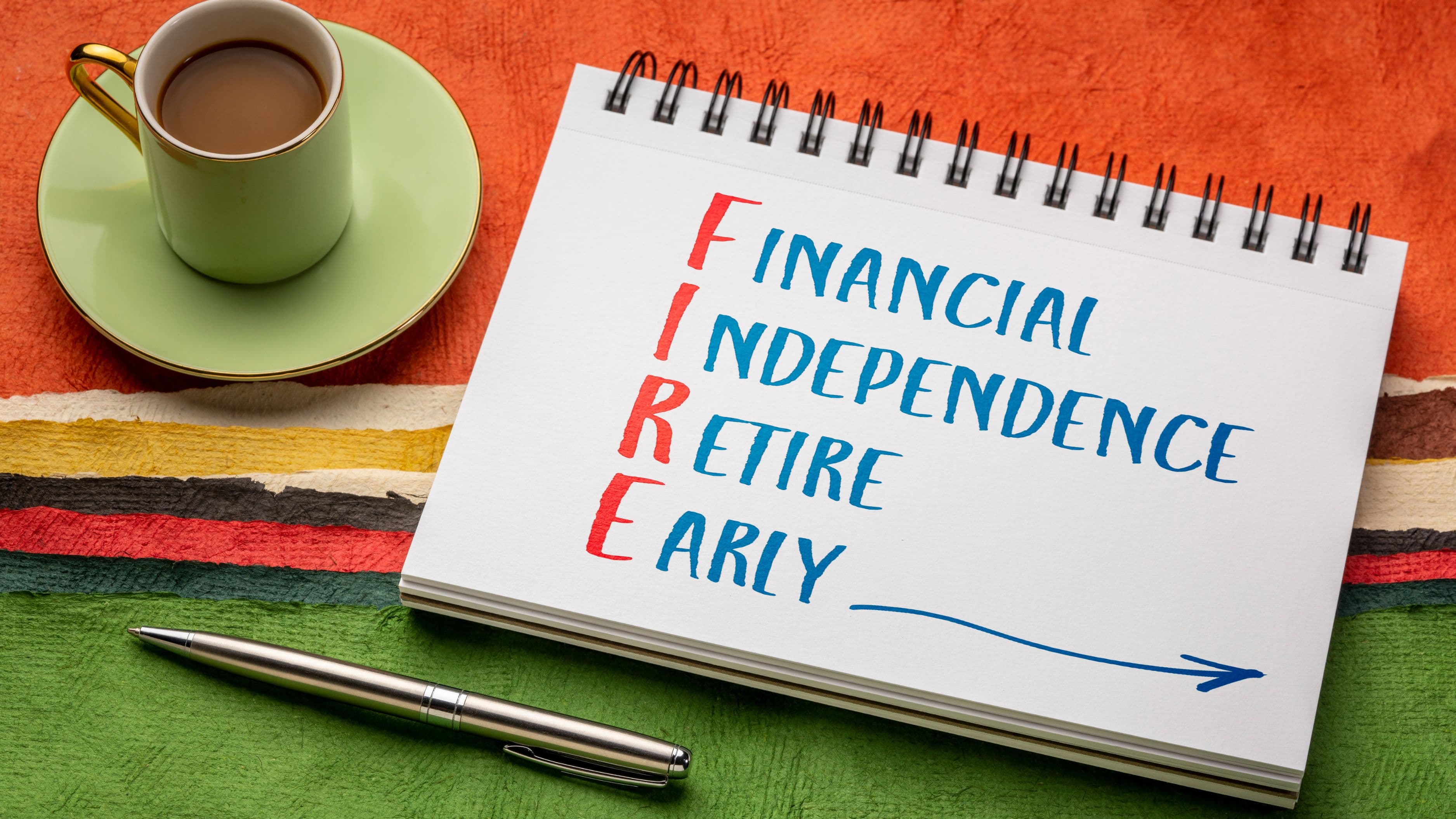
This list cuts through the noise. These are the 10 strategies that consistently show up in the portfolios, habits, and decisions of people who actually reach financial independence — not just talk about it.
Top 10 FIRE Strategies at a Glance
Calculate your FIRE number first
Max out tax-advantaged accounts aggressively
Increase your savings rate beyond the standard 15%
Build income from multiple streams
Invest in low-cost index funds consistently
Cut housing costs — your biggest lever
Choose the right FIRE variant for your life
Avoid lifestyle inflation as income grows
Build a realistic withdrawal strategy
Track net worth, not just income
1. Calculate Your FIRE Number First
Before you can work toward financial independence, you need to know what you're actually working toward. Your FIRE number is the amount of invested assets you need to cover your living expenses indefinitely — typically calculated using the 4% rule. Multiply your annual expenses by 25, and you have a rough target.
If you spend $50,000 per year, your FIRE number is $1.25 million. If you spend $40,000, it's $1 million. The math sounds simple, but most people skip this step and end up saving without a clear destination. Knowing your number gives every financial decision a context — every extra $10,000 saved is a measurable step forward, not just a vague improvement.
Revisit and refine the number as your life changes. Early in the process, a ballpark estimate is fine. As you get closer, you'll want to stress-test it against different inflation rates, sequence-of-return scenarios, and lifestyle scenarios.
Key benefit: Converts an abstract goal into a specific, trackable target that makes every financial decision easier to evaluate.
Tip: Use a FIRE calculator (like those at Personal Capital or cFIREsim) to model different scenarios, including varying your spending, expected returns, and retirement age.
2. Max Out Tax-Advantaged Accounts Aggressively
Tax-advantaged accounts are the single most powerful compounding engine available to everyday investors. 401(k)s, IRAs, Roth IRAs, HSAs, and 403(b)s all let your money grow in ways that taxable brokerage accounts simply can't match — either through tax-deferred growth, tax-free withdrawals, or both.
Maxing these out annually should be the first priority after building a basic emergency fund. In 2024, you can contribute up to $23,000 to a 401(k) and $7,000 to an IRA (with catch-up contributions allowed if you're 50+). An HSA adds another $4,150 for individuals or $8,300 for families — and it's the only account in the system that's triple tax-advantaged (contributions pre-tax, growth tax-free, withdrawals tax-free for medical costs).
Many FIRE-focused investors use a Roth conversion ladder to access tax-advantaged funds before the traditional penalty-free withdrawal age of 59½. The strategy involves converting traditional IRA or 401(k) money to a Roth each year, then accessing those converted funds five years later — giving early retirees a bridge between early retirement and traditional retirement account access.
Key benefit: Reduces your current tax burden while dramatically accelerating long-term wealth accumulation through compounding.
Tip: If your employer offers a 401(k) match, treat that as a guaranteed return and contribute at least enough to capture the full match before doing anything else.
3. Increase Your Savings Rate Beyond the Standard 15%
Mainstream financial advice says save 10–15% of your income for retirement. FIRE adherents typically save 40–70%. That gap isn't arbitrary — it's the single biggest determinant of when you reach financial independence, more than investment returns, market conditions, or income level.
The math is stark. At a 15% savings rate, traditional retirement around age 65 is the realistic outcome. At 50%, you can reach financial independence in roughly 17 years. At 65%, it's closer to 10. The more of your income you keep and invest, the faster you both accumulate assets and reduce your required FIRE number (because lower spending means lower ongoing expenses to fund).
Getting to a 40%+ savings rate usually requires two things working together: intentional reduction of major expenses and, ideally, income growth. Slashing discretionary spending alone rarely gets you there — you also need to work on earning more over time. The combination of higher income and controlled spending is what produces the outsized savings rates FIRE achievers are known for.
Key benefit: Savings rate is the most controllable variable in the FIRE equation — and it has a compounding effect that goes beyond just accumulating more money.
Tip: Track your savings rate monthly (total savings ÷ gross income). Watching it trend upward is one of the most motivating metrics in personal finance.
4. Build Income From Multiple Streams
Relying on a single paycheck is both a financial fragility risk and a ceiling on how fast you can reach FIRE. Most people who achieve early financial independence have more than one income stream in place during the accumulation phase — whether that's a side hustle, freelance work, rental income, dividends, or a side business.
Multiple income streams matter for two reasons. First, they accelerate the timeline by putting more dollars to work faster. Second, they reduce the psychological and financial risk of job loss — a layoff that derails a single-income household is a temporary setback in a multi-income one. Some FIRE achievers also build income streams that continue generating money in retirement, which reduces the amount they need to withdraw from invested assets.
You don't need a side hustle empire to benefit from this. Even one additional income stream generating $500–$1,000/month can meaningfully shorten a FIRE timeline when invested consistently. The key is directing that income straight into investment accounts rather than absorbing it into lifestyle spending.
Key benefit: Accelerates accumulation, adds financial resilience, and can reduce withdrawal pressure in retirement.
Tip: The best secondary income stream is usually the one closest to your existing expertise — consulting, freelancing, or monetizing knowledge tends to produce income faster than building something from scratch.
5. Invest in Low-Cost Index Funds Consistently
The investment strategy used by the vast majority of successful FIRE practitioners isn't complicated: buy low-cost, diversified index funds — primarily through Vanguard, Fidelity, or Schwab — and add to them consistently regardless of market conditions.
The core argument for index funds in a FIRE context is well-supported by data. Over long periods, the broad market (measured by something like the S&P 500 or a total market index) has consistently outperformed the majority of actively managed funds, especially after accounting for fees. A fund with a 0.03% expense ratio vs. one with a 1% expense ratio sounds like a small difference — but over 20–30 years, that gap can represent hundreds of thousands of dollars in lost compounding.
Dollar-cost averaging — investing a fixed amount at regular intervals regardless of price — removes the temptation to time the market and keeps you buying through downturns when prices are lower. The FIRE community's standard portfolio varies, but a common starting point is a three-fund portfolio: a US total market index fund, an international index fund, and a bond index fund, with allocation shifting as you approach your target date.
Key benefit: Low fees, consistent strategy, and market-matched returns over time — without the complexity or cost of active management.
Tip: Don't let market dips break your routine. Some of the best compounding gains come from continuing to invest through downturns rather than pausing or selling.
6. Cut Housing Costs — Your Biggest Lever
Housing is the single largest expense for most households — often 30–40% of take-home pay. In a FIRE framework, it's also your single biggest lever for increasing your savings rate. Even a modest reduction in housing cost produces outsized results because it affects both your current savings rate and your projected retirement expenses.
The FIRE community has developed a range of housing strategies to address this. House hacking — buying a multi-unit property, living in one unit, and renting out the others — is one of the most powerful, effectively reducing or eliminating housing costs while building equity. Geographic arbitrage (living in a lower cost-of-living area, especially if you have remote income) is another widely used approach.
Even less dramatic steps matter significantly. Staying in your current home longer instead of upsizing, refinancing at a better rate, taking on a roommate, or choosing to rent in a more affordable neighborhood when flexibility allows — all of these reduce the largest line item in most budgets. The psychological challenge is that housing upgrades are socially normalized at every income level, making it easy to spend more than necessary without it feeling like a choice.
Key benefit: Reducing housing costs often produces a bigger savings rate improvement than any other single change.
Tip: Calculate what a 10% reduction in your housing costs would mean for your savings rate and projected FIRE timeline. For most people, the number is surprising enough to motivate action.
7. Choose the Right FIRE Variant for Your Life
FIRE isn't one-size-fits-all. The umbrella term covers several distinct approaches, each with different spending targets, lifestyle implications, and risk profiles. Choosing the wrong variant — especially pursuing Lean FIRE when you actually need Fat FIRE — is one of the most common reasons people either burn out mid-journey or retire underfunded.
The main variants break down like this:
Lean FIRE targets a minimal lifestyle with annual expenses typically under $40,000. It requires a smaller portfolio (often $500K–$1M) but demands tight, consistent frugality indefinitely.
Fat FIRE targets a comfortable or even luxurious retirement with annual expenses of $100,000+, requiring a $2.5M–$4M+ portfolio. The timeline is longer, but the lifestyle is largely unconstrained.
Barista FIRE (or Coast FIRE) involves reaching a point where part-time or lower-stress work covers current expenses while invested assets continue to grow untouched. It's a middle path that reduces burnout without requiring a full portfolio.
Chubby FIRE sits between Lean and Fat — typically $80,000–$100,000/year in retirement spending with a $2M–$2.5M portfolio target.
Picking your variant shapes every other decision in the process: your FIRE number, your savings rate target, your timeline, and what retirement actually looks like day-to-day.
Key benefit: Aligns your strategy with your actual lifestyle goals, preventing either unnecessary sacrifice or reaching retirement underprepared.
Tip: Be honest about what kind of life you actually want in retirement before committing to a variant. Lean FIRE sounds appealing when you're motivated, but it requires sustained frugality that doesn't suit everyone long-term.
8. Avoid Lifestyle Inflation as Income Grows
Lifestyle inflation is what happens when spending grows proportionally with income — more salary, bigger apartment, newer car, more dining out. It's socially invisible because everyone around you is doing it too, but it's one of the most reliable ways to stay on a 40-year work trajectory even with a high income.
High earners who fail to reach financial independence almost universally share this pattern: income went up significantly over time, but expenses tracked closely behind it, leaving the savings rate roughly static. A household earning $200,000 that spends $180,000 is in a worse FIRE position than a household earning $80,000 that spends $40,000.
The practical defense against lifestyle inflation is deciding in advance what percentage of any income increase goes to investing versus spending. A common approach is to direct 50–80% of every raise or windfall directly into investment accounts before it hits a checking account and starts to feel like available money. Automating investments removes the temptation from the equation entirely.
Key benefit: Preserves and accelerates savings rate growth as income increases, compressing the FIRE timeline without requiring deeper cuts to current quality of life.
Tip: Before any major lifestyle upgrade (new car, housing upgrade, regular subscriptions), calculate the opportunity cost in years added to your working life. It makes the decision more concrete.
9. Build a Realistic Withdrawal Strategy
Reaching your FIRE number is the halfway point. The other half is making sure you don't run out of money in retirement — which, for early retirees, can mean funding 40–50 years of expenses rather than the 20–25 years traditional retirement planning assumes.
The 4% rule — the foundational withdrawal guideline for FIRE — says you can withdraw 4% of your portfolio annually with a high historical probability of your money lasting 30 years. But for early retirees with longer time horizons, many FIRE practitioners use a more conservative 3–3.5% withdrawal rate to reduce sequence-of-returns risk (the danger of a major market downturn early in retirement depleting your portfolio before it has time to recover).
Other strategies commonly used in early retirement include flexible spending (reducing withdrawals in down years to protect the portfolio), holding 1–2 years of expenses in cash or short-term bonds as a buffer, and maintaining some form of part-time or passion income to reduce withdrawal pressure in early years. The goal isn't to predict the market — it's to build enough flexibility into the plan that a bad decade early in retirement doesn't derail everything.
Key benefit: A sound withdrawal strategy is what separates a sustainable early retirement from one that requires going back to work.
Tip: Model your withdrawal strategy through a tool like cFIREsim or FIRECalc using historical market data and multiple scenarios before treating any number as final.
10. Track Net Worth, Not Just Income
Income tells you what you earn. Net worth tells you where you actually stand. For FIRE purposes, net worth — total assets minus total liabilities — is the number that actually matters, and tracking it regularly is one of the clearest behavioral differences between people who reach FIRE and people who don't.
Tracking net worth monthly creates a direct feedback loop between your decisions and your progress. It makes the impact of debt paydown, investment growth, and savings rate changes visible in a way that income statements alone never do. It also exposes problem areas — a high income paired with stagnant or declining net worth is a clear signal that spending, debt, or lifestyle inflation is eating the gains.
Tools like Empower (formerly Personal Capital), YNAB, or even a simple spreadsheet make net worth tracking low-effort once set up. The key is consistency: tracking it on the same date each month and watching the trend line over time, not reacting to any single month's fluctuation.
Key benefit: Shifts focus from earning to building, which is the actual mechanism behind financial independence.
Tip: Celebrate net worth milestones — $100K, $250K, $500K — as meaningful markers. Each one is a real inflection point in how much your money is doing for you independent of your labor.
Quick Takeaway
FIRE isn't about extreme frugality or luck — it's about applying a consistent system to the right levers. The people who reach financial independence earliest tend to do a few things very well: they know their number, they keep their savings rate high, they invest simply and consistently, and they don't let income growth drive equivalent spending growth. Start with whichever of these ten you're furthest behind on. That's where your biggest gains are.
FAQ
What income do I need to pursue FIRE? There's no minimum income required, but higher income makes the timeline significantly shorter. Many people begin their FIRE journey on average salaries by focusing on savings rate and expense reduction. That said, income growth is one of the most effective accelerators and something most FIRE practitioners actively pursue.
Is the 4% rule still reliable? It's a widely used guideline backed by historical data (Bengen's original research, later expanded by the Trinity Study), but it's not a guarantee. For early retirees with longer time horizons, many planners recommend 3–3.5% as a more conservative alternative. Running your own scenario analysis is always better than applying any rule mechanically.
Can I pursue FIRE while paying off debt? Yes, but prioritization matters. High-interest debt (credit cards, personal loans above 7–8%) should generally be paid off before aggressive investing. Lower-interest debt (mortgage, student loans under 4–5%) can often be maintained while still investing, since expected market returns historically exceed those interest rates.
How does FIRE work if I have kids? Having children increases expenses and often extends the timeline, but doesn't make FIRE impossible. Adjustments typically include accounting for education costs, increasing your FIRE number to reflect higher ongoing expenses, and potentially targeting Barista FIRE or a later target date rather than Lean FIRE.
What's the biggest mistake people make pursuing FIRE? Underestimating expenses in retirement is the most consequential mistake. Many people plan based on current spending without accounting for healthcare (especially pre-Medicare), travel or lifestyle changes in retirement, inflation over a 40+ year horizon, or unexpected large expenses. Building a generous buffer into your FIRE number is nearly always worth it.
Do I need a financial advisor to pursue FIRE? Most FIRE practitioners manage their own investments using index funds, which are straightforward enough to handle independently. A fee-only financial advisor (one who charges flat fees rather than commissions) can be valuable for tax planning, withdrawal strategy, and stress-testing your plan — but is not required to get started.
The Bottom Line
The FIRE movement has a reputation for being extreme, but at its core it's just a more intentional approach to the financial decisions everyone is making anyway. You don't have to give up everything you enjoy or work 80-hour weeks to pursue it. You do have to be deliberate about your savings rate, your investments, your housing costs, and your spending as income grows. The 10 strategies above are where that deliberateness pays off most.
Pick your FIRE number. Choose your variant. Max your tax-advantaged accounts. Everything else follows from there.
📚 Sources
Mr. Money Mustache – The Shockingly Simple Math Behind Early Retirement: https://www.mrmoneymustache.com/2012/01/13/the-shockingly-simple-math-behind-early-retirement/
Investopedia – FIRE Movement overview and withdrawal strategies: https://www.investopedia.com/terms/f/financial-independence-retire-early-fire.asp
Vanguard – The case for low-cost index fund investing: https://investor.vanguard.com/investor-resources-education/index-funds
cFIREsim – Free FIRE simulation tool using historical market data: https://www.cfiresim.com
IRS – 2024 retirement account contribution limits: https://www.irs.gov/newsroom/401k-limit-increases-to-23000-for-2024-ira-limit-rises-to-7000
The Trinity Study (original via AAII) – Safe withdrawal rate research: https://www.aaii.com/journal/article/retirement-savings-choosing-a-withdrawal-rate-that-is-sustainable
Empower (Personal Capital) – Net worth tracking tool: https://www.empower.com/personal-investors/net-worth-calculator