
Here are the 10 technologies worth watching closely – what they are, why they matter, and what they mean for everyday people.
Top 10 at a Glance
Agentic AI Systems
Spatial Computing and Mixed Reality
Next-Generation Energy Storage
Quantum Computing (for real this time)
Autonomous Vehicles and Robotaxi Networks
Personalized Medicine and Genomics
Small Modular Nuclear Reactors
Neural Interfaces and Brain-Computer Technology
Ambient Intelligence and Invisible Computing
Advanced Humanoid Robotics
1. Agentic AI Systems
What it is: AI that doesn't just answer questions – it takes actions. Agentic AI can plan multi-step tasks, use tools, browse the web, write and run code, and complete complex workflows with minimal human input.
Why it matters: The jump from AI as a search engine to AI as an autonomous worker is significant. Instead of asking an AI a question and then doing something with the answer, agentic systems handle entire workflows end-to-end. Scheduling, research, document drafting, customer follow-up – these are already being handed to AI agents in early enterprise deployments.
How it applies to you: If you're in any knowledge work role – marketing, operations, finance, legal – you'll interact with these systems sooner than you think. The people who understand how to direct and review agentic AI will have a serious edge over those who don't.
Key benefit: Productivity multiplier that scales with complexity. The more moving parts a task has, the more value an agent provides.
Watch for: Reliability issues. Agents make mistakes that compound when they're unsupervised. Human oversight isn't going away – it's shifting.
2. Spatial Computing and Mixed Reality
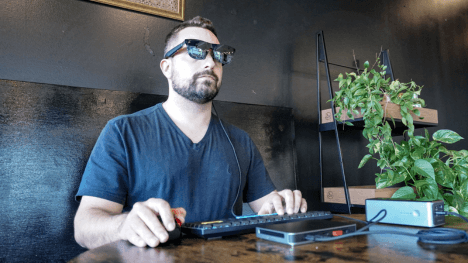
What it is: Computing that blends the digital and physical worlds through headsets, smart glasses, and environmental sensors – replacing flat screens with 3D digital objects that exist in your physical space.
Why it matters: Spatial computing is moving from a niche gaming and enterprise tool to a broader platform. With Apple Vision Pro establishing a high-end reference point and more affordable competitors entering the market, the form factor is becoming real consumer hardware, not just concept demos.
How it applies to you: Remote collaboration that feels less like a video call and more like being in the same room. Training simulations. Navigation overlaid on your actual environment. Hands-free workflows for tradespeople and surgeons. The applications span almost every industry.
Key benefit: Removes the screen as an intermediary between you and digital information, making some tasks dramatically faster and more intuitive.
Watch for: The killer use case for consumers is still being discovered. Enterprise adoption is happening faster than consumer adoption right now.
3. Next-Generation Energy Storage
What it is: New battery chemistries and grid-scale storage technologies that go beyond current lithium-ion limits – including solid-state batteries, sodium-ion batteries, and long-duration grid storage systems.
Why it matters: The energy transition runs on storage. Solar and wind are cheap, but intermittent. Storing that energy efficiently – at scale, for long durations, using materials that don't depend on rare minerals – is the linchpin problem. Multiple approaches are reaching commercialization simultaneously.
How it applies to you: Cheaper, longer-range electric vehicles. Home battery systems that actually make financial sense. Grid reliability as renewable penetration increases. The shift in energy economics flows downstream into every utility bill.
Key benefit: Enabling renewable energy at scale without the reliability tradeoff that has historically slowed adoption.
Watch for: Solid-state battery manufacturing – several automakers have set commercialization timelines in the 2025–2027 range, and whether those hold will be telling.
4. Quantum Computing (For Real This Time)
What it is: Computers that use quantum mechanical phenomena to perform certain types of calculations exponentially faster than classical computers. The key word is "certain" – quantum computers aren't better at everything, but for specific problem types they're transformatively faster.
Why it matters: Quantum computing has been "five years away" for a long time. But the number of usable qubits is climbing, error correction is improving, and major players – Google, IBM, Microsoft – are moving from research to early commercial deployment for specific workloads.
How it applies to you: The most immediate real-world impact is in drug discovery, materials science, logistics optimization, and cryptography. The encryption that protects your data today may need to be replaced as quantum capabilities scale – a transition already being planned by security teams.
Key benefit: Solving optimization and simulation problems that would take classical computers longer than the age of the universe.
Watch for: Post-quantum cryptography standards – NIST finalized its first set of quantum-resistant encryption standards, which will matter for anyone dealing with sensitive data long-term.
5. Autonomous Vehicles and Robotaxi Networks
What it is: Self-driving vehicles that navigate without human input – ranging from highway autopilot systems to fully driverless robotaxis operating in urban geofenced zones.
Why it matters: Waymo is running fully driverless rides in multiple U.S. cities right now. Tesla's autonomous driving features are improving with each software update. The technology is past the conceptual stage and into operational deployment, with expansion happening city by city.
How it applies to you: Cheaper, more available transportation in participating cities. Freight and delivery automation affecting logistics costs and timelines. Long-term implications for car ownership, insurance, urban planning, and commercial driving jobs.
Key benefit: Mobility on demand with reduced cost and friction – plus safety improvements in corridors where human error causes the most accidents.
Watch for: Regulatory patchwork. State-by-state rules vary dramatically, and the pace of legal framework development is lagging behind the technology.
6. Personalized Medicine and Genomics
What it is: Medical treatment tailored to your specific genetic makeup, microbiome, lifestyle, and health history – moving away from one-size-fits-all treatment protocols toward interventions designed for individuals.
Why it matters: Genomic sequencing costs have dropped by orders of magnitude in the past decade. Combined with advances in proteomics, wearable health monitoring, and large-scale biobank data, doctors now have tools to predict, prevent, and treat disease in ways that weren't possible even five years ago.
How it applies to you: More accurate cancer screening and treatment. Pharmacogenomics – knowing in advance which medications will work for your specific biology instead of trialing them. Preventive interventions based on genetic risk profiles before symptoms appear.
Key benefit: Higher treatment efficacy, fewer side effects, earlier intervention.
Watch for: Data privacy implications. Your genomic data is uniquely identifying and permanent. The policy and legal framework for protecting it is still catching up.
7. Small Modular Nuclear Reactors (SMRs)
What it is: Nuclear reactors designed to be smaller, faster to build, and more flexible in deployment than conventional large-scale plants – standardized units that can be factory-manufactured and deployed where needed.
Why it matters: Nuclear is the only carbon-free energy source that works regardless of weather conditions, producing consistent baseload power. SMRs address the two biggest barriers to nuclear expansion: construction time and capital cost. Multiple designs are in various stages of regulatory approval and early deployment globally.
How it applies to you: Reliable zero-carbon electricity that doesn't depend on sunny days or windy conditions. Potential energy cost stabilization in regions that adopt it. Industrial heat supply for manufacturing processes that currently rely on fossil fuels.
Key benefit: Closes the gap in the clean energy mix that intermittent renewables alone can't fill.
Watch for: First-of-kind deployment timelines. Several projects have faced delays; the credibility of the technology at scale depends on early projects being completed.
8. Neural Interfaces and Brain-Computer Technology
What it is: Devices that create a direct communication channel between the brain and external hardware – ranging from non-invasive headsets that read electrical signals to surgically implanted electrodes.
Why it matters: Neuralink made headlines with its first human implants, but the broader field includes companies like Synchron, Paradromics, and academic research teams making progress on medical applications. The near-term focus is medical: restoring movement and communication for people with paralysis, treating neurological conditions, and advancing understanding of brain function.
How it applies to you: For most people, non-invasive consumer applications – focus monitoring, sleep tracking, mental state feedback – are likely to arrive before medical-grade implants become broadly relevant. Longer term, this is the most foundational technology on this list.
Key benefit: Potential to bypass physical disability entirely for communication and control. Profound implications for healthcare and human-computer interaction.
Watch for: The gap between research results and clinical deployment. Neural interfaces are advancing but regulated strictly, and the timeline to widespread use is longer than most of the other technologies on this list.
9. Ambient Intelligence and Invisible Computing
What it is: Computing that fades into the background – environments that sense, respond to, and adapt to human presence and needs without explicit user interaction. Think homes that adjust automatically, spaces that respond to context, and devices that anticipate needs rather than waiting to be addressed.
Why it matters: The smartphone has been the dominant computing interface for 15 years. Ambient intelligence represents the next shift: distributed sensors, edge computing, and contextual awareness embedded in physical environments. Your home, office, car, and public spaces become part of one responsive computing layer.
How it applies to you: Smarter energy management in your home that actually adapts to your schedule. Workspaces that adjust lighting, temperature, and notifications based on what you're doing. Retail environments that reduce friction from the shopping experience. Healthcare environments that monitor continuously without wearables.
Key benefit: Reduces the cognitive load of managing technology. The interface disappears and the outcome is what remains.
Watch for: Privacy design. Ambient computing requires continuous sensing, and the data that entails must be handled with strong on-device processing and clear user controls.
10. Advanced Humanoid Robotics
What it is: Bipedal robots with general-purpose manipulation capabilities – designed to operate in environments built for humans, using tools and spaces that existing industrial robots can't access.
Why it matters: Figure, Boston Dynamics, Agility Robotics, and Tesla's Optimus are all deploying humanoid robots in real operational settings – warehouses, manufacturing, logistics. The convergence of better hardware, improved sensor packages, and AI-driven motion planning has crossed a threshold where these systems are genuinely useful rather than just impressive demos.
How it applies to you: Supply chain efficiency improvements that affect product availability and cost. Long-term implications for labor-intensive industries. The more optimistic view: offloading dangerous and repetitive physical work, similar to what industrial automation did for manufacturing in the 20th century.
Key benefit: Generalizes across environments and tasks that fixed industrial robots can't handle – the physical equivalent of general-purpose software.
Watch for: Cost trajectory. Current humanoid robots are expensive. The question is how quickly costs fall through scale, and whether the operational ROI holds up in real deployments beyond pilot programs.
Quick Takeaway
The technologies that matter most this year aren't just impressive – they're beginning to intersect. Agentic AI combined with advanced robotics. Genomics combined with ambient sensing. Quantum computing combined with drug discovery. The convergence of these trends is where the most significant shifts will happen. You don't need to be an expert in all of them, but knowing which direction each one is heading puts you ahead of the curve.
FAQ
Which of these technologies will affect everyday life first? Agentic AI systems and autonomous vehicles are already affecting everyday life in meaningful ways. Spatial computing and ambient intelligence are close behind for consumer impact in the near term.
Are any of these technologies investment opportunities? Some are publicly traded through major companies – Alphabet/Waymo, Apple/spatial computing, various battery manufacturers, and Nvidia's role in AI infrastructure. Research thoroughly before making any financial decisions.
How do I stay updated on emerging tech? Publications like MIT Technology Review, IEEE Spectrum, and The Verge's science coverage are reliable. Subscribing to newsletters from research labs and following technical announcements directly from companies keeps you closer to the source than most tech media.
Should I be worried about any of these technologies? Healthy skepticism is warranted on timelines – emerging tech is consistently oversold in the short term. The concerns worth taking seriously are privacy (ambient intelligence, genomics, neural interfaces), labor displacement (humanoids, agentic AI), and security (quantum computing's effect on encryption).
What's the most underrated technology on this list? Next-generation energy storage. It doesn't have the same headline appeal as humanoid robots or neural interfaces, but solving the storage problem is foundational to almost every other climate and energy goal. Progress here has outsized downstream effects.
📚 Sources
MIT Technology Review – 10 Breakthrough Technologies 2025: https://www.technologyreview.com/2025/01/06/1109126/10-breakthrough-technologies-2025/
NIST – Post-Quantum Cryptography Standards: https://www.nist.gov/cybersecurity/post-quantum-cryptography
Waymo – Autonomous Ride-Hailing Operations: https://waymo.com/waymo-one/
Nature – Advances in Solid-State Battery Technology: https://www.nature.com/articles/s41560-023-01234-5
IEEE Spectrum – Humanoid Robots in Industry: https://spectrum.ieee.org/humanoid-robots
Neuralink – First Human Trials: https://neuralink.com/blog/prime-study-progress-update/
World Economic Forum – Top 10 Emerging Technologies 2024: https://www.weforum.org/reports/top-10-emerging-technologies-of-2024/