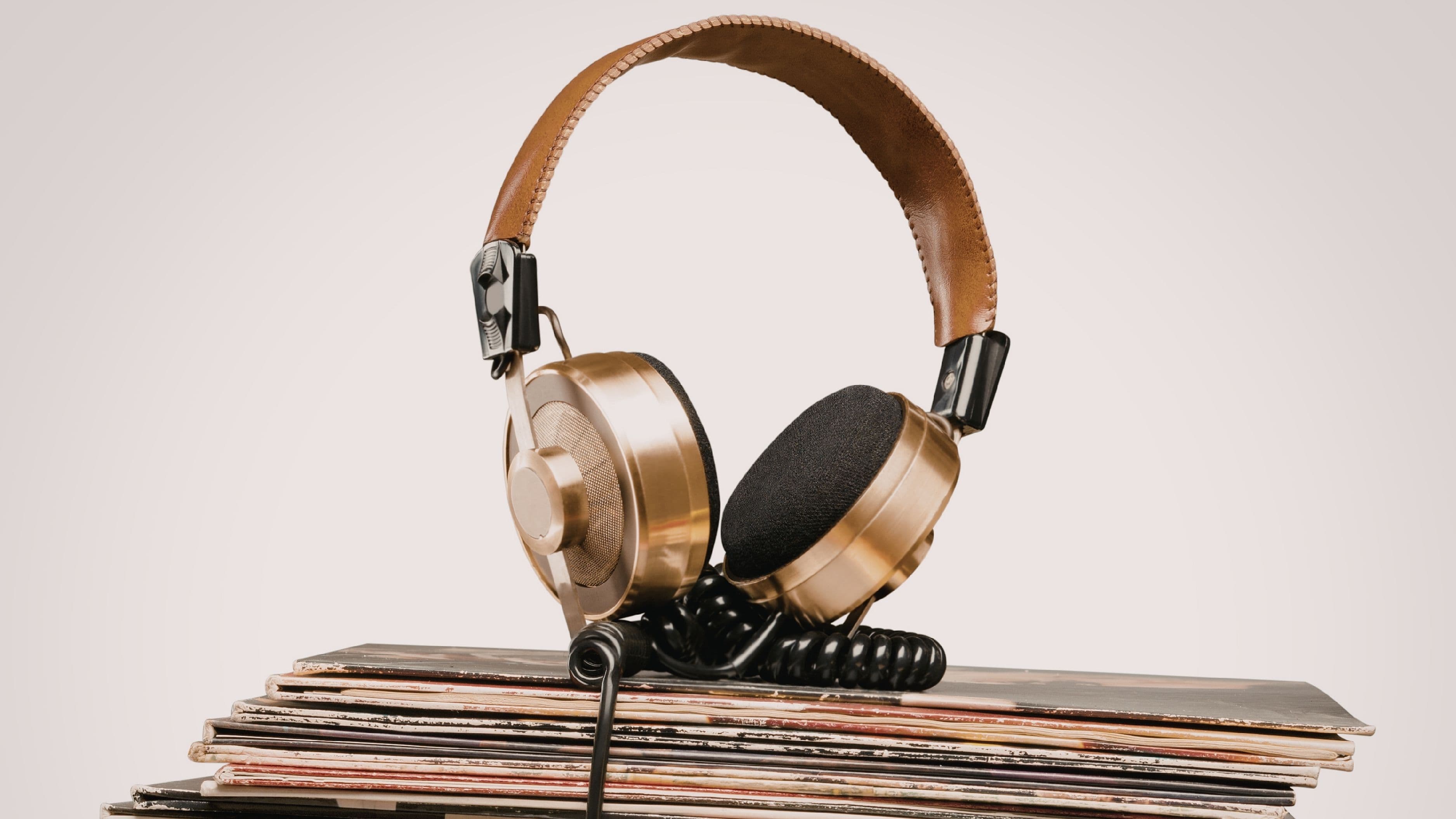
Whether you're a casual listener or a devoted fan, these 10 albums belong in your ears at least once. Ideally more.
Top 10 at a Glance
The Dark Side of the Moon — Pink Floyd
Kind of Blue — Miles Davis
What's Going On — Marvin Gaye
Rumours — Fleetwood Mac
Nevermind — Nirvana
Thriller — Michael Jackson
Blonde on Blonde — Bob Dylan
Purple Rain — Prince
The Miseducation of Lauryn Hill — Lauryn Hill
Abbey Road — The Beatles

The Full List
1. The Dark Side of the Moon — Pink Floyd (1973)
Genre: Progressive rock | Runtime: ~43 minutes
Pink Floyd didn't make an album — they built a world. Dark Side explores anxiety, time, greed, and the fragility of the mind across a seamless, continuous listen. It spent over 900 weeks on the Billboard charts. That's not a coincidence.
Why it matters: It proved rock music could be cinematic, philosophical, and emotionally devastating all at once.
How to listen: Start to finish, headphones on, no distractions. Let "Time" hit you without looking it up first.
Key benefit: Even if you've never heard it, you've already absorbed its influence — it's in every major rock and electronic album that came after.
Quick tip: Breathe flows directly into On the Run — don't skip tracks. The whole thing is one 43-minute statement.
2. Kind of Blue — Miles Davis (1959)
Genre: Modal jazz | Runtime: ~45 minutes
The best-selling jazz album in history, and possibly the most relaxed revolution ever recorded. Davis and his ensemble — featuring John Coltrane and Bill Evans — invented modal jazz almost casually, ditching complex chord progressions for open, spacious improvisation.
Why it matters: It changed how jazz musicians thought about melody, space, and freedom. And it sounds stunning while doing it.
How to listen: Morning coffee, late night reading, or any moment you want to slow your brain down without turning it off.
Key benefit: Instantly accessible even if you've never listened to jazz. It doesn't demand — it invites.
Quick tip: "So What" is the opener and arguably the most influential jazz composition ever recorded. Give it your full attention.
3. What's Going On — Marvin Gaye (1971)
Genre: Soul, R&B | Runtime: ~35 minutes
Marvin Gaye went against Motown's wishes to release a concept album about the Vietnam War, racial injustice, and environmental destruction. It became one of the greatest albums ever made. Sometimes defiance is genius.
Why it matters: It treated Black listeners as thoughtful adults at a time when commercial soul rarely did. It was protest music that felt like grace.
How to listen: Play it the whole way through. It's written as a suite — each song flows into the next.
Key benefit: Emotionally resonant and socially urgent — and 50+ years later, it still sounds current.
Quick tip: "Mercy Mercy Me (The Ecology)" hits differently once you notice it was written in 1971. Let that sink in.
4. Rumours — Fleetwood Mac (1977)
Genre: Soft rock, pop rock | Runtime: ~40 minutes
Recorded while the band's relationships were falling apart in real time — two couples breaking up, affairs, addiction — Rumours somehow became one of the warmest, most polished albums ever made. The chaos didn't show. Except it did, in every lyric.
Why it matters: Nearly every song became a classic. It set the standard for what a pop-rock album could look and sound like.
How to listen: Drive somewhere at dusk. Or cook dinner. It works in almost any context — that's part of the magic.
Key benefit: Pure songwriting craft. Every track is built to last.
Quick tip: "The Chain" is fan-favourite, but don't overlook "Gold Dust Woman" — one of the most haunting album closers in rock history.
5. Nevermind — Nirvana (1991)
Genre: Grunge, alternative rock | Runtime: ~46 minutes
When "Smells Like Teen Spirit" hit radio in 1991, it knocked Michael Jackson off the top of the charts and rewrote what mainstream rock looked like. Kurt Cobain famously hated the album's polished production. The world didn't care — it needed exactly this.
Why it matters: It ended the hair-metal era overnight and launched alternative rock into the mainstream permanently.
How to listen: Loud. Full volume. Ideally in one sitting so you can hear how the album's energy shifts from explosive to wounded by the end.
Key benefit: Still sounds urgent and alive. Nothing about it feels dated.
Quick tip: "Something in the Way" closes the album in near-silence. It's a completely different emotional register from track 1 — and it's intentional.
6. Thriller — Michael Jackson (1982)
Genre: Pop, R&B, disco, rock | Runtime: ~42 minutes
The best-selling album of all time — over 70 million copies — and it deserves every one of them. Jackson didn't just make pop music, he engineered experiences. Collaborating with Quincy Jones, he fused genres that had never shared a stage.
Why it matters: It redefined what a pop album could be commercially and artistically. The music video for the title track changed visual media permanently.
How to listen: Any time, any place. Start with "Billie Jean" and "Beat It" if you need an entry point, then let the whole thing play.
Key benefit: Genuinely fun from the first second to the last. Joy is underrated as an artistic achievement.
Quick tip: "Human Nature" is the quiet masterpiece on this album that people often overlook. It rewards close listening.
7. Blonde on Blonde — Bob Dylan (1966)
Genre: Folk rock, country rock | Runtime: ~73 minutes
Dylan's first double album, and still one of rock's great artistic statements. Recorded in Nashville with session musicians who'd never heard anything like him, Blonde on Blonde sounds loose and absolutely locked-in at the same time.
Why it matters: It showed that rock could carry literary weight — dense, surreal, beautiful lyrics delivered with complete conviction.
How to listen: Start with "Visions of Johanna" — ten minutes long, and it earns every second. Then work your way through.
Key benefit: Expands what you think a "song" can be. Nothing sounds quite like this.
Quick tip: "Sad-Eyed Lady of the Lowlands" takes up an entire side of vinyl at 11 minutes. Let it breathe. Don't skip.
8. Purple Rain — Prince (1984)
Genre: Funk, rock, pop, R&B | Runtime: ~44 minutes
Prince was already a star when this came out. Purple Rain made him a phenomenon. Simultaneously a movie soundtrack, a live album, and a studio record, it contains some of the most technically stunning guitar work in pop history.
Why it matters: It proved one artist could master multiple genres without diluting any of them. Prince played almost every instrument.
How to listen: "When Doves Cry" has no bass — notice it. The closer, "Purple Rain," is one of the greatest guitar ballads ever recorded. Save it for the end.
Key benefit: Showcases what raw, undeniable musical talent looks like at its absolute peak.
Quick tip: The live energy of "I Would Die 4 U" and "Baby I'm a Star" sounds genuine because it was — recorded with a real audience.
9. The Miseducation of Lauryn Hill (1998)
Genre: Neo-soul, R&B, hip-hop, reggae | Runtime: ~78 minutes
Lauryn Hill was 23 years old when she made this album. It won five Grammy Awards including Album of the Year — the first hip-hop album to do so — and it still sounds like nothing else. Raw, spiritual, heartbroken, and joyful all at once.
Why it matters: It redefined what a female artist could say and sound like in hip-hop and soul at a time when neither genre made much room.
How to listen: Full album, in order. The interstitial classroom scenes between some tracks give it a narrative arc that rewards patience.
Key benefit: One of the most emotionally honest albums ever recorded. It gets better with every listen.
Quick tip: "Ex-Factor" is considered one of the greatest R&B songs of all time. Let it hit without distractions.
10. Abbey Road — The Beatles (1969)
Genre: Rock, pop | Runtime: ~47 minutes
The last album The Beatles recorded together (though not the last released), Abbey Road feels like a band saying goodbye in the most beautiful way possible. Side two's medley — an unbroken 16-minute sequence of half-finished songs stitched together — is one of the most inventive things ever committed to tape.
Why it matters: It showed what collaborative songwriting at its highest level can produce. Every member was at their peak.
How to listen: Listen to Side 1 first to settle in, then let Side 2's medley run uninterrupted. Don't break it up.
Key benefit: Still sounds fresh because the songwriting is just that strong. It's a masterclass in melody.
Quick tip: "Something" — written by George Harrison — is considered by many to be the finest Beatles song ever written. Frank Sinatra called it the greatest love song of the last 50 years.
Quick Takeaway
You don't need to love every genre to benefit from this list. Each of these albums teaches you something different about music — what it can carry emotionally, technically, or culturally. Even a single listen to Kind of Blue or What's Going On expands your frame of reference permanently.
Start with the one that sounds furthest outside your usual taste. That's usually the one that teaches you the most.
FAQ
Do I need to listen to these in order? No — start anywhere. But albums like Dark Side of the Moon, What's Going On, and the medley on Abbey Road are designed as continuous listens, so play those front to back.
Are any of these suitable for new music listeners? All of them. Thriller, Rumours, and Purple Rain are probably the most immediately accessible. Kind of Blue is the best entry point for jazz beginners.
What if I don't usually like older music? Try Nevermind (1991), The Miseducation of Lauryn Hill (1998), or Purple Rain (1984) first — they feel more modern in production.
Should I listen on streaming or vinyl? Both are fine. But if you have the chance to hear Kind of Blue or Dark Side of the Moon on vinyl, take it. The format suits both albums extremely well.
What makes an album "classic" vs just popular? Classics endure across generations, influence other artists measurably, and hold up under repeated listening over decades. Everything on this list checks all three boxes.
Final Word
These aren't just records — they're arguments for what music can do when someone refuses to compromise. You don't need to like all 10. But each one will leave you with a clearer sense of what moved the culture, and why that still matters today.
Pick one. Press play. The rest takes care of itself.
📚 Sources
Rolling Stone, "500 Greatest Albums of All Time" — rs.com
Grammy Awards Historical Records, Recording Academy — grammy.com
RIAA Gold & Platinum Certifications — riaa.com
AllMusic Editorial Reviews — allmusic.com
Pitchfork, "The 200 Best Albums of the 1960s/70s/80s/90s" — pitchfork.com
NPR Music, Classic Album reviews and liner notes coverage — npr.org/music
The Guardian, "The 100 Greatest Albums Ever" — theguardian.com
MusicBrainz & Discogs, Release and chart data — discogs.com
Metacritic, Historical critical aggregation scores — metacritic.com
The Rock and Roll Hall of Fame, Inductee citations — rockhall.com