
We've analyzed dozens of balance transfer offers to identify the cards that provide the longest 0% periods, lowest fees, and most valuable features for different financial situations. Here are the top 10 balance transfer credit cards that can help you take control of your debt.
Top 10 Best Balance Transfer Credit Cards
Citi® Diamond Preferred® Card – Best for longest intro period
Wells Fargo Reflect® Card – Best for extended 0% APR with flexibility
Chase Freedom Unlimited® – Best for earning rewards while paying debt
Discover it® Balance Transfer – Best for cashback matching
BankAmericard® credit card – Best for straightforward balance transfers
U.S. Bank Visa® Platinum Card – Best for low balance transfer fees
Capital One Quicksilver Cash Rewards – Best for combining cashback and transfers
Amex EveryDay® Credit Card – Best for Amex cardholders with rewards
Citi Simplicity® Card – Best for no late fees ever
Navy Federal Credit Union Platinum Credit Card – Best for military members
Our Methodology
We evaluated balance transfer credit cards based on five critical criteria to ensure our recommendations serve borrowers with different needs and credit profiles. First, we examined introductory APR periods, prioritizing cards offering 15+ months of 0% interest on balance transfers. Second, we analyzed balance transfer fees, which typically range from 3-5% of the transferred amount—a significant factor when moving large balances.
Third, we assessed additional features including ongoing rewards programs, credit-building tools, and whether cards offer 0% APR on purchases alongside balance transfers. Fourth, we considered approval requirements and credit score thresholds, recognizing that not everyone has excellent credit. Finally, we reviewed customer satisfaction ratings, mobile app functionality, and issuer reputation to ensure you're working with reliable institutions. Cards that excel across multiple categories earned top positions on our list.
Detailed Reviews
1. Citi® Diamond Preferred® Card – Best for Longest Intro Period
Best for: Borrowers with significant debt needing maximum time to pay it off | Intro APR: 0% for 21 months on balance transfers | Balance Transfer Fee: 5% (min $5) | Regular APR: 18.24%-28.99% Variable
The Citi Diamond Preferred sets the standard with one of the longest 0% introductory periods available—21 months on balance transfers when you transfer within four months of account opening. This extended timeline is ideal if you're carrying substantial debt and need breathing room to pay it down without accumulating additional interest. The card also offers 0% APR on purchases for 12 months, though your focus should be debt elimination rather than new spending.
While the 5% balance transfer fee is higher than some competitors, the extra months of interest-free payments often justify this cost, especially for larger balances. Citi provides excellent account management tools, including customizable alerts and spending trackers to help you stay on target. The card has no annual fee, and once you've paid off your balance, it transitions into a solid, no-frills card with no penalty APR—you won't face rate increases for late payments, which is rare in the industry.
Pros:
Industry-leading 21-month 0% intro period on balance transfers
12 months 0% APR on purchases
No annual fee
No penalty APR for late payments
Strong mobile app and account management tools
Cons:
5% balance transfer fee is on the higher end
No rewards program after intro period
Requires good to excellent credit for approval
Must transfer balance within 4 months for full intro period
2. Wells Fargo Reflect® Card – Best for Extended 0% APR with Flexibility
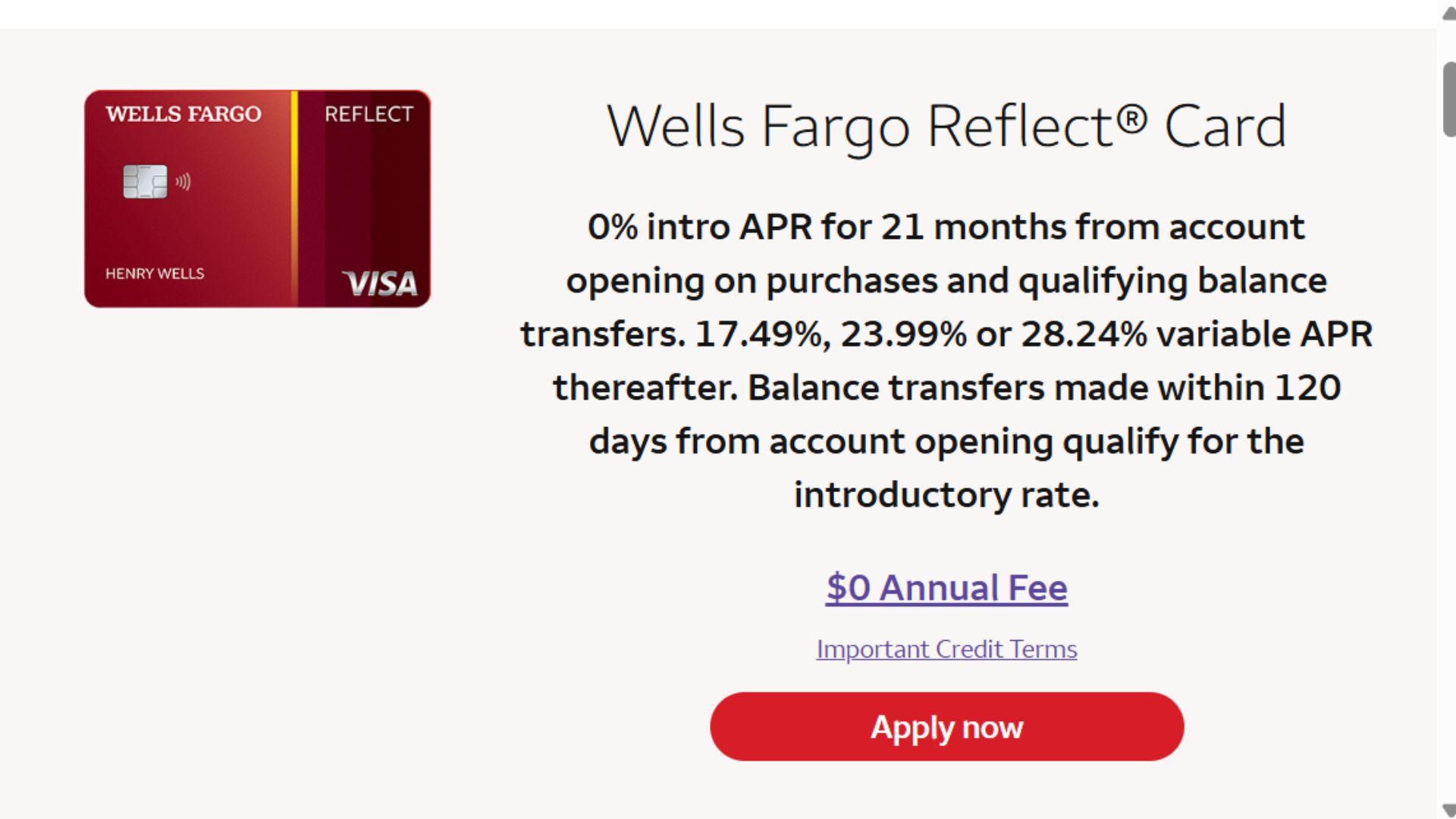
Best for: Borrowers wanting a long intro period with potential extension | Intro APR: 0% for 21 months on purchases and balance transfers | Balance Transfer Fee: 5% (min $5) | Regular APR: 18.24%, 24.74%, or 29.99% Variable
The Wells Fargo Reflect Card matches Citi's 21-month intro offer but adds a unique twist: you can extend the 0% period by an additional month (up to 21 total months) simply by making on-time payments during your first year. This rewards responsible behavior and could give you up to nearly two full years to eliminate your debt. The card applies the 0% rate to both balance transfers and new purchases, providing comprehensive debt management.
Wells Fargo's "My Wells Fargo Deals" feature provides personalized cashback offers at various retailers, adding unexpected value even though this isn't primarily a rewards card. The mobile app includes a "Control Tower" feature that gives you visibility into all your Wells Fargo accounts in one place, helpful if you bank with them. Cell phone protection (up to $600 per claim, $1,200 annual maximum with $25 deductible) is included when you pay your monthly bill with the card—an uncommon perk for a no-annual-fee balance transfer card.
Pros:
21-month 0% intro period on purchases and balance transfers
Potential to extend intro period by making on-time payments
Cell phone protection included
Personalized cashback deals through My Wells Fargo Deals
No annual fee
Cons:
5% balance transfer fee
Requires good credit for approval
Rewards program is minimal compared to dedicated rewards cards
Must have Wells Fargo relationship to maximize benefits
3. Chase Freedom Unlimited® – Best for Earning Rewards While Paying Debt
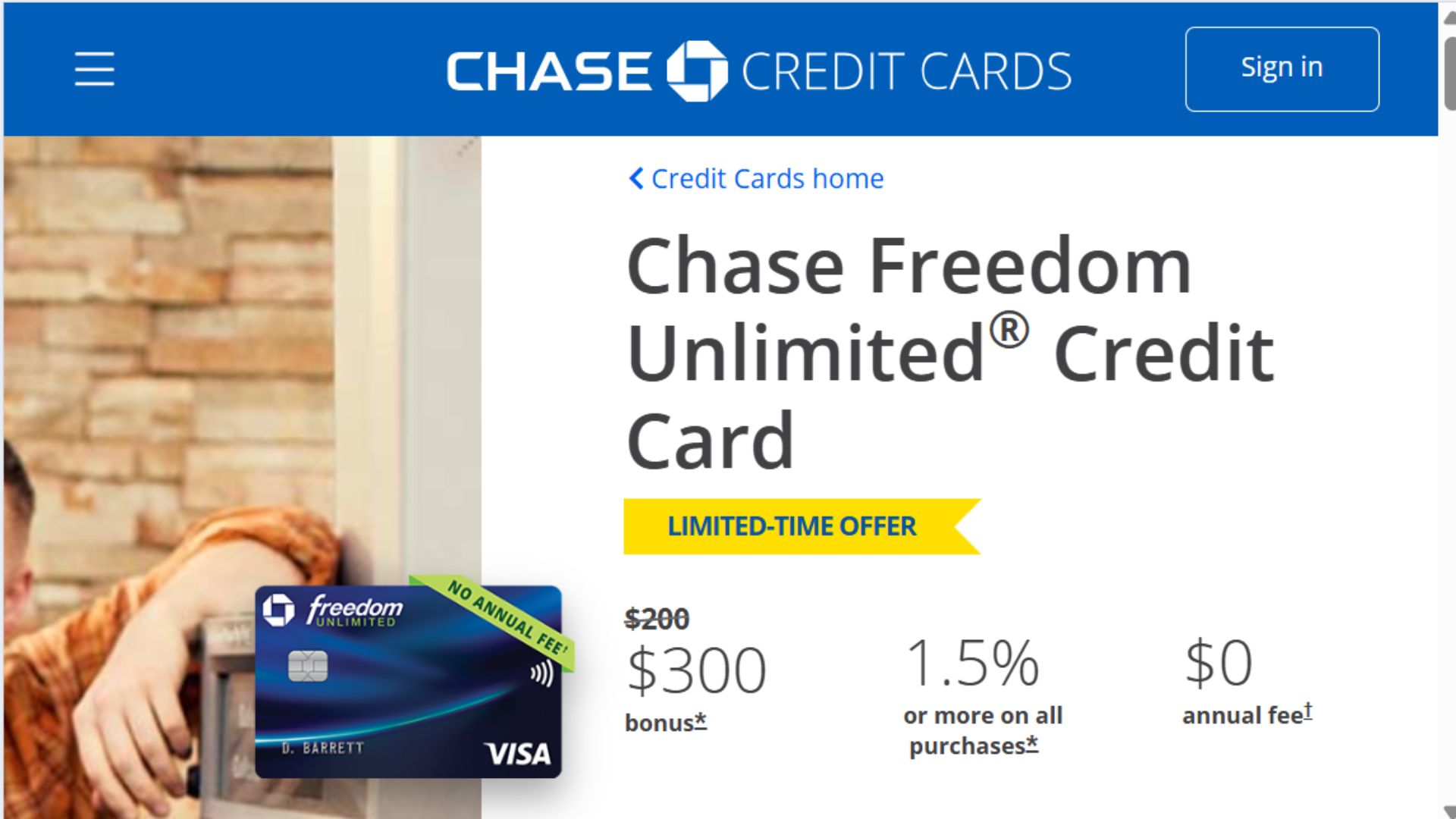
Best for: Debt paydown without sacrificing rewards potential | Intro APR: 0% for 15 months on purchases and balance transfers | Balance Transfer Fee: 5% (min $5) | Regular APR: 20.49%-29.24% Variable | Rewards: 1.5% cash back on all purchases, 5% on travel through Chase, 3% on dining and drugstores
The Chase Freedom Unlimited takes a different approach by combining a solid balance transfer offer with an ongoing rewards program. While the 15-month intro period is shorter than our top two picks, you'll earn 1.5% cash back on all purchases, 5% on travel booked through Chase Ultimate Rewards, and 3% at restaurants and drugstores. If you need to make purchases while paying down debt (grocery shopping, gas, etc.), you're at least earning something back.
This card shines if you're also a Chase banking customer or have other Chase Ultimate Rewards cards, as points can be combined and potentially transferred to travel partners at higher values. Once your balance is paid off, the Freedom Unlimited becomes an excellent everyday spending card rather than sitting unused in your wallet. Chase's fraud protection and customer service consistently rank among the best in the industry, and the mobile app provides spending insights and credit score tracking at no extra cost.
Pros:
Earn rewards while paying down debt
15-month 0% intro APR on transfers and purchases
Strong ongoing rewards structure (1.5%+ cash back)
Excellent integration with Chase ecosystem
No annual fee with premium benefits
Cons:
Shorter intro period than top competitors
5% balance transfer fee
Rewards may tempt additional spending
Best value requires having other Chase cards
4. Discover it® Balance Transfer – Best for Cashback Matching
Best for: Modest debt amounts with desire to build rewards | Intro APR: 0% for 18 months on balance transfers and purchases | Balance Transfer Fee: 3% (min $5) | Regular APR: 18.24%-28.24% Variable | Rewards: 5% rotating categories (up to $1,500/quarter), 1% on everything else, cashback match first year
Discover's balance transfer card stands out with its lower 3% transfer fee and generous cashback matching program. In your first year, Discover automatically matches all the cash back you've earned—essentially doubling your rewards. Combined with 5% cash back in rotating quarterly categories (activation required) and 1% on everything else, this creates significant earning potential even while you're focused on debt elimination.
The 18-month 0% intro period strikes a middle ground between longest-period cards and rewards-focused options. Discover is known for exceptional U.S.-based customer service available 24/7, and the card includes free FICO credit score tracking, freeze protection, and $0 fraud liability. If you transfer a balance during the intro period, Discover won't charge interest on that amount for 18 months—a straightforward, consumer-friendly approach. The main limitation is that Discover isn't accepted everywhere (though acceptance has improved dramatically), so check that your favorite retailers accept it.
Pros:
Lower 3% balance transfer fee saves money upfront
Cashback match doubles all rewards in year one
5% rotating category cashback opportunities
Excellent customer service with U.S.-based support
Free FICO score tracking included
Cons:
Not accepted at as many merchants as Visa/Mastercard
Must activate rotating 5% categories quarterly
18-month intro period is mid-range
Cashback match only applies to first year
5. BankAmericard® credit card – Best for Straightforward Balance Transfers
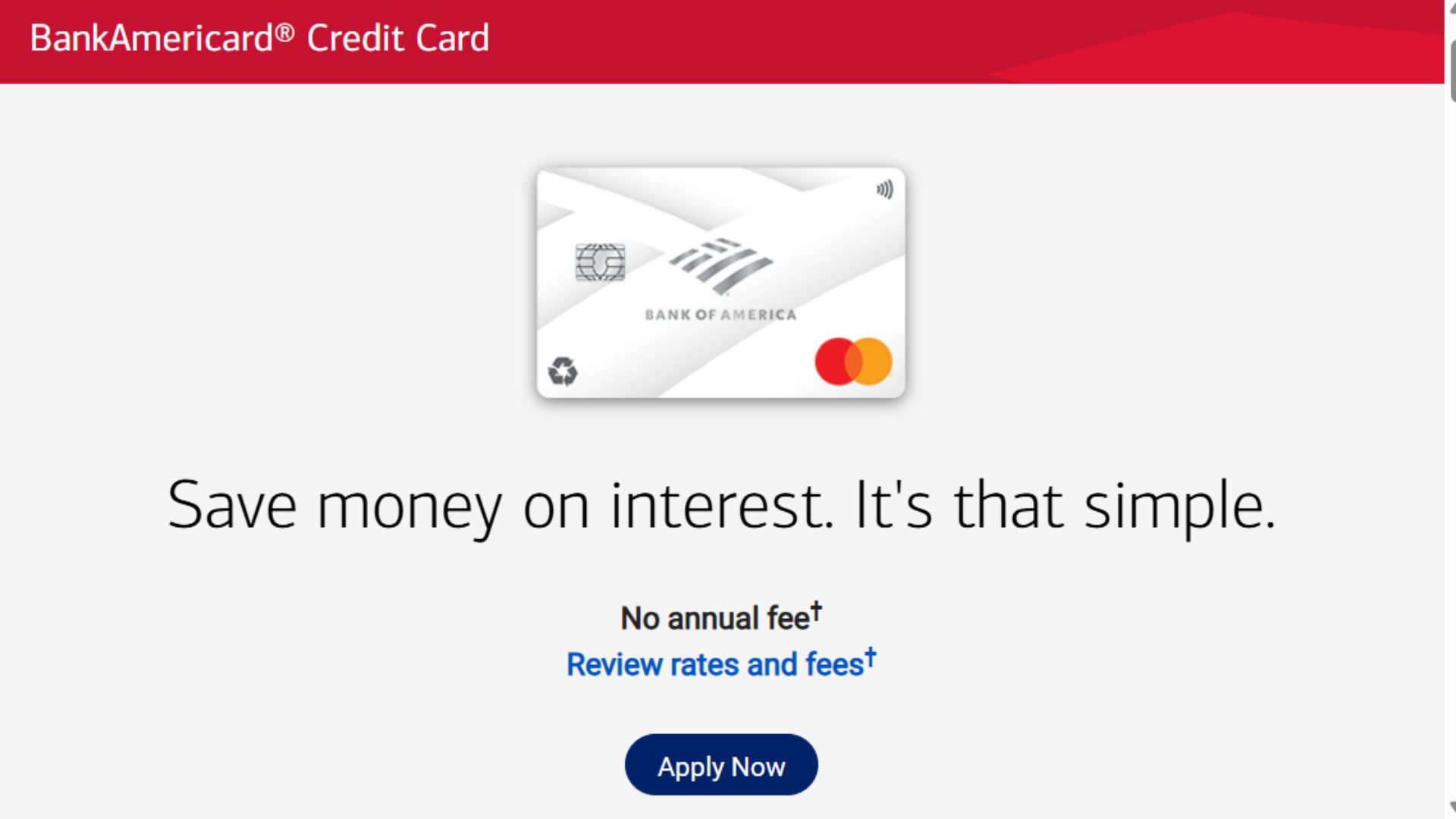
Best for: Simple, no-frills debt elimination | Intro APR: 0% for 21 billing cycles on balance transfers (transfers must be made within 60 days) | Balance Transfer Fee: 3% (min $10) | Regular APR: 16.24%-26.24% Variable
The BankAmericard credit card focuses exclusively on what matters most for debt elimination: a long 0% period with a reasonable transfer fee. With 21 billing cycles of no interest and a 3% fee, it's one of the most cost-effective long-term balance transfer options available. There are no rewards to distract you from your debt payoff goal, no complex terms to navigate, and no annual fee—just straightforward debt management.
Bank of America provides strong mobile banking tools and will automatically apply your payments to the highest-interest balances first, saving you money if you carry multiple balances. Preferred Rewards members (those who maintain qualifying Bank of America deposit or investment accounts) may receive additional benefits including higher credit limits. The card includes $0 fraud liability and identity theft protection at no extra charge. Once you've paid off your balance, this becomes a reliable backup card with competitive regular rates.
Pros:
21 billing cycles of 0% intro APR on balance transfers
Lower 3% balance transfer fee
Simple, straightforward terms with no confusion
Preferred Rewards program benefits for BofA customers
No annual fee
Cons:
No rewards or cashback program
Must transfer balance within 60 days of opening
0% rate only applies to transfers, not purchases
Best benefits require existing Bank of America relationship
6. U.S. Bank Visa® Platinum Card – Best for Low Balance Transfer Fees
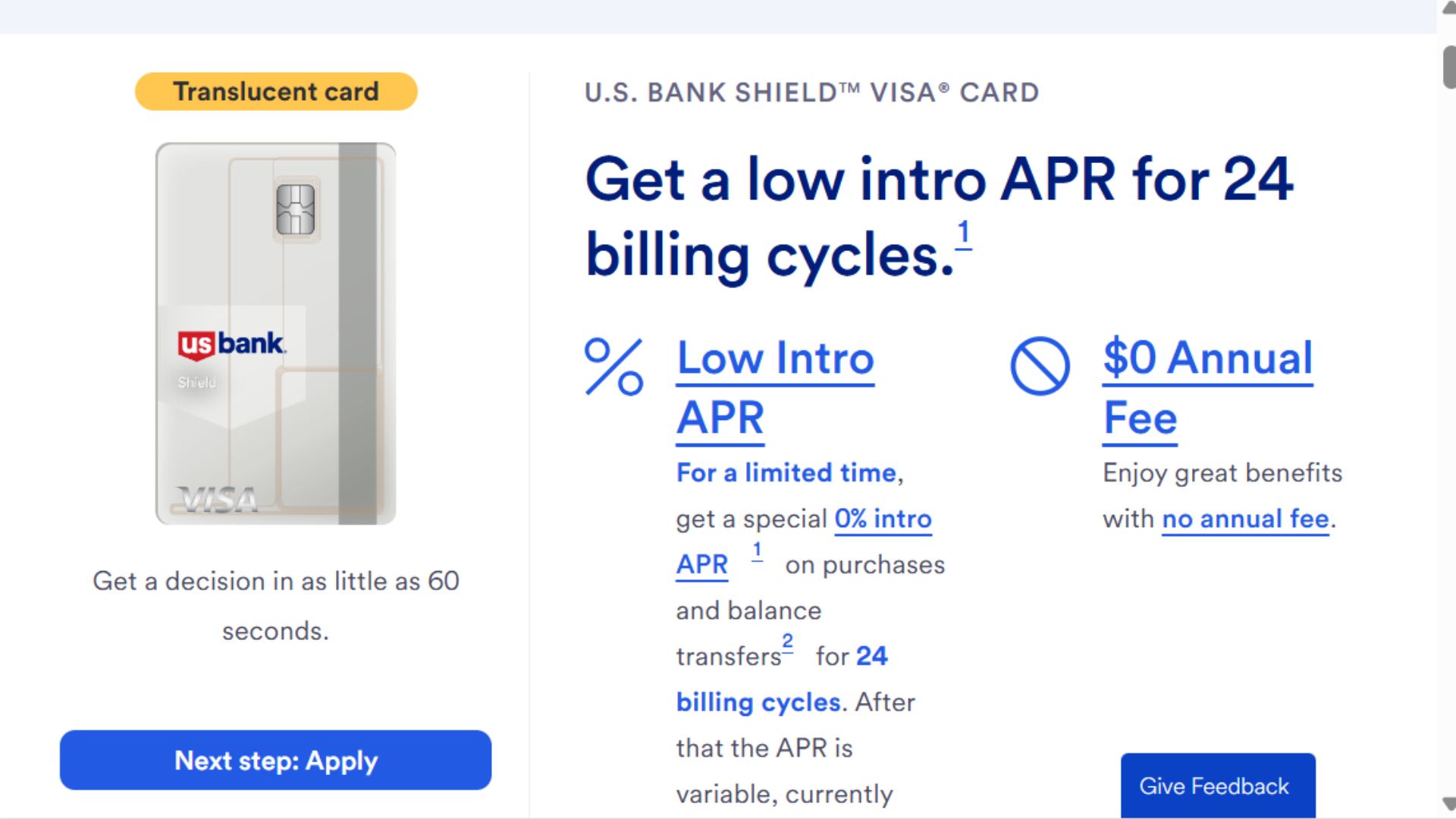
Best for: Minimizing upfront transfer costs | Intro APR: 0% for 21 billing cycles on balance transfers (within 60 days), 0% for 21 billing cycles on purchases | Balance Transfer Fee: 3% (min $5) in first 60 days | Regular APR: 18.74%-29.74% Variable
The U.S. Bank Visa Platinum Card delivers exceptional value by combining a 21-billing-cycle intro period with a low 3% transfer fee, one of the best combinations available. This means more of your transferred balance is actually debt you owe rather than fees, particularly beneficial if you're moving large balances. The card also extends 0% APR to purchases for 21 billing cycles, allowing you to avoid new interest charges while focusing on debt elimination.
U.S. Bank provides robust security features including card lock/unlock through the mobile app, real-time alerts, and extended warranty protection on eligible purchases. The issuer's ExtendPay Plan feature lets you convert purchases into monthly installment plans, though you should avoid this while paying off transferred debt. Once you're debt-free, this card can continue serving as a reliable option with no annual fee. Customer service receives high marks, and U.S. Bank's mobile app includes budgeting tools to help you track spending as you work toward financial freedom.
Pros:
Long 21-billing-cycle intro period
Low 3% balance transfer fee
0% APR on purchases and transfers
Strong mobile app with security features
No annual fee
Cons:
Must transfer within 60 days for 3% fee
No rewards program
Regular APR is on the higher end
Requires good credit for approval
7. Capital One Quicksilver Cash Rewards – Best for Combining Cashback and Transfers
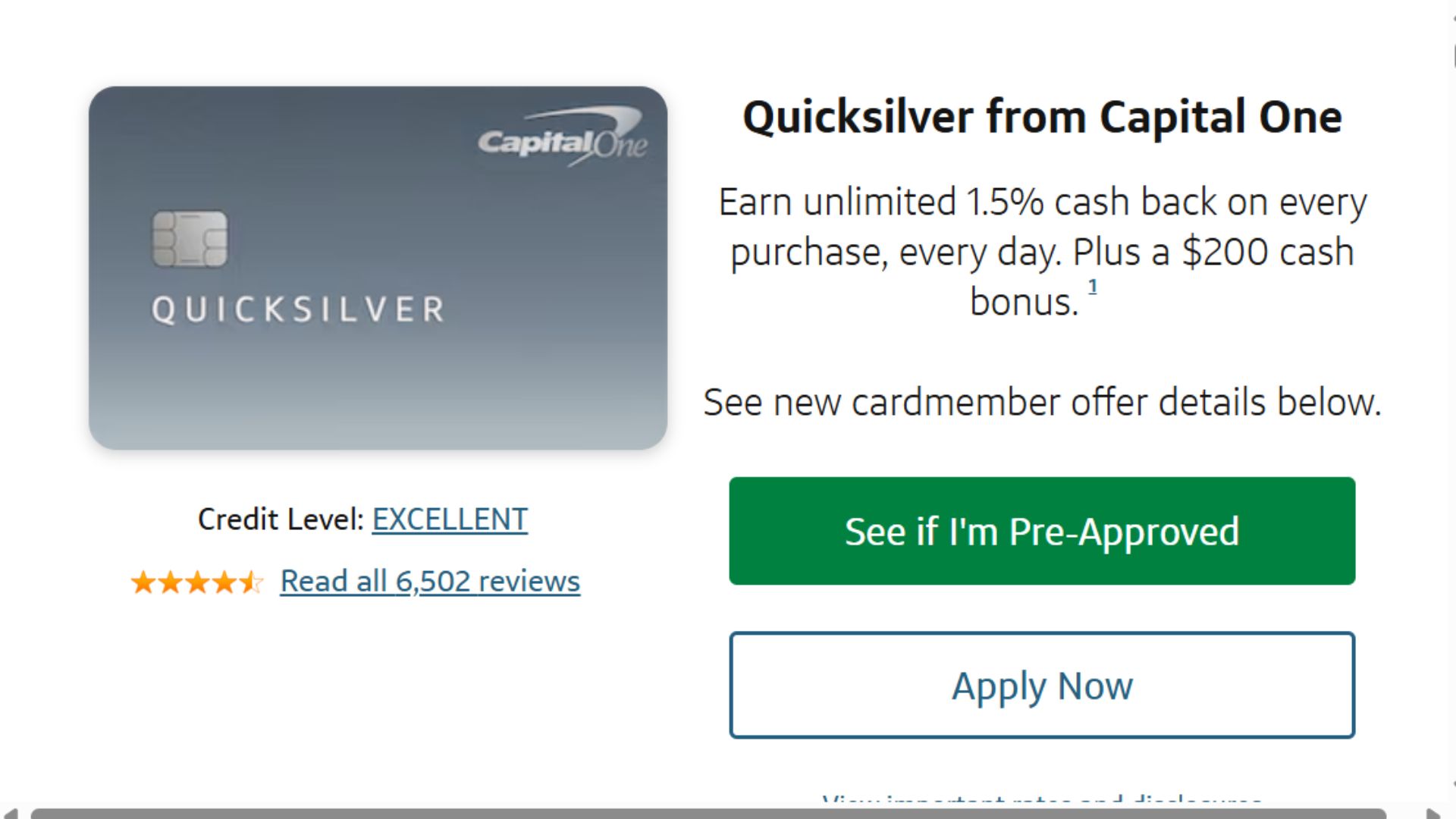
Best for: Building rewards while eliminating debt | Intro APR: 0% for 15 months on purchases and balance transfers | Balance Transfer Fee: 3% (min $3) | Regular APR: 19.74%-29.74% Variable | Rewards: Unlimited 1.5% cash back on every purchase
The Capital One Quicksilver offers a balanced approach: a competitive 15-month intro period with a reasonable 3% transfer fee, combined with straightforward 1.5% unlimited cash back on all purchases. This makes it ideal if you need to continue making everyday purchases while paying down debt—you'll earn rewards on necessary spending like groceries and gas. The cashback structure is simple with no rotating categories or earning caps to track.
Capital One provides excellent credit monitoring through CreditWise, giving you free access to your TransUnion credit report and VantageScore 3.0, plus dark web scanning to alert you if your information appears in data breaches. The mobile app is intuitive and highly rated, with features like virtual card numbers for secure online shopping. Capital One also tends to be more forgiving with credit applications than some competitors, though you'll still need good credit for approval. The $200 cash bonus after spending $500 in the first three months provides immediate value to offset part of your balance transfer fee.
Pros:
Unlimited 1.5% cash back with no categories to track
$200 cash bonus after meeting minimum spend
15-month intro period on purchases and transfers
Excellent credit monitoring tools included
Low 3% balance transfer fee
Cons:
Shorter 15-month intro period
Rewards rate is good but not exceptional
Regular APR range is wide
Foreign transaction fees apply (2.5%)
8. Amex EveryDay® Credit Card – Best for Amex Cardholders with Rewards

Best for: American Express fans who want transfer flexibility | Intro APR: 0% for 15 months on purchases and balance transfers (transfers within 60 days) | Balance Transfer Fee: 3% (min $5) | Regular APR: 19.24%-29.99% Variable | Rewards: 2x points at U.S. supermarkets (up to $6,000/year), 1x everywhere else, 20% points bonus with 20+ purchases per billing period
The Amex EveryDay Credit Card uniquely allows you to transfer balances from non-American Express cards while earning Membership Rewards points on new purchases. You'll earn 2x points at U.S. supermarkets (on up to $6,000 annually, then 1x) and 1x everywhere else, with a 20% points boost if you make 20 or more purchases in a billing cycle. Membership Rewards points are valuable, transferring to airline and hotel partners often at premium rates.
American Express is renowned for customer service and card member benefits including purchase protection, return protection, and extended warranty coverage. The mobile app is best-in-class, and Amex's fraud detection is industry-leading. If you have other Amex cards, you can pool Membership Rewards points, amplifying your earning potential. The 15-month intro period gives you adequate time to pay off moderate debt while the rewards program makes this card worth keeping long-term. Note that you can't transfer balances from other American Express cards, only from other issuers.
Pros:
Earn valuable Membership Rewards points
2x points at U.S. supermarkets
Excellent Amex customer service and protections
Can pool points with other Amex cards
No annual fee
Cons:
Can't transfer balances from other Amex cards
15-month intro period is mid-range
Amex acceptance is slightly lower than Visa/Mastercard
Requires good to excellent credit
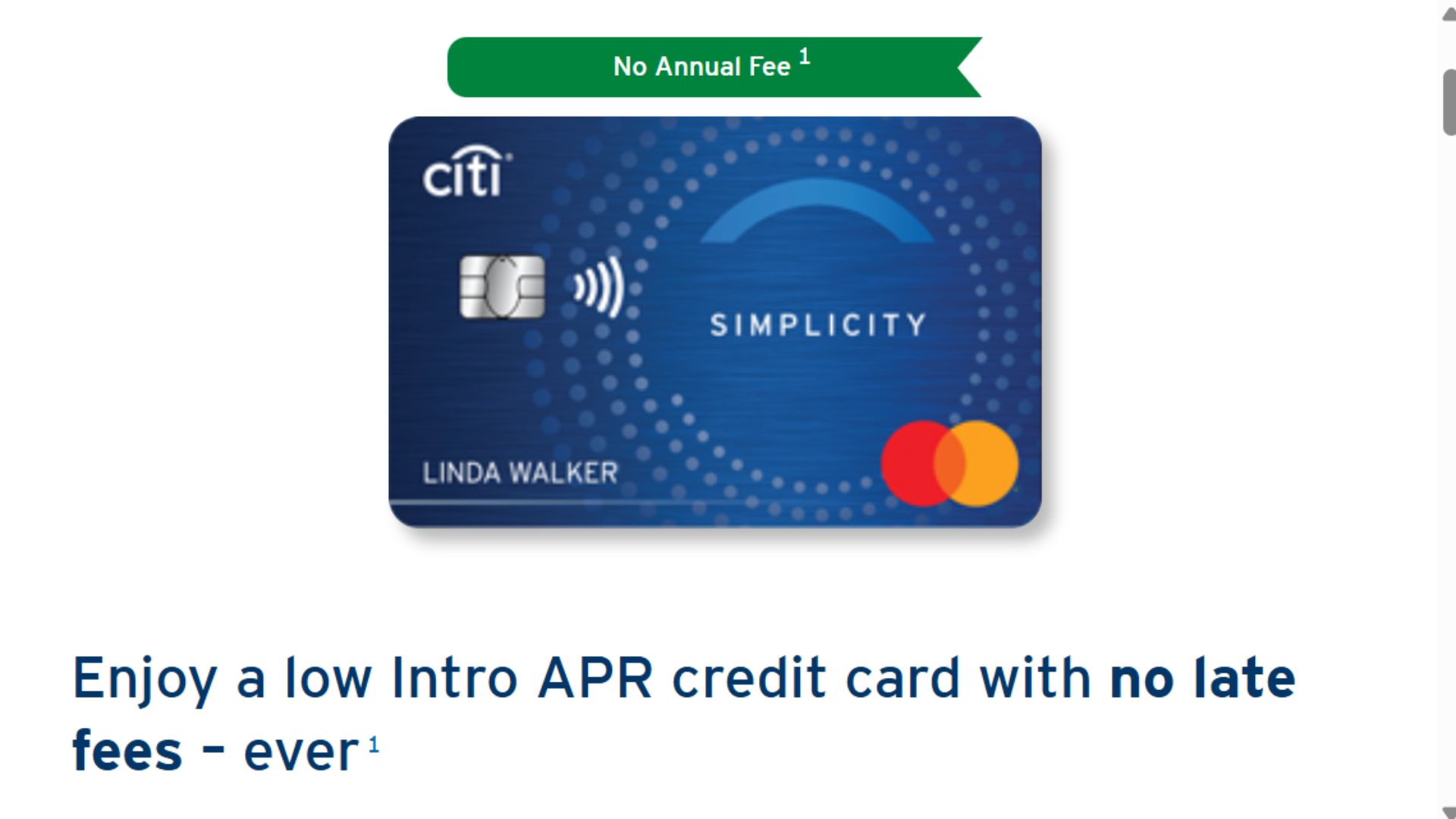
9. Citi Simplicity® Card – Best for No Late Fees Ever
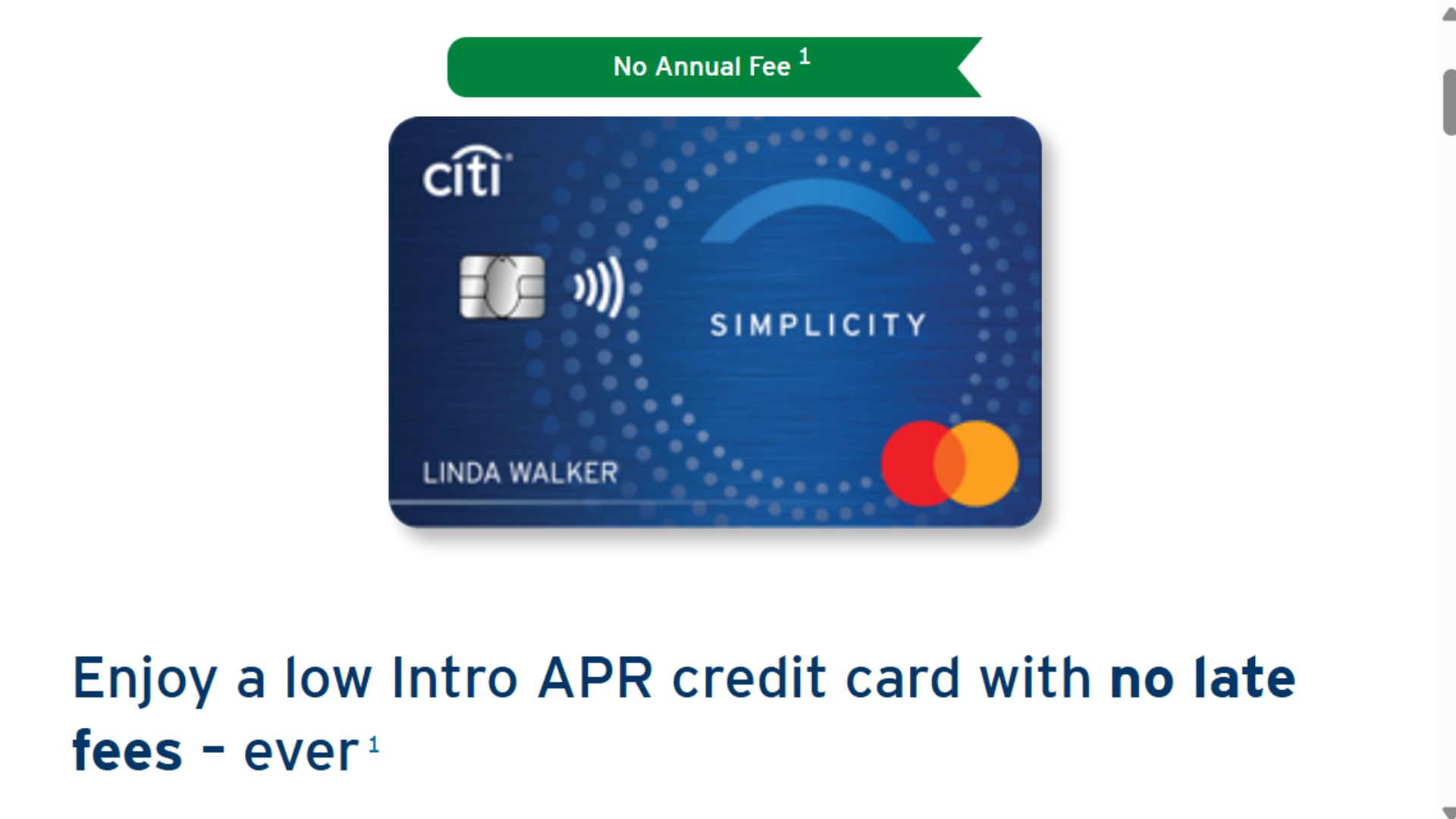
Best for: Borrowers worried about missing payments | Intro APR: 0% for 21 months on balance transfers (within 4 months) and purchases | Balance Transfer Fee: 5% (min $5) | Regular APR: 19.24%-29.99% Variable
The Citi Simplicity Card's defining feature is its permanent elimination of late fees and penalty APR—a safety net worth thousands if you accidentally miss a payment while juggling debt payoff. This unique protection continues for the life of the account, not just during the intro period. Combined with a 21-month 0% APR window on both balance transfers and purchases, it provides maximum flexibility and forgiveness for borrowers managing tight budgets.
Beyond the no-late-fee promise, the Simplicity Card is refreshingly straightforward with no annual fee, no penalty rate, and no complicated terms. Citi's mobile app provides spending insights and the ability to set up automatic payments to ensure you never miss a due date despite the late fee protection. The card lacks a rewards program, which actually helps you focus entirely on debt elimination without the temptation to spend for points. Once your balance is clear, this card becomes a reliable emergency backup with its forgiving terms.
Pros:
No late fees ever (unique benefit)
No penalty APR for late payments
21-month intro period on transfers and purchases
Simple terms with no confusion
No annual fee
Cons:
5% balance transfer fee is higher
No rewards program
Must transfer within 4 months for full intro period
Requires good to excellent credit
10. Navy Federal Credit Union Platinum Credit Card – Best for Military Members
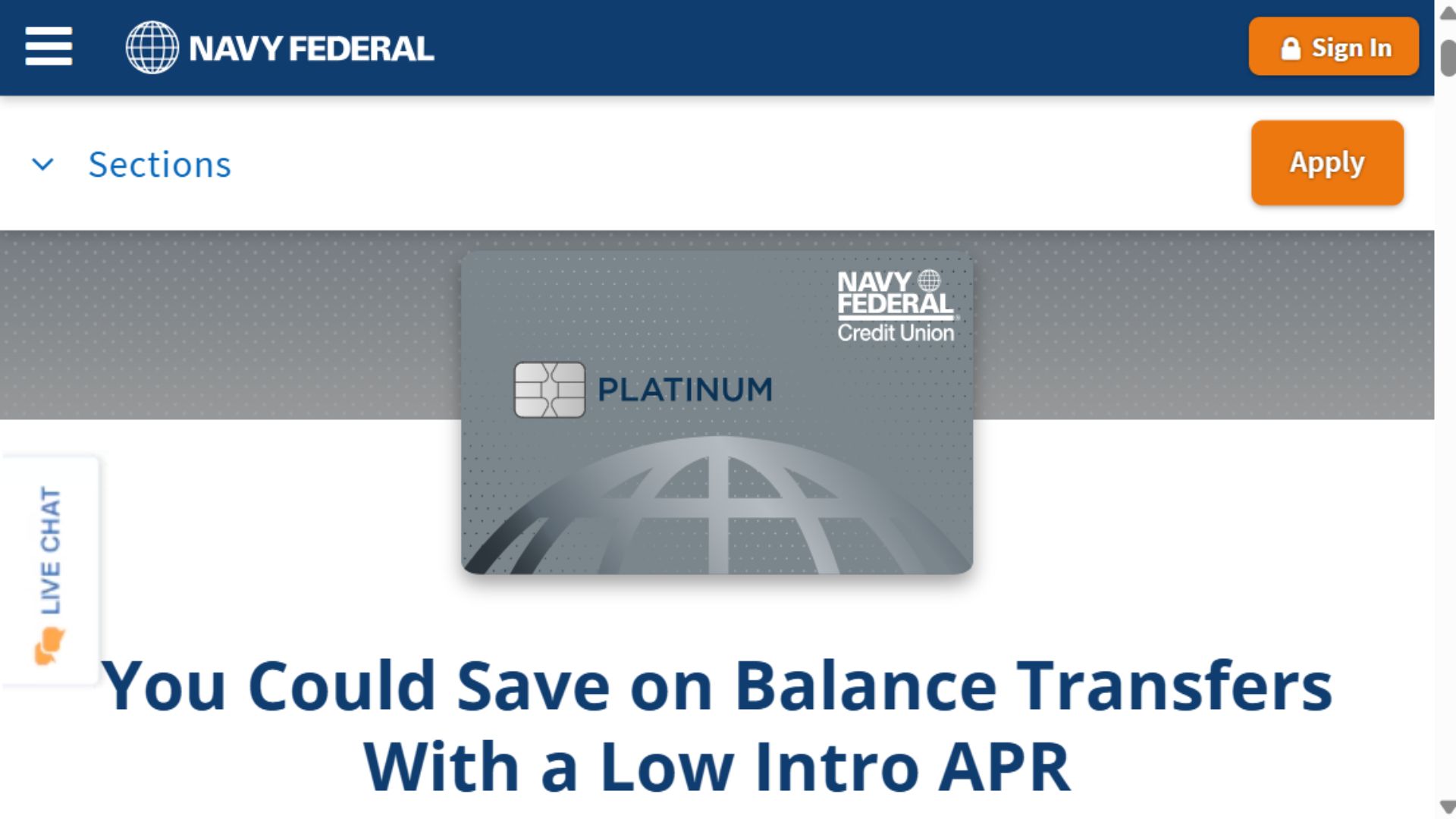
Best for: Active military, veterans, and their families | Intro APR: 0% for 12 months on balance transfers and purchases | Balance Transfer Fee: 2% | Regular APR: 11.99%-18.00% Variable (based on creditworthiness) | Membership Required: Military affiliation or family member
Navy Federal's Platinum Card offers the lowest balance transfer fee on our list at just 2%, potentially saving hundreds compared to standard 3-5% fees. While the 12-month intro period is shorter than civilian alternatives, the ongoing APR of 11.99%-18.00% is significantly lower than most cards, meaning even after the intro period ends, you're paying less interest if a balance remains. This makes it ideal for military members who may face unpredictable deployments or financial situations.
Navy Federal is a not-for-profit credit union serving military members with a strong service orientation and member-first philosophy. The Platinum Card includes rental car insurance, travel accident insurance, and extended warranty protection at no extra cost. There's no annual fee, no balance transfer limit (subject to credit limit), and Navy Federal tends to work with members facing financial hardship with flexible payment options. The credit union's mobile app is highly rated, and customer service is available 24/7 with representatives who understand military life. If you're eligible for membership, this is an outstanding value.
Pros:
Lowest balance transfer fee at just 2%
Significantly lower ongoing APR than competitors
No annual fee
Excellent customer service for military community
Travel protections included
Cons:
Requires military affiliation for membership
Shorter 12-month intro period
No rewards program
Limited physical branch locations in some areas
Comparison Summary
When comparing balance transfer cards, three factors drive your decision: intro period length, transfer fees, and ongoing benefits. The Citi Diamond Preferred and Wells Fargo Reflect lead with 21-month intro periods ideal for large balances, though both charge 5% transfer fees. For lower upfront costs, the Discover it (3% fee), BankAmericard (3% fee), U.S. Bank Platinum (3% fee), and Navy Federal Platinum (2% fee) save money immediately, though Navy Federal requires military eligibility.
If you want rewards alongside debt payoff, the Chase Freedom Unlimited (1.5% cash back), Capital One Quicksilver (1.5% cash back), and Discover it (5% rotating categories) keep earning while you pay down balances, though their 15-18 month intro periods require larger monthly payments. The Amex EveryDay offers valuable Membership Rewards points for Amex ecosystem users. For maximum forgiveness, the Citi Simplicity's no-late-fee policy provides peace of mind for uncertain financial situations.
Your best choice depends on your specific situation: large balances benefit most from longer intro periods (21 months) even with higher fees, while smaller balances under $5,000 might prioritize low transfer fees over extended timeframes. Calculate your required monthly payment to become debt-free before the intro period ends—this determines whether you need maximum time or can benefit from rewards-earning cards with shorter periods.
Buying Guide: Who Needs Balance Transfer Cards and How They Work
Balance transfer credit cards are designed for individuals carrying high-interest credit card debt who can commit to aggressive payoff during a 0% APR introductory period. You're an ideal candidate if you have credit card balances with interest rates above 15-20%, good to excellent credit (typically 670+ FICO score), and a realistic plan to pay off the transferred balance before the intro period expires. These cards work best when you stop adding new debt and focus entirely on elimination.
The process is straightforward: apply for a balance transfer card, get approved with a credit limit, then request transfers from your existing high-interest cards (usually during application or within 60-120 days of approval). The new issuer pays off your old cards, and you now owe the balance to your new card at 0% APR for the intro period. You'll pay a balance transfer fee (typically 3-5% of the transferred amount), which is added to your new balance. From there, divide your total balance by the number of intro months to determine your monthly payment needed to become debt-free.
When choosing a balance transfer card, consider these key features: intro period length (longer is better for large balances), balance transfer fee (lower saves money upfront), whether the 0% rate applies to new purchases (helpful but can tempt additional spending), ongoing rewards programs (nice but secondary to debt payoff), and the regular APR that kicks in after the intro period (important if you can't pay everything off in time). Also verify you're transferring from a different issuer—most banks won't let you transfer balances between their own cards. Read terms carefully regarding when you must initiate transfers to qualify for the full intro period and the promotional rate.
Pricing Overview and Strategy
Balance transfer fees range from 2% to 5% of the transferred amount, with most cards charging 3-5%. On a $10,000 balance, this means paying $200-$500 upfront. While a lower fee saves money immediately, a longer intro period often provides greater total savings. For example, paying off $10,000 at 24% APR in 21 months would cost approximately $2,800 in interest, while a 5% transfer fee costs just $500—a net savings of $2,300. Run calculations based on your specific balance and realistic monthly payment capability.
The DIY approach to balance transfers is straightforward and free beyond the transfer fee—you simply apply, move your balances, and make payments. There's no need for professional debt settlement services when using balance transfer cards, as you're managing your debt yourself at 0% interest. However, if you're considering balance transfers, ensure you have a realistic budget and payment plan. Financial counseling through nonprofit credit counseling agencies can help you create a payoff strategy at no or low cost (typically $25-50 for a session), far less expensive than for-profit debt settlement companies that charge 15-25% of your enrolled debt.
The key to maximizing value is committing to aggressive payments during the intro period. Calculate your break-even payment by dividing your total transferred balance (including the fee) by the number of intro months, then pay more if possible. Even an extra $50-100 monthly accelerates your debt-free date and provides a buffer if unexpected expenses arise. Set up automatic payments above the minimum to ensure you never miss a due date, as a single late payment can void your promotional rate with some issuers.
Frequently Asked Questions
Can I transfer balances from multiple credit cards to one balance transfer card?
Yes, most issuers allow you to transfer balances from multiple cards up to your approved credit limit. You can typically request several transfers during the application process or within the designated timeframe (usually 60-120 days after approval). This strategy is effective for consolidating multiple high-interest debts into one 0% APR account, simplifying your payments and debt elimination timeline. Just ensure your total transfers don't exceed 70-80% of your new credit limit, as maxing out the card can hurt your credit score.
Will opening a balance transfer card hurt my credit score?
Initially, yes, but the impact is typically minor and temporary. You'll see a small dip from the hard inquiry (usually 5-10 points) and potentially from reduced average account age. However, if the new card increases your total available credit without increasing your debt, your credit utilization ratio improves—a major factor in credit scoring that can offset the initial dip. Most borrowers who pay down balances consistently see their scores increase within 3-6 months as utilization drops and positive payment history builds.
What happens if I don't pay off the balance before the intro period ends?
Any remaining balance will begin accruing interest at the card's regular APR, which typically ranges from 18-30%. This interest applies only to the remaining balance going forward, not retroactively to the original transfer (unlike deferred interest promotions on store cards). This is why calculating your required monthly payment before transferring is crucial. If you realize mid-way through that you won't finish paying off the balance in time, consider whether another balance transfer to extend your 0% period makes sense, though you'll pay another transfer fee.
Can I use a balance transfer card for new purchases?
Technically yes, but it's generally inadvisable. Many balance transfer cards offer 0% APR on purchases as well, but adding new debt defeats the purpose of debt elimination. Additionally, payments are typically applied to lower-APR balances first, meaning if your purchase intro period ends before your transfer period, new purchases would start accruing interest while your transfer balance continues at 0%. Focus exclusively on paying off your transferred balance, and use a different card (or cash) for necessary purchases to keep your debt elimination on track.
Is it worth paying a 5% balance transfer fee?
In most cases, yes, especially if you're carrying high-interest debt. If you're paying 20-25% APR on existing balances, a one-time 5% fee to stop interest accumulation for 15-21 months is a bargain. For example, on a $5,000 balance at 22% APR, you'd pay approximately $1,100 in interest over 18 months making minimum payments. A $250 transfer fee (5%) saves you $850, even accounting for the upfront cost. The key is committing to paying off the balance during the intro period to maximize savings.