
Top 10 Auto Loan Lenders That Help You Avoid Costly Mistakes
LightStream – Best for excellent credit borrowers avoiding dealer markup
Capital One Auto Navigator – Best for rate shopping without credit damage
PenFed Credit Union – Best for low rates and flexible terms
Bank of America – Best for relationship discounts and rewards
Consumers Credit Union – Best for refinancing high-rate loans
Navy Federal Credit Union – Best for military members seeking protection
AutoPay – Best for transparent online comparison shopping
Chase Auto Finance – Best for existing customers avoiding multiple inquiries
myAutoloan – Best for marketplace comparison without bias
Carvana – Best for coordinated financing and vehicle purchase
Our Methodology
We evaluated auto loan providers based on five critical criteria that directly impact cost and borrower protection. First, we analyzed interest rates and APR ranges across credit tiers to identify lenders offering competitive pricing. Second, we assessed fee transparency, including origination fees, prepayment penalties, and dealer markups. Third, we examined loan terms and flexibility, such as repayment periods, early payoff options, and refinancing policies. Fourth, we reviewed the application process for features that protect borrowers from credit damage and help them compare offers safely. Finally, we considered customer reviews and complaint data from the Consumer Financial Protection Bureau to gauge real-world borrower experiences and identify lenders with patterns of hidden costs or problematic practices.
Detailed Lender Reviews
1. LightStream – Best for Excellent Credit Borrowers Avoiding Dealer Markup
Best for: Borrowers with excellent credit (660+ credit score) who want to avoid dealer financing games
Pricing from: APRs starting at 5.99% for new vehicles (rates as of 2026, vary by creditworthiness)
Key features: No fees whatsoever, rate beat program, same-day funding, new and used vehicle financing
LightStream, a division of Truist Bank, eliminates one of the most expensive auto loan mistakes: accepting dealer financing without shopping around. By securing pre-approved financing before visiting the dealership, you arrive as a "cash buyer" with negotiating power, avoiding dealer markup on interest rates that typically adds 1-3 percentage points. LightStream charges absolutely no fees—no origination fees, no prepayment penalties, no application fees—meaning every dollar of your payment goes toward principal and interest.
The lender offers a unique Rate Beat Program: if you find a lower rate elsewhere, they'll beat it by 0.10 percentage points. This addresses the common mistake of not comparing multiple offers. LightStream's application process is entirely online with same-day funding available, and they finance vehicles up to 12 years old, giving you flexibility without forcing you into a brand-new car to get decent rates. Their loans range from $5,000 to $100,000 with terms from 24 to 84 months, though financial experts typically recommend keeping terms under 60 months to avoid negative equity.
Pros:
Zero fees of any kind (no origination, prepayment, or late fees)
Rate Beat Program guarantees competitive pricing
Same-day funding for quick purchases
Pre-approval doesn't impact credit score
Finances both new and used vehicles up to 12 years old
Cons:
Requires excellent credit (minimum 660 score, but best rates need 720+)
No physical branches for in-person support
Must complete purchase within 30 days of funding
Income verification required (no stated income loans)
2. Capital One Auto Navigator – Best for Rate Shopping Without Credit Damage
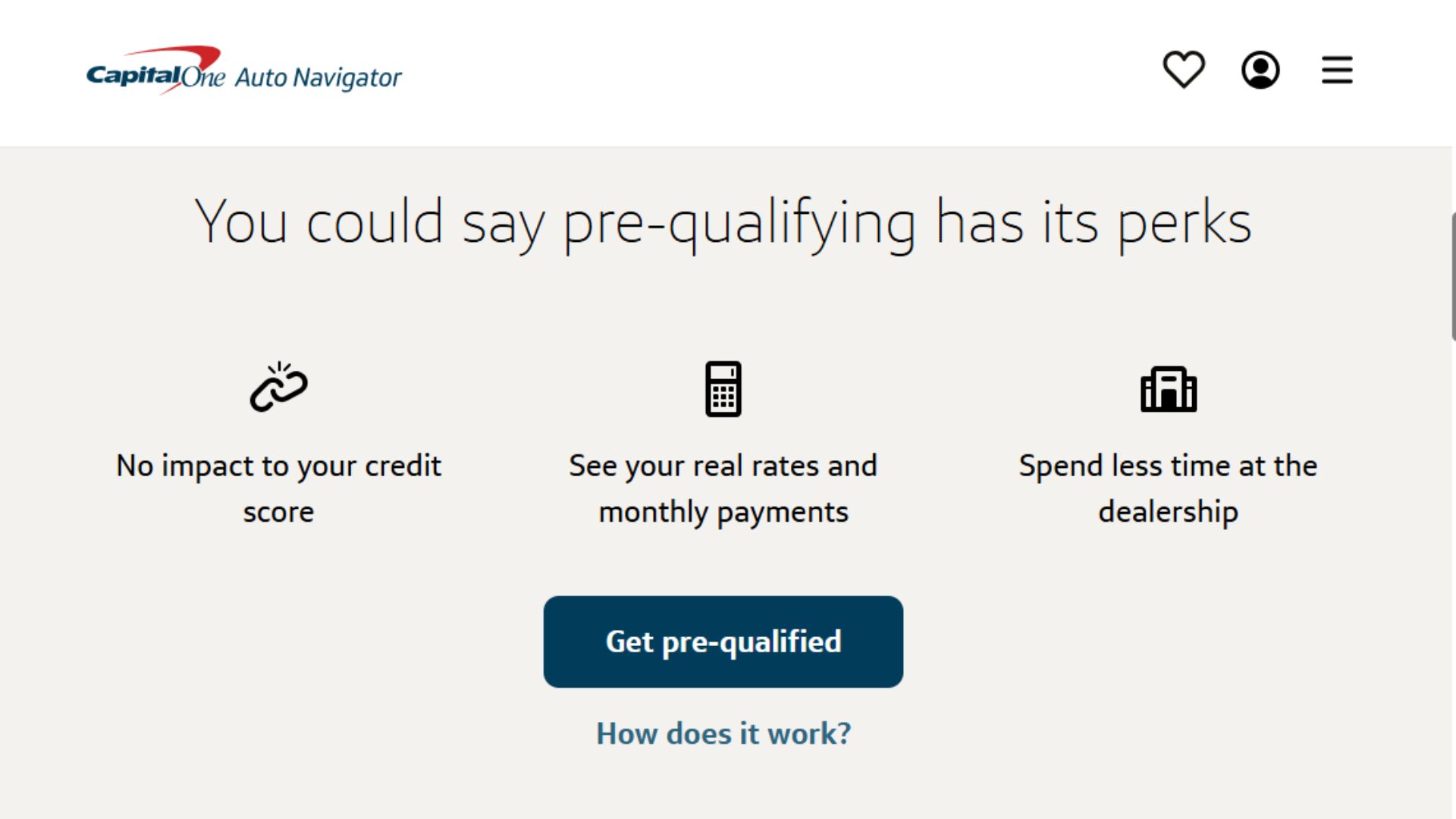
Best for: Buyers who want to compare offers without multiple hard credit inquiries
Pricing from: APRs vary by credit profile; pre-qualification with soft pull only
Key features: Soft credit check for pre-qualification, dealer network access, transparent dealer pricing, purchase price negotiation tools
Capital One Auto Navigator solves a critical mistake: damaging your credit score by applying with multiple lenders. Most auto loan applications trigger hard credit inquiries that temporarily lower your score by 3-5 points each. Capital One uses only a soft inquiry for pre-qualification, which doesn't affect your credit at all, allowing you to see your real rate and loan amount before committing. This prevents the scenario where multiple applications within a short period compound into significant credit damage.
The platform integrates shopping and financing by partnering with over 10,000 dealers nationwide. You can search inventory, see your pre-qualified pricing, and understand both the vehicle cost and financing terms before visiting any dealership. This transparency helps you avoid the common mistake of focusing only on monthly payments while dealers extend loan terms to keep payments low but maximize total interest paid. Auto Navigator shows you the full picture including total loan cost, helping you make informed decisions about loan length versus payment size.
Pros:
Pre-qualification uses soft credit check only
Compare multiple offers without credit damage
Access to nationwide dealer network
Tools to separate vehicle negotiation from financing
See real monthly payments before dealer visit
Cons:
Final approval requires hard credit pull
Limited to dealer network (can't bring to any dealer)
May push Capital One products over competitor options
Online-only application process
3. PenFed Credit Union – Best for Low Rates and Flexible Terms

Best for: Buyers seeking competitive rates with flexible payoff options
Pricing from: APRs starting at 5.24% for new vehicles with excellent credit
Key features: No prepayment penalties, refinancing options, new and used vehicle financing, payment skip option, rate discounts for automatic payments
PenFed Credit Union consistently offers some of the lowest auto loan rates in the industry, addressing the expensive mistake of accepting whatever rate your bank or dealer offers without comparison. Their rates are particularly competitive for borrowers with good to excellent credit, and they finance vehicles up to 20 years old—unusual for older used cars. PenFed also avoids prepayment penalties, a hidden cost that some lenders use to trap borrowers who want to pay off loans early and save on interest.
The credit union offers genuine flexibility that helps avoid long-term financial mistakes. Their loans range from 36 to 84 months, and they provide payment skip options if you encounter financial difficulty, preventing late fees and credit damage. PenFed also offers refinancing for existing auto loans, helping borrowers escape high-rate loans that drain their budgets. Membership is open to anyone through their qualifying organizations, making these benefits accessible beyond military families.
Pros:
Highly competitive interest rates across credit tiers
No prepayment penalties for early payoff
Finances older vehicles (up to 20 years)
Payment skip options during financial hardship
0.25-0.50% rate discount for automatic payments
Cons:
Requires credit union membership (though easy to join)
Application and approval can take longer than online lenders
Limited physical branch locations
May require vehicle inspection for older cars
4. Bank of America – Best for Relationship Discounts and Rewards
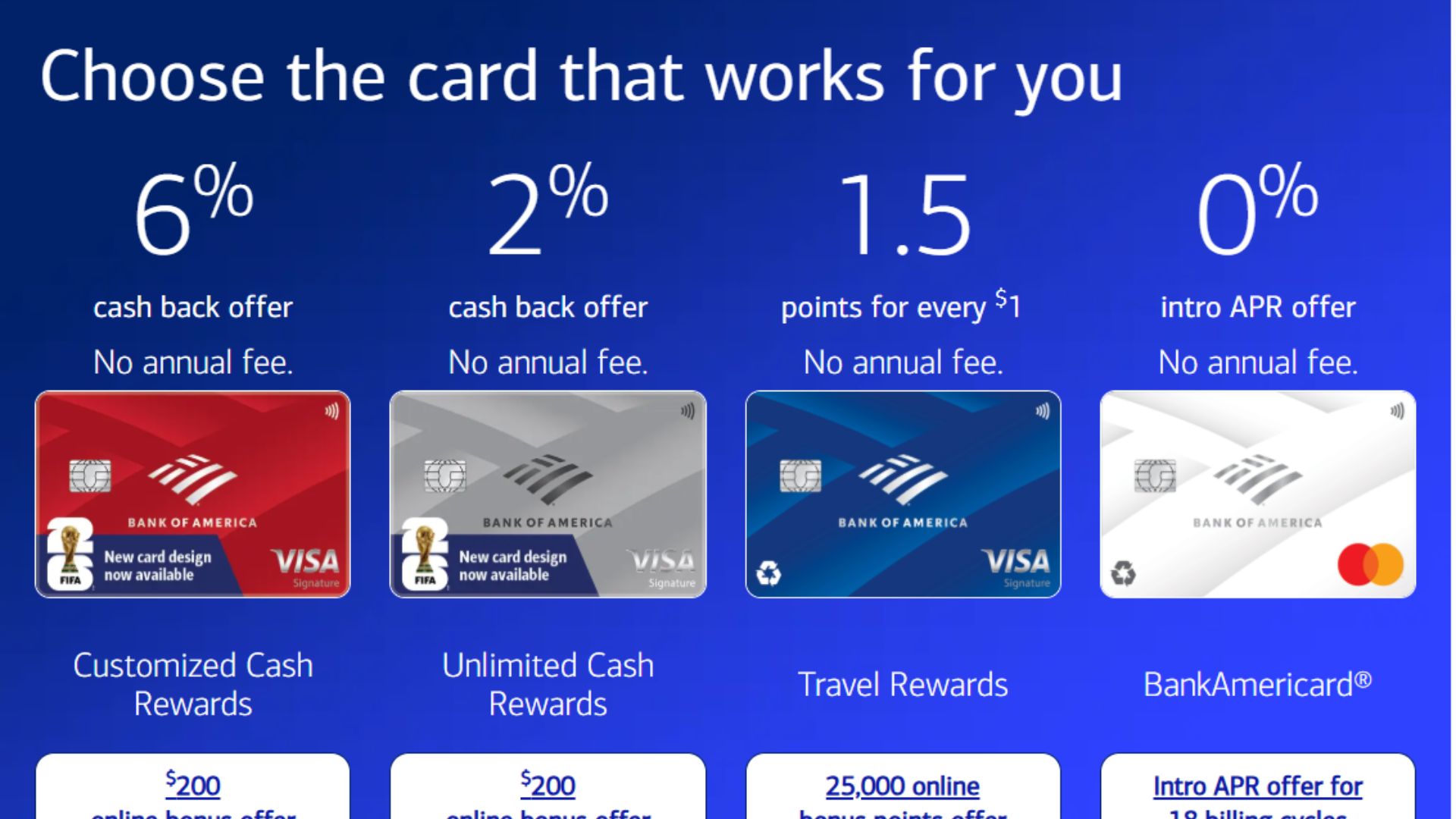
Best for: Existing Bank of America customers who can leverage relationship benefits
Pricing from: Competitive APRs with up to 0.50% rate discount for Preferred Rewards members
Key features: Preferred Rewards discounts, no application or origination fees, online pre-qualification, extensive dealer network, potential cashback rewards
Bank of America rewards customer loyalty with auto loan rate discounts that can save hundreds over the loan term. Preferred Rewards members receive up to 0.50% off their APR—addressing the mistake of not leveraging existing banking relationships for better loan terms. On a $30,000 loan over five years, this discount saves approximately $750 in interest. The bank also offers no application or origination fees, eliminating upfront costs that inflate the total loan expense.
The lender provides a comprehensive pre-qualification process that shows your estimated rate and loan amount without impacting your credit score, helping you avoid the mistake of applying blindly. Bank of America's extensive dealer network and online shopping tools help you compare financing options before visiting dealerships. Additionally, eligible customers can earn rewards points on their auto loan, essentially getting paid back for borrowing money—a unique benefit that offsets interest costs over time.
Pros:
Up to 0.50% rate discount for existing customers
No application or origination fees
Pre-qualification with soft credit inquiry
Rewards points available on auto loans
Extensive branch network for in-person support
Cons:
Best rates require Preferred Rewards membership
May need to maintain minimum balances for discounts
Rate discounts not as substantial as credit unions
Limited benefits for non-customers
5. Consumers Credit Union – Best for Refinancing High-Rate Loans
Best for: Borrowers trapped in high-interest loans who need to refinance
Pricing from: Refinance APRs starting around 5.49% for well-qualified borrowers
Key features: No prepayment penalties, streamlined refinancing process, underwater loan refinancing, cash-out refinancing options, rate reduction programs
Consumers Credit Union specializes in helping borrowers escape one of the costliest mistakes: staying in a high-rate auto loan when better options exist. Many car buyers accept dealer financing at elevated rates during the purchase excitement, then continue paying inflated interest for years. Consumers Credit Union's refinancing program can reduce rates by 2-4 percentage points for qualified borrowers, saving thousands in interest and potentially lowering monthly payments significantly.
What sets this credit union apart is their willingness to refinance underwater loans—situations where you owe more than the vehicle is worth. This common problem occurs when buyers accept long loan terms (72-84 months) with minimal down payments, then face negative equity for years. Consumers Credit Union evaluates the full financial picture rather than just loan-to-value ratios, offering solutions when other lenders refuse. They also provide cash-out refinancing if you need to access vehicle equity for emergencies, though this should be used cautiously to avoid extending debt unnecessarily.
Pros:
Competitive refinance rates for rate reduction
Willing to refinance underwater loans
No prepayment penalties for early payoff
Cash-out refinancing options available
Streamlined application process for existing loans
Cons:
Requires credit union membership
May require higher credit scores for best rates
Processing time longer than online-only lenders
Limited physical locations outside primary markets
6. Navy Federal Credit Union – Best for Military Members Seeking Protection
Best for: Active duty, veterans, and military families needing member-focused lending
Pricing from: APRs starting at 5.79% for new vehicles with excellent credit
Key features: No prepayment penalties, deployment protection, payment deferral options, comprehensive member support, GAP insurance options
Navy Federal Credit Union provides auto loans with built-in protections that help military members avoid financial mistakes during service. Their Servicemembers Civil Relief Act (SCRA) benefits cap interest rates at 6% during active duty periods, protecting members from the costly mistake of maintaining high-rate loans during deployment. Navy Federal also offers payment deferral programs during financial hardship, preventing late fees and credit damage that compound financial problems.
The credit union's comprehensive approach addresses multiple common mistakes simultaneously. They offer GAP insurance at competitive rates, protecting borrowers from the devastating financial impact of total loss when they owe more than the vehicle's value—a critical protection since most new cars depreciate 20-30% in the first year. Navy Federal also provides extensive financial counseling and education resources, helping members understand loan terms, total costs, and repayment strategies before committing. Their member service representatives are trained to prioritize member financial health over loan volume, reducing pressure tactics common with dealer financing.
Pros:
SCRA protections for active duty members
Deployment-related payment flexibility
Comprehensive financial counseling included
Competitive GAP insurance pricing
No prepayment penalties
Cons:
Membership restricted to military and families
Application processing can be slower
Physical branch access limited in some regions
May require more documentation than commercial lenders
7. AutoPay – Best for Transparent Online Comparison Shopping
Best for: Tech-savvy borrowers who want to compare multiple lenders simultaneously
Pricing from: APRs from 5.24% depending on credit profile and lender matching
Key features: Multi-lender marketplace, soft credit pull for pre-qualification, transparent comparison tools, direct lender access, no dealer involvement required
AutoPay operates as a lending marketplace that addresses the costly mistake of applying with only one lender and accepting whatever rate you're offered. Their platform connects borrowers with multiple competing lenders—banks, credit unions, and online lenders—who bid for your business based on your credit profile. This competitive process typically yields rates 0.5-2 percentage points lower than accepting a single offer without comparison, translating to savings of $1,000-$3,000 over a typical loan term.
The platform uses a single soft credit inquiry to generate offers from multiple lenders, solving the problem of credit score damage from multiple applications. You receive real rate quotes (not estimates) within minutes, complete with total loan costs, monthly payments, and interest paid over the life of the loan. This transparency helps you avoid the common mistake of focusing only on monthly payment amounts while ignoring loan length and total cost. AutoPay's lenders compete openly, and you can see exactly how much you'll pay in interest to each lender before selecting your loan, eliminating surprises at closing.
Pros:
Compare multiple lenders with one application
Single soft credit inquiry protects credit score
Transparent display of total loan costs
Direct lender relationships (no dealer markup)
Quick approval and funding process
Cons:
Limited to lenders in their network
May not include all major credit unions
Online-only platform with no physical support
Best rates still require good to excellent credit
8. Chase Auto Finance – Best for Existing Customers Avoiding Multiple Inquiries
Best for: Chase banking customers who want streamlined approval with relationship benefits
Pricing from: Competitive rates with potential discounts for qualifying accounts
Key features: Relationship-based pricing, pre-qualification without hard inquiry, extensive dealer network, online account management, refinancing options
Chase Auto Finance leverages your existing banking relationship to streamline the loan process and avoid the mistake of starting from scratch with unknown lenders. If you already bank with Chase, they have access to your financial history and can often provide pre-approval decisions within minutes without additional credit inquiries. This prevents the costly mistake of multiple credit applications damaging your score while you shop for the best rate. Chase customers may also qualify for relationship discounts that reduce interest rates by 0.25-0.50%, similar to Bank of America's approach.
The integration with Chase's broader banking ecosystem helps you avoid coordination mistakes that delay or complicate the buying process. You can manage your auto loan through the same mobile app and online banking platform you already use for checking and savings, set up automatic payments easily to avoid late fees, and potentially qualify for special financing during promotional periods. Chase's extensive dealer network means you can secure pre-approval and then shop confidently, knowing you have financing locked in at a competitive rate without dealer markup.
Pros:
Streamlined approval for existing customers
Relationship discounts available
Integrated account management with other Chase products
Pre-qualification with soft credit check
Extensive branch network for support
Cons:
Best benefits require existing Chase relationship
Rates may not beat specialized auto lenders
Limited flexibility compared to credit unions
May push additional Chase products
9. myAutoloan – Best for Marketplace Comparison Without Bias

Best for: Borrowers who want unbiased access to multiple lenders' real offers
Pricing from: APRs vary by matched lender; comparison shows exact rates from each
Key features: Up to four competing lender offers, soft credit check, transparent pricing display, purchase and refinance options, subprime lender access
myAutoloan functions as an unbiased marketplace that addresses the expensive mistake of limiting your loan search to familiar banks or convenient dealer options. Their platform submits your information to multiple lenders simultaneously—including banks, credit unions, and online lenders—generating up to four real offers within minutes. This competitive bidding process helps you avoid accepting inflated rates, as lenders know they're competing directly for your business based solely on their terms and pricing.
What distinguishes myAutoloan from other marketplaces is their inclusion of lenders across the entire credit spectrum, including subprime specialists who work with borrowers recovering from credit challenges. This prevents the costly mistake of assuming you can't get approved or will face predatory lending because of past credit issues. The platform displays all offers transparently with clear APR, monthly payment, and total interest paid, making it easy to compare true costs rather than just monthly payments. myAutoloan also facilitates both purchase financing and refinancing, helping borrowers escape high-rate existing loans.
Pros:
Access to diverse lender types simultaneously
Lenders compete for your business
Includes subprime and credit-challenged options
Transparent comparison of all offers
Both purchase and refinance options
Cons:
Limited to lenders in their network
Multiple lender contacts after selection
Online-only platform without phone support
Final approval may differ from initial offers
10. Carvana – Best for Coordinated Financing and Vehicle Purchase
Best for: Buyers who want seamless integration of vehicle shopping and financing
Pricing from: APRs competitive with traditional lenders; varies by credit profile
Key features: Integrated shopping and financing platform, transparent pricing, soft credit pre-qualification, 7-day return policy, home delivery available
Carvana addresses a common expensive mistake: separating vehicle shopping from financing planning, which leads to poor decisions on both fronts. Their integrated platform shows you monthly payments and total loan costs while you browse vehicles, preventing the costly error of falling in love with a car you can't comfortably afford. By seeing the financial impact before emotional attachment forms, you make more rational decisions about price, down payment, and loan terms that fit your actual budget.
The company's approach eliminates dealer finance office pressure tactics that cost buyers thousands. You complete the entire transaction online with transparent pricing—no surprise fees or mandatory add-ons at the finance desk. Carvana provides pre-qualification with a soft credit check, showing your real rate before hard inquiry. Their 7-day return policy offers protection from the mistake of rushed buyer's remorse, giving you time to verify the vehicle meets expectations and the loan terms remain comfortable. While Carvana's rates may not always beat specialized lenders, the coordinated experience and transparency help you avoid the much more expensive mistakes of overborrowing, accepting bad loan terms under pressure, or buying the wrong vehicle.
Pros:
Integrated shopping shows financing impact upfront
Transparent pricing without dealer pressure
Pre-qualification doesn't impact credit
7-day return policy reduces purchase risk
Convenient home delivery option
Cons:
Rates may not be the absolute lowest available
Selection limited to Carvana inventory
May charge delivery fees for some areas
Cannot inspect vehicle before purchase (though 7-day return helps)
Comparison Summary
When comparing auto loan providers, the most significant differences emerge in rate competitiveness, borrower protections, and the relationship between shopping and financing. LightStream and PenFed Credit Union offer the lowest rates for borrowers with excellent credit, with APRs often 1-2 percentage points below average lenders. These providers suit disciplined borrowers who shop independently and prioritize minimizing interest costs above convenience.
Capital One Auto Navigator and myAutoloan excel in the comparison shopping phase, allowing borrowers to see multiple real offers without credit damage. These platforms work best for buyers who want to separate financing approval from dealer negotiation, arriving at dealerships as informed cash buyers. Bank of America and Chase provide moderate advantages for existing customers through relationship discounts, working well for people who prefer consolidated banking relationships and value branch access for questions.
Navy Federal and PenFed offer superior member protections and flexibility, though they require membership eligibility. These credit unions prioritize member financial health over profit maximization, making them ideal for borrowers who qualify and value ongoing support beyond just competitive rates. AutoPay and myAutoloan suit tech-comfortable buyers who want marketplace competition and transparency, while Carvana works best for buyers who value coordinated vehicle selection and financing over absolute lowest rates.
The most expensive mistake is choosing convenience over comparison—accepting dealer financing or your primary bank's first offer without exploring alternatives. Even small rate differences compound dramatically: a 1% higher APR on a $30,000 five-year loan costs an extra $800. Borrowers with good credit should compare at least three lenders, while those with challenging credit benefit from marketplace platforms that access specialized lenders.
Buying Guide: Understanding Auto Loans and Avoiding Expensive Mistakes
Who Needs an Auto Loan and When to Use One
Most car buyers need auto loans because vehicles cost $30,000-$50,000 on average—far more than most people can pay cash. Auto loans make sense when the vehicle is necessary for work or daily life, you've saved for an adequate down payment (ideally 20%), and the monthly payment fits comfortably within your budget without stretching finances. The general rule is that total transportation costs—car payment, insurance, fuel, and maintenance—shouldn't exceed 15-20% of your gross monthly income.
However, auto loans should be avoided or delayed if you're carrying high-interest credit card debt (pay that off first), lack an emergency fund (save 3-6 months expenses first), or can barely afford the monthly payment even at the longest term. Cars depreciate rapidly—losing 20-30% of value in the first year—so borrowing excessively or accepting unfavorable terms creates financial burden without building equity. Consider whether you truly need the vehicle immediately or can delay six months while improving credit scores and saving a larger down payment, as both factors dramatically improve loan terms and reduce total costs.
How Auto Loans Work and What to Understand Before Applying
Auto loans are secured installment loans where the vehicle serves as collateral. The lender gives you money to purchase the car, you make fixed monthly payments over a set term (typically 36-72 months), and if you default, the lender can repossess the vehicle. Your credit score, income, debt-to-income ratio, down payment, and the vehicle's value all influence your approval and interest rate. Lenders assess risk: borrowers with high credit scores and substantial down payments qualify for the lowest rates, while those with challenged credit or minimal down payment pay premium rates to offset higher default risk.
The most misunderstood aspect of auto loans is how monthly payments, loan terms, and total cost interact. A $30,000 loan at 6% APR costs $483 monthly for 72 months, totaling $34,776 in payments. The same loan at 60 months costs $580 monthly but totals only $34,800—nearly identical total cost despite $100 higher monthly payment. However, at 48 months, payments rise to $705 but total cost drops to $33,840. The longer the term, the more interest accumulates. Dealers exploit this by focusing on monthly payment affordability while extending terms to 84 months, maximizing their interest revenue while buyers believe they're getting a good deal.
Essential Features and Terms to Consider
The most critical feature is the Annual Percentage Rate (APR), which represents the true cost of borrowing including interest and most fees. Always compare APR, not just interest rates, as this reveals the complete picture. Loan term length dramatically affects total cost—financial experts recommend maximum 60 months for new cars and 48 months for used vehicles to avoid paying interest longer than the vehicle holds significant value. Prepayment penalties should be avoided entirely; many lenders charge fees if you pay off the loan early, trapping you in interest payments even when your financial situation improves.
Gap insurance is crucial if you're putting less than 20% down, as it covers the difference between what you owe and the vehicle's value if totaled in an accident—a common scenario since cars depreciate faster than loan balances decrease initially. Avoid dealer add-ons like extended warranties, paint protection, or VIN etching in the finance office; these are almost always overpriced and can be purchased elsewhere for less or skipped entirely. Look for lenders offering payment flexibility during financial hardship, such as payment deferrals or term extensions, which prevent late fees and credit damage during temporary difficulties.
Pricing Overview and DIY vs. Professional Guidance
Auto loan pricing varies significantly based on credit profile, with excellent credit borrowers (740+ scores) accessing rates from 5.0-6.5%, good credit borrowers (670-739) paying 6.5-9.0%, fair credit borrowers (580-669) facing 9.0-15.0%, and poor credit borrowers (below 580) often paying 15-20% or higher. The difference is substantial: on a $30,000 five-year loan, the gap between 6% and 12% APR is $3,600 in total interest paid. These ranges fluctuate based on Federal Reserve policy, economic conditions, and individual lender strategies, but the credit-based hierarchy remains consistent.
Most borrowers can successfully navigate auto loan shopping independently using the strategies and lenders outlined in this guide. The DIY approach involves checking your credit score first (free through Credit Karma or your credit card provider), getting pre-approved with 2-3 lenders before shopping for vehicles, and negotiating vehicle price separately from monthly payment discussions. This method saves money by avoiding dealer finance office markups and ensuring you control the terms rather than accepting whatever is offered during the purchase excitement.
However, professional guidance makes sense in certain situations. Credit repair specialists can help if your credit report contains errors or you need strategies to improve your score quickly before applying. Financial advisors should be consulted if you're unsure whether buying now versus delaying makes sense for your overall financial picture, or if your debt-to-income ratio is high and you need guidance on restructuring obligations. Auto loan brokers can assist borrowers with complex credit situations, though verify they're working in your interest rather than receiving commissions from specific lenders. Never pay upfront fees for auto loan assistance; legitimate services are compensated by lenders or charge reasonable fees only after successful loan placement.
Frequently Asked Questions
What's the biggest mistake people make when getting an auto loan?
The most expensive mistake is focusing solely on monthly payment affordability rather than total loan cost. Dealers exploit this by extending loan terms to 72, 84, or even 96 months to reduce monthly payments while dramatically increasing total interest paid. A $30,000 loan at 7% costs $38,208 over 84 months versus $35,284 over 60 months—a $2,924 difference. Additionally, long terms create negative equity situations where you owe more than the vehicle's worth for years, trapping you in the loan if circumstances change. Always evaluate the APR, loan term, and total amount paid, not just the monthly payment number.
Should I finance through the dealer or get my own loan first?
Get pre-approved with an outside lender before visiting any dealership. Dealer financing involves markup—dealers receive compensation for selling loans with higher interest rates than you qualify for, typically adding 1-3 percentage points. Pre-approval through a bank, credit union, or online lender gives you three advantages: you know the true rate you qualify for, you negotiate as a "cash buyer" separating vehicle price from financing discussions, and you can compare the dealer's best offer against your pre-approval to ensure you're getting competitive terms. Dealers sometimes match or beat outside financing to earn your business, but you can only verify this if you have a real competing offer in hand.
How much should I put down on a car loan?
Financial experts recommend a minimum 20% down payment for new vehicles and 10-15% for used vehicles. This substantial down payment accomplishes several goals: it reduces your monthly payment and total interest paid, helps prevent negative equity where you owe more than the car's worth, demonstrates financial responsibility to lenders which may improve your rate, and ensures you have "skin in the game" reducing default temptation if the vehicle depreciates or circumstances change. Many buyers minimize down payments to preserve cash, but this strategy costs thousands in extra interest and creates financial vulnerability. If you cannot afford a 20% down payment, consider purchasing a less expensive vehicle or delaying the purchase while you save.
Can I refinance my auto loan if I made a mistake initially?
Yes, refinancing is possible and often advisable if you accepted unfavorable terms initially. Most lenders allow refinancing after 6-12 months of on-time payments, and refinancing makes sense if interest rates have dropped, your credit score has improved significantly, you initially accepted dealer financing without shopping around, or you need to reduce monthly payments even if it extends the term. Refinancing can reduce your interest rate by 2-4 percentage points for borrowers who initially had challenged credit or accepted dealer markup. However, avoid refinancing if you're more than halfway through your loan term, as you've already paid most of the interest, or if extending the term would result in owing more than the vehicle's worth.
What credit score do I need to get a good auto loan rate?
Lenders typically tier pricing by credit score, with the best rates (prime financing) starting around 740+ FICO score. Good rates are generally available to borrowers with scores above 670, while scores between 580-669 face higher "subprime" rates, and scores below 580 encounter difficulty qualifying with traditional lenders or face very high rates from specialized subprime lenders. However, credit score isn't the only factor—lenders also evaluate income stability, debt-to-income ratio, down payment size, and vehicle value. If your score is below 670, focus on improving it before applying: pay down credit card balances below 30% of limits, ensure all payments are current, dispute any credit report errors, and avoid new credit applications for several months before your auto loan application.