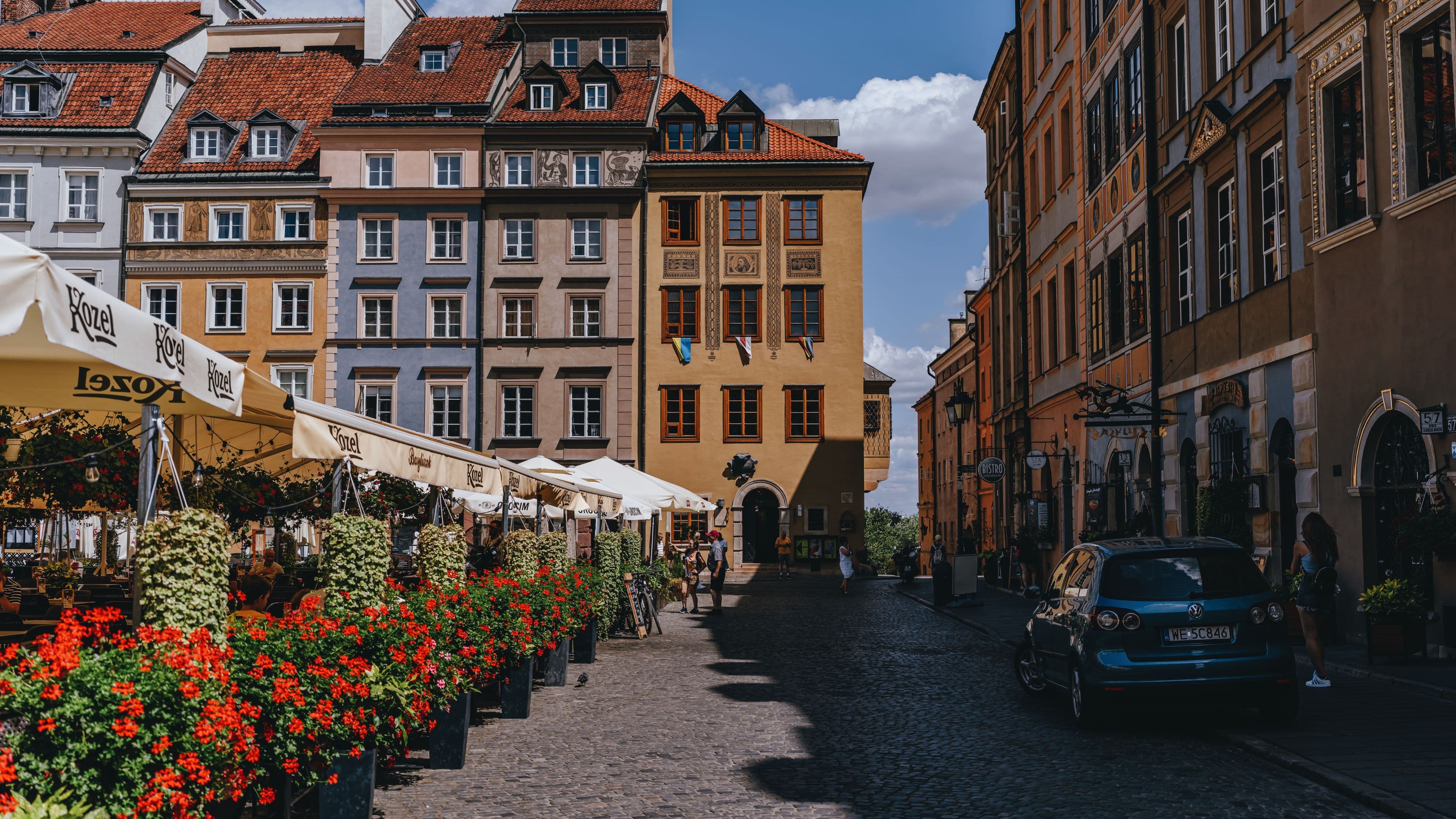
We dug through traveler reviews, boutique travel blogs, regional tourism reports, and firsthand accounts from people who genuinely prefer a cobblestone alley with no tourist map in sight to a selfie stick gauntlet outside a famous cathedral. What we found is a Europe that most visitors never see: quieter, more affordable, often more beautiful, and full of the kind of authentic moments that make you feel like you actually traveled somewhere rather than just checked a destination off a list. Here are the ten hidden gems that kept rising to the top.
🏆 Top 10 Hidden Gem Destinations at a Glance
Kotor, Montenegro – Best for medieval old towns without the Venice crowds
Matera, Italy – Best for jaw-dropping ancient cave architecture
Ghent, Belgium – Best for art, history, and canals without the Bruges tourists
Plitvice Lakes, Croatia – Best for otherworldly natural scenery on a budget
Sintra, Portugal – Best for fairytale palaces in the hills above Lisbon
Plovdiv, Bulgaria – Best for bohemian Old Town charm at rock-bottom prices
Hallstatt, Austria – Best for picture-perfect alpine lakeside scenery
Valletta, Malta – Best for history-dense city breaks in the Mediterranean
Colmar, France – Best for fairy-tale Alsatian villages and incredible food
Gjirokastra, Albania – Best for UNESCO-listed Ottoman heritage off the beaten path entirely
The Full Reviews
1. Kotor, Montenegro
Best for: Medieval old towns without the Venice crowds
Kotor is one of those places that stops you mid-step the moment you come around a mountain bend and see it — a perfectly preserved medieval walled city hugging the edge of a dramatic fjord-like bay, ringed by fortress walls that climb the sheer limestone cliffs behind it. It looks like a film set. It isn't. It's real, it's lived-in, and it costs a fraction of comparable destinations in Western Europe.
The old town is a UNESCO World Heritage Site packed with Venetian-era churches, marble-paved squares, and cats — an inexplicable abundance of incredibly comfortable cats who have apparently decided this is their city and they're right. Hiking the fortress walls above the city takes about 45 minutes and delivers panoramic views of the Bay of Kotor that will make you understand immediately why people extend their stays here by three to five days without planning to.
General pricing: Budget travelers can eat, sleep, and explore for $50–$80/day. Mid-range hotels run $70–$150/night. Entrance to the old town walls costs around $8.
Pros:
UNESCO-protected old town with genuine medieval character
Stunning Bay of Kotor scenery in every direction
Far less crowded than comparable Adriatic destinations
Excellent and affordable Adriatic seafood
Gateway to Montenegro's national parks and beaches
Cons:
Can get busy with cruise ship day-trippers in peak summer months
Limited direct flight options from North America — connection through Europe required
Some streets and wall climbs are strenuous — not ideal for limited-mobility travelers
High season (July–August) significantly busier and pricier than shoulder seasons
2. Matera, Italy
Best for: Jaw-dropping ancient cave architecture unlike anywhere else on earth
Matera is the kind of place that makes you reconsider everything you thought you knew about "old." This southern Italian city in Basilicata is home to the Sassi — a network of cave dwellings carved into two deep ravines that have been continuously inhabited for over 9,000 years, making Matera one of the oldest continuously occupied human settlements on the planet. It was named a European Capital of Culture in 2019, but somehow still hasn't been overrun by mass tourism the way comparable Italian destinations have.
Walking through the Sassi at dusk, when the golden light hits the pale tufa stone and candles glow from the windows of cave hotels, is one of those travel experiences that genuinely changes your sense of what human civilization looks and feels like. Many of those caves are now boutique hotels, restaurants, and wine bars — and sleeping in one is an experience that no conventional hotel on earth can replicate. The food, meanwhile, is peak southern Italian: rustic, extraordinary, and priced for locals rather than tourists.
General pricing: Cave hotel rooms range from $100–$250/night depending on property and season. Meals at local restaurants run $15–$35 per person. Overall daily budget: $80–$150 for comfortable mid-range travel.
Pros:
Literally unique — there is nowhere else like the Sassi on earth
Cave hotels deliver a once-in-a-lifetime accommodation experience
Authentic southern Italian cuisine at non-tourist prices
Relatively uncrowded compared to Rome, Florence, or the Amalfi Coast
Spectacular photography at every turn, especially at golden hour
Cons:
Remote location in Basilicata requires effort to reach — no major airport nearby
Uneven cobblestones and steep gradients make mobility a challenge
Limited nightlife compared to larger Italian cities
Less public transportation infrastructure than northern Italy
3. Ghent, Belgium
Best for: Art, history, and canal scenery for travelers who've done Bruges
Bruges gets all the attention, all the Instagram posts, and all the tourist crowds. Ghent, just 30 minutes away by train, gets the Belgians themselves — and that tells you everything you need to know about where the real experience is. Ghent is a full-sized, fully functioning Flemish city with one of the best-preserved medieval city centers in Europe, a world-class art museum, a thriving university scene, and canal views that are arguably more striking than Bruges because they don't come with tour groups photobombing every shot.
The star attraction is the Ghent Altarpiece — Jan van Eyck's Adoration of the Mystic Lamb, one of the most significant paintings in the history of Western art — housed in Saint Bavo's Cathedral and recently restored to breathtaking clarity. Beyond the masterpiece, Ghent rewards slow walking: the Graslei and Korenlei quays at night are luminous, the street art in the Patershol neighborhood is excellent, and the beer list at almost any bar will make you seriously reconsider your relationship with craft brewing.
General pricing: Budget-friendly by Western European standards. Mid-range hotels run $90–$160/night. A three-course dinner with Belgian beer costs $30–$50. Daily budget: $100–$180.
Pros:
Less crowded than Bruges with equally stunning medieval architecture
Home to one of Europe's greatest paintings in a non-intimidating setting
Outstanding Belgian food and beer scene
Compact enough to explore meaningfully in two to three days
Excellent train connections to Brussels, Bruges, and Antwerp
Cons:
Smaller English-language tourism infrastructure than major Belgian cities
Some attractions have limited weekend hours
Fewer luxury hotel options than Brussels
Weather is typically overcast — not a sun destination
4. Plitvice Lakes, Croatia
Best for: Natural scenery so dramatic it looks digitally enhanced
Croatia is no longer a secret — Dubrovnik is firmly on the mass tourism map — but Plitvice Lakes National Park, tucked inland in the Croatian highlands, still delivers a natural spectacle that feels almost impossible. Sixteen terraced lakes cascade into each other via a series of waterfalls, the water shifting from turquoise to emerald to deep jade depending on the angle of light and mineral content. Wooden boardwalks thread through the whole system, letting you walk directly above the falls and through the mist of the cascades.
What makes Plitvice special beyond the visual drama is the accessibility. The park is well-maintained and genuinely walkable for most fitness levels, with boat crossings across the larger lakes and electric train connections between trail sections. It's also more affordable than Croatia's coastal destinations, and the surrounding Lika region — with its traditional stone villages and farm-to-table konoba restaurants — rewards travelers who arrive a day early and stay a day late to explore beyond the park itself.
General pricing: Park entrance costs approximately $10–$40 depending on season (higher in summer). Nearby guesthouses and small hotels run $60–$120/night. Daily budget including entry and meals: $70–$130.
Pros:
Natural scenery that genuinely exceeds expectations
Well-maintained boardwalks accessible to most fitness levels
More affordable than Croatia's coastal Dalmatian destinations
Best visited in spring (waterfalls are fullest) or fall (fewer crowds, brilliant foliage)
UNESCO World Heritage Site with strong conservation standards
Cons:
Summer months bring significant crowds — pre-booking timed entry is essential
Remote location requires a car or organized tour to reach comfortably
Accommodation options in the immediate area are limited
No major city nearby — purely a nature destination, not a base for broader exploration
5. Sintra, Portugal
Best for: Fairytale palaces and romantic forests within day-trip distance of Lisbon
Forty minutes by train from Lisbon, Sintra occupies a forested ridge in the Sintra-Cascais Natural Park and manages to feel like an entirely different world — one where eccentric 19th-century royals commissioned palaces in clashing Romantic styles and then scattered them across the hillside without apparent concern for coherence or restraint. The result is one of Europe's most visually unusual landscapes: a village below, dense forest above, and improbable towers and turrets emerging from the trees at every elevation.
The Pena Palace is the centerpiece — a yellow-and-red architectural fever dream perched above the clouds that looks like someone asked a child to design a castle and then actually built it. But Sintra rewards exploration beyond the big sites: the ruined Moorish Castle, the mysterious Quinta da Regaleira with its initiatic well, and the shaded forest paths connecting them all deserve unhurried time. Staying overnight (after the day-trip crowds drain back to Lisbon) transforms Sintra from a tourist attraction into something genuinely enchanting.
General pricing: Palace entrance fees run $15–$25 each. A Lisbon-Sintra train ticket costs approximately $3 each way. Overnight accommodation in Sintra ranges $80–$200/night. Worth at least one overnight stay.
Pros:
Extraordinarily unique architectural and landscape character
Easy and cheap day trip from Lisbon — or a magical overnight stay
Multiple distinct palaces and gardens spread across the hills
Cooler temperatures than Lisbon in summer thanks to Atlantic-facing elevation
Excellent food scene in the village below the palaces
Cons:
Day-trip crowds from Lisbon are genuinely significant in summer
Hillside terrain requires solid walking shoes and reasonable fitness
Tuk-tuks and taxis within the park are expensive compared to walking
Many attractions require separate entry tickets — costs add up quickly
6. Plovdiv, Bulgaria
Best for: Bohemian Old Town charm at the most affordable prices in the EU
Plovdiv is Europe's best-kept affordable secret, which is particularly remarkable given that it was a European Capital of Culture in 2019 and has been consistently ranked among the most livable cities on the continent. The Old Town — a hilltop neighborhood of colorful National Revival-era houses with jutting upper stories that seem to lean toward each other across cobblestone lanes — is one of the most visually distinctive urban environments in the Balkans, packed with galleries, craft studios, and some of the best small restaurants you've never heard of.
Below the Old Town, the pedestrianized Kapana (the Trap) district is a creative quarter of converted warehouses housing independent coffee shops, street art murals, boutique design stores, and a social life that costs almost nothing. A great meal in Plovdiv runs $8–$15. A beer in a craft bar costs $2–$3. A beautifully located hotel room in the Old Town runs $50–$90/night. For travelers with limited budgets who refuse to sacrifice experience for affordability, Plovdiv is one of the most compelling destinations in Europe right now.
General pricing: Extremely affordable by European standards. Budget travelers can live well for $40–$60/day. Mid-range daily budget: $70–$100. Old Town guesthouses: $45–$90/night.
Pros:
Among the most affordable destinations in the European Union
Exceptionally charming Old Town with genuine local character
Kapana creative district is vibrant, photogenic, and free to explore
Roman amphitheater in the center of the city — still used for concerts
Welcoming to solo travelers and younger visitors
Cons:
Limited direct connections from North America — requires a European hub
English is less widely spoken than in Western European capitals
Fewer luxury accommodation options than major European cities
Less infrastructure for organized tours — independent travel works better here
7. Hallstatt, Austria
Best for: Alpine lakeside beauty in a village that seems too perfect to be real
Hallstatt is, by almost any measure, one of the most photographed villages in the world — and yet somehow it remains genuinely worth visiting rather than just worth photographing. The 16th-century lakeside village clings to a narrow strip between the Hallstätter See and sheer alpine cliffs, its pastel-painted houses and wooden docks reflected in water so still and clear that the reflection sometimes looks sharper than the reality. It has been described as the inspiration for the fictional kingdom of Arendelle in Frozen, which a nearby South Korean replica makes slightly surreal.
Beyond the famous view (best captured from the lake at sunrise, before the day-trippers arrive), Hallstatt has genuine cultural depth: the world's oldest known salt mine is accessible by funicular above the village, and the Bone House (Beinhaus) in the village churchyard — where painted skulls of former residents are displayed due to the tiny cemetery's space limitations — is one of the most unexpectedly moving small attractions in Central Europe. The surrounding Salzkammergut lake district deserves at least two to three days of exploration.
General pricing: Hallstatt is Austrian-priced — mid-range, not cheap. Hotels in the village run $130–$250/night. Staying in nearby Bad Ischl or Obertraun reduces costs significantly. Daily budget: $100–$180. Salt mine entry: approximately $35.
Pros:
Visual perfection — the alpine lakeside scenery is genuinely extraordinary
Salt mine tour adds historical depth and a unique experience
Central location for exploring the wider Salzkammergut lake district
Four-season destination — winter snow and summer greenery both spectacular
Accessible by ferry, train, and bus from Salzburg
Cons:
Very small — the village itself can be covered in under two hours
Day-tripper crowds are significant from late morning to late afternoon
Limited accommodation options mean premium pricing for in-village stays
Not ideal as a standalone destination — best combined with Salzburg or the lake district
8. Valletta, Malta
Best for: History-dense Mediterranean city breaks with year-round sunshine
Valletta punches dramatically above its weight. Europe's smallest capital city — the entire old city is smaller than Central Park — contains more UNESCO-listed monuments per square meter than anywhere else on the continent, a claim that sounds like tourism marketing until you actually walk through it and realize that virtually every street turn reveals a Baroque church, a Knights Hospitaller fortification, or a jaw-dropping harbor view. It was a European Capital of Culture in 2018 and has been smartly reinvesting in its tourism infrastructure ever since.
The city is also genuinely pleasant to visit year-round, which sets it apart from most Mediterranean destinations that become uncomfortable in July and August. Spring and fall in Valletta are warm, sunny, and beautifully uncrowded. The Grand Harbour is one of the great natural harbors of the world, and the ferry crossing to the Three Cities across the water costs less than a dollar and delivers views that rival anything in the Mediterranean. Maltese cuisine — a layered mix of Sicilian, Arabic, and British colonial influences — is underrated internationally and excellent locally.
General pricing: Mid-range by European standards. Hotels in Valletta run $80–$180/night. Excellent restaurant meals: $20–$40 per person. Daily budget: $80–$150. Most fortifications and churches are free to enter.
Pros:
Extraordinary density of history and architecture in a walkable area
Year-round sunshine makes it a viable destination in any month
English is an official language — seamless communication for American travelers
Ferry and day trips to Gozo and the Blue Lagoon easily accessible
Strong arts and food scene relative to city size
Cons:
Small size means it's best combined with Gozo or southern Malta for stays longer than three days
Limited green space — predominantly stone, walls, and harbor
Can feel very busy during peak summer cruise season
Flight connections from North America require a European connection
9. Colmar, France
Best for: Fairy-tale Alsatian villages, exceptional wine, and food that justifies the flight
Colmar is the town that inspired the village in Beauty and the Beast — half-timbered houses in candy colors leaning over flower-lined canals, geraniums in every window box, and a general aesthetic so charming that it occasionally tips into the surreal. Located in the Alsace region near the German border, Colmar combines the visual warmth of a German medieval town with the gastronomic standards of France, which is a combination so attractive it almost feels unfair to everywhere else.
The Little Venice quarter — where flat-bottomed boats drift beneath the colored facades along the Lauch River — is the most photographed section, but Colmar rewards full-day wandering: the Unterlinden Museum houses Matthias Grünewald's Isenheim Altarpiece, one of the most emotionally powerful works in European art, and the surrounding Alsatian Wine Route connects thirty wine villages across two days of driving through some of the most beautiful agricultural landscape in France. Riesling and Gewürztraminer tastings are everywhere and inexpensive.
General pricing: Mid-range French pricing. Hotels in Colmar run $100–$200/night. Restaurant meals: $25–$55 per person for Alsatian cuisine. Wine tasting at regional cellars: often free or minimal cost. Daily budget: $100–$200.
Pros:
Among the most visually beautiful towns in all of France
Alsatian cuisine is distinctive, hearty, and excellent
Gateway to one of Europe's great wine regions
Compact enough to explore thoroughly in two to three days
Easy rail connections to Strasbourg, Basel, and Freiburg
Cons:
Very popular in December (Christmas markets) — book months ahead
Can feel artificially pristine — more fairy tale than lived-in city
Limited budget accommodation options
Requires a car to fully explore the surrounding Wine Route villages
10. Gjirokastra, Albania
Best for: UNESCO-listed Ottoman heritage for the truly adventurous off-the-beaten-path traveler
Gjirokastra is not for the faint of heart, and that's precisely what makes it extraordinary. This southern Albanian city — built dramatically on a steep hillside, its thousand-year-old stone Ottoman houses stacked like geological strata below a massive castle — was described by Ismail Kadare (Albania's greatest novelist, who was born here) as "the city of stone." That description captures something essential: Gjirokastra feels ancient in a way that goes beyond architecture. It feels like a place that time has moved around rather than through.
The UNESCO-listed old bazaar, the castle (which houses an incongruous collection of captured military aircraft alongside ethnographic exhibits), and the stone-paved lanes connecting them deliver a quality of historical atmosphere that rivals the great Ottoman heritage cities of the Balkans — at a fraction of the cost and with almost none of the tourist infrastructure. Albania is the most affordable country in Europe for travelers, and Gjirokastra sits at the extreme affordable end even within Albania. A full day of eating, exploring, and sleeping well costs less than $50. The border with Greece is forty minutes away, making it a natural extension of a Greek itinerary.
General pricing: Exceptionally affordable. Guesthouses in the old bazaar: $30–$60/night. Full restaurant meals: $8–$15. Daily budget including activities: $40–$70. Essentially the most affordable destination on this entire list.
Pros:
Among the most authentic and unfiltered Ottoman heritage experiences in the Balkans
The most affordable destination on this list by a significant margin
Castle with remarkable views over the valley and surrounding mountains
Virtually no mass tourism — genuinely off the beaten path
Natural extension of a Greek or North Macedonia itinerary
Cons:
Very limited tourist infrastructure — requires independent, flexible travel
Roads to and within the city are steep and narrow — driving demands confidence
English is less widely spoken than in Western or Central Europe
Limited direct transport links — reaching Gjirokastra requires planning
📖 Your Quick Guide to European Hidden Gems
What Makes a Destination a "Hidden Gem"?
A hidden gem destination is one that delivers genuine, high-quality travel experiences — historical depth, natural beauty, cultural richness, distinctive food — without the overcrowding, inflated pricing, and homogenized tourist infrastructure that characterize the continent's most famous cities. Hidden gems aren't necessarily unknown; many are UNESCO-listed and well-reviewed. What distinguishes them is the quality of the experience relative to the volume of visitors they receive.
The Benefits of Traveling Off the Beaten Path
The most immediate benefit is financial: destinations outside the major European tourism circuit are consistently 30–60% more affordable for accommodation, food, and activities. But the experiential benefits go deeper than cost savings. Without the management layer that mass tourism creates — the velvet ropes, the timed-entry tickets, the English-language menus replacing local ones — you encounter places more directly and people more genuinely. Locals in Plovdiv or Gjirokastra are happy to see you; locals in over-touristed Venice are, understandably, considerably less so.
There's also the simple pleasure of discovery — the feeling of turning a corner and seeing something extraordinary that you didn't already know from a hundred pre-trip Instagram images. That quality of surprise is increasingly rare in European travel and consistently high in the destinations on this list.
What to Look for When Choosing a Hidden Gem Destination
Accessibility vs. adventure: Some hidden gems (Sintra, Ghent, Colmar) are easy to reach with strong infrastructure. Others (Gjirokastra, Matera) require more logistical flexibility. Be honest about your comfort with independent travel before choosing.
Seasonality: Many of these destinations are dramatically better in shoulder season (April–May or September–October) than in peak summer. Plitvice Lakes, Hallstatt, and Kotor all benefit significantly from avoiding July and August.
Length of stay: Most hidden gems work best as two-to-three-day stops rather than full-week bases. Build them into a regional itinerary rather than trying to stretch a small destination across seven days.
What you prioritize: Nature (Plitvice), history (Matera, Valletta, Gjirokastra), food and wine (Colmar, Ghent), scenery (Hallstatt, Kotor, Sintra), or budget (Plovdiv, Albania) — each destination excels in distinct categories.
❓ Frequently Asked Questions
Q: Are these destinations safe for solo travelers? Yes — all ten destinations on this list are considered safe for solo travelers, including solo women travelers. Standard travel precautions apply (secure your belongings in crowded areas, be aware of surroundings at night), but none of these destinations have elevated safety concerns for tourists. Albania and Bulgaria occasionally receive unwarranted safety skepticism; both are, in practice, safe and welcoming to visitors.
Q: When is the best time to visit Europe's hidden gems? Shoulder season — specifically late April through early June, and mid-September through October — is ideal for almost every destination on this list. You'll find milder weather, dramatically lower prices, fewer crowds, and more authentic local atmosphere than in peak July and August. Colmar in December (Christmas markets) and Hallstatt in winter (snow) are notable exceptions where off-peak timing adds rather than subtracts.
Q: Do I need to speak the local language to travel in these destinations? For most destinations on this list, English is widely spoken enough for comfortable independent travel, particularly in restaurants, hotels, and tourism-adjacent businesses. Malta is an official English-speaking country. Albania and Bulgaria have less English coverage outside hotels and restaurants, but these are manageable with translation apps and the universal language of goodwill. Learning five to ten phrases in the local language is always appreciated and often genuinely rewarding.
Q: How do I get to these destinations from the U.S.? All destinations are accessible via European hub airports — most commonly London (Heathrow/Gatwick), Frankfurt, Amsterdam, Paris, or Vienna. Budget carriers like Ryanair, Wizz Air, and easyJet connect European hubs to many of these smaller destinations affordably. Kotor (Montenegro) and Gjirokastra (Albania) require the most logistical planning; the remaining eight are well-connected by rail or low-cost air from major European cities.