These aren't niche products you have to hunt for. They're practical, widely available, and in most cases they'll save you money over time because you stop buying disposables. Here are the 10 eco-friendly swaps that are actually worth making.
Top 10 at a Glance
Reusable paper towels and cloth rags
Shampoo bars and conditioner bars
Beeswax wraps instead of plastic wrap
Compostable trash bags
Bamboo toothbrushes
Reusable produce bags
Concentrated cleaning products
Silicone food storage bags
Natural fiber dish scrubbers
LED smart bulbs
1. Reusable Paper Towels and Cloth Rags
Americans go through roughly 13 billion pounds of paper towels every year. Most of that is wiping up spills, cleaning counters, and drying hands — tasks that a cloth does better anyway. The swap here is simple: a stack of small cotton or microfiber cloths lives where your paper towels used to live. Use one, toss it in the laundry, repeat.
Swedish dishcloths are a popular upgrade — they're made from cellulose and cotton, absorb significantly more than a paper towel, dry quickly so they don't get musty, and last for months. When they're finally done, they're compostable. A pack of five Swedish dishcloths costs roughly the same as a month of paper towels and lasts the better part of a year. The math isn't complicated.
Key benefit: Reduces landfill waste and saves real money over time — most households spend $100–$200/year on paper towels alone.
Best for: Every household. This is the easiest, highest-impact swap on the list.
2. Shampoo Bars and Conditioner Bars
The average bathroom generates more plastic waste per square foot than almost any other room in the house. Shampoo and conditioner bottles are a big part of that — they're used up, rinsed, and tossed, often into recycling that doesn't actually accept them due to residue or mixed plastic types.
Shampoo bars eliminate the bottle entirely. A good bar lasts as long as two to three liquid bottles and takes up a fraction of the space. Brands like Ethique, HiBar, and Kitsch have spent years refining formulas that work on a wide range of hair types — the days of bars that left hair waxy or stripped are largely behind us. The key is giving it a two-week adjustment period while your scalp recalibrates from sulfate-heavy liquid shampoos.
Key benefit: Eliminates plastic bottles from your bathroom routine. One bar swap removes approximately 2–3 plastic bottles from circulation per person, per year.
Best for: People who want to cut bathroom plastic without changing their entire haircare routine.
3. Beeswax Wraps Instead of Plastic Wrap
Plastic wrap is one of those products that is almost never recycled and goes straight to landfill — or worse, ends up in waterways. Beeswax wraps replace it for most food-storage tasks: covering bowls, wrapping half an avocado, keeping cheese fresh, packing a sandwich. You warm them with your hands, mold them to shape, and the slight tackiness holds them in place.
Brands like Bee's Wrap and Abeego make durable, washable options that last a year or more with normal use. They come in multiple sizes, are washable with cool soapy water, and at the end of their life they're compostable. The one limitation: they're not suitable for raw meat or very hot foods, so they're not a 100% replacement in every situation — but for the vast majority of plastic wrap use cases, they work perfectly.
Key benefit: Replaces one of the most un-recyclable single-use plastics in the kitchen with a reusable, compostable alternative.
Best for: Home cooks who go through a lot of plastic wrap and cling film for everyday food storage.
4. Compostable Trash Bags
If you're going to use a bag that ends up in a landfill anyway, it might as well be one that breaks down. Conventional plastic trash bags are made from polyethylene and persist in landfills for hundreds of years. Compostable trash bags — made from plant starches like cornstarch or sugarcane — break down significantly faster under the right conditions.
Brands like BioBag and Unni are widely available and hold up well for general household use. It's worth noting that "compostable" doesn't mean these bags magically disappear in a standard landfill — they still need industrial composting conditions to break down quickly. But if you have curbside composting, they're ideal. And even in a landfill, they're a better choice than conventional plastic.
Key benefit: Reduces dependence on petroleum-based plastics and is compatible with municipal composting programs where available.
Best for: Households with access to curbside or drop-off composting, or anyone wanting to reduce their plastic footprint incrementally.
5. Bamboo Toothbrushes
A billion plastic toothbrushes are thrown away in the US every year. They're too small to be sorted by most recycling machinery, so virtually all of them end up in landfill or the ocean. A bamboo toothbrush replaces the handle — the largest part of the toothbrush — with a material that's biodegradable and fast-growing (bamboo is one of the fastest-renewable resources on the planet).
Most bamboo toothbrushes still have nylon bristles, since fully compostable bristle options haven't matched the performance of nylon yet. The practical workaround is to snap off the bristle head before composting the handle. Brands like Brush with Bamboo, Bam&Boo, and The Humble Co. offer solid options at prices comparable to standard plastic brushes.
Key benefit: Removes one of the most common, non-recyclable single-use plastics from your bathroom trash with zero change to your brushing routine.
Best for: Everyone. This is one of the simplest swaps with no learning curve and no performance trade-off.
6. Reusable Produce Bags
Thin plastic produce bags at grocery stores are almost universally non-recyclable and are a significant source of microplastic contamination. Most people use them for a few hours — from store shelf to home refrigerator — and then throw them away. Reusable mesh or cotton produce bags replace them permanently.
Mesh bags are lightweight enough that they add negligible weight at checkout, washable, breathable (which actually keeps produce fresher than sealed plastic), and durable enough to last years. A set of 10–15 bags costs around $10–$20 and covers produce shopping for an entire household. Keep them with your reusable grocery bags so you always have them when you need them.
Key benefit: Eliminates thin plastic bags — one of the most commonly littered and least-recycled plastic types — from your grocery routine.
Best for: Anyone who shops for fresh produce regularly. Pairs naturally with bringing reusable grocery bags.
7. Concentrated Cleaning Products
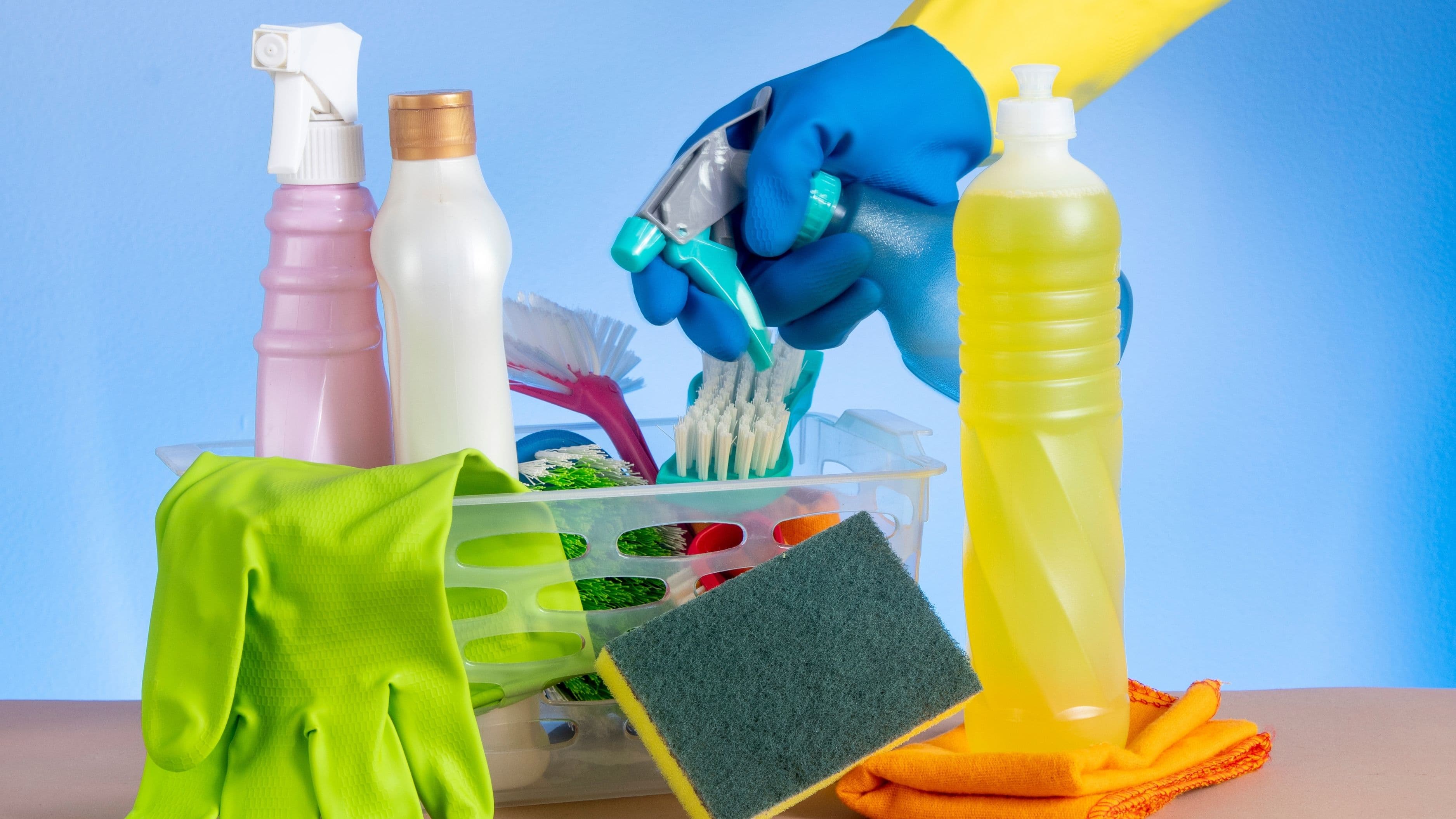
Most conventional cleaning products are 90–95% water. You're paying to ship and package water, then throwing away the plastic bottle when it's done. Concentrated cleaning products — whether tablets, powder, or small liquid concentrates — solve both problems at once.
Brands like Blueland, Grove Collaborative, and Cleancult sell starter kits that include reusable spray bottles and concentrated tablets or refill pouches. You fill the bottle with tap water, drop in the tablet, shake, and you're done. The packaging is minimal (often a small compostable paper sleeve), the shipping footprint is a fraction of conventional cleaners, and the cleaning performance is comparable. Multi-surface spray, bathroom cleaner, glass cleaner, dish soap — all of it is available in concentrated form now.
Key benefit: Slashes plastic packaging waste from one of the most plastic-heavy categories in the home, while reducing shipping emissions from heavy liquid products.
Best for: Households that go through a lot of cleaning products and want to dramatically cut their plastic output in one category.
8. Silicone Food Storage Bags
Ziplock bags are convenient and cheap, and most people use them constantly — for snacks, meal prep, marinating, freezer storage, and packing lunches. They're also single-use plastic that's almost never recycled. Silicone reusable bags do everything a Ziplock does, better, for years.
Brands like Stasher, Zip Top, and Bumkins make bags that are leak-proof, freezer-safe, microwave-safe, dishwasher-safe, and durable enough to last 3,000+ uses. A set of four Stasher bags costs roughly $40–$60 — which sounds like a lot compared to a box of Ziplocks, but pays for itself many times over across their lifespan. They also stand upright on their own, which is a quality-of-life upgrade most people don't expect to care about until they try it.
Key benefit: Replaces one of the highest-volume single-use plastic products in the kitchen with something that lasts years and performs better.
Best for: Meal preppers, parents packing school lunches, or anyone who goes through a box of Ziplocks a month.
9. Natural Fiber Dish Scrubbers
Conventional kitchen sponges are made from synthetic polyurethane foam and nylon, shed microplastics into water with every use, harbor bacteria quickly, and end up in landfill after just a few weeks. Natural alternatives — cellulose sponges, loofah scrubbers, coconut fiber scrubbers, or natural bristle brushes — clean just as effectively and break down without leaving microplastics behind.
A wooden dish brush with plant-fiber bristles is one of the best long-term swaps: the handle lasts years, the brush head is replaceable, and both are compostable at end of life. Brands like Full Circle, Redecker, and OXO Good Grips offer natural fiber options. They dry faster than sponges, resist bacterial buildup better, and generally last longer — making them cheaper per use over time.
Key benefit: Removes a microplastic-shedding, bacteria-harboring single-use product from your sink and replaces it with something compostable and longer-lasting.
Best for: Anyone who goes through multiple kitchen sponges a month and is concerned about microplastic contamination in household water.
10. LED Smart Bulbs
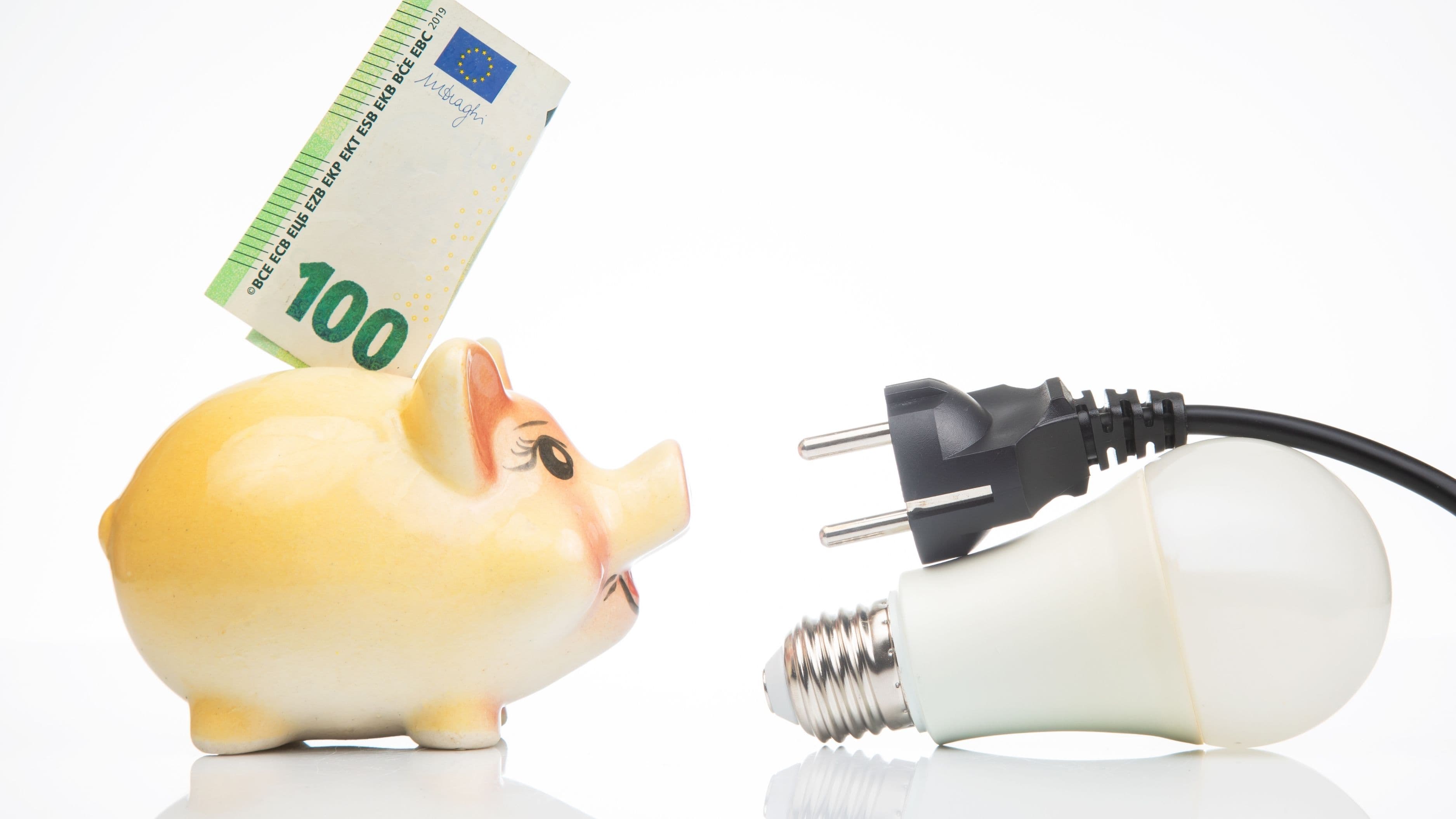
If you haven't already replaced every incandescent or CFL bulb in your home with LED, this is the single swap with the largest ongoing energy and cost impact on this list. LEDs use 75–80% less energy than incandescent bulbs and last 15–25 times longer. A standard LED bulb lasts approximately 15,000–25,000 hours compared to 1,000 hours for a typical incandescent.
Smart LED bulbs — from brands like Philips Hue, LIFX, or even budget-friendly options from Wyze and Amazon — add scheduling, dimming, and automation on top of the base energy efficiency. Setting lights to automatically dim in the evening, turn off when rooms are empty, or shift to warmer tones after sunset saves additional energy without requiring any behavioral change. The upfront cost of LEDs is higher than incandescents, but the energy savings pay back the difference within a few months for bulbs used daily.
Key benefit: Reduces household energy consumption immediately and permanently, with no trade-off in performance and significant long-term cost savings.
Best for: Every household. Energy used for lighting is one of the most controllable and reducible categories of home energy consumption.
Quick Takeaway
You don't need to make all 10 swaps at once. Start with the ones that match your heaviest-use habits — if you go through paper towels and Ziplocks constantly, those are your highest-impact starting points. If your bathroom generates the most waste, start with the shampoo bar and bamboo toothbrush. Small, consistent changes made across a household add up to a meaningful reduction in waste and spending over a year.
FAQ
Are eco-friendly products actually better for the environment, or is it mostly marketing? It varies by product. The swaps on this list have genuine, measurable impact — less plastic waste, lower energy consumption, fewer disposables in landfill. Some "green" products on the market are more marketing than substance (watch for vague claims like "natural" with no certifications). The products listed here have clear, specific environmental benefits tied to their design.
Are these swaps more expensive than conventional products? Upfront, some are. But most pay for themselves quickly because you stop buying disposables. Reusable bags, cloth rags, silicone bags, and LED bulbs all cost less over 12 months than the disposables they replace. The main exception is concentrated cleaning products, which are roughly cost-neutral.
What's the single highest-impact swap on this list? LED bulbs have the largest ongoing impact on energy and cost. For plastic reduction specifically, switching from paper towels to reusable cloths and from plastic bags to silicone alternatives removes the most volume from your trash.
Do shampoo bars really work as well as liquid shampoo? For most hair types, yes — after an adjustment period of 1–3 weeks. During that window, your scalp is recalibrating from the sulfates and silicones in conventional shampoo. Most people who push through the adjustment period find bars work just as well, or better, for their hair.
Where's the best place to buy these products? Most are available on Amazon, at Target, Whole Foods, and natural grocery stores. Brands like Blueland, Ethique, and Bee's Wrap also sell directly on their own websites, often with starter kits at a discount.
📚 Sources
EPA – Reducing Wasted Food and Packaging – https://www.epa.gov/recycle/reducing-wasted-food-packaging
US Department of Energy – LED Lighting – https://www.energy.gov/energysaver/led-lighting
National Geographic – The Plastic Bag Problem – https://www.nationalgeographic.com/environment/article/plastic-bag-problem
Environmental Working Group – Safer Cleaning Products – https://www.ewg.org/guides/cleaners/
Plastics Oceans International – Single-Use Plastics – https://plasticoceans.org/the-facts/
Good Housekeeping – Best Shampoo Bars – https://www.goodhousekeeping.com/beauty/hair/g32012625/best-shampoo-bars/
The Spruce – How to Reduce Kitchen Waste – https://www.thespruce.com/ways-to-reduce-kitchen-waste-5025046
Consumer Reports – LED Bulbs Buying Guide – https://www.consumerreports.org/cro/light-bulbs/buying-guide/index.htm